REVIEW · WARSAW
Jewish Heritage and Holocaust Memorial Tour of the Former Ghetto
Book on Viator →Operated by Orange Umbrella Free Tour · Bookable on Viator
A hard walk, and a clear one. This Jewish Heritage and Holocaust Memorial Tour strings together major Warsaw sites with an English-speaking guide and the kind of on-the-ground context that helps the past make sense fast. Two things I really liked: the respectful pace and the way the route connects neighborhoods, people, and events instead of just listing dates. I also liked the small group size, which makes it easier to ask questions and keep moving without feeling rushed. One caution: this is heavy material, and if you want light sightseeing, you’ll feel out of place.
You start near Sigismund’s Column at 1:30 pm and finish at Umschlagplatz, close to the Polin Museum. The route takes about 2.5 hours, and admission at each stop is listed as free, so most of what you pay for goes directly to the professional local guide.
In This Review
- Key things to know before you go
- A 2.5-hour Warsaw walk with serious purpose
- Finding the start at Sigismund’s Column (and what happens if crowds block it)
- Castle Square: medieval Jewish Warsaw before the ghetto
- Krasinski Palace: power, protection, and Warsaw’s baroque backdrop
- Warsaw Ghetto relics near Nalewki: seeing the line where it changed
- POLIN Museum memorial area: the Monument to the Ghetto Heroes
- Mordechaja Anielewicz bunker memorial by Miła Street
- Umschlagplatz: deportation ground and surviving prewar buildings
- Price and value: what $19.22 buys you in Warsaw
- What kind of guide you’re hoping for (and how to get the most out of it)
- Who should book this tour, and who might want a different pace
- Should you book this Jewish Heritage and Holocaust Memorial Tour in Warsaw?
- FAQ
- How long is the Jewish Heritage and Holocaust Memorial Tour?
- Where does the tour start and end?
- What language is the tour offered in?
- Is there an admission ticket cost at the stops?
- Is a mobile ticket provided?
- What is the group size limit?
- What if there’s a parade or protest at the meeting point?
- Is tipping included in the price?
- Is cancellation free?
Key things to know before you go
- Small group (max 25): easier questions, tighter focus, less crowd noise
- English-only delivery: the tour is offered in English with a mobile ticket
- Meaningful stop sequence: from medieval Jewish Warsaw context to ghetto walls, uprising, and deportations
- Memorial-first approach: you’ll spend time at monuments where people can pause and reflect
- Built-in flexibility near the finish: you end near Polin Museum, so you can keep going afterward
- Respectful guidance matters: guides like Max and Magda have been praised for clarity and empathy
A 2.5-hour Warsaw walk with serious purpose
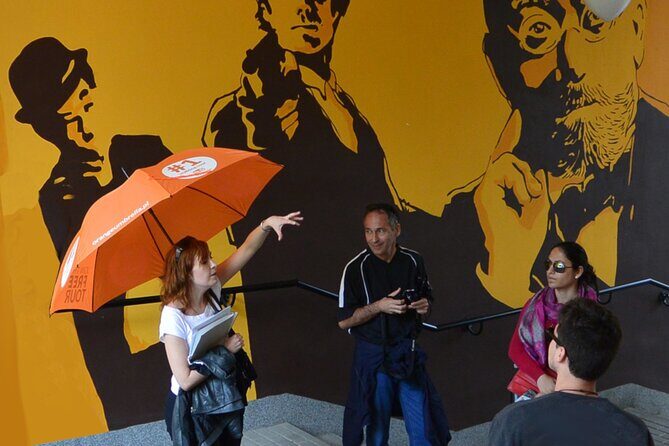
Warsaw can feel like a city that grew back and kept going. But in this tour, you slow down and look at what was broken, and what survived. The best part is that the walk doesn’t treat the former ghetto as a single dark block on a map. Instead, it tracks how the Jewish quarter shifted, how confinement formed, and how the uprising and deportations fit into the same story.
The tone is serious without being theatrical. Expect moments where the guide’s words do more than explain logistics. They help you understand why certain corners matter, why certain buildings became symbols, and why specific names are still spoken.
And you’ll notice the practical design of the route. It’s compact enough to feel like one coherent experience, but spread out enough that you’re not stuck staring at one monument the entire time.
You can also read our reviews of more historical tours in Warsaw


Finding the start at Sigismund’s Column (and what happens if crowds block it)
The tour begins at Sigismund’s Column, Plac Zamkowy (the address area is 00-001 Warszawa). That’s a central meeting point, easy to reach by public transportation. The start time is 1:30 pm, and the total tour runs about 2 hours 30 minutes.
Here’s a detail I appreciate because it prevents stress: if a mass event (like a parade/protest/concert) blocks the usual meeting point, the group shifts to beneath a red-brick medieval defensive wall about 100 meters north of the Column. That kind of contingency matters on busy Warsaw days.
For your timing, plan to arrive a few minutes early. This is one of those tours where arriving late can make you miss the first framing comments, which set up the meaning of everything you’ll see next.
Castle Square: medieval Jewish Warsaw before the ghetto
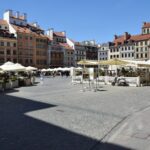
The first stop is Castle Square (Plac Zamkowy), right by the historic center. The guide starts with medieval migrations of Jews and explains how the medieval Jewish quarter developed nearby. This matters because it gives you a baseline: before the Warsaw Ghetto existed, there was already a neighborhood, a community, and a pattern of life.
You’re not just learning that Jews lived somewhere in old Warsaw. You’re learning how the city’s geography and politics shaped settlement over time. That makes the later scenes hit harder, because you can feel the contrast between a living community and the machinery that later compressed and controlled it.
Admission here is listed as free, so this first segment is mostly about interpretation and orientation. If you’re the kind of person who likes context—names, time periods, and how neighborhoods evolve—this opener works well.
Krasinski Palace: power, protection, and Warsaw’s baroque backdrop
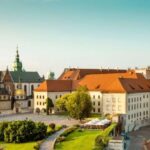
Next comes Krasinski Palace, a fine Warsaw aristocratic baroque palace with a beautiful park around it. The story connected to the palace is the crucial part: the guide frames the Krasinski family as protectors of the Warsaw Jews.
That might sound like a side-note, but it isn’t. In the middle of a tour focused on persecution, this stop reminds you that different groups in society existed side-by-side—and that some people used their position to help. It also keeps you from collapsing history into a simple good-vs-bad picture. Real communities are more complicated than that.
This stop also breaks up the heaviness visually. You’re standing in a grand palace setting, in a park-like area, which can help your brain process the information without constantly staring at the sharpest reminders of the past.
Again, admission is listed as free, so you’re paying for the guide’s connection-making: how a city’s elites, institutions, and neighborhoods interacted.
Warsaw Ghetto relics near Nalewki: seeing the line where it changed
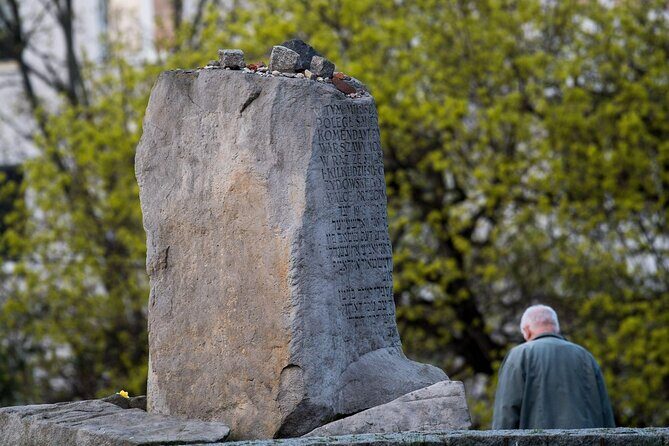
The tour then moves into the Warsaw Ghetto area, focusing on relics along former Nalewki Street. This is where you get traces of the main ghetto gate and ghetto wall.
I like this kind of stop because it forces you to read the city like a document. Even when what you see is partial—traces instead of a fully restored wall—the explanation helps you understand what you’re looking at. The guide’s job is to translate faint physical evidence into the lived reality it represented.
If you’ve visited other memorial sites, you may be used to perfectly preserved structures. Here, you get something different: the city remembers in fragments. And that can be powerful in its own way, because it suggests both destruction and continuity.
This is also one of the spots where a clear guide makes a difference. If the narrative stays focused and cohesive, you’ll come away with a strong sense of where the ghetto boundary ran and how people would have experienced that shift day-to-day.




POLIN Museum memorial area: the Monument to the Ghetto Heroes
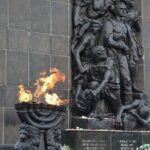
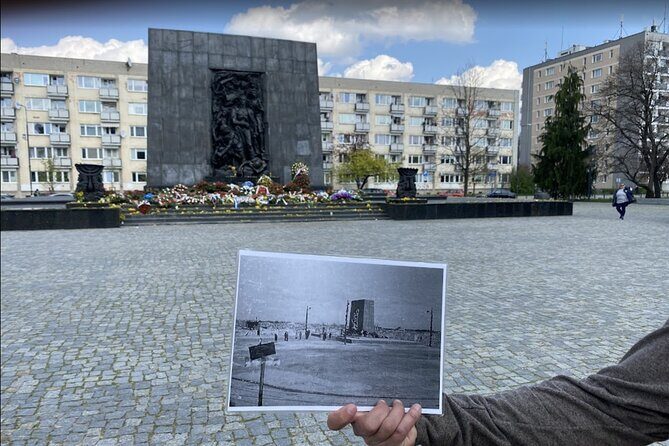
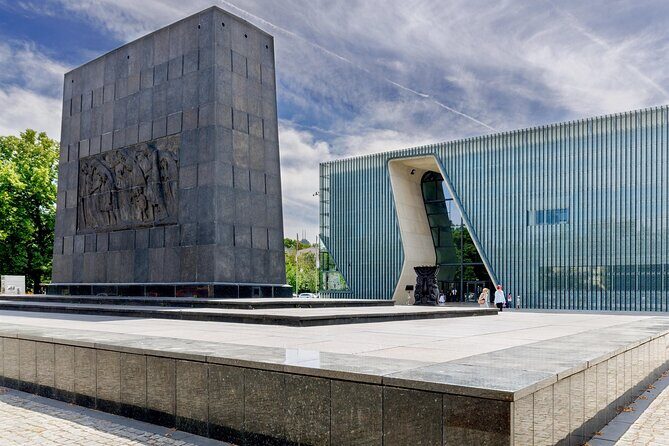
From the ghetto relics, you reach POLIN Muzeum Historii Żydów Polskich, specifically the memorial area in front of the main entrance. Here, you’ll spend time at the famous Monument to the Ghetto Heroes.
This is a turning point in mood. Earlier stops help you visualize how confinement formed. This one calls attention to resistance and the human figures attached to that resistance. The monument gives you a place to stop and breathe in the middle of a walking route that won’t let you fully drift off.
If you’re someone who wants the experience to feel both educational and emotionally grounded, this stop is often the kind of moment people remember weeks later. It’s not just a photo stop. The guide’s framing helps you understand the symbolism and why it’s located where it is.
Admission is listed as free for this segment too, which means you can focus on meaning rather than extra ticket logistics.
Mordechaja Anielewicz bunker memorial by Miła Street
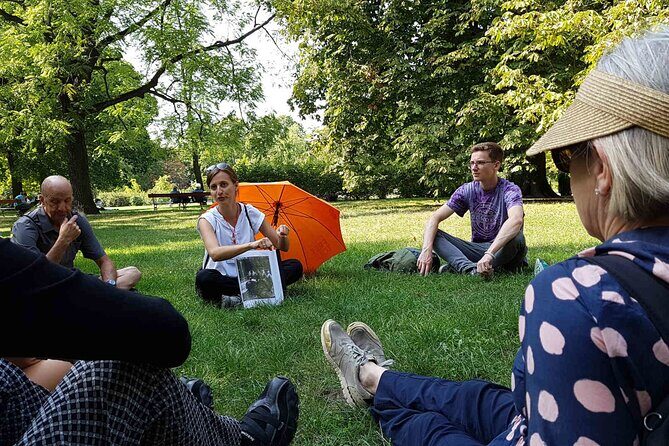
The next stop is connected to Mordechaja Anielewicz and the Anielewicz Bunker Memorial Area by Miła Street. This is the place described as the headquarters of the Jewish Combat Organization during the Uprising in the Ghetto.
This is one of the most specific, name-driven parts of the tour. The point isn’t just that an uprising happened; it’s that particular people organized it, and they did it from real locations with real constraints.
When guides are at their best here, they avoid turning the story into a dramatic script. Instead, they connect the uprising to the larger arc you’ve been walking: the narrowing of space, the limits imposed on daily life, and the choices made in response.
Admission is listed as free again, and that’s helpful because it keeps the tour focused on interpretation. You’re not juggling extra entry lines. You’re moving through a sequence designed to build understanding.
Umschlagplatz: deportation ground and surviving prewar buildings
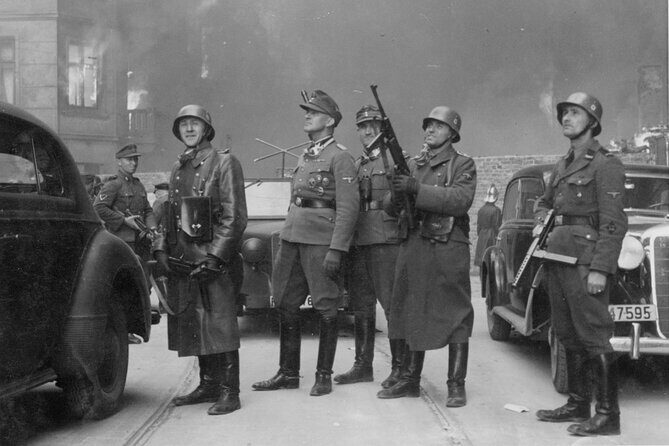
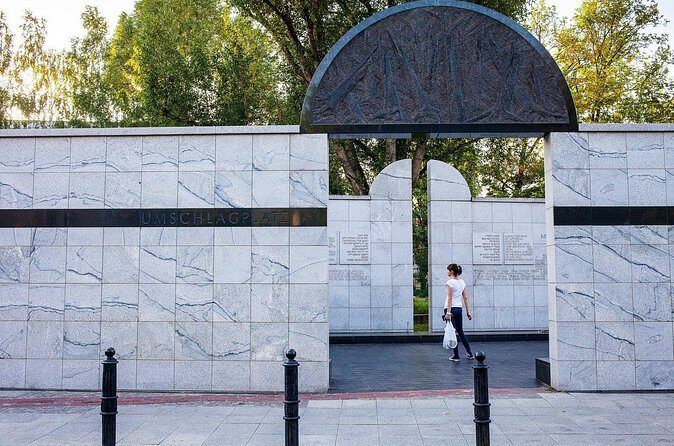
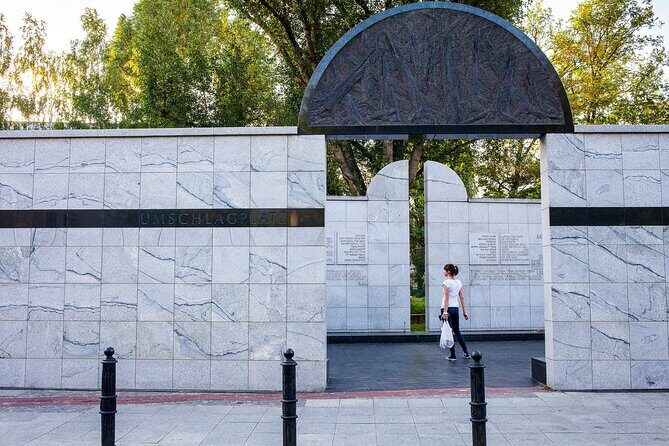
The final stop is Umschlagplatz, the memorial of the deportation area. This is described as the place where you can see the only three prewar buildings that survived in the Big Ghetto.
This is the kind of detail that changes how you look at a city. Instead of thinking of the ghetto as only walls and streets, you understand it also as an area where normal-looking structures existed right up against unimaginable events. Those surviving buildings become silent witnesses.
The guide’s explanation helps you place what you’re seeing into the story of deportations. Even if you know the headline facts already, it’s different when you’re standing at the specific ground where the process is memorialized.
The tour ends at the Umschlagplatz Monument area on Stawki 10. It’s also noted to be about two blocks away from the Polin Museum, which gives you a smart next step. If you want deeper context after the walking tour, you can plan to continue nearby rather than restarting your day from scratch.
Price and value: what $19.22 buys you in Warsaw
The listed price is $19.22 per person, which is surprisingly practical considering what’s included. You’re getting a professional local guide service plus a free tourist map of Warsaw.
This price also feels more like the cost of good narration than the cost of entry fees. The itinerary segments list admission tickets as free at each stop, so you’re not paying extra to step inside attractions. You’re paying for translation of space into meaning: how the guide connects migrations, neighborhoods, aristocratic protection, ghetto boundaries, memorial symbolism, and the deportation site.
Two more value signals matter:
- The tour runs about 2 hours 30 minutes, which is a real amount of time for a guided story, not a quick circuit.
- The group cap is 25, which usually improves the quality of interaction and pacing.
One thing to remember: tip for the guide isn’t included. That’s normal for this style of tour, and if the guide’s empathy and clarity landed for you, setting aside a tip is a straightforward way to support the people doing the work.
What kind of guide you’re hoping for (and how to get the most out of it)
Guides make or break history walking tours. This one has strong praise for guides such as Max and Magda for being engaging, clear, and empathetic. That fits the subject well. When the guide’s delivery is organized and humane, you’re not just absorbing facts; you’re learning how to hold the information responsibly.
Still, there’s a legitimate consideration: one account rated the experience “just ok,” saying the guide felt too focused on facts from books and didn’t give a full picture. The takeaway for you is simple. If you care about nuance, ask a question. During natural pauses, prompt the guide with what you want clarified—like how the ghetto’s borders changed over time, or how different groups interacted. A good guide will respond with additional context, not just more dates.
Because the tour is only about 2.5 hours, it’s best when you come prepared to engage. Bring curiosity, not just expectations for a photo walk.
Who should book this tour, and who might want a different pace
This experience is best for people who want a structured walk through key Warsaw sites tied to Jewish heritage and the Holocaust. If you like guided context and you’re okay with difficult themes, you’ll likely find it meaningful and coherent.
It also suits anyone who wants to understand the “why” behind memorial locations. The route is designed to connect place to meaning: medieval Jewish settlement context, aristocratic patron-protection stories, physical traces of ghetto boundaries, monuments for resistance, and deportation-ground memory.
If you’re in Warsaw for a very tight schedule and you mainly want light entertainment, you might prefer something else. This walk is about history at its most painful. It’s not built to distract you from that.
Should you book this Jewish Heritage and Holocaust Memorial Tour in Warsaw?
Yes, I’d book it if your priority is learning the story through real streets and memorial stops, with an English guide and a route that doesn’t sprawl across the whole city. The small group size, the free-to-enter memorial stops, and the guided connection-making are exactly the ingredients that turn a short walk into a lasting education.
I’d think twice only if you strongly prefer upbeat sightseeing, or if you know you want a broader historical treatment than this kind of focused memorial route provides. Even then, you can still get value from the clarity of the stops—especially if you plan to follow up at Polin Museum afterward.
If you do book, do two practical things: arrive a little early near Sigismund’s Column, and bring questions. The best version of this tour happens when you actively participate in the conversation the guide is building.
FAQ
How long is the Jewish Heritage and Holocaust Memorial Tour?
It runs for approximately 2 hours 30 minutes.
Where does the tour start and end?
It starts at Sigismund’s Column (Plac Zamkowy) and ends at the Umschlagplatz Monument near Stawki 10.
What language is the tour offered in?
The tour is offered in English.
Is there an admission ticket cost at the stops?
Admission is listed as free for the stops included on this walking tour.
Is a mobile ticket provided?
Yes, the tour uses a mobile ticket.
What is the group size limit?
The tour has a maximum of 25 travelers.
What if there’s a parade or protest at the meeting point?
If there’s a mass event at the usual meeting spot near Sigismund’s Column, the tour starts beneath a red-brick medieval defensive wall about 100 meters north.
Is tipping included in the price?
No. Tips for the guide are not included.
Is cancellation free?
Yes, you can cancel for a full refund up to 24 hours before the experience starts.