REVIEW · KRAKOW
Guided Tour in Kraków-Płaszów Former Concentration Camp
Book on Viator →Operated by Krakow Explorers · Bookable on Viator
Płaszów feels close, almost too close. This guided visit takes you beyond Kraków’s usual headline draw and puts you in the same neighborhood where the German Nazi camp once operated. I love how the walk starts with Kraków Ghetto memory in public space, then moves to the camp site itself for a grounded, human-scale explanation. I also like the stop at the Ghetto Wall fragment, which gives you a clear physical landmark to connect the story to. One drawback to consider: the camp grounds are today an uneven, outdoor area, so you’ll want comfortable shoes and a bit of patience for the walking pace.
In under two hours, you’ll get context for how Kraków’s Holocaust history unfolded, without rushing the big moments. A knowledgable guide (for example, I’ve seen guidance from Olga in reviews) helps turn scattered locations into one coherent picture. The small-group size, capped at 25, means it’s easier to ask questions and keep up.
In This Review
- Key things that make this tour worth your time
- Start at Ghetto Heroes Square: a memorial built from a complicated past
- Walk to Płaszów: the camp site is hard to read, which is exactly the point
- The emotional anchor: the Ghetto Wall fragment stop after the main visit
- How the 2-hour format works for real-time understanding
- English guidance and small-group questions you can actually ask
- Value check: is $30.01 for Płaszów and the surrounding landmarks a fair deal?
- Where to be and how to get there without stress
- Who this tour fits best (and who should think twice)
- Should you book the Guided Tour in Kraków-Płaszów?
- FAQ
- Does this tour include admission for the camp?
- How long is the guided tour?
- Is the tour offered in English?
- What is the price per person?
- Where does the tour start?
- Where does the tour end?
- What kind of ticket do I receive?
- How large is the group?
- Is there public transportation nearby?
- Do I get confirmation after booking?
- Can I cancel for a refund?
Key things that make this tour worth your time
- Ghetto Heroes Square first, so you understand how remembrance evolved in Kraków after the war
- Płaszów camp visit on foot, starting from the fact that it sits in the city’s backyard
- The ghetto wall fragment stop, with a commemorative plaque in Hebrew and Polish
- English-guided format, designed for real explanation rather than quick sightseeing
- A free admission ticket for the camp included in the experience
Start at Ghetto Heroes Square: a memorial built from a complicated past
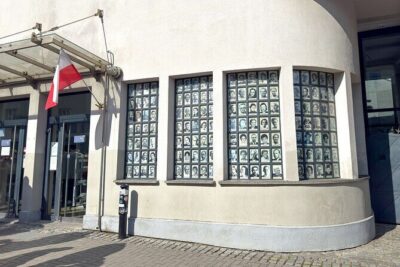
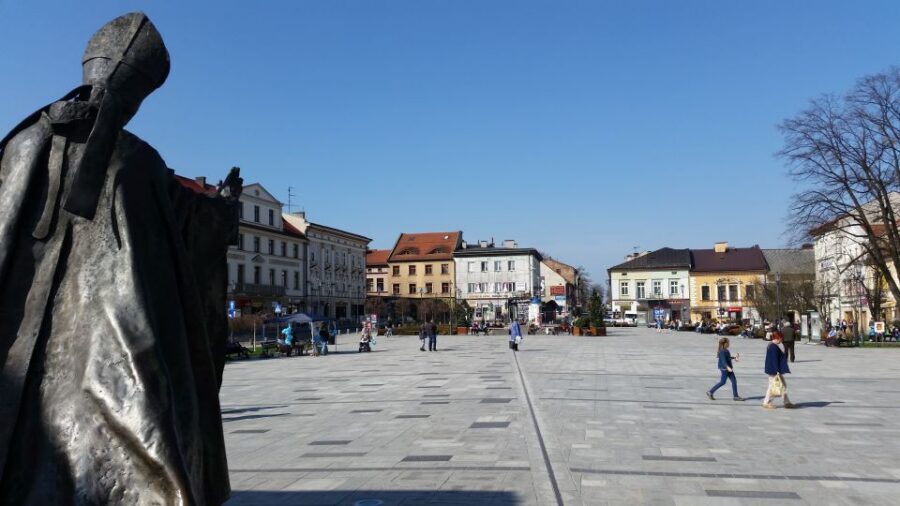
Your tour begins at Plac Bohaterów Getta (Ghetto Heroes Square), by the meeting point listed at Apteka pod Orłem, Plac Bohaterów Getta 18. This is on the Podgorze side, just across the river, and it matters because the area shows how memory in Kraków was reshaped over time.
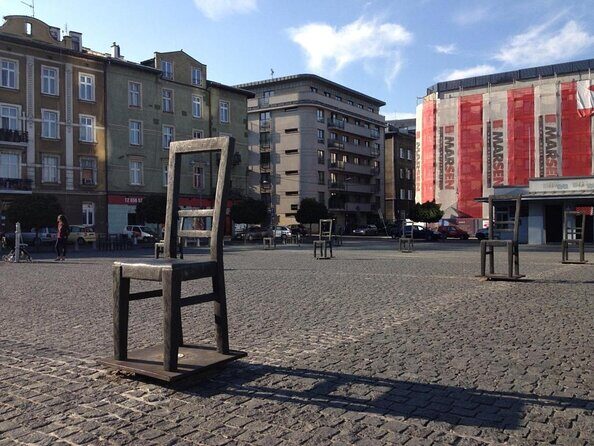
Here’s the useful context I think you’ll appreciate: after the war, Plac Zgody was renamed Plac Bohaterów Getta, and a small monument was added. But for decades, the square’s everyday use didn’t match its meaning. The space was reportedly used as a public toilet or parking lot, and that mismatch is exactly the kind of detail your guide can help you sit with—not for shock value, but to explain how places can forget even when events never should.
In 2005, the square was renovated, which sparked real controversy about the design. The layout uses 70 large metal chairs, spaced out with a purpose: they symbolize departure and the absence that followed. You don’t just see a memorial—you see how design choices can be argued, criticized, and interpreted. That makes this first stop feel like an entry point into the tour’s main theme: how Kraków chose to mark the past, and how the city still wrestles with doing it well.
You can also read our reviews of more guided tours in Krakow
Walk to Płaszów: the camp site is hard to read, which is exactly the point
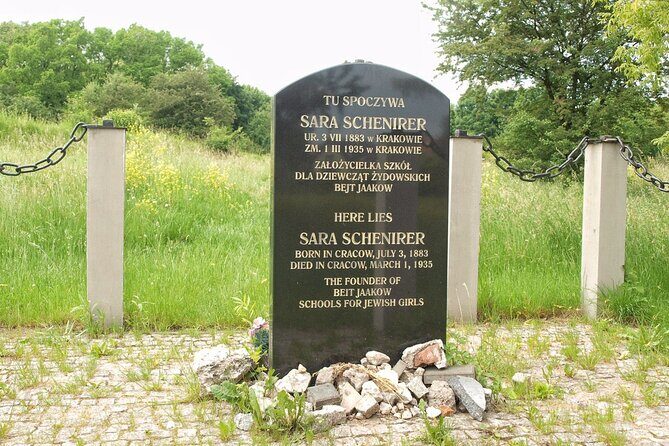
Next you head to Płaszów, where the guided visit starts. Your guide will take you around and give you what you need to understand what you’re looking at. The experience is about 1 hour at the camp, and the admission ticket is free as part of the tour.
What makes Płaszów especially important (and sometimes hard to absorb) is that it’s not tucked away in a remote museum setting. Until recently, the area didn’t visually announce what it was. Even today, it’s described as a wild, uneven space of land, which can feel like a gap in the landscape—like you’re walking across something that resists easy recognition.
At the same time, it sits in a location that feels almost contradictory: it’s in Podgórze, near Wielicka Street, opposite the Bonarka shopping center, and not far from Krakus Mound, in a district that is otherwise commercial and residential. This contrast is one of the most valuable parts of the tour. You’ll see how history can exist in plain sight—right next to modern life—without announcing itself loudly.
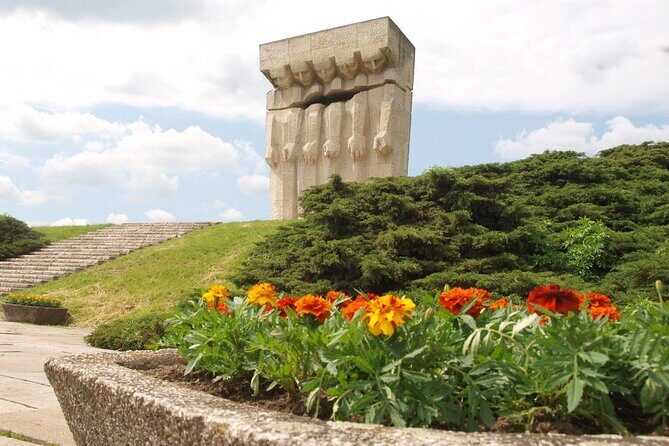
Your guide will identify the site as the former Konzentrationslager Plaszow bei Krakau, a German Nazi concentration camp in Płaszów. That name can feel administrative at first glance, but with a guide, it becomes more than wording on a sign. The point is not to treat the site like a checkmark. The point is to connect the location to the people who were forced to live, suffer, and endure there.
Practical tip: because the ground is uneven, I’d plan on slow, steady steps. It’s not a long-distance hike, but it’s also not a smooth walkway. If you’re prone to mobility issues, bring a little extra caution and go at the pace your guide sets.
The emotional anchor: the Ghetto Wall fragment stop after the main visit
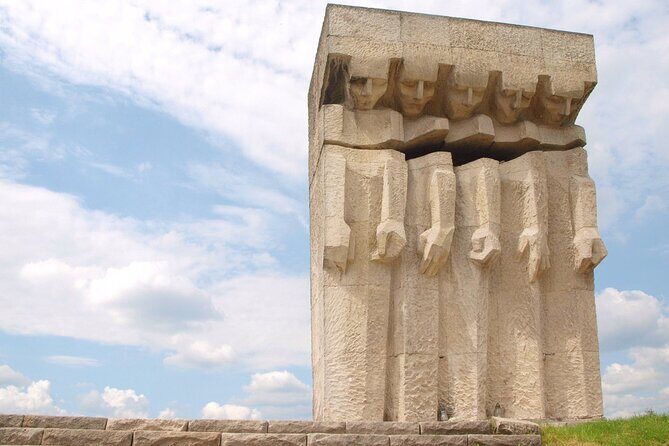
After the camp segment, the tour continues with a pass-by of one of Kraków’s most specific, tangible reminders of the ghetto: the Fragment of Ghetto Wall.
This stop is powerful because it’s not just a story—you can stand near a physical piece of the original wall. The fragment is a 12-metre stretch, and it’s tied to commemoration that’s been in place since 1983. A commemorative plaque, written in Hebrew and Polish, states that here people lived, suffered, and died at the hands of German torturers, and that from here they began their final journey to the death camps.
You might think of a wall as a barrier, but here it becomes evidence. It helps you anchor what you’ve been learning so far. Without a physical landmark like this, it’s easier for a visitor to mentally file the story under broad terms. With this fragment, the experience gains a concrete edge: you can point, look, and remember that this wasn’t abstract.
If you’re the kind of person who likes “where exactly did it happen?” details, this is the stop that will stick with you. It’s brief, but it lands.
How the 2-hour format works for real-time understanding
This whole experience runs about 2 hours (approx.), with the camp portion taking about 1 hour. That timing is useful if you’re trying to balance Holocaust sites with the rest of Kraków. You don’t get dragged across the city all day, and you’re not stuck in a lecture that forgets you’re actually outdoors in the locations you’re being taught to read.
The pacing also supports better learning. You start with a memorial square shaped by post-war memory, then you visit the camp site itself, and you finish with the wall fragment. That order matters because it moves you from remembrance in public space to the wartime location, and then back to a specific marker that survived.
Group size is capped at 25, and the reviews I’ve seen strongly suggest the experience can feel intimate when the group is small. One review mentioned a guide named Olga, with the added detail that the group was just three people and she even helped with tram tickets. Even if you don’t need help with transit, it hints at a bigger point: a smaller group makes questions feel normal rather than rushed.
English guidance and small-group questions you can actually ask
This tour is offered in English. That’s important because the best moments in a guided visit often come from the guide explaining details you might miss alone—like why a memorial looks the way it does, what a name means, or how to interpret what you’re seeing in a place that doesn’t scream its purpose at a glance.
A small-group limit of 25 helps with that. I like group tours best when they let you slow down mentally and ask one or two things without feeling like you’re holding everyone hostage. This one is structured to fit that.
And since the tour is guided by Krakow Explorers, you’ll know you’re dealing with a provider that offers this specifically as a focused historical walk, not a generic city stroll with a quick stop.
Value check: is $30.01 for Płaszów and the surrounding landmarks a fair deal?
At $30.01 per person, you’re paying for two hours of guided explanation plus access to the experience’s key on-site area. The biggest value lever here is that the camp admission ticket is free as part of the tour. So you’re not paying extra just to step into the core site.
You’re also not just buying “a place to go.” You’re buying someone to help you interpret it. That’s where this price makes sense, because without guidance, Płaszów can be harder to read. The grounds are described as wild and uneven, and the site doesn’t function like a polished museum walkway where you can easily connect every dot.
Also, you get more than one meaningful location. Your tour includes the Ghetto Heroes Square memorial stop and then the Ghetto Wall fragment. Many Holocaust-focused tours focus on a single landmark. This one stitches together public remembrance, the camp site, and a surviving piece of ghetto infrastructure.
If you’re trying to make Kraków more than a day-trip hub, this is a strong way to do it without spending a whole day elsewhere.
Where to be and how to get there without stress
The tour lists a start at Apteka pod Orłem, Plac Bohaterów Getta 18, Kraków, and it ends at Henryka Kamieńskiego 57, Kraków with a bus stop at that location. The experience is noted as being near public transportation, which is exactly what you want for a tour that involves walking between meaningful stops.
You’ll receive a mobile ticket, and confirmation is sent at booking time. That’s practical for keeping your day moving and avoiding ticket-printing hassle.
One small thing to keep in mind: because this is a guided walk, you’ll want to arrive a few minutes early so the group forms and the guide can start on time.
Who this tour fits best (and who should think twice)
This tour is a great match if you:
- want Holocaust-era history tied specifically to Kraków locations, not only the best-known comparison site
- like tours where the guide helps you connect place, memory, and meaning
- prefer a shorter format that still covers multiple key markers: the square, the camp, and the wall fragment
It’s less ideal if you:
- dislike outdoor walking on uneven ground, since the camp area is described that way
- want a fully indoor, museum-style experience with lots of built-in comfort
For most people, though, the structure is straightforward: a guided walk with meaningful context, not a long, exhausting day.
Should you book the Guided Tour in Kraków-Płaszów?
If you’re in Kraków and you care about understanding the Holocaust beyond the usual headline itinerary, I think you should book this. The price is reasonable for a guided, two-hour experience, the camp admission ticket is free, and the tour adds two important context stops: Ghetto Heroes Square and the Fragment of Ghetto Wall.
I’d book it especially if you like your history explained in a way that helps you read the sites rather than just look at them. The small-group cap also gives the day a better feel than big, fast-moving tours.
If you’re worried about uneven outdoor terrain, plan for sturdy shoes and a slower pace, and you’ll be fine.
FAQ
Does this tour include admission for the camp?
The tour information says the admission ticket is free for the Płaszów concentration camp visit.
How long is the guided tour?
It lasts about 2 hours (approx.), with about 1 hour at the camp.
Is the tour offered in English?
Yes, it is offered in English.
What is the price per person?
The price is listed as $30.01 per person.
Where does the tour start?
It starts at Apteka pod Orłem, Plac Bohaterów Getta 18, 33-332 Kraków, Poland.
Where does the tour end?
It ends at Henryka Kamieńskiego 57, 30-644 Kraków, with a bus stop at Kamienskiego street.
What kind of ticket do I receive?
You get a mobile ticket.
How large is the group?
The tour has a maximum of 25 travelers.
Is there public transportation nearby?
Yes, the experience is noted as being near public transportation.
Do I get confirmation after booking?
Confirmation will be received at the time of booking.
Can I cancel for a refund?
Yes. Free cancellation is available, and you can cancel up to 24 hours in advance for a full refund.