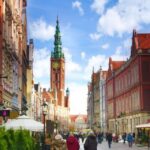
REVIEW · GDANSK
Gdansk: 2H City Sightseeing Tour LIVE GUIDED by Buggy/Golf cart
Book on Viator →Operated by Top City Tour Gdansk · Bookable on Viator
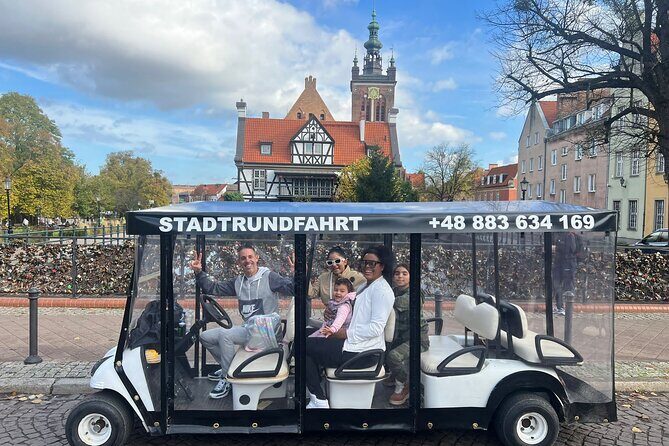
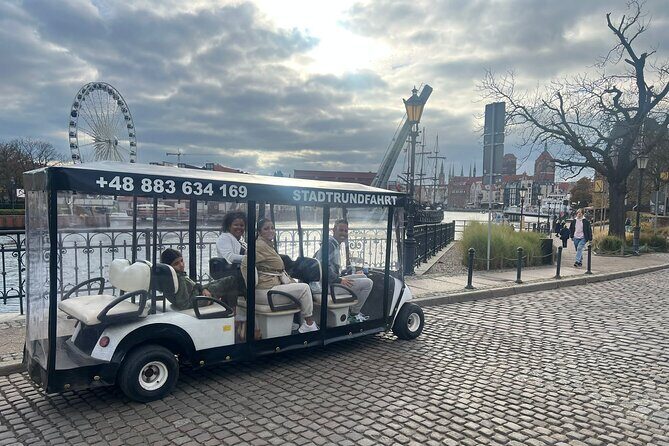
Gdansk moves fast on wheels. In just a couple hours, this live guided golf cart tour strings together Old Town icons, major churches, and the Solidarity/shipyard area with minimal walking.
I like that you cover a lot of ground without feeling like you’re sprinting between stops, especially on an electric buggy that makes tight historic streets easier. I also love the practical touch: you get a free drink (water, coffee, or beer) while you’re getting oriented for the rest of your trip.
The main thing to consider is comfort in cooler weather: the carts can feel chilly in autumn, so bring a layer or even a small blanket.
In This Review
- Key highlights worth planning around
- Why a Gdansk golf cart tour makes sense for a short stay
- Price and what you actually get for your money
- Meeting point, pickup limits, and how to avoid timing stress
- The route in plain language: from Neptune to the shipyard
- Stop 1: Neptune’s Fountain (Fontanna Neptuna)
- Stop 2–4: Main Town Hall, Arthur’s Court, and Długi Targ
- Stop 5–8: Green Gate, Shakespeare Theatre, Katownia, Golden Gate
- Stop 9–12: Highland Gate, Great Armoury, Millennium Tree, Sobieski Monument
- Stop 13–18: Gdańsk Główny Station, St. Joseph’s, St. Elisabeth’s, Old Town Hall, Great Mill, St. Catherine’s
- Stop 19: St. Bridget’s Church and the Amber Altar (the big moment)
- Stop 20–24: Polish Post Office Museum, Solidarity Centre, Three Crosses Monument, Sala BHP, shipyard area
- Stop 25–27: Museum of the Second World War, Baltic Symphony Hall, St. John’s Church
- Stop 28–31: Crane, St. Mary’s Church, Royal Chapel, St. Nicholas Church
- Stop 32: Market Hall
- Guides and what kind of tour vibe to expect
- Timing, comfort, and how to dress for the buggy
- Who this tour is best for
- When planning your trip: key season note
- Should you book the Gdansk electric buggy city tour?
- FAQ
- How long is the Gdansk buggy city sightseeing tour?
- Is the tour guided in English?
- Do they provide pickup?
- What is included with the ticket price?
- Are there admission fees for the stops?
- What happens if the weather is bad?
- How big is the group?
Key highlights worth planning around
- Efficient, short-stop route that’s made for seeing landmarks in limited time
- Pickup within 2 km of Neptune’s Fountain for an easy start in the historic center
- Free-entry stops built around the city’s key squares, gates, and churches
- Solidarity-focused pacing with dedicated time at places like Sala BHP and the shipyard area
- Amber Altar time included at St. Bridget’s Church (longest stop on the route)
- Small group cap (30) so you’re not lost in a huge crowd
Why a Gdansk golf cart tour makes sense for a short stay
If you’re arriving with limited time—say you only have a morning or you’re trying to avoid museum fatigue—this tour is built for the “see it all first” stage of a trip. You’re not trying to become a walking historian. You’re getting a map in motion: where the waterfront landmarks sit, where the big churches dominate, and how the Old Town connects to the later 20th-century sites.
The buggy format matters in Gdansk because the historic center is packed with highlights and narrow lanes. Getting around by foot is doable, but it can be slow once you factor in photo lines, street crossings, and simply carrying energy for hours. Here, the vehicle turns the same distance into a smoother experience—so you spend your effort on looking and listening, not on walking.
Also, the tour is live guided in English. You’ll get the kind of commentary that helps you understand why something matters, not just what it is.
You can also read our reviews of more guided tours in Gdansk



Price and what you actually get for your money
At $51.97 per person for about 2 to 2 hours 15 minutes, this isn’t a bargain “just ride around” deal. You’re paying for three things that add up fast in any European city: a guide, transportation, and included basics that remove friction.
Here’s the value logic:
- You get a guide for the full session, covering a long list of major sites.
- You get pickup and drop-off centered around Neptune’s Fountain (within a 2 km radius), so you’re not spending time figuring out local meeting logistics.
- You get a drink included for each person (water, coffee, or beer), which is a nice “start the day right” perk.
- Stops are tied to places where admission is listed as free, and one key interior moment—the Amber Altar—has an admission fee included.
If you’re comparing this to a walking tour plus taxis plus separate ticket stops, the price feels more reasonable. If you prefer long museum time and unhurried exploration, you might end up using it mainly as an orientation tool. But as a first-or-second morning in Gdansk, it’s a strong use of time.
Meeting point, pickup limits, and how to avoid timing stress
The default start and finish is Neptune’s Fountain (Fontanna Neptuna) near Długi Targ. Pickup is offered within a 2 km radius from the fountain, so you can often meet near your hotel or lodging.
One important detail: pickup is not offered at the ports. If you’re arriving by cruise, plan to get to the historic city-center meeting area rather than expecting a buggy to come out to the pier.
They also mention a practical reality: traffic can cause a slight delay sometimes. It’s not usually a deal-breaker, but it’s wise to keep your next plan flexible—especially if you’re connecting to another activity after the tour.
If your requested pickup address is in a restricted street area, the guide will contact you to arrange a different nearby pickup point. So don’t assume every street will work exactly as typed.
The route in plain language: from Neptune to the shipyard
This is a “high coverage” route. Many stops are brief, mostly for quick context and photos, while a few are longer and more memorable.
Stop 1: Neptune’s Fountain (Fontanna Neptuna)
Neptune’s Fountain is one of the most recognizable symbols of Gdańsk, and the sea link is part of the city’s identity. People line up here for photos—so seeing it first helps you understand the geography right away: you’re starting in the Old Town core, close to the historic main streets.
You can also read our reviews of more city tours in Gdansk




Stop 2–4: Main Town Hall, Arthur’s Court, and Długi Targ
You pass the old Main Town Hall building and then Arthur’s Court, both tied to the city’s long trading and municipal story. The tour then moves into Długi Targ (Long Market Square), the main square in the historical center.
Why this matters: in Gdansk, power and commerce often look like architecture first—town halls, courts, and merchant gathering spaces. Seeing these early makes later church and gate stops easier to place.
Stop 5–8: Green Gate, Shakespeare Theatre, Katownia, Golden Gate
These are classic “walk-up-and-look” landmarks:
- Green Gate (Brama Zielona): Renaissance structure from the 1500s, now part of the museum complex.
- Gdansk Shakespeare Theatre: noted as the only theatre in the world equipped with a folding roof.
- Katownia (Old Prison Tower): the old prison tower complex, including a torture chamber.
- Langgasser Tor / Golden Gate: through this gate, royal suites once entered Długi Street.
I like this cluster because it mixes civic, cultural, and darker historical layers in a short span. Even if you don’t go inside everything, the exterior context helps.
Stop 9–12: Highland Gate, Great Armoury, Millennium Tree, Sobieski Monument
You continue through more gates and monuments:
- Highland Gate: tied to the Royal Road tradition and used today as a tourist information point.
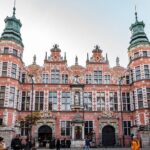
- Great Armoury (Wielka Zbrojownia): Dutch Mannerism-style building, later associated with the city’s art academy.
- Millennium Tree (Trzewko Tysiąclecia): a modern polished stainless steel monument for the city’s 1000th anniversary.
- Jan III Sobieski Monument: equestrian statue with a history of being transferred to Gdańsk.
This section is useful if you want to see how Gdańsk layers time: medieval gates and civic buildings, then later monuments signaling other eras of pride and identity.
Stop 13–18: Gdańsk Główny Station, St. Joseph’s, St. Elisabeth’s, Old Town Hall, Great Mill, St. Catherine’s
This stretch adds variety:
- Gdańsk Główny Railway Station: opened in 1900, a recognizable “modern anchor” next to older town structures.
- St. Joseph’s Church and St. Elisabeth’s Church: both described with post-World War II rebuilding in their histories.
- Ratusz Starego Miasta (Old Town Hall): one of the few historic buildings that survived war damage.
- Great Mill: once the greatest industrial plant of Medieval Europe, now tied to the amber museum.
- St. Catherine’s Church: described as the oldest church in Gdańsk and with a shift back to Catholic use after WWII.
If you care about how a city rebuilds after destruction, this is one of the more meaningful “architecture with consequences” parts of the tour.
Stop 19: St. Bridget’s Church and the Amber Altar (the big moment)
This is the standout stop for most people. You’ll spend about 15 minutes here, with admission included, focused on the Amber Altar inside St. Bridget’s Church.
The tour description makes the scale part of the story: it’s described as twice as big as the legendary Amber Room and more than three times as high. In practice, the value here is simple: you’re not just walking by. You have time to actually see something that’s hard to replicate elsewhere.
Stop 20–24: Polish Post Office Museum, Solidarity Centre, Three Crosses Monument, Sala BHP, shipyard area
Then the tour pivots into the 20th-century story of resistance and change:
- Museum of the Polish Post Office: tied to the defense of the Polish Post Office in 1939, described as one of the first acts of WWII in Europe (as part of the September campaign).
- European Solidarity Centre (Solidarity Museum): a modern cultural institution preserving the memory of Solidarity’s victory.
- Three Crosses Monument: steel monument with anchors, commemorating victims from December 1970 events.
- Sala BHP: place connected with major strike events, the signing of agreements in 1980, and the birth of Solidarity (as described here).
- Gdańsk Shipyard: described as famous because Solidarity was founded there in September 1980.
This is where the “quick tour” format still works, because the sites are linked by theme. Even if you don’t go deep into every museum, you’ll leave with the big timeline in your head: 1939 conflict → Solidarity movement momentum → shipyard centrality.
Stop 25–27: Museum of the Second World War, Baltic Symphony Hall, St. John’s Church
Next comes more “future-looking” and cultural space:
- Museum of the Second World War: dedicated to WWII, with exhibits opened in 2017.
- Baltic Symphony Hall: the former municipal power plant on the island of Ołowianka, rebuilt and extended.
- St. John’s Church: Gothic church and cultural center.
This cluster helps the tour end feel less like a history lecture and more like a city that keeps building new purpose into old sites.
Stop 28–31: Crane, St. Mary’s Church, Royal Chapel, St. Nicholas Church
These are some of Gdańsk’s most photo-friendly landmarks:
- Great Crane: described as the largest medieval port crane in Europe, on the Motława River.
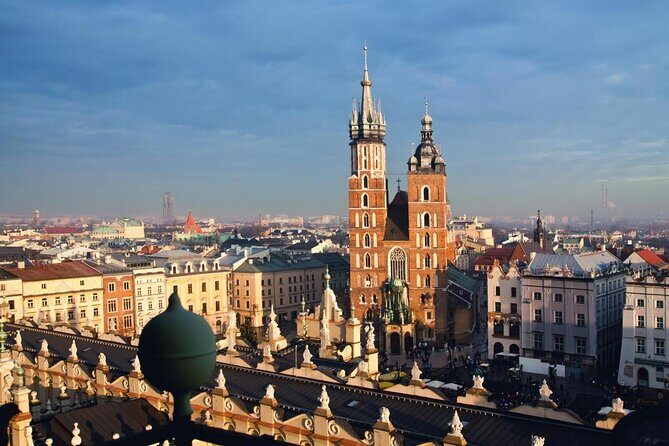
- St. Mary’s Church: described as the biggest Gothic brick building in the world.
- Royal Chapel (Kaplica Krolewska): Baroque church with a dome in the center of Gdańsk, with a richly decorated facade.
- St. Nicholas Church: Dominican church dating back to the 1100s and noted for surviving WWII.
If you like walking out of a tour with “I know what I’m looking at” confidence, this end stretch delivers.
Stop 32: Market Hall
The tour finishes at Historical Market Hall (Hala Targowa 1896), described as the oldest shopping center in Gdańsk. It’s a nice last stop: you’re back in the mood for browsing and snacks.
Guides and what kind of tour vibe to expect
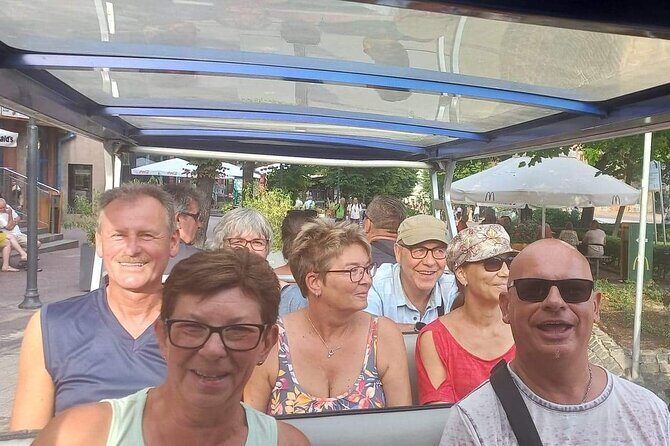
The experience is only as good as the guide, and the names that consistently pop up in feedback include Michael, Matchek, Maciej, and Noris. What stands out from those accounts is energy: guides described as enthusiastic, friendly, and willing to answer questions.
A couple practical notes to keep your expectations grounded:
- You can get a lot of detail in a short time, since the route covers many stops. If you’re the type who likes slowing down, plan to spend extra time on your favorites after the tour.
- English delivery is offered, but accents and speaking pace can vary by guide. One review mentioned a Cuban accent and faster speed as a challenge. If you need clarity, you’re usually safer asking for pace adjustment early rather than waiting.
The best part of the guide vibe is the difference between memorizing facts and actually understanding why a place matters. The tour seems built for that, especially around Solidarity and the Amber Altar.
Timing, comfort, and how to dress for the buggy
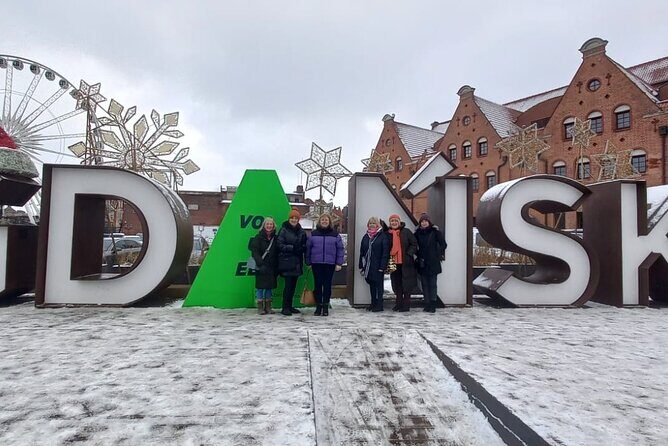
This tour lasts about 2 to 2 hours 15 minutes, and the stops are short by design. So think of it as moving sightseeing, not a slow museum crawl.
Because you’re sitting outside in an open-air cart part of the time, weather matters. The most direct piece of advice I’d follow based on the feedback: in autumn or cooler days, bring a layer and don’t assume you’ll stay warm. (One review specifically recommended bringing a blanket.)
Also, bring your patience for city pacing. Even with a cart, you’re traveling through a real city with traffic. The operator warns that slight delays can happen due to road traffic beyond their control.
Who this tour is best for
This is a great match if:
- You want a first-day orientation to Gdańsk.
- You have limited time and want Old Town + shipyard/Solidarity sites in one go.
- You don’t want to handle long distances on foot.
- You like architecture, monuments, and story-driven stops more than deep museum study.
It’s also helpful if you’re visiting for a short stop from elsewhere and want your bearings fast—many people use it to decide where to spend the rest of their stay.
When planning your trip: key season note
There are route restrictions during July 27 to August 25, 2025 due to the Saint Dominic’s Fair, with itinerary adjustments but keeping the normal schedule and length. If you’re traveling in that window, consider building in a little flexibility for stop order.
Should you book the Gdansk electric buggy city tour?
Book it if your goal is to see Gdańsk highlights quickly and understand the big stories behind them. The mix of Old Town icons (Neptune’s Fountain, Długi Targ, major gates), plus a focused turn into Solidarity-era sites (European Solidarity Centre, Sala BHP, shipyard area), plus a guaranteed “wow” interior moment (St. Bridget’s Church and the Amber Altar) makes this one of the more efficient city intro options.
Skip it (or add extra planning) if:
- You hate short stops and want long time inside museums and churches.
- You need lots of quiet or you’re very sensitive to cold in outdoor seating.
- You’re expecting port pickup or door-to-door service farther than the 2 km radius from Neptune’s Fountain.
If you want a practical, story-forward way to get your bearings in Gdańsk, this tour is a strong pick.
FAQ
How long is the Gdansk buggy city sightseeing tour?
It runs about 2 hours to 2 hours 15 minutes.
Is the tour guided in English?
Yes, the live guide is offered in English.
Do they provide pickup?
Yes. Pickup and drop-off are offered within a 2 km radius from Neptune’s Fountain in the historical city center. Port pickup is not offered.
What is included with the ticket price?
A live guide, mobile ticket, all fees and taxes, and a drink for each tourist (water, coffee, or beer) are included.
Are there admission fees for the stops?
The tour lists admission as free for the stops, and the Amber Altar at St. Bridget’s Church specifically has admission included.
What happens if the weather is bad?
The experience requires good weather. If it’s canceled due to poor weather, you’ll be offered a different date or a full refund.
How big is the group?
The tour has a maximum of 30 travelers.