REVIEW · KRAKOW
Cracow: Guided Tour of Schindler’s Factory & Jewish Ghetto
Book on GetYourGuide →Operated by MyRide · Bookable on GetYourGuide
Krakow history hits fast in Podgórze. This tour pairs Schindler’s Factory with a guided walk through what remains of the Jewish Ghetto area. I especially liked the chance to connect the museum’s story to real streets in Podgórze, and to see the standout details like Pod Orłem pharmacy. One possible drawback: the day can run a touch long, so it’s smart to give yourself a small time buffer after the 3-hour mark.
You’ll spend your time with a professional guide who helps make sense of Nazi-occupied daily life in Krakow, not just names and dates. The tour also hits emotionally heavy landmarks in a clear, guided route, including a preserved section of the ghetto wall and the Empty Chair Monument in Heroes’ Square with its symbolic 68 chairs. The key consideration is that museum entry uses personalized tickets, so you’ll want to bring the right ID and book using full participant names.
In This Review
- Key highlights that make this tour worth your time
- First steps in Podgórze: where the story becomes physical
- Schindler’s Factory Museum: getting the big picture without losing the human scale
- Walking the ghetto wall and residences: what you should notice on your feet
- Pod Orłem pharmacy in Podgórze: a landmark you can actually picture
- Heroes’ Square and the Empty Chair Monument: what the 68 chairs mean in practice
- Tour pace and timing: why 3 hours can feel like 3.5
- Price and value: what $58 buys you in this exact format
- Language options: choose what helps you follow the details
- Who this tour suits best (and who may want a different plan)
- Should you book this Schindler’s Factory & Jewish Ghetto tour?
- FAQ
- How long is the tour?
- Where does the tour meet?
- How much does the tour cost?
- What’s included in the ticket?
- What isn’t included?
- Do I need a passport or ID for entry?
- Is there a skip-the-line benefit?
- What languages are available for the live guide?
- Can I choose a time, and is it exact?
- Is free cancellation available?
Key highlights that make this tour worth your time
- Schindler’s Factory Museum with a live guide: You’re not just reading panels; you get a person explaining context.
- Podgórze street walk: The ghetto story feels more real when you’re standing where events unfolded.
- A preserved ghetto wall segment: One physical remnant can do more than a dozen photos.
- Pod Orłem pharmacy stop: A specific landmark gives the tour a clear visual anchor.
- Heroes’ Square and the Empty Chair Monument: The symbolic 68 chairs make the monument’s message immediate.
- Skip-the-ticket-line access: It saves time so the 3 hours stay focused.
First steps in Podgórze: where the story becomes physical
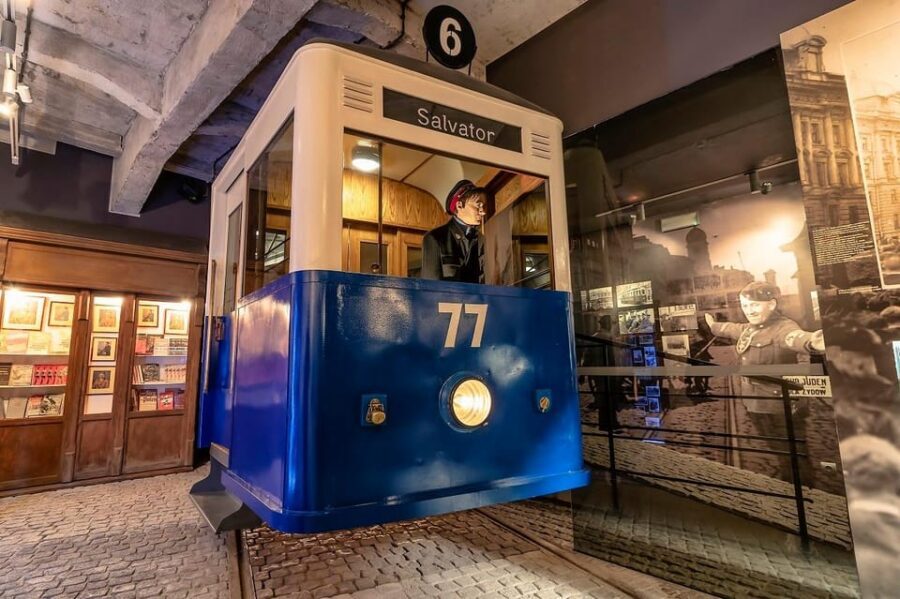
The meeting point is right at the front of the Schindler’s Factory Museum, in front of the main entrance, with the excursions.city sign. From there, the tour quickly moves from museum facts to the streets around Podgórze—Krakow’s district where you’ll see the landscape shaped by 20th-century trauma.
What I like about this format is that it helps your brain stop treating the Holocaust like a distant lesson. You start indoors with the exhibition and then step outside into the neighborhood that still reflects the wartime geography. That shift matters. When you later stand near a preserved wall segment or a memorial, you’re not guessing what you’re looking at.
The route also keeps you moving with a purpose. You’re not wandering randomly. You’re going stop-to-stop—each one selected to build meaning, not just tick boxes.
You can also read our reviews of more guided tours in Krakow


Schindler’s Factory Museum: getting the big picture without losing the human scale
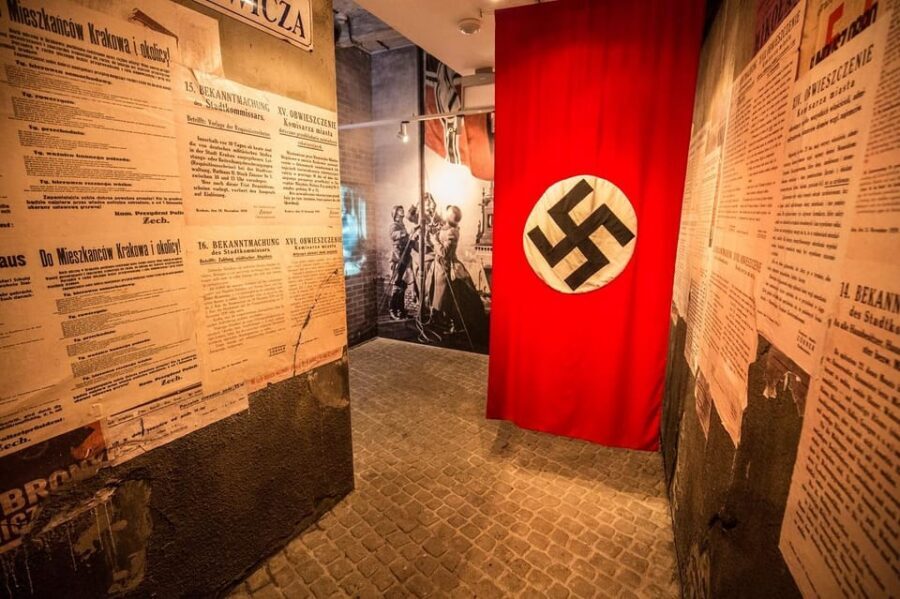
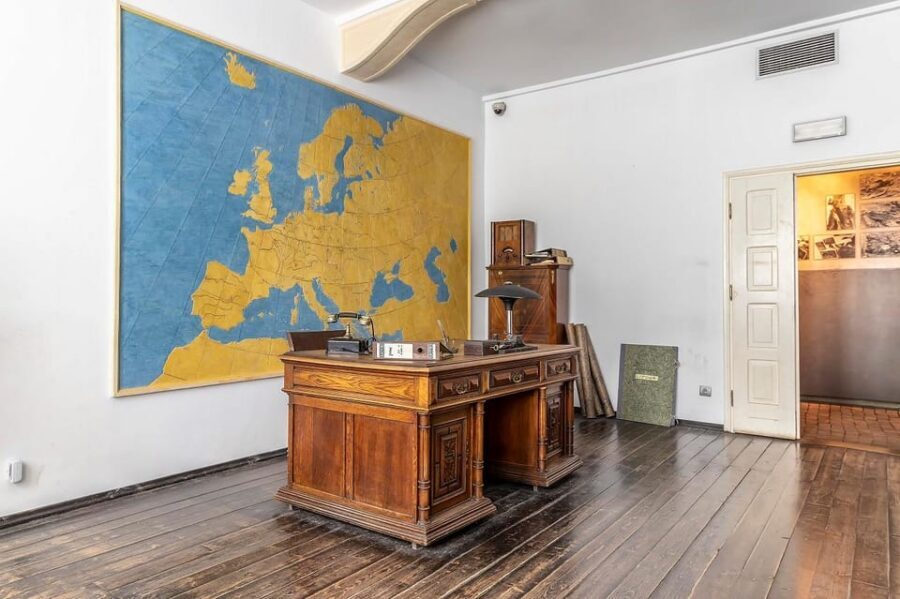
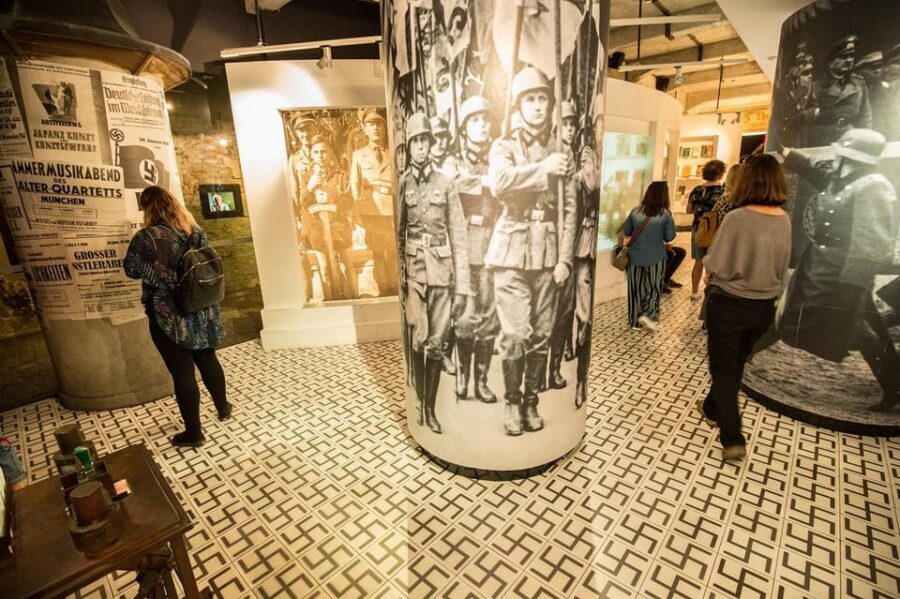
Schindler’s Factory Museum is the centerpiece, and your guide runs the show here. You’ll look at the exhibition centered on Krakow Under Nazi Occupation, with specific attention on day-to-day life under Nazi control. This isn’t just a biography; it’s about what life looked like when freedom disappeared.
The strongest value of a guided visit is interpretation. You’ll get help connecting what you see to how people lived—how policies affected work, movement, and survival. A self-guided museum visit can be good, but it can also leave you with “I understood the facts” and not much more. Here, the guide helps you make the connections that make the exhibition stick.
You’ll also come away with a clearer understanding of Oskar Schindler’s courageous role—described in the tour as a German entrepreneur who aided numerous Jews during the war. That framing matters because it keeps the story anchored to specific actions and decisions, not only to suffering. You’ll still face the harsh reality, but the tour makes room for why certain people chose to act.
Practical note: since museum scheduling can affect timing (especially with personalized ticket entry), you should treat the start time as approximate. The idea is that you show up ready to enter, not to argue with the clock.
Walking the ghetto wall and residences: what you should notice on your feet
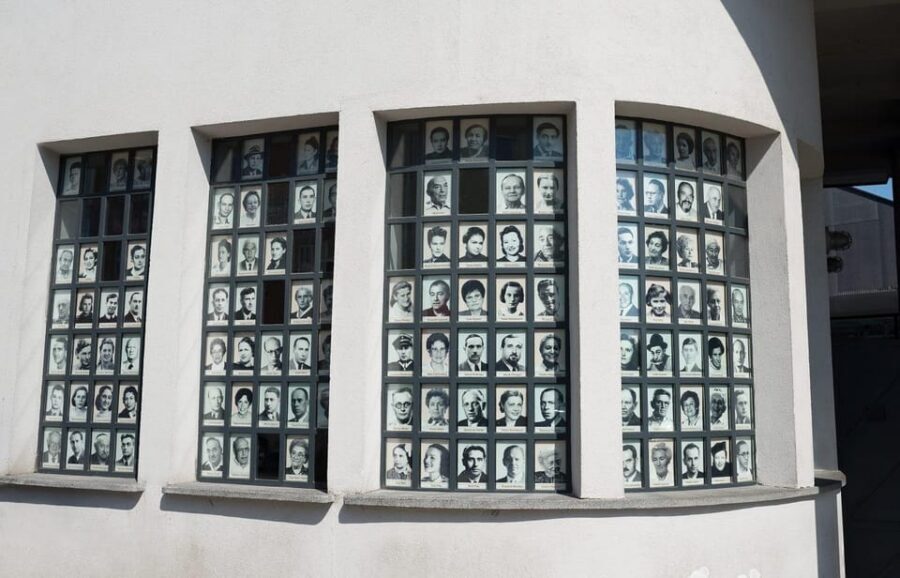
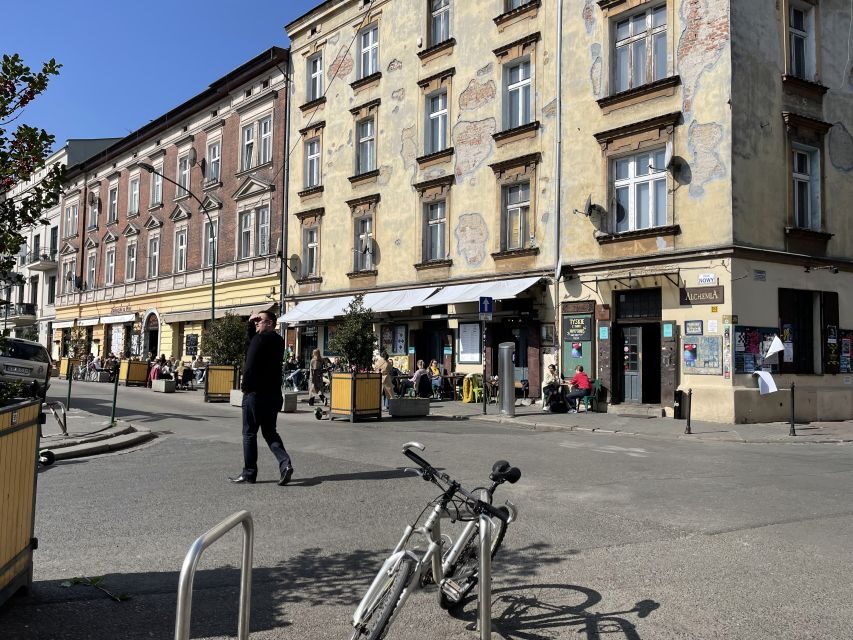
After the museum, the tour shifts outdoors into Podgórze and into the preserved traces of the Jewish Ghetto. You’ll walk through streets where the wartime reality left marks—some structural, some memorial, and some both.
A key stop is a segment of the ghetto wall. Seeing a remnant like that is one of those rare travel moments where your senses do some of the work. It’s harder to intellectualize the story when you’re looking at something that didn’t vanish. The guide’s job here is to connect the physical wall to what it represented: separation, control, and the narrowing of daily life.
You’ll also pass locations tied to residences where thousands of displaced Jews once lived. That’s where the guided element really pays off. Without explanation, it’s easy to see buildings and move on. With a guide, you learn how to read the space—how people were squeezed into certain areas, and how the neighborhood’s wartime function differs from how it feels today.
One consideration: because the content is heavy, the walk can feel emotionally intense even though it’s only a few hours. If you know you need time to process, plan a slow moment afterward somewhere nearby—coffee, a bench, just quiet.
Pod Orłem pharmacy in Podgórze: a landmark you can actually picture
One of the most memorable stops is the Under the Eagle pharmacy, known as Pod Orłem. This is a famous Krakow landmark, and the tour uses it as more than a photo stop.
Why it works: a place like this gives your brain a stable reference point. You now have a street-level image you can attach to the broader story of the ghetto area. It’s easier to remember the tour as “museum, wall, pharmacy, monument” when you have concrete stops that stand out.
The guide’s context helps you see how landmarks function in wartime memory. Even if the building itself isn’t what you imagine when you hear ghetto, the tour connects the area’s identity to what happened here. You end the walk with a clearer sense of how Krakow held onto certain parts of everyday life while the rest was collapsing.
Heroes’ Square and the Empty Chair Monument: what the 68 chairs mean in practice
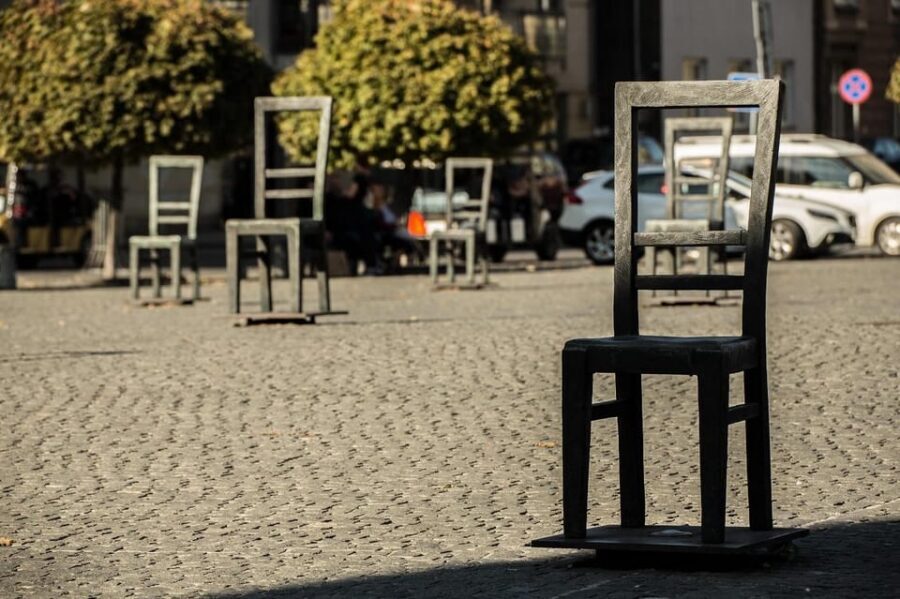
The tour finishes with a poignant stop at Heroes’ Square. Here you’ll see the Empty Chair Monument, described as being adorned with symbolic 68 chairs.
This is where memorial design does its job. The idea isn’t abstract. The chairs provide a physical, countable element that makes the monument’s message easier to grasp from a distance. You’re not just reading a sign; you’re looking at a visual structure that demands attention.
A guided visit helps here too, because monuments like this can feel “staring at art” if you don’t know what to look for. With a guide, you learn how the symbol works and why that number matters in the larger story of loss and remembrance.
And because this stop is in Heroes’ Square—an easier, open setting—it gives you a different emotional texture than the museum. It’s quieter in a different way, less about objects and more about collective memory.


Tour pace and timing: why 3 hours can feel like 3.5
The official duration is about 3 hours, and the tour includes tickets, a professional guide, and the walking route between stops. You also get skip-the-ticket-line entry, which is a real time-saver for a museum visit.
Still, here’s the practical reality: museum-based tours can run a bit long when discussion takes time. The tour involves both Schindler’s Factory and multiple neighborhood stops, so pacing is critical. If you’re catching another appointment right after, I’d leave some buffer.
From January 1, 2026, the timing you pick is approximate, and exact starting times aren’t guaranteed due to Schindler’s Factory Museum scheduling. That doesn’t mean chaos—it means you should be flexible. Arrive with your documents ready and your schedule open.
Price and value: what $58 buys you in this exact format
At $58 per person, this tour isn’t cheap in the way a basic city walk is. But you’re paying for a tight package that includes:
- Schindler’s Factory Museum tickets
- A professional live guide
- A guided walking tour through multiple linked sites
- Skip-the-line access
For me, value here comes from the guide plus the museum entry. If you did only the museum yourself, you’d still be paying for admission. If you added your own walking tour, you’d likely lose the benefit of someone explaining how everything connects—especially around Nazi-occupied daily life and the specific locations tied to remembrance.
In other words: you’re not just buying transportation and a route. You’re buying interpretation. For a topic this serious, that matters. Paying a bit more for clarity often costs less than paying with confusion later.
Language options: choose what helps you follow the details
The tour runs with live guides in Italian, French, English, Spanish, and German. That’s a wide range, and it matters because historical content works best when you can catch the nuance.
If you’re traveling with someone who understands multiple languages, pick the one you’ll be most comfortable processing emotionally. Hearing the guide’s explanation clearly can be the difference between “I got through it” and “I understood what I saw.”
Who this tour suits best (and who may want a different plan)
This is ideal if you want:
- A guided museum visit instead of a solo walk-through
- A structured route in Podgórze, including wall remnants and memorials
- A short, focused format that still covers major landmarks like Pod Orłem pharmacy and the Empty Chair Monument
It may be less ideal if you:
- Need long, quiet breaks and are sensitive to emotionally heavy themes
- Have a very tight schedule with no buffer after the tour end
- Prefer fully self-paced history, where you control reading speed at every object
If you’re the type who likes to understand context as you go, this fits your style.
Should you book this Schindler’s Factory & Jewish Ghetto tour?
Yes, if you’re looking for a well-structured, guided experience that connects the museum to the neighborhood—Podgórze—and brings you to specific, memorable sites like Pod Orłem pharmacy and the Empty Chair Monument with its symbolic 68 chairs.
Book it with extra care if you’re traveling around the January 1, 2026 scheduling window: times are approximate and museum entry requires full participant names and an ID/passport. If you can handle that, you’ll get a powerful mix of explanation and place-based history in about 3 hours.
If you want a more casual “only photos” plan, this may feel too serious and too guided for you. But if you want your Krakow visit to make sense—and to stick—you’ll probably be glad you chose this one.
FAQ
How long is the tour?
It lasts about 3 hours.
Where does the tour meet?
The guide meets you in front of the main entrance to Schindler’s Factory Museum, with the excursions.city sign.
How much does the tour cost?
The price is $58 per person.
What’s included in the ticket?
You get tickets to Schindler’s Factory Museum, a professional tour guide, and a walking tour.
What isn’t included?
Food and drinks are not included, and there’s no hotel pickup or drop-off.
Do I need a passport or ID for entry?
Yes. You must provide a passport or ID for entry to Schindler’s Factory Museum, and you’ll need to use full names of all participants when reserving.
Is there a skip-the-line benefit?
Yes. The tour includes skip the ticket line.
What languages are available for the live guide?
The live guide is available in Italian, French, English, Spanish, and German.
Can I choose a time, and is it exact?
You can choose a preferred time, but the exact time is not guaranteed because museum scheduling can affect it.
Is free cancellation available?
Yes. You can cancel up to 24 hours in advance for a full refund.