REVIEW · KRAKOW
Cracow – Guided Tour of the Jewish Ghetto
Book on GetYourGuide →Operated by MyRide · Bookable on GetYourGuide
Some streets carry weight you can feel. This guided walk in Krakow’s Podgórze shows where the ghetto life happened, and it stops for key memorial points. I especially like the ghetto wall fragment and how the tour leads you to the story behind the buildings, not just the landmarks.
There’s also a strong, human ending at the famous Under the Eagle pharmacy. The possible downside is simple: 1 hour moves fast, so if you want a deep, slow account of every site, you may feel you’ve only scratched the surface.
In This Review
- Key things to know before you go
- Podgórze streets: walking where the ghetto lived
- Plac Bohaterów Getta and the meaning of identification
- The ghetto wall fragment: what’s left of the boundary
- Reading the buildings: cramped life, not just ruins
- Under the Eagle pharmacy: why the ending lands
- Price and value for a 1-hour guided walk
- Meeting point and what to look for (quick and practical)
- Who this tour fits best
- Should you book this Krakow Jewish Ghetto tour?
- FAQ
- FAQ
- How long is the tour?
- How much does it cost?
- Where do we meet for the tour?
- Is a guide included?
- What languages are available?
- What are the main stops on the tour?
- Is food or drink included?
Key things to know before you go
- Podgórze first, then the memorial squares: you start in the district where the ghetto was concentrated
- Plac Bohaterów Getta: a focused stop tied to identification and deportations
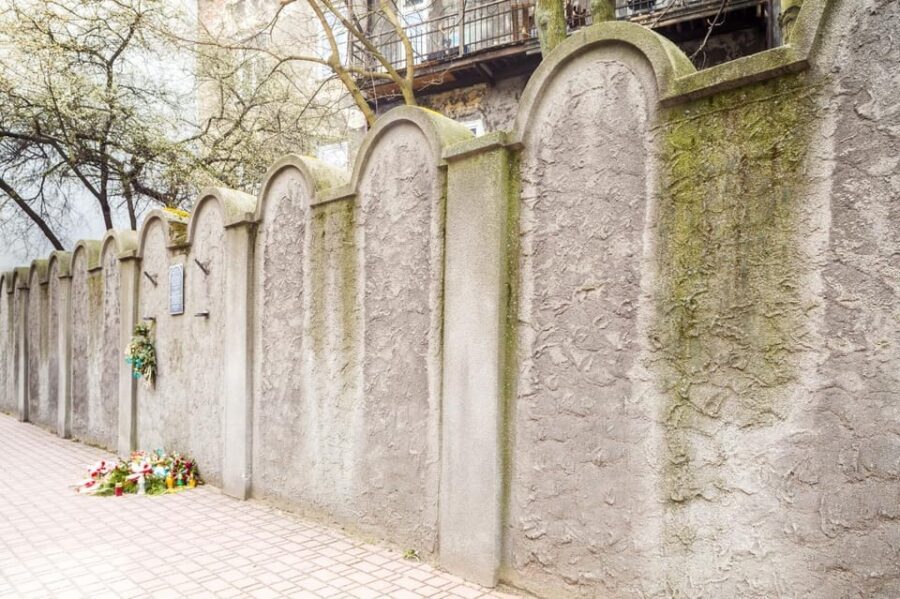
- A surviving piece of the wall: you see what remains of the boundary that confined people
- Former residential buildings: the tour makes you read the spaces where families lived in cramped conditions
- Under the Eagle pharmacy: a meaningful finish that connects suffering to survival
- Guide quality varies by language and group: the format is sensitive to how much your guide chooses to explain
Podgórze streets: walking where the ghetto lived
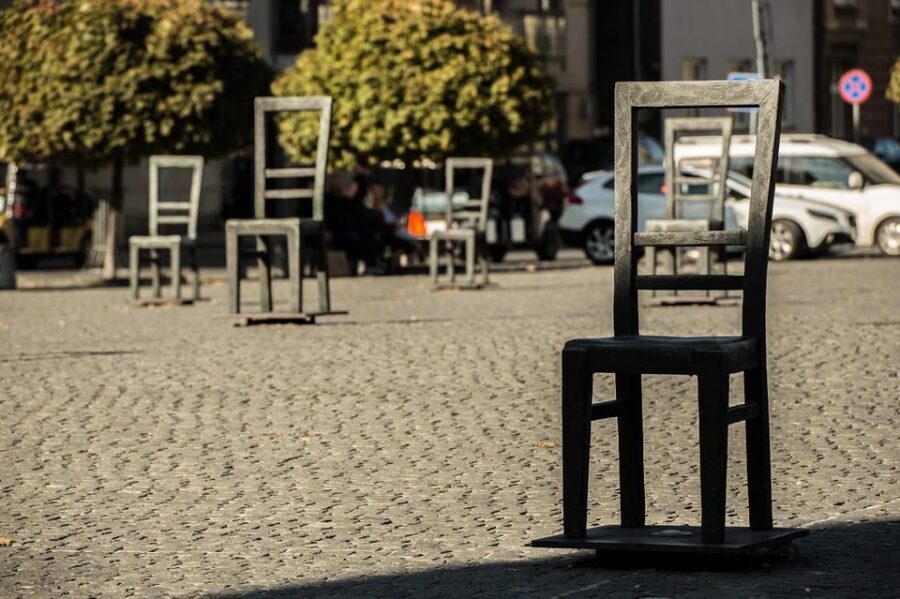
Krakow’s Jewish Ghetto is tied to the Podgórze district, and the tour uses that geography in the best way. You’ll walk past buildings where thousands of displaced Jews once lived, and you’ll start seeing how the neighborhood layout helped shape confinement. It’s not an abstract lecture. It’s the street view version of history.
What I like is that the tour doesn’t treat the area like just another “old town” scene. Instead, your guide frames what you’re seeing in terms of lives disrupted and forced movement. That matters, because it keeps your brain from trying to turn tragic places into casual sightseeing.
Also, the pace is guided but not rushed by chaos. You get enough time to notice the physical clues around you—building facades, street turns, and the feel of the area—before the tour shifts to the memorial sites.
You can also read our reviews of more guided tours in Krakow
Plac Bohaterów Getta and the meaning of identification
One of the tour’s core stops is Plac Bohaterów Getta (Ghetto Heroes’ Square). This is where your guide connects the square to the process of identifying Jewish residents before deportations to concentration camps. Even if you already know the broad story, the square gives you a concrete place to anchor it.
I like this stop because it’s specific. Instead of pointing out “a tragic event happened here,” you’re given a clearer chain of what happened and why the square was significant. That makes the history feel less like a list and more like a sequence.
You should also be ready for a solemn mood. This isn’t the kind of place where you want to keep things light or photo-happy. If you prefer more reflective travel, this tour fits that style.
The ghetto wall fragment: what’s left of the boundary
The tour includes a fragment of the original ghetto wall—the kind of thing that can look like just another bit of stone until the guide puts it in context. Seeing the remaining wall pieces helps you understand how the ghetto wasn’t only social or administrative. It was physical.
That’s a big reason this stop works. A wall fragment is small, but it’s a direct reminder of restriction—of a boundary designed to control where people could go and how the world outside could be kept away. When your guide points out what the wall represented, the stone stops being “just historic debris” and becomes evidence.
If you’re the type who likes to connect history to material traces, you’ll appreciate this. And if you tend to skim memorials quickly, slow down here. This is one of the most visual parts of the experience.
Reading the buildings: cramped life, not just ruins
Part of the emotional force of this tour comes from walking through the preserved layout of the district. You’ll pass buildings tied to how people lived there—thousands displaced, living in cramped conditions. Your guide’s job is to make that lived reality visible, not just talk around it.
This is where guide quality really matters. A strong guide helps you picture how ordinary daily tasks—sleeping, eating, moving through narrow spaces—would have been affected by overcrowding. A weaker explanation can leave the buildings feeling like background scenery instead of evidence of survival and suffering.
So here’s the practical way to handle it: when you’re standing in front of the buildings, let your questions guide you. Ask yourself what size these streets and entrances would have allowed, and how that would feel for families. Then listen closely to what the guide says, because they’re the translator between architecture and human experience.
Under the Eagle pharmacy: why the ending lands
The tour concludes at Under the Eagle, a famous pharmacy tied to resilience and survival during the turmoil of war. Ending here is effective because it shifts you from pure memorial geography into a story of continued existence—of staying power, not only loss.
I like the placement. You’ve spent time seeing confinement and deportation-linked sites. Then you finish with a place that represents endurance. It makes the tour feel like a complete arc: restriction, catastrophe, and the human refusal to disappear.
Also, this gives you a natural “last stop” that’s easy to remember later. If you’re short on time in Krakow, you still walk away with one iconic, specific finish point, not just a vague sense of “we visited some memorials.”


Price and value for a 1-hour guided walk
At $15 per person for about 1 hour, this is priced for an overview. You’re paying for a professional guide and for an organized route that hits major points: Podgórze locations, Plac Bohaterów Getta, a ghetto wall fragment, and Under the Eagle.
Is it enough for everyone? If you want a full, slow, museum-level education, you’ll likely want more than one hour. But for many people, an hour is the right tool: it gets you oriented fast, and it prevents the common mistake of walking past meaningful sites without understanding them.
Where the value shines is the structure. You’re not piecing things together yourself. You’re following a guided sequence that ties buildings to events, and events to place.
Meeting point and what to look for (quick and practical)
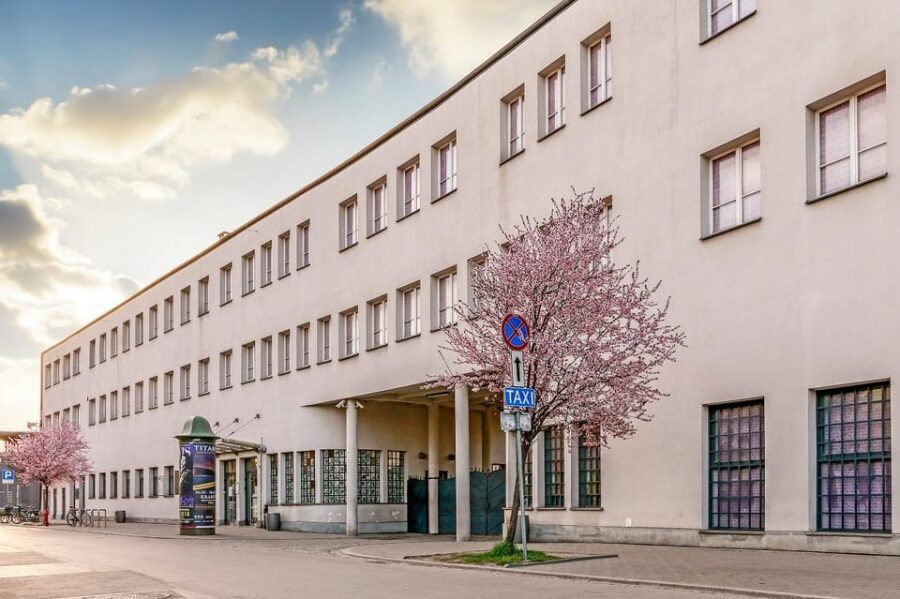
Meet at the entrance to the Schindler Factory Museum and look for a guide with an excursions.city sign. Plan to arrive a few minutes early so you can check you’re with the correct group and language.
The tour is offered with live guides in English, German, French, Spanish, and Italian, so choose the language that lets you follow details without straining. A sensitive topic deserves clarity.
Who this tour fits best
This guided Jewish Ghetto walk is ideal if you:
- want a time-efficient introduction to Krakow’s wartime ghetto sites
- like walking routes where you can see places, not just read about them
- appreciate a guide who explains context at memorial locations
- prefer a structured stop list with a meaningful ending at Under the Eagle
It may not be the best match if you:
- need very long storytelling time at each stop
- get frustrated when a 1-hour format doesn’t allow extra questions and side detours
- are hoping for a deep, site-by-site analysis at the level of a full-day program
Should you book this Krakow Jewish Ghetto tour?
Yes—if you’re going for orientation and a respectful, guided route within a short window. For $15 and one hour, you get a coherent path through Podgórze, the key memorial square, a surviving wall fragment, and a memorable finish at Under the Eagle pharmacy.
Before you book, calibrate expectations: this is a starter tour, not a full encyclopedia. If you’re the type who learns best at a slow pace, consider pairing it with additional self-guided time afterward so your brain can process what the guide started.
FAQ
FAQ
How long is the tour?
The tour lasts 1 hour.
How much does it cost?
The price is $15 per person.
Where do we meet for the tour?
Meet at the entrance to the Schindler Factory Museum, and look for a guide holding an excursions.city sign.
Is a guide included?
Yes. The tour includes a professional guide.
What languages are available?
The live tour guide is available in English, German, French, Spanish, and Italian.
What are the main stops on the tour?
You’ll walk in Podgórze, visit Plac Bohaterów Getta, see a fragment of the ghetto wall, and end at Under the Eagle pharmacy.
Is food or drink included?
No. Food and drink are not included.