REVIEW · WARSAW
Best of Warsaw – private tour by retro minibus with hotel pickup
Book on Viator →Operated by Warsaw Behind the Scenes · Bookable on Viator
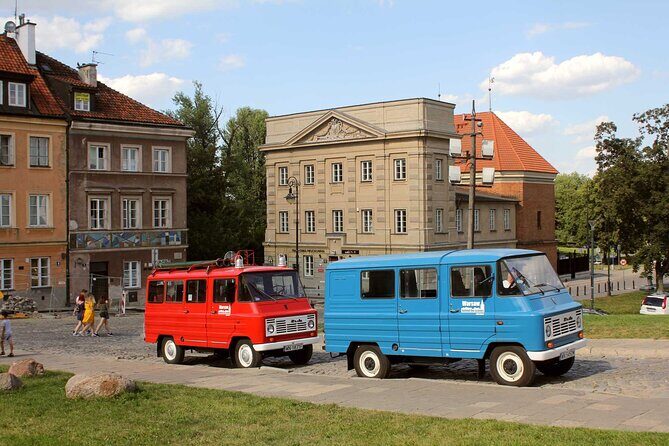
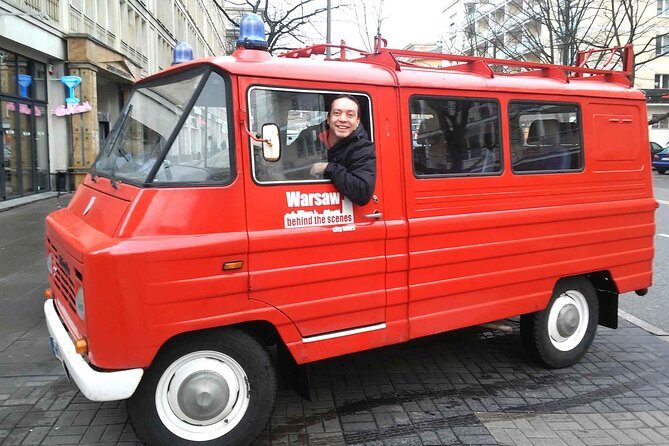
Retro minibus, real Warsaw stories. This private 3-hour highlights tour uses a communist-era retro minibus and a friendly guide to help you get your bearings fast across the key neighborhoods, with customizable stops based on what you want to focus on. I like that pickup works from central hotels, so you spend less time figuring out transit and more time looking at the places you came for.
Just plan around one drawback: many vintage vehicles have no air-conditioning, so dress for the season. Also, it is a highlights loop, not a slow, all-day museum program, so the stops are short and you’ll be doing some walking.
In This Review
- Key takeaways before you go
- Why the retro minibus is more than a gimmick
- Price and value: $135.45 for a private, focused loop
- Pickup in Warsaw center: how to keep the 3 hours for sightseeing
- Old Town walk: 700+ years of Warsaw in one guided hour
- Castle Square and St. John’s: symbols you can actually interpret
- Market Square and the Mermaid legend: the fun part of Old Town
- Royal Castle context: a quick museum moment with major meaning
- Barbican and the medieval walls: what survived, what was rebuilt
- Praga Polnoc: a calmer side of Warsaw across the Vistula
- The Warsaw Palm Tree story and a chuckle break
- Śródmieście and Soviet-era architecture: seeing politics in buildings
- Palace of Culture and Science: the Soviet gift you can’t miss
- What the guides do well (and what to ask for on day-of)
- Who this tour fits best
- Should you book this retro Warsaw highlights tour?
- FAQ
- How long is the tour?
- Is this a private tour?
- What’s included in the price?
- Are there admission tickets to pay for the stops?
- Where does hotel pickup happen?
- Can children join the tour?
- Do the minibuses have air-conditioning or seat belts?
- Can I cancel and get a full refund?
Key takeaways before you go
- A private tour for your group only, with a max of 8 passengers per minibus, so your guide can adjust the pace.
- Hotel pickup within about 3 km of the city center, but transfer time counts in the 3-hour window.
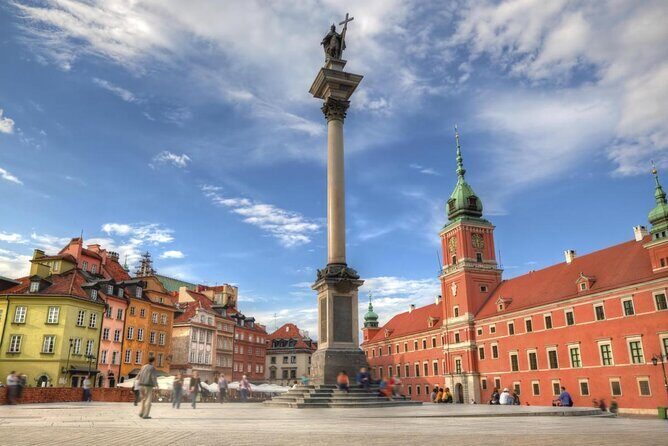
- Old Town in the first hour, with Castle Square, St. John’s Archcathedral, and Market Square all handled efficiently.
- Praga Polnoc across the Vistula, a district that largely survived World War II and still feels more local than the main sights.
- Communist-era Warsaw lesson, including stops near the former Communist Party headquarters and the Palace of Culture and Science from the 1950s.
- Photo-friendly add-ons, including the fun Warsaw Palm Tree story for a quick laugh and a memorable snapshot.
Why the retro minibus is more than a gimmick
Warsaw can feel huge when you first arrive. The streets are wide, the neighborhoods shift fast, and the city’s history shows up everywhere you look. This tour helps you stitch it together in a few hours, and the retro minibus plays a real role: it slows you down just enough to notice details, while still getting you from place to place without hassle.
I like that the vehicle is part of the experience rather than a random photo stop. When you’re riding through the city, you’re learning the timeline too: how the Old Town grew, why the Royal Castle became a symbol of survival, and how postwar rebuilding shaped what you see in places like Śródmieście. It’s also naturally entertaining. The minibus feels like a rolling conversation starter, and that fits the guides’ style—people have been especially happy with guides such as Martin, Michál, Lucas, and Arturo for being personable and bringing their own way of explaining Warsaw.
One practical note: classic vintage minibuses are not built like modern tour buses. They may not have air-conditioning, and some vehicles do not have seat belts (which is permitted for historic vehicles). The good part is that heating is available for winter.
You can also read our reviews of more private tours in Warsaw
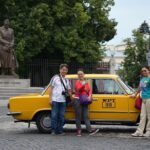

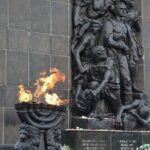
Price and value: $135.45 for a private, focused loop
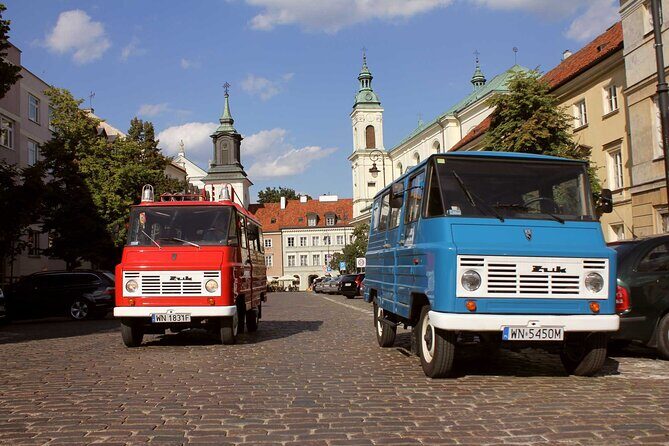
At about $135.45 per person for roughly 3 hours, this isn’t the cheapest way to see Warsaw—but it can be good value if you care about time and convenience.
Here’s what you’re really paying for:
- Private guide + private vehicle service for your group
- Hotel pickup and drop-off (within the city-center radius)
- A tight route that covers both the Old Town and the postwar/communist layers
- No paid admissions required at the listed stops (each stop notes free admission)
Value is especially strong when you’re traveling as a small group. Because each minibus fits up to 8 passengers and the tour is private, the per-person cost effectively drops as your group fills the vehicle. The operator also offers group discounts, which can help if you’re traveling with friends or family.
Where it might not be worth it: if you want long museum time, quiet wandering, or a slower pace with lots of inside viewing. This tour is set up for orientation and smart highlights.
Pickup in Warsaw center: how to keep the 3 hours for sightseeing
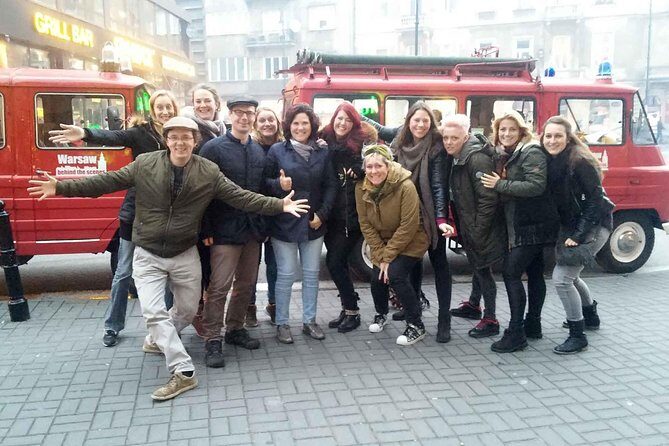
The biggest logistics detail is the pickup radius: hotel/apartment pickup and drop-off are offered within a 3 km radius of the city center. If your hotel is farther out—or you’re staying somewhere awkward to reach—the tour suggests meeting in the city center instead, because transfer from and back to your hotel counts toward the tour’s total time.
Also, it helps to think about timing like a local. You’ll have walking segments at each stop, but the vehicle transfers are how the tour stays efficient. If you’re running late or want extra detours, it can squeeze the schedule. The route is designed to move.
If you like structure, you’ll probably enjoy this. If you like full flexibility, you still get it—your route is customizable, and some guides will ask what you want to prioritize and adjust the walking amount accordingly.
Old Town walk: 700+ years of Warsaw in one guided hour
Your tour typically begins in the Old Town, with about an hour of guided walking. This first part matters because it gives you the city’s main frame.
At Castle Square and along the Old Town core, the guide explains how Warsaw formed over more than 700 years—royal ambition, medieval trade routes, and shifting European influences all left marks. This is the kind of context that turns pretty streets into a place with meaning.
You’re also being trained to “read” what you see:
- Where historic landmarks sit relative to each other
- Why the Royal Route is such a big deal
- How the Old Town’s look ties back to decisions made long after wars and destruction
This is also where you’ll likely start noticing why guides in past rides were praised for being chatty and for adding personal touches. When the tour feels alive, it usually comes from a guide who can explain the why behind the stone and wood.
Castle Square and St. John’s: symbols you can actually interpret
After that opening walk, you’ll spend time at Castle Square (Plac Zamkowy). This is one of the most important landmarks in Warsaw’s historic center, dominated by Sigismund’s Column and positioned directly in front of the Royal Castle. The guide also connects it to the Royal Route, which is useful even if you aren’t planning to walk that entire route later.
Then comes St. John’s Archcathedral (next to the Jesuit Church). The key point here is what the site represents. St. John’s is described as one of Poland’s national pantheons, and the surrounding historic center is part of UNESCO-listed Warsaw. If you’ve seen cathedrals elsewhere, you’ll recognize the role—this is a place that ties national identity to architecture and ceremony.
The practical side: the stop is long enough to look, but not so long that you’ll feel stuck. This fits a 3-hour highlights format. If you want to linger, you can ask the guide to add a few minutes, but the tour is designed to keep momentum.



Market Square and the Mermaid legend: the fun part of Old Town
You’ll reach Rynek Starego Miasta (Old Town Market Square), and this is where the Old Town shifts from “big picture” into “small details.”
The setting is packed with cafés and colorful façades, and the guide points you toward what to notice in the square’s atmosphere. You’ll also hear the legend of the Warsaw Mermaid, which is one of those local stories that makes the place feel personal rather than just photogenic. If you’re lucky, you might catch the sounds of a traditional barrel organ, which adds that street-music layer that you can’t recreate later from a travel photo.
One small consideration: Old Town areas can be busy in peak times. This tour doesn’t try to avoid crowds completely, but because you’re moving with a guide and hitting the stops in a tight sequence, you typically keep the experience from feeling like aimless queueing.
Royal Castle context: a quick museum moment with major meaning
The tour also includes a short stop at the Royal Castle in Warsaw – Museum area. The time is brief—about 5 minutes—but the story is heavy.
You learn that the Royal Castle was once the official residence of Polish monarchs, then it was burned and looted during the Nazi invasion in 1939. It was almost completely destroyed after the Warsaw Uprising in 1944. The reconstruction after the war matters because it’s framed as a deliberate symbol of national resilience.
Even in just a few minutes, this changes how you see the Castle Square setting. Instead of treating the castle as a pretty backdrop, you start understanding it as a statement. If you want the full museum experience, you’ll need extra time later. But as a first orientation stop, it does its job.
Barbican and the medieval walls: what survived, what was rebuilt
Next up is the Warsaw Barbican (Barbakan Warszawski). The Barbican area offers preserved fragments of Warsaw’s medieval city walls. That matters because the Old Town you see today is not simply a time capsule. It’s the result of careful rebuilding after World War II.
This stop also helps you understand the contrast between:
- what Warsaw lost
- what survived in fragments
- what was reconstructed to bring back the historic city feel
The Barbican stop is short, but it’s a good “proof” stop. It gives you something tangible that connects the broader history you heard at the beginning with a specific structure you can point to and recognize.
Praga Polnoc: a calmer side of Warsaw across the Vistula
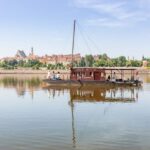
Then you cross the Vistula River to Praga Polnoc, the one district that survived World War II largely intact. That fact alone changes the tone of what you’ll notice as you walk.
In Praga Polnoc, you’ll see:
- Belle Époque buildings
- lively courtyards
- an atmosphere that still feels pre-war in character
The area also functions now as a creative and cultural hub, and it’s still described as relatively free from mass tourism compared with the core Old Town sights. That balance is a big reason this stop works in a short tour. You don’t just hear history; you see how it looks when it keeps living.
The stop here is longer than most walking stops—about 25 minutes—so you get time to slow down and actually look at the streets.
The Warsaw Palm Tree story and a chuckle break
There’s also a brief stop connected with the Warsaw Palm Tree. In Warsaw, there’s a rumor that it was a gift from the city of Jerusalem for Warsaw, and that it was part of Israeli humor meant to show Poles what a real Christmas tree looks like.
The guide ties that rumor to the Polish expression hit by a palm tree, which refers to something unthinkable or silly. Even if you treat it as legend rather than fact, it adds a human layer to the day. It’s a reminder that history isn’t only tragedy and monuments. People joke, and irony shows up in public art and odd city traditions.
If you like your tours to include a moment of personality, this little detour is worth it.
Śródmieście and Soviet-era architecture: seeing politics in buildings
Back in central Warsaw, you’ll reach Śródmieście, with a stop near the former Communist Party headquarters. This is where the tour shifts from historic restoration to ideology and rebuilding after 1945.
You’ll learn how Soviet-style ideology influenced reconstruction, and how architecture was used for both functionality and political messaging. It’s not taught like a lecture. Instead, you’re shown a way to interpret the city’s shape: what was designed to matter, and what the designers wanted you to read into it.
If you’re the kind of traveler who likes to connect details to causes, this part is satisfying. It gives you a framework for why certain areas look the way they do and why some structures feel more like statements than buildings.
Palace of Culture and Science: the Soviet gift you can’t miss
At the end, you’ll pass the Palace of Culture and Science, Warsaw’s most recognizable landmark. The tour notes it was built between 1952 and 1955 as a gift from the Soviet Union, and it remains a powerful symbol of the communist era.
This is a pass-by rather than a long stop, which makes sense in a 3-hour route. But it’s still useful. Even a quick look gives you a reference point for what you learned about Soviet-era rebuilding in Śródmieście. You come away with more than a photo—you come away with a story for the skyline.
If you want to linger there afterward, you’ll have context for your own walk around the area.
What the guides do well (and what to ask for on day-of)
The tour’s success is strongly tied to the guide experience. In past tours, names like Martin, Michál, Lucas, and Arturo were praised for being entertaining and for adding personal touches. People also liked how guides used pictures to explain history and how they listened for preferences.
When you meet your guide, I’d do two things:
- Tell them what you care about most: WWII, architecture, street life, or just getting oriented quickly.
- Ask for a pace adjustment if you don’t want heavy walking. Some guides have accommodated requests not to do too much walking.
If your group includes kids, ask the guide to share the kind of stories that hold attention—legends, symbolic buildings, and the smaller details around the square often work better than long dates.
Who this tour fits best
This is a strong fit if:
- you’re short on time and want the main Warsaw highlights in a single morning or afternoon
- you want both Old Town and the communist-era layers without coordinating multiple guide services
- you like photo moments in addition to guided interpretation
- you want a private experience where your guide can adjust to your preferences
It’s less ideal if:
- you want to spend hours inside museums
- you need an air-conditioned vehicle (many vintages won’t have it)
- you want a fully car-free walking experience (the vehicle is part of how the route works)
Should you book this retro Warsaw highlights tour?
If you want an efficient, thoughtful Warsaw orientation with a fun twist, I’d book it. The mix of Old Town landmarks, Praga Polnoc across the Vistula, and communist-era context in central Warsaw hits the city’s most important contrasts in about 3 hours.
I’d especially recommend it if you’re traveling with family, on a first visit, or you simply don’t want to spend your precious limited time organizing transport between neighborhoods. The private setup, the customizable pacing, and the free admission stops make the price easier to justify.
FAQ
How long is the tour?
The tour is about 3 hours.
Is this a private tour?
Yes. It’s private, and only your group participates.
What’s included in the price?
It includes a professional local guide, transport by retro communist minibus, and hotel/apartment pickup and drop-off within a 3 km radius of the city center.
Are there admission tickets to pay for the stops?
The tour details list admission as free for the scheduled stops.
Where does hotel pickup happen?
Pickup and drop-off are offered within a 3 km radius of the city center. Transfer time counts in the total tour time.
Can children join the tour?
Adults and children over 150 cm can book online. For a child under 150 cm, you need to contact the operator in advance to check seat booster availability.
Do the minibuses have air-conditioning or seat belts?
Classic vintage minibuses are not equipped with air-conditioning, and some do not have seat belts (this is permitted for historic vehicles). Vehicles have heating for winter.
Can I cancel and get a full refund?
Yes. You can cancel up to 24 hours in advance for a full refund.