REVIEW · KRAKOW
Wawel Castle, Cathedral, Old Town and St. Mary’s Basilica
Book on GetYourGuide →Operated by INTERCRAC Ltd. · Bookable on GetYourGuide
Wawel Hill in one smooth, guided sweep. I love Wawel Castle for its real variety of art and rooms, and I also look forward to the moment you touch the Sigismund Bell for luck and city views. One thing to watch: this is a long, popular route, so expect crowds around the big photo spots and plan for limited buffer time at each stop.
What makes this tour work is the way it stitches together three icons—royal power at Wawel, university-era Krakow in the Old Town, and the dramatic art in St. Mary’s Basilica—under one licensed local guide. In recent groups, guides like Jadwiga, Anna, and Beata have shown up, and the common thread is clear storytelling plus a pace that keeps you moving without feeling rushed for everything. You’ll still do a fair bit of walking, and it’s not set up for wheelchair users.
In This Review
- Quick hits you’ll feel immediately
- Wawel Castle and Cathedral: the royal core of Krakow
- Entering the Royal Castle State Rooms: art collections you can actually picture
- The main drawback to expect here
- Wawel Cathedral: coronations, ornate chapels, and the royal crypts
- A small timing note
- The Sigismund Bell moment and tower views over Krakow
- UNESCO Old Town walking: Main Market Square, Cloth Hall, and Copernicus
- When the Old Town portion is best
- St. Mary’s Basilica and the Veit Stoss altar: Gothic art with a storyline
- Dress code reminder (important here)
- Pacing and logistics for a 210-minute itinerary
- Meeting point you should actually find
- Price and value: is $87 per person worth it?
- Who this tour suits best (and who might want a different plan)
- Should you book this Wawel + Old Town + St. Mary’s tour?
- FAQ
- What’s the duration of this tour?
- Where do I meet the guide?
- Is it a skip-the-line experience?
- What languages are available for the guided tour?
- What dress code should I follow?
- Is the tour suitable for wheelchair users?
Quick hits you’ll feel immediately
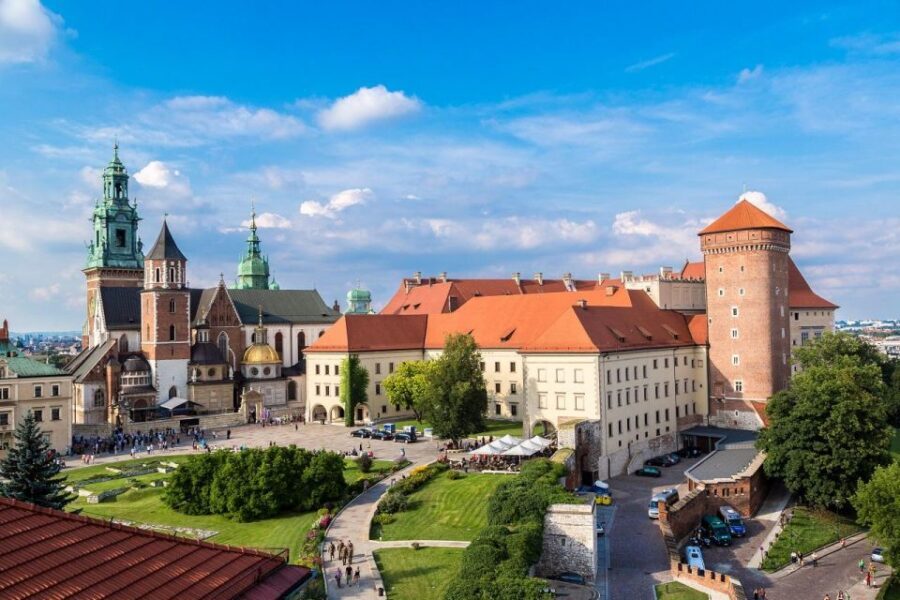
- Skip-the-line entry helps you spend more time inside Wawel and less time waiting outside.
- Royal Castle State Rooms bring Renaissance interiors, ornate display galleries, and major collections (including Italian paintings).
- Wawel Cathedral is built for monarchs: coronations, marriages, and final resting places all show up in the details.
- Sigismund Bell + tower views give you a Krakow panorama, plus the good-luck touch that everyone talks about.
- UNESCO Old Town walking hits Main Market Square, Cloth Hall, and the university story around Copernicus.
- St. Mary’s Basilica and the Veit Stoss altar turn medieval art into something you can actually read and understand.
Wawel Castle and Cathedral: the royal core of Krakow
If Krakow is a city you want to understand fast, Wawel Hill is the starting point. This area isn’t just pretty stone and impressive ceilings. It’s where Polish statehood and court culture became visible—centuries of rulers, power, faith, and art all layered in one place.
What I like about tackling Wawel with a guide is that the highlights connect. The Royal Castle makes sense as a museum of collections and royal taste, and the Cathedral explains why those same rulers cared so much about ceremony, symbolism, and burial. Together, they read like one long story.
You’ll also get a practical benefit: this tour is built around skip-the-line access and guided entry, so you don’t lose your day to ticket queues. For a place as popular as Wawel, that alone is worth something—especially if you only have a short stay.
You can also read our reviews of more tours and experiences in Krakow.


Entering the Royal Castle State Rooms: art collections you can actually picture
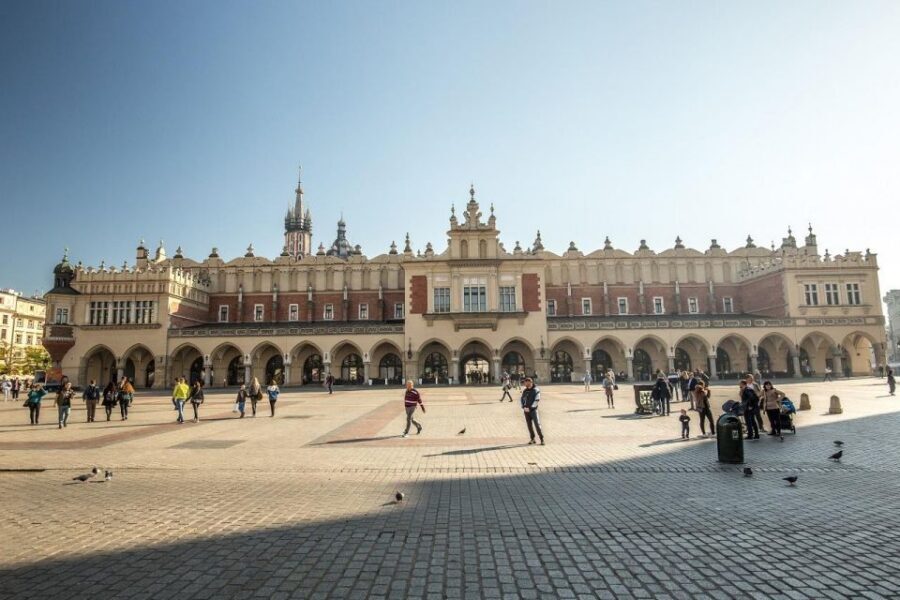
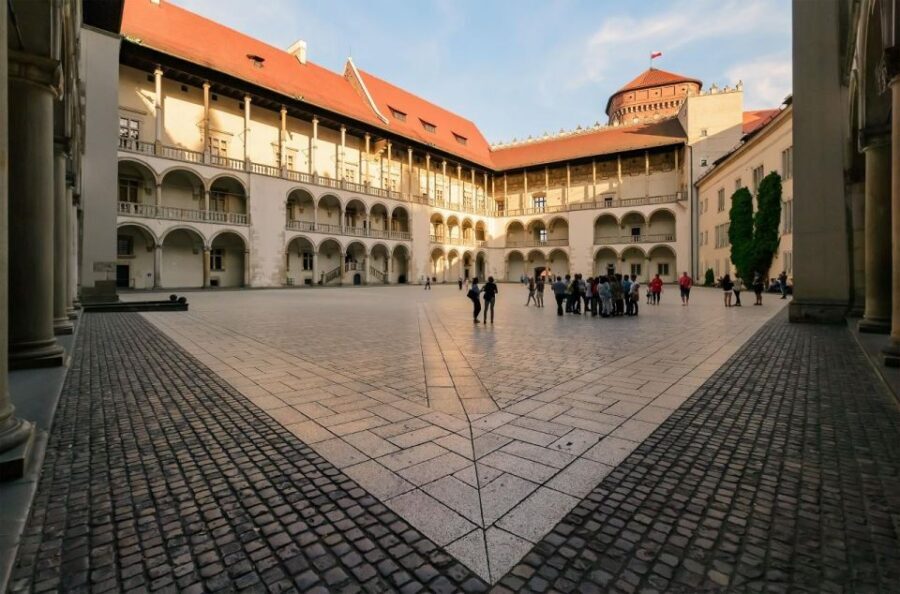
Wawel Castle isn’t one room and done. The experience is designed around walking through the museum spaces tied to the Royal Castle. Expect State Rooms and galleries where you see how the royal court presented itself—through art, objects, and carefully arranged displays.
A few specific collection themes you should keep an eye out for:
- Renaissance-era interiors and the feel of court life
- Elaborate wall hangings and decorative textiles that help you picture the castle as a lived-in seat of power
- The Lanckoroński collection of Italian paintings, which gives the castle an art-history punch
- Display galleries featuring porcelain, weaponry, and Eastern art
- A standout called out for visitors: Europe’s largest collection of Ottoman tents, which shows Krakow’s place at a crossroads of cultures
One more practical note: the tour includes fast-track access to one permanent Wawel Castle exhibition, but availability can vary. Translation for your planning brain: don’t assume every single gallery will open exactly the way you pictured it from photos. Still, the route is structured so you’ll get the big visual anchors.
The main drawback to expect here
If you’re the type who wants to linger at every display label, the schedule may feel tight. Even when the guide is great, the castle’s popularity and layout limit how long you can pause. If you’re hoping for a super slow museum day, you might want to pair this with a shorter self-guided revisit later.
Wawel Cathedral: coronations, ornate chapels, and the royal crypts
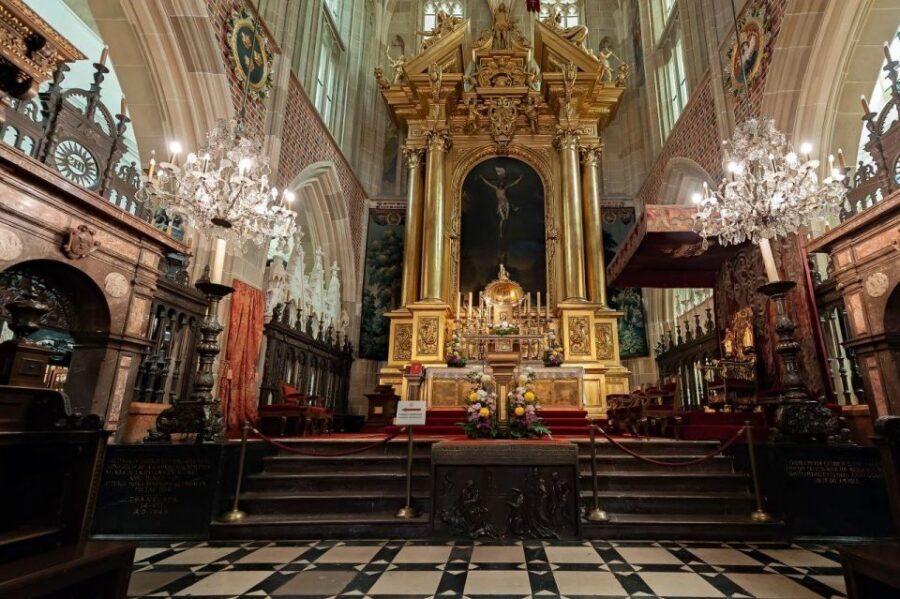
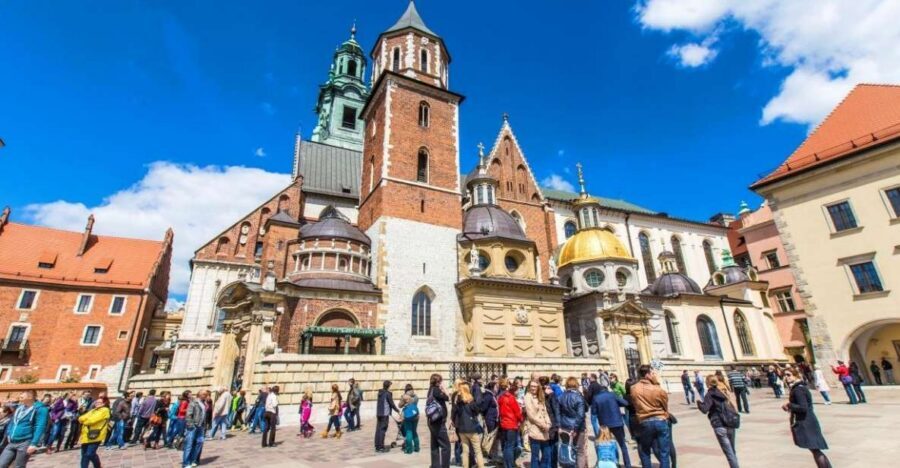
After the castle’s courtly atmosphere, Wawel Cathedral shifts gears into Gothic grandeur and sacred ceremony. This is the part that makes the whole day feel meaningful, not just impressive.
In the Cathedral, you’re in the space where monarchs were crowned and where royal life and death became part of the same architecture. Look for:
- Ornate chapels that show how prayer and politics braided together
- Exquisite detail throughout the interior
- Golden domes and the kind of decorative work that makes you slow down without being asked
Then comes one of the most powerful sections: the descent into the royal crypts. This is where you connect names and legacies to place. The crypts are described as the resting place of Poland’s greatest rulers and visionaries, and even if you don’t know every person beforehand, the guide’s framing helps you understand why it matters.
A small timing note
You’ll have time for core Cathedral highlights, but there can be limits depending on crowds. The pace is usually designed to keep the group moving and to protect the overall walking flow. That’s good for first-timers. It can be a little frustrating if you arrive wanting extra time to quietly absorb every chapel.



The Sigismund Bell moment and tower views over Krakow
This is the stop people remember later. You get the chance to climb to the tower for panoramic views, and there’s also the good-luck tradition: you can touch the Sigismund Bell.
For me, the value here is two-fold:
- The tower view gives your brain a map of Krakow—your orientation improves instantly.
- The bell touch adds a hands-on break in the formality, so the day feels less like museum time and more like a real experience.
Just be aware of one consideration: tower access and the time available can be affected by crowd levels and the day’s flow. If you’re visiting during peak seasons, you may not get a long wait-free moment at each photo spot. On some departures, the group flow can shorten time for the tower section.
Wear comfortable shoes and keep your expectations flexible. You’ll still get the view moment and the bell tradition, but don’t plan to treat it like a private rooftop session.
UNESCO Old Town walking: Main Market Square, Cloth Hall, and Copernicus
Once Wawel is out of the way, the mood changes from royal ceremony to city life. You’ll move into Kraków’s UNESCO-listed Old Town with a licensed local guide, and the goal becomes getting you oriented in the historic center.
The classic anchors are front and center:
- Main Market Square (with the kind of landmark geometry that helps you understand Krakow’s layout)
- Cloth Hall, a key symbol of the city’s merchant past
- Old streets and the links between buildings so you don’t just see facades—you understand why they’re there
A smart addition to this walk is the educational stop at Collegium Maius, described as the oldest university building in Poland. The guide ties this to Nicolaus Copernicus, so you’re not only looking at pretty stone. You’re learning how Krakow functioned as a place where ideas mattered.
When the Old Town portion is best
This part is ideal if you want a guided sense of order. If you’re the sort of traveler who likes to collect context while you walk—trade routes, guilds, royal processions—this hits the sweet spot.
If you prefer quiet time and slow wandering, you might feel that the Old Town segment moves quickly in comparison to the castle and cathedral. The schedule is compact by design.
St. Mary’s Basilica and the Veit Stoss altar: Gothic art with a storyline
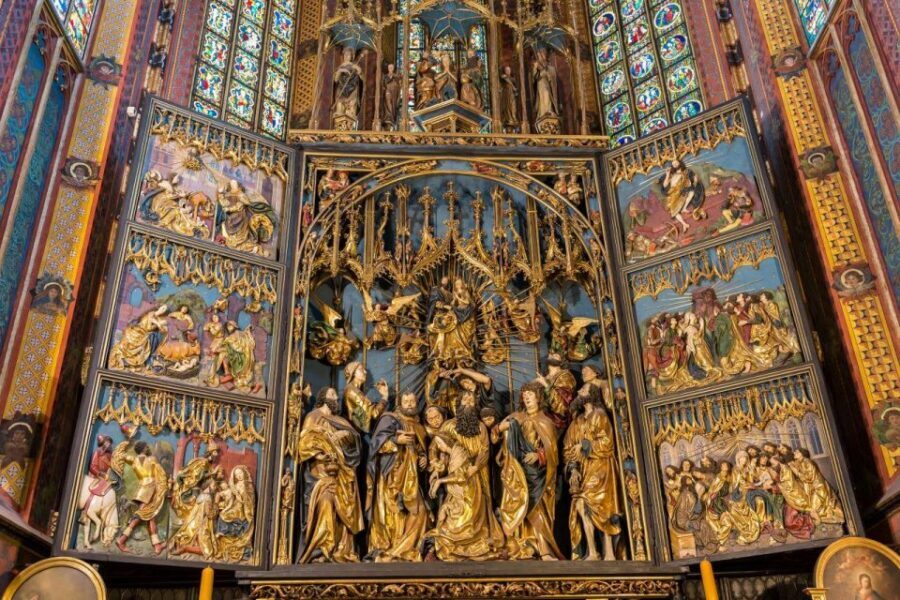
St. Mary’s Basilica is the capstone because it turns Gothic splendor into something readable. The building is described as a Gothic masterpiece, and inside is the headline: the Veit Stoss altar.
This isn’t just about staring at carvings. The guide explains details and history, which matters because the altar is packed with storytelling elements. When you understand what you’re looking at, it changes from decorations into meaning—faith, symbolism, and medieval craft all in one.
This is also one of the best places on your trip to lean into the guide. If you tried to tackle St. Mary’s alone, you’d miss a lot of the “wait, that detail matters” moments. With a guide, you’re handed the interpretation so you can enjoy the artistry on the spot.
Dress code reminder (important here)
Because you’re entering a place of worship, plan ahead: clothing must cover shoulders and knees. Shorts and sleeveless tops aren’t permitted. This matters for St. Mary’s and is enforced, so don’t gamble with your outfit.
Pacing and logistics for a 210-minute itinerary
This tour runs about 210 minutes. That’s roughly three and a half hours, which sounds manageable until you remember: two major museum/heritage sites plus Old Town streets plus a church interior all within one block.
The walking isn’t extreme, but it’s constant enough that you’ll want:
- Comfortable shoes
- A light layer if you’re visiting in cooler months
- A mindset that some stops are highlight-focused rather than deep-study
Group size is limited to a maximum of 30. That’s big enough to feel energetic, small enough to stay coordinated. You’ll also be in one language for the whole group, depending on what you booked.
And here’s the most important start-tip: meet early. You should arrive at the meeting point at least 10 minutes before the scheduled start. Once the group has entered, it won’t be possible to join late, and tickets are non-refundable.
Meeting point you should actually find
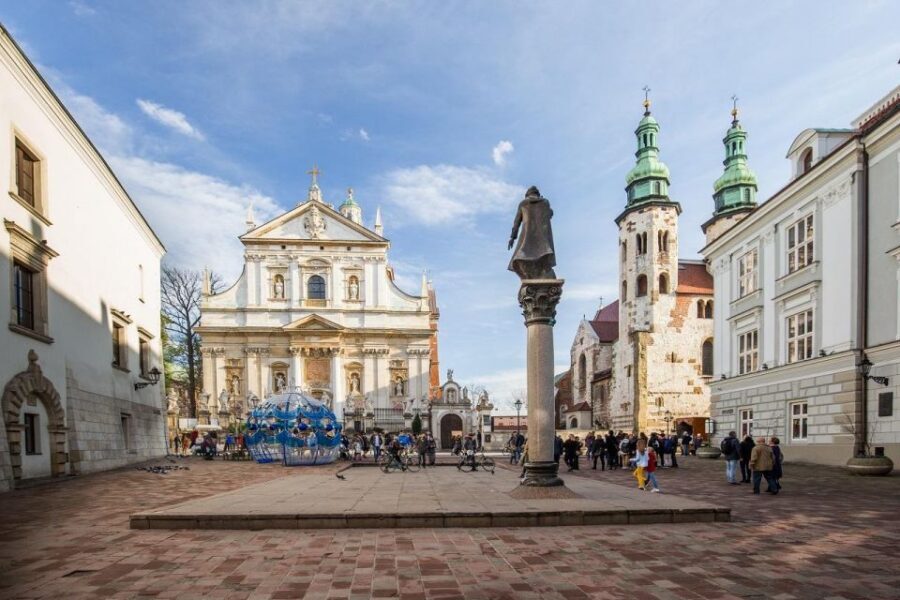
Meet your guide on St. Mary Magdalene Square, at the Piotr Skarga Monument. The guide will hold a Wawel Castle & Cathedral Guided Tour sign. The meeting point is not on Wawel Hill, so don’t walk up expecting to find the group there.
Price and value: is $87 per person worth it?
At about $87 per person, you’re paying for more than admissions. You’re paying for:
- A guided tour led by a certified local expert focused on Krakow’s royal story
- Entrance tickets to Wawel Cathedral and St. Mary’s Basilica
- Skip-the-ticket-line help for Wawel Castle (and fast-track access to one permanent exhibition, availability varying)
For a first-time visit, this is good value because you’re stacking four headline stops that many independent travelers end up doing one-by-one. One guided “thread” saves time and prevents you from wandering into the wrong order.
Lunch isn’t included, so you’ll want to plan food around the end of the tour. Think of this day block as a cultural sprint, not a meal-and-gaze picnic.
If you’re the kind of traveler who enjoys interpretation—why rooms were used, what ceremonies meant, how an altar’s scenes connect—this price feels fair. If you only want to stand and photograph with minimal explanation, you may not get the full value out of a guided format.
Who this tour suits best (and who might want a different plan)
This experience is a strong fit if:
- You’re visiting Krakow for the first time
- You want a compact path through Wawel, Old Town, and St. Mary’s
- You care about history and art, but you don’t want to build a plan from scratch
- You like local context—merchant culture, royal processions, and ideas tied to the university
It’s not the right fit if you need wheelchair access, since it’s listed as not suitable for wheelchair users.
Also, pets aren’t allowed. If you’re traveling with a companion animal, you’ll need an alternate plan.
Should you book this Wawel + Old Town + St. Mary’s tour?
Book it if you want a clear, high-impact Krakow introduction in one go. The combination of Wawel Castle State Rooms, Wawel Cathedral, the Sigismund Bell moment, a guided pass through UNESCO Old Town, and entry to St. Mary’s Basilica with the Veit Stoss altar is exactly the kind of route that saves time and helps you remember what you saw.
Skip or rethink it if you prefer slow museum wandering, or if you hate crowds and would rather spend more time picking one site deeply. This tour is designed for focus and flow, not for lingering.
One smart optional mindset: if you’re genuinely fascinated by underground and hidden layers of Wawel, you might want to add a separate visit later—this format is packed with the main highlights.
FAQ
What’s the duration of this tour?
The tour lasts about 210 minutes.
Where do I meet the guide?
Meet on St. Mary Magdalene Square, at the Piotr Skarga Monument. The guide will hold a Wawel Castle & Cathedral Guided Tour sign.
Is it a skip-the-line experience?
Yes. The tour includes skip-the-line access for the Wawel Castle and fast-track access to one permanent exhibition (availability varies).
What languages are available for the guided tour?
English, French, German, Italian, and Polish.
What dress code should I follow?
In places of worship and selected museums, shoulders and knees must be covered. Shorts and sleeveless tops are not permitted.
Is the tour suitable for wheelchair users?
No. This tour is not suitable for wheelchair users.