REVIEW · WARSAW
Warsaw Praga Guided Historical Walking Tour
Book on Viator →Operated by Warsaw UnDiscovered · Bookable on Viator
Praga is Warsaw’s favorite side street. In 2.5 hours, I like how this guided walk threads daily life with big architectural landmarks, starting at Strzelecka 46 and heading through Praga’s industrial past at the Centrum Praskie Koneser vodka factory. I also love the way guides bring the story down to street level, with pacing that works for slow walkers and honest context about dispossession and gentrification. One thing to consider: the tour is offered in English, so confirm language if you were counting on Spanish.
You get a compact route with a maximum of 10 people, plus a mobile ticket. Most stops are free to view from the outside, and the only extra paid add-on noted is the Polish Vodka Museum (70 PLN). You end in a spot with easy public transport access, so you don’t have to drag yourself back across town.
If you’re trying to understand Warsaw beyond the postcard center, this is a smart way to do it. The walk covers Praga’s most talked-about streets and a set of churches and cathedrals that help explain how the city’s history shows up in real blocks, not museum cases.
In This Review
- Key highlights you will actually feel on the walk
- Praga on foot: what this 2.5-hour route gets you
- From Strzelecka 46 to the Cathedral finish: the logistics that matter
- Stop 1: Strzelecka 46 and the Praga setup
- Stop 2: Centrum Praskie Koneser and the old vodka factory stories
- Stop 3: Ząbkowska Street, the café-and-façade stroll
- Stop 4: Praga Polnoc streets—Szwedzka, Konopacki Palace, Stalowa, and more
- Stop 5: The Russian Orthodox Cathedral of St. Mary Magdalene
- Stop 6: Cathedral of St. Michael the Archangel and St. Florian the Martyr finish
- Price and value: what $28.68 covers (and what costs extra)
- Your guide makes Praga click: Olivia and Aga’s approach
- What to know before you go: English focus, walking comfort, museum choice
- Should you book this Warsaw Praga guided historical walking tour?
- FAQ
- FAQ
- How long is the Warsaw Praga Guided Historical Walking Tour?
- Where does the tour start and where does it end?
- Is the tour offered in English?
- What is the price per person?
- Is admission included for all the stops?
- How large is the group?
Key highlights you will actually feel on the walk
- A tight 2.5-hour loop through Praga’s most meaningful corners
- Koneser vodka factory industrial architecture plus guided storytelling
- Ząbkowska Street, a practical stroll full of cafés and old façades
- Praga Polnoc streets like Stalowa (the street of films) and famous street-art walls
- Two different cathedral styles, including a Russian Orthodox site
- Small group size for questions, plus an info pack before you go
Praga on foot: what this 2.5-hour route gets you
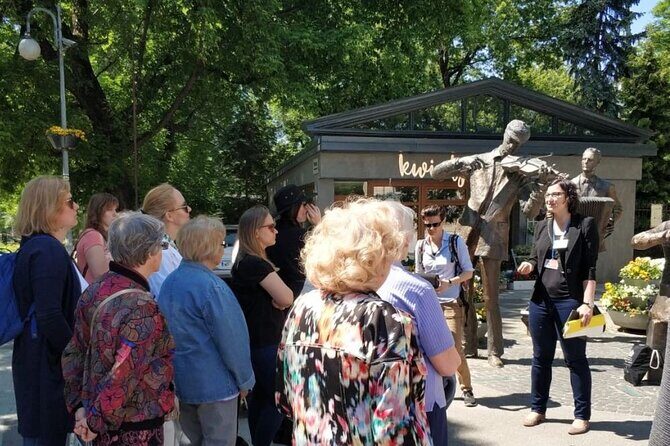
Praga is the part of Warsaw that many people only pass through on the way to somewhere else. This tour flips that idea. In about 2 hours 30 minutes, you walk the district like it matters, with a guide putting names, context, and cause-and-effect into the mix while you move.
I especially like the balance between showpieces and ordinary streets. You’re not only checking off landmarks; you’re also seeing the “in-between” where cafés, apartments, old walls, and street art sit side by side. That combination is what makes the district feel lived-in rather than staged.
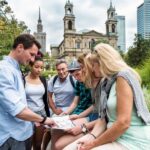
Another plus: the tour format keeps things manageable. The group stays small (up to 10), and the pacing tends to be flexible. In particular, the experience has a reputation for accommodating slower walkers, which matters on a historical walking tour where everyone else might be rushing.
The tradeoff is simple: you’re walking. Even though the route is designed to be doable for most people, you still want comfortable shoes and a willingness to move at a steady pace for a couple hours.
You can also read our reviews of more walking tours in Warsaw


From Strzelecka 46 to the Cathedral finish: the logistics that matter
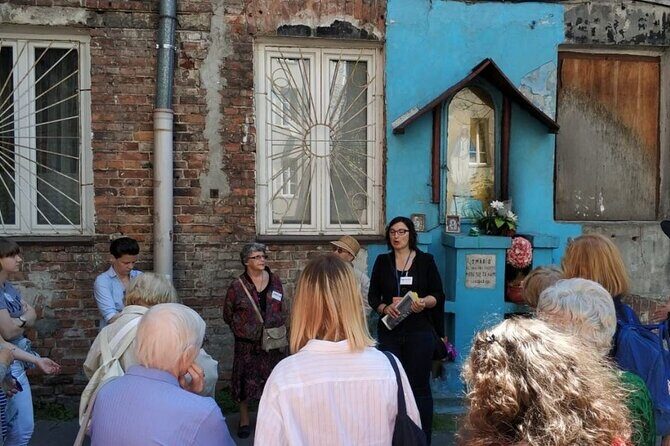
The tour starts at Strzelecka 46 and ends at Floriańska 3, in front of the Cathedral of St. Michael the Archangel and St. Florian the Martyr. That end point is helpful because you’re right where you can connect easily to buses, trams, and the metro.
This matters because the tour is long enough that your energy planning counts. Starting at a clear street address makes it easy to find your meeting point quickly. Ending at a transit-friendly cathedral area means you can keep sightseeing, eat, or head back to your hotel without doing extra walking you didn’t plan.
You’ll also get a mobile ticket, which is convenient in a city where phones are already part of how you navigate. If you prefer paper backups, I’d still keep a screenshot of your booking details, but the tour itself is set up for phone use.
Finally, check language expectations when you book. The tour is offered in English, and if another language is available it can depend on availability. If language is important to you, confirm it before you show up.
Stop 1: Strzelecka 46 and the Praga setup
You begin at Strzelecka 46, where you get a short introduction to Praga. The goal here is not a lecture. It’s the “get your bearings fast” moment so the rest of the walk makes sense.
In practical terms, that first stop helps you read what you’re about to see. Praga’s mix of industrial buildings, older residential streets, and newer changes can look random if you don’t have a thread running through it. The guide sets that thread early, so later you’ll understand why a factory building matters, why a street name repeats in stories, and why a cathedral’s presence feels political and personal at the same time.
This is also a good time to ask questions. If you’re the kind of person who likes to know what to look for—architectural details, street art themes, or how to interpret monuments—this initial chunk is when those questions get the best answers.
It’s only around 5 minutes, so arrive ready to start moving rather than settling in for a long chat.
Stop 2: Centrum Praskie Koneser and the old vodka factory stories
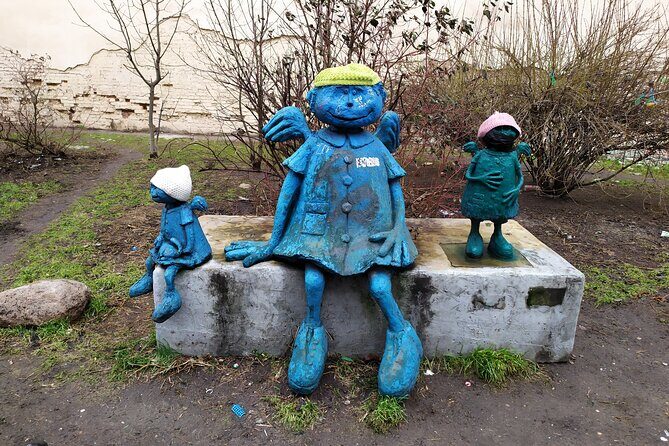
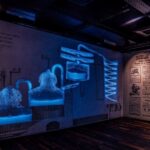
Next up is Centrum Praskie Koneser, the area tied to the old vodka factory. Expect industrial architecture you can actually study with your eyes: heavy building forms, a sense of scale, and a layout that still feels like production space even after reuse.
But the big value here is the storytelling. You’re not just looking at brick and steel. The guide connects the building to what it meant to the district, and you’ll hear stories that are described as slightly tipsy in tone—meaning they don’t treat the subject like a dead textbook.
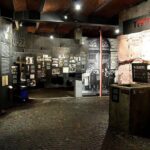
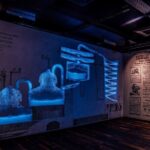
One very practical detail: the Polish Vodka Museum entrance is not included. The museum ticket is listed as 70 PLN. If you’re curious and time allows, you can treat the guided walk as the orientation phase and then decide whether to pay for the museum deeper look.
Even if you don’t enter, this stop still pays off. You’ll leave with a clearer sense of why this kind of industry shows up in Praga’s identity, and why reused industrial buildings often become the center of debates about change.
Stop 3: Ząbkowska Street, the café-and-façade stroll
Ząbkowska is often treated like the main street for Praga, and this stop leans into that. You’ll walk down a street lined with cafés and older architecture, with stories layered onto what you see.
This part of the tour is good for two different kinds of people. If you like photo stops, you’ll have plenty of material. If you prefer cultural context, you’ll still get it—because the guide’s narration helps you interpret what you’re seeing rather than just moving from one picture to the next.
The 20-minute timing is just right for this kind of street walk. It’s long enough to feel like you’re in the district, short enough that you don’t get stuck waiting for the group to catch up later.
If you want to make the most of it, slow down for the small stuff: storefront rhythm, the street’s height and width, and how buildings present to the sidewalk. That’s where a district starts telling you what life looks like at street level.
You can also read our reviews of more guided tours in Warsaw
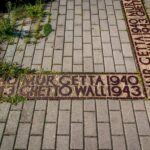
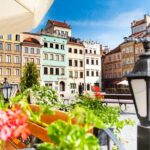
Stop 4: Praga Polnoc streets—Szwedzka, Konopacki Palace, Stalowa, and more
The longest stretch is Praga Polnoc, clocking in at about 1 hour 30 minutes. This is where the tour feels like a curated walk through the district’s layers—older transit remnants, notable buildings, street art, and memorials that mark history in public.
Here are the highlights you’ll cover in this section:
- Szwedzka Street
- Konopacki Palace
- Walls with famous street art
- Stalowa Street, often called the street of films
- Remains of a horse-drawn tram depot
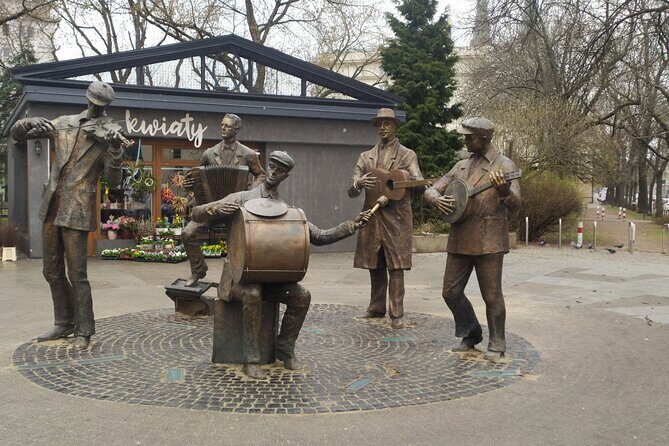
- A street band memorial
- The Cathedral of St. Florian and St. Michael the Archangel
What I like about this block is that it doesn’t force everything into one theme. You get industry and mobility history (that horse-drawn tram depot remnant), visual culture (street art walls), and named streets that carry reputations (like Stalowa’s film connection). Then you cap it with the cathedral sight that links the neighborhood to broader Warsaw religious and cultural storylines.
A note on street art: the guide doesn’t treat it like decoration. You’ll learn how it functions as part of the district’s public voice. That’s important, because street art can easily be reduced to aesthetics if you only look.
Also, watch your footing. This is a walking tour with multiple stops in one long section. You’ll probably be on uneven sidewalks at points, and you don’t want sore feet to turn into a distraction halfway through.
Stop 5: The Russian Orthodox Cathedral of St. Mary Magdalene
After the street-heavy Praga Polnoc section, the tour pivots to a major religious landmark: Warsaw’s Metropolitan Cathedral of St. Mary Magdalene.
This is the Russian Orthodox Cathedral of St. Mary Magdalene, and it’s described as one of the few Russian Orthodox sites left in Warsaw. That phrasing matters, because it signals that the building isn’t just another church on a map—it represents a historical thread that didn’t vanish neatly.
The stop is about 10 minutes, so it’s not a deep architectural lecture. Instead, it’s a guided “why this exists here” moment. You’ll likely notice differences in style compared with other churches you’ve seen in the city, and the narration gives you the framework to understand what that means in Warsaw’s shifting past.
If you enjoy contrast, this stop is satisfying because it changes the tone of the walk. Streets with street art and memorials suddenly give way to a place that signals continuity and identity in a different way.
Stop 6: Cathedral of St. Michael the Archangel and St. Florian the Martyr finish
The tour ends at the Cathedral of St. Michael the Archangel and St. Florian the Martyr, near Floriańska 3. Expect about 10 minutes here, enough time to take in the façade and get the closing context from your guide.
This finish is practical, not just scenic. You’re positioned with easy transport links, which makes it simple to continue your day. It also lets you end somewhere that feels meaningful rather than random—useful for walking tours that otherwise end in a busy intersection.
If you want to squeeze more value out of the day, this is a good point to compare what you saw earlier. You passed industrial and street-level landmarks; now you end with a cathedral that anchors the district’s story in a more official, enduring presence.
Price and value: what $28.68 covers (and what costs extra)
At $28.68 per person for roughly 2.5 hours, this is priced like an efficient guided walk, not a long-form museum experience. For that money, you get:
- A guided route through Praga with multiple named stops
- Visual aids during the walk
- A full info pack before you go, with FAQ and useful links
- Recommendations on where to eat and drink afterward
That info pack is not a small thing. On a district-walk day, it can guide you to follow-up stops that match the vibe you just learned about—especially when you want to eat without guessing.
Most of the stops are noted as free (you’re viewing them as part of the street walk). The only explicitly called-out paid add-on is the Polish Vodka Museum at 70 PLN. So if you’re trying to budget, you can treat this tour as the paid orientation and then decide on the museum based on interest and time.
It’s also worth noting that the tour caps at 10 people. In practice, that usually means better chances for questions and less time waiting for a lagging group member.
Your guide makes Praga click: Olivia and Aga’s approach
Names you may run into include Olivia and Aga, and their styles come up in the way people describe the tour.
Olivia’s narration is praised for depth and for personalization—especially linking the district’s changes to real feelings people have, including dispossession and gentrification rather than only presenting the upbeat side. That kind of balanced framing makes Praga feel less like a trend and more like a living neighborhood facing real tradeoffs.
Aga’s approach is described as having the right pacing and depth, plus the advantage of someone who knows the district well enough to show spots you probably wouldn’t find on your own. That’s a big deal in a place like Praga, where the streets are interesting but the stories aren’t obvious unless you have a guide to connect the dots.
Across both, you’ll also see mention of accommodations—like being willing to slow down for someone with mobility difficulties. That’s exactly the kind of detail that changes a walking tour from a chore into something you can actually enjoy.
What to know before you go: English focus, walking comfort, museum choice
Before you lace up, focus on three practical points.
First, language. The tour is offered in English. Other languages may be possible depending on availability, so if you’re booking for a specific language like Spanish, verify that it’s confirmed. You don’t want to discover at the meeting point that your plan doesn’t match what’s running.
Second, comfort. This is a 2.5-hour walking route with a long stretch through Praga Polnoc. Even though the route is described as suitable for most people, you’ll be on sidewalks, so bring shoes you can walk in without thinking about it.
Third, the vodka museum choice. If you want museum-level details, plan for the extra cost of the 70 PLN entrance. If you’d rather keep the day light, the Koneser stop still gives you plenty to work with.
One more small tip: bring a charged phone. You’ll have a mobile ticket, and you’ll likely use maps on your own once you’re done.
Should you book this Warsaw Praga guided historical walking tour?
I think this is a strong book if you want Warsaw with edges. Praga isn’t just “different buildings.” It’s a district where history shows up in industries, street names, transit leftovers, memorials, and churches—and this tour uses a walk to make all those pieces readable.
You should book if:
- You care about understanding places, not just photographing them
- You like street-level context about neighborhood change
- You want a small-group experience (up to 10 people)
- You like the idea of finishing near major transit for an easy next stop
Skip or rethink if:
- You need a specific language other than English and you haven’t confirmed it
- You don’t want extra walking on a 2.5-hour route
- You expect all stops to include paid museum access (the Polish Vodka Museum is not included)
If you’re the kind of traveler who enjoys discovering a neighborhood you might otherwise overlook, this tour is a cost-effective way to do it with structure, guidance, and a route that ends where it’s easy to keep going.
FAQ
FAQ
How long is the Warsaw Praga Guided Historical Walking Tour?
The tour lasts about 2 hours 30 minutes.
Where does the tour start and where does it end?
It starts at Strzelecka 46, 00-001 Warszawa, Poland. It ends in front of the Cathedral of St. Michael the Archangel and St. Florian the Martyr at Floriańska 3, 03-707 Warszawa.
Is the tour offered in English?
Yes, the tour is offered in English.
What is the price per person?
The price is $28.68 per person.
Is admission included for all the stops?
The stops listed are free to view during the tour. Entrance to the Polish Vodka Museum is not included and costs 70 PLN.
How large is the group?
The tour has a maximum of 10 travelers.
If you want, tell me your travel dates and what language you booked for, and I’ll help you plan the safest way to match expectations before you arrive.