REVIEW · WARSAW
Warsaw : Jewish Quarter Private Walking Tour
Book on GetYourGuide →Operated by Guydeez Tours · Bookable on GetYourGuide
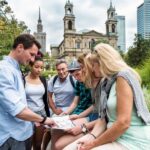
Warsaw’s Jewish Quarter hits fast. In two hours, you walk from Nożyk Synagogue into the memorial landscape of the ghetto, with a guide who pulls meaning out of each stop. I like that it’s private and customizable, so you can slow down where your questions land, instead of following a rigid script.
What I really liked is how much you learn while still seeing the key places you came for. You’ll pause at major landmarks like Umschlagplatz and the Footbridge of Remembrance, then connect the dots between events, locations, and names.
One thing to consider: this route is emotionally heavy. You’re honoring victims and resistance during Nazi oppression, so it’s not the kind of “see a few sights and move on” walk.
In This Review
- Key highlights I’d plan around
- Starting at Miodowa 21B: the easiest way into the Jewish Quarter
- Nożyk Synagogue: a living anchor before the memorials
- A Footbridge Of Remembrance: seeing division in a single glance
- Okopowa Street and the Jewish Cemetery: names that carry weight
- Mauzoleum Walki i Męczeństwa: resistance, suffering, and the space between
- Umschlagplatz and the Ghetto Uprising reminders
- Fragments of the ghetto wall and boundary markers
- Price and what you’re really getting for $58
- How hard is it, and what should you bring?
- Guides to look for: strong language, strong storytelling
- Should you book this Warsaw Jewish Quarter tour?
- FAQ
- How long is the Warsaw Jewish Quarter Private Walking Tour?
- Where does the tour start?
- Is this a private tour?
- What languages are the guides available in?
- Is the tour wheelchair accessible?
- Is food or drink included?
- What’s the cancellation policy?
- Can I reserve now and pay later?
Key highlights I’d plan around

- Private, exclusive group: just you (and your party), so questions don’t feel like an interruption
- Customizable pacing: spend more time where you care—photos, monuments, or the cemetery mood
- Memorial route with purpose: you move through the ghetto sites in a logical sequence, not random stops
- Nożyk Synagogue + major memorials: religious heritage and Holocaust remembrance in one continuous walk
- Stops that explain boundaries: fragments of the ghetto wall and boundary markers help you visualize the division
- Guides who use examples: English- and Spanish-speaking guides may use photos to clarify key moments
Starting at Miodowa 21B: the easiest way into the Jewish Quarter

Your tour begins at Miodowa 21B in Warsaw’s city center, close to the Old Town area. That’s a practical win: you’re starting in a part of Warsaw that’s easy to reach and easy to return to afterward. It also means you can fit this into a normal day without needing a complicated logistics puzzle.
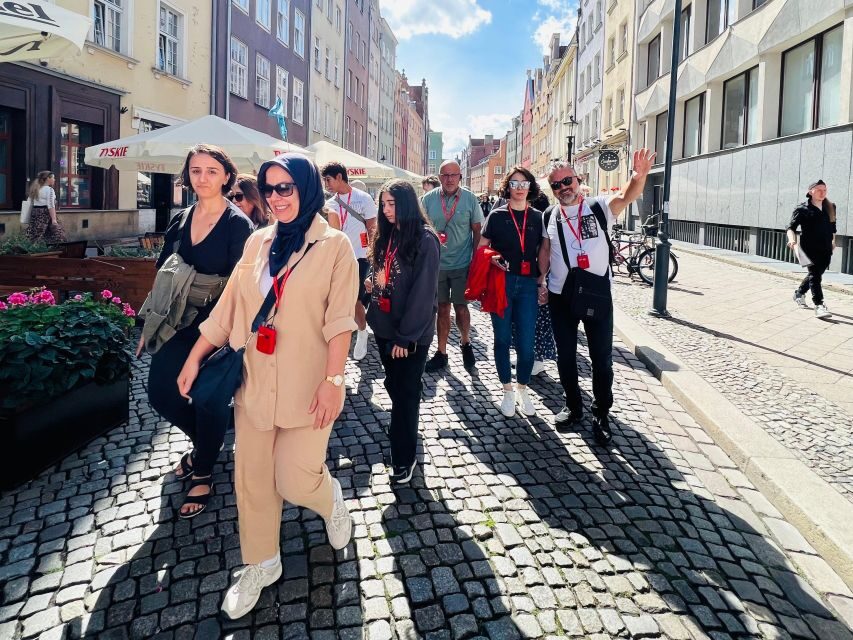
From the first steps, the tour is built for walking. You’re outdoors for the full experience, with short photo stops and guided segments. That matters because it keeps the story grounded in place—less “facts from a lecture,” more “you see it, then you understand it.”
One more detail I appreciate: the walk includes public transport where it fits the route. That can save time if weather, distance, or timing makes pure walking annoying. Just know that the plan may vary depending on your selected option.
You can also read our reviews of more walking tours in Warsaw


Nożyk Synagogue: a living anchor before the memorials
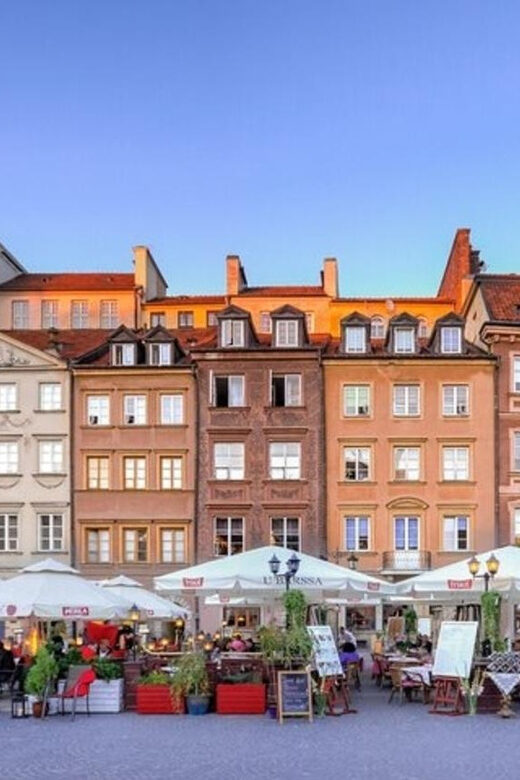
A stop at Nożyk Synagogue gives you context before you hit the heavier sites. Even if you don’t know much about Polish-Jewish history going in, you get a starting point that feels human and real: this wasn’t only a tragedy story, it was also a community with institutions, culture, and identity.
Expect a mix of photos and a guided visit, plus time to walk around and get your bearings. This is also the moment where your guide’s style matters. Some guides bring extra visuals to help explain transitions—one review specifically mentioned photos used to illustrate points. If you’re the type who learns faster with images, this can help you stay oriented during the memorial sequence.
Why this stop is worth it: it prevents the tour from feeling like it starts only at the end. It reminds you that the ghetto wasn’t just an abstract event in a book—it was part of a broader world that had existed before the Nazis destroyed daily life.
Potential drawback: since this is a short stop, you’ll want to come with at least one question in mind. For example: Are you more interested in community life, the resistance, or how Warsaw’s geography affected what happened?
A Footbridge Of Remembrance: seeing division in a single glance
Next comes the Footbridge of Remembrance, one of those Warsaw details that you can’t fully understand until you’re standing near it. The guide helps connect it to what it symbolizes: the ghetto’s separation and the way people’s movement and lives were controlled. It’s also the kind of location where you can actually picture the barrier effect instead of just imagining it.
There’s a photo stop and a guided walk-by that keeps things moving. If you enjoy architecture-as-storytelling, you’ll likely find this bridge works well in the middle of a tour like this. You get a visual checkpoint, then the narrative continues immediately.
Why it matters for your understanding: memorials work best when you can map them. Here, the bridge helps you build a mental map of “this is where the line was,” which makes later boundary markers hit harder.
Okopowa Street and the Jewish Cemetery: names that carry weight
Then you reach the Jewish Cemetery in Warsaw on Okopowa Street, a stop that feels different from the memorial stones you’ll see later. A cemetery isn’t only a place to remember; it’s also a place where individuals become visible again through names, families, and legacies.
The tour includes a guided visit with time for photos. You’ll hear about notable figures tied to the cemetery, including Ludwik Zamenhof and Ischok Leib Perec. You’ll also pay tribute to Janusz Korczak at his symbolic grave. Even if you’ve heard some of these names before, hearing them anchored in the cemetery context tends to make the information “stick.”
Why this stop is powerful: it shifts the focus from events to people. The ghetto story can start to blur when you’re moving quickly from monument to monument. The cemetery slows you down in a good way—your attention shifts from dates to lives.
Practical consideration: since there’s no drink or food included, you’ll want to pace yourself. If you tend to get lightheaded when walking in stress-inducing spaces, plan a simple snack for afterward.
Mauzoleum Walki i Męczeństwa: resistance, suffering, and the space between
The tour continues to Mauzoleum Walki i Męczeństwa, another important memorial stop with its own tone. The phrase connected to this site points toward struggle and martyrdom themes, and your guide’s job here is to help you understand what you’re seeing—not just where you are.
You get another guided photo stop and a walking segment. This is a classic “meaning interval”: the tour keeps moving, but the guide uses the time to interpret the memorial setting so it doesn’t become a checklist.
What you’ll gain here: a clearer sense of how resistance and survival fit into the story, not as side notes, but as central threads. Even if you know the basic timeline, these memorial sites often teach you something subtler: how Warsaw’s Jewish community experienced oppression day by day, and what that meant when people chose resistance.
You can also read our reviews of more private tours in Warsaw


Umschlagplatz and the Ghetto Uprising reminders
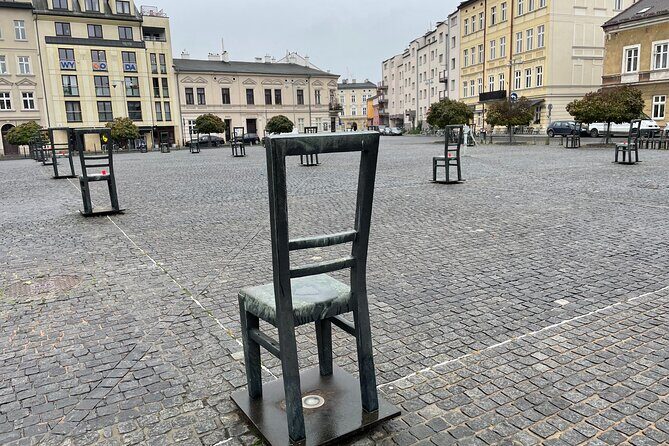
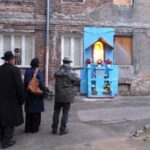
Next comes Umschlagplatz, marked by its own significant Monument and described as a solemn reminder of countless lives lost to extermination camps. If you’re sensitive to Holocaust memorials, give yourself permission to stand a moment longer than the guide’s pacing—your emotional attention is part of how the site works.
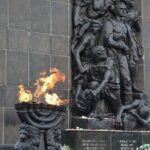
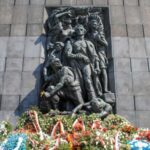
You’ll also stop at the Monument to the Ghetto Heroes, where the guide pauses the tour to honor those who resisted Nazi oppression during the Ghetto Uprising. Expect time for photos, plus guided explanation focused on bravery, resistance, and remembrance.
These stops can feel repetitive if you only think in terms of “another monument.” The trick is to listen for what changes between stops. One memorial may emphasize boundaries and geography; another emphasizes organized resistance; another centers the act of remembrance itself. The guide helps you see the differences so the route becomes an organized narrative rather than a set of similar-looking stones.
Why the sequence works: you move from context (synagogue) to separation (bridge), to individual legacy (cemetery), then to struggle and transport sites (mauzoleum and Umschlagplatz). That arc gives your understanding shape.
Fragments of the ghetto wall and boundary markers
A detail that I think makes this tour especially educational is the inclusion of fragments of the Jewish Ghetto wall and iron slabs marking boundaries. These aren’t just decorative. They help you visualize the “line” that shaped movement, fear, and daily life.
When you see physical boundary markers while the guide explains their meaning, the story becomes spatial. You stop thinking only about what happened and start thinking about how a system of control was built into the city.
If you love place-based history: this is one of your best reasons to choose the private format. When you’re with a guide, you can ask things like how the boundary worked in practice, or what the surrounding streets were like.
Price and what you’re really getting for $58
At $58 per person for a 2-hour private walking tour, the value depends on your group size and your learning style.
If you’re traveling solo or as a couple, private tours can feel pricey at first glance. But here you’re paying for:
- a route built around key memorial sites you actually want to see
- a guide who can adjust the pacing to what you care about
- time for questions while you’re in front of the sites, not only on the way there
The tour is also exclusive, meaning there isn’t a mixed group walking alongside you. That matters because memorial sites need space. You don’t want to be scanning faces and negotiating who’s hearing what. You want your own pace.
Also consider the language options: guides operate in English and Spanish. If that’s your comfort zone, you’re more likely to absorb the nuance instead of “translating in your head” the whole time.
And since food and drinks aren’t included, the cost isn’t inflated with extra stops. You’ll just want to plan a simple meal after.
How hard is it, and what should you bring?
This is a walking tour, and the stops are close enough to stay active for two hours. Expect multiple photo stops and guided segments rather than a quick shuffle between sites. If you like to take your time reading plaques or absorbing details, you’ll still fit within the 2-hour window, but you may want comfortable shoes.
A few things to pack based on what’s included and what isn’t:
- Comfortable walking shoes (you’ll be on foot for the full tour)
- A light layer for weather, since you’ll spend time outdoors
- Water or a small snack plan for before/after, since no drink or food is included
The good news: the tour is listed as wheelchair accessible, so it should be workable for guests who need that level of support. If you have mobility needs beyond standard wheelchair access, it’s still worth asking directly.
Guides to look for: strong language, strong storytelling
The tour relies on your guide’s delivery. The available language options are English and Spanish, and the guides vary in style, but the recurring theme in the experience is clear: strong clarity and a personal approach.
Some guides you might encounter include names like Paulina, Karol, and Maria. In particular, one guide was praised for excellent English and for keeping the material both memorable and understandable, even in a short time frame. Another was noted for being very engaged and for providing a personal, direct explanation.
What I take from that as a practical traveler: if you care about context, not just sightseeing, this is the kind of tour where the guide can genuinely change your experience.
Should you book this Warsaw Jewish Quarter tour?
Book it if you want a private, two-hour walk through the Warsaw Jewish Quarter that blends major sights with meaningful interpretation. It’s especially worth it if:
- you want to see the big memorial landmarks without turning the day into a self-guided scavenger hunt
- you like asking questions in real time while standing at the exact place being discussed
- you’re planning a short Warsaw trip and want maximum understanding per hour
I’d skip or think twice if you know you don’t handle Holocaust memorials well. This tour includes memorials connected to Nazi oppression, ghetto uprising resistance, extermination reminders, and sites of remembrance. It’s powerful, but it’s not light.
If you want Warsaw’s story in a way that feels grounded in streets and symbols, this private route is a smart choice.
FAQ
How long is the Warsaw Jewish Quarter Private Walking Tour?
The tour lasts 2 hours.
Where does the tour start?
The meeting point is Miodowa 21B, 00-246 Warsaw, Poland.
Is this a private tour?
Yes. It’s a private and exclusive walking tour, so there won’t be anyone else in your group.
What languages are the guides available in?
The live guide is available in English and Spanish.
Is the tour wheelchair accessible?
Yes. The tour is listed as wheelchair accessible.
Is food or drink included?
No. Drink or food is not included.
What’s the cancellation policy?
You can cancel up to 24 hours in advance for a full refund, and the tour also offers a free cancellation option.
Can I reserve now and pay later?
Yes. There is a reserve now & pay later option, so you can book your spot and pay nothing today.