Five restaurants, one full stomach. This Warsaw Food Tour strings together classic Polish flavors in a practical walking loop, so you’re not just sampling food—you’re understanding why it shows up on tables. I especially love the variety of dishes across savory, soup, stew, and dessert, and I like how Cesar pairs bites with clear local context, not vague facts.
The main thing to consider is that this is a food-and-drink-forward outing. If you’re not into hearty meals or you’d rather skip alcohol, plan how you’ll handle the vodka and the three liquor tastings.
In This Review
- Key Highlights You’ll Actually Feel on the Tour
- Warsaw Food Tour at a Glance: What You Get for $82.90
- Meeting at Sigismund’s Column: Starting Where Warsaw’s Story Is Easy to Read
- Starter Round 1: Herring, Sausages, and Potato Vodka
- The Classic Restaurant Stop: Żurek in a Bread Bowl
- Comfort Food Pairing: Stuffed Cabbage and Bigos Stew
- The Pastry Break: Donat with Rose Jam at an Old Café
- Final Sip: Three Types of Aperitif Liquor
- What I’d Be Looking For (If This Were My First Day in Warsaw)
- Value Check: Is This Warsaw Food Tour Worth It?
- Who This Tour Suits Best (And Who Might Want a Different Plan)
- Should You Book the Warsaw Food Tour?
- FAQ
- FAQ
- How long is the Warsaw Food Tour?
- What time does the tour start?
- Where does the tour start?
- Where does the tour end?
- What language is the tour offered in?
- Is the tour private or shared?
- What food and drinks are included?
- What is the price per person?
- Do I get a mobile ticket?
- Is there free cancellation?
- How far in advance is this tour usually booked?
Key Highlights You’ll Actually Feel on the Tour
- Five different restaurants, five different styles of eating
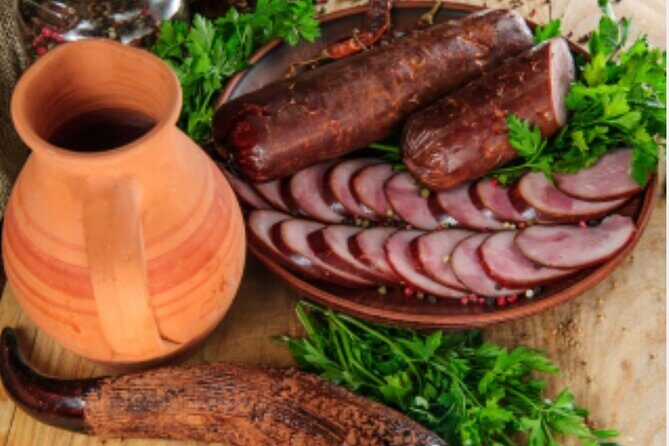
- Hearty starters with herrings and sausages plus potato vodka
- Żurek served the traditional way in a bread bowl
- Bigos and stuffed cabbage for comfort-food depth
- Rose-jam donat at an old-school Warsaw café
- Three liquor tastes with a story tied to Polish aristocratic manors
Warsaw Food Tour at a Glance: What You Get for $82.90
At $82.90 per person for about 2 to 4 hours, this tour is priced like a true meal experience, not a quick snack crawl. You get dinner included, plus a guide—so the cost mainly covers the guided restaurant stops and the lineup of tastings across multiple places.
I like how the tour is clearly structured. You’re not wandering and hoping to find the right dishes. You show up at one landmark, then you’re guided restaurant to restaurant with a set menu in mind: starter, soup, a cabbage-and-stew course, pastry, and finally three types of aperitif liquor.
One practical note: it’s offered in English, and it’s a private tour/activity, meaning only your group participates. That matters if you want to ask questions without feeling rushed, and if you’re traveling with friends or family who move at a similar pace.
You can also read our reviews of more food & drink experiences in Warsaw


Meeting at Sigismund’s Column: Starting Where Warsaw’s Story Is Easy to Read
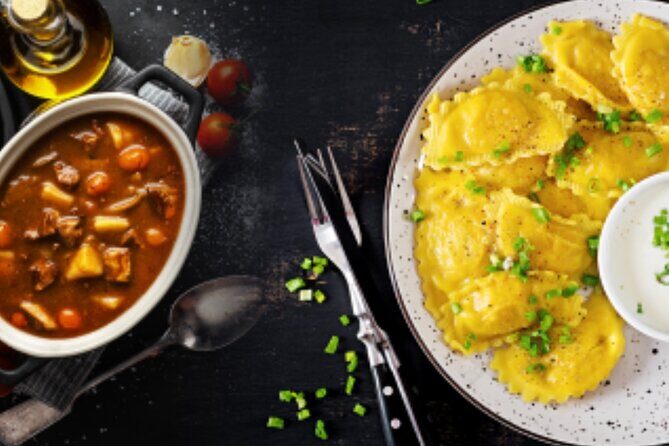
Your tour starts at Sigismund’s Column, Plac Zamkowy, 00-001 Warszawa. That’s a convenient anchor in central Warsaw, and it’s the kind of starting point that helps you orient quickly. You also end back at the meeting point, which keeps logistics simple—no hunting for a final drop-off.
Because the meeting area is near public transportation, you can plan around whatever mode you’re using that day. If you’re doing other sightseeing in the afternoon, a 3:00 pm start time is also a good fit. It’s late enough to settle in, but early enough that dinner happens at a normal human hour.
For a private food tour, the “start and end in the same place” detail sounds minor. It’s not. It lowers friction on the day, especially when you’re adding several restaurant stops.
Starter Round 1: Herring, Sausages, and Potato Vodka
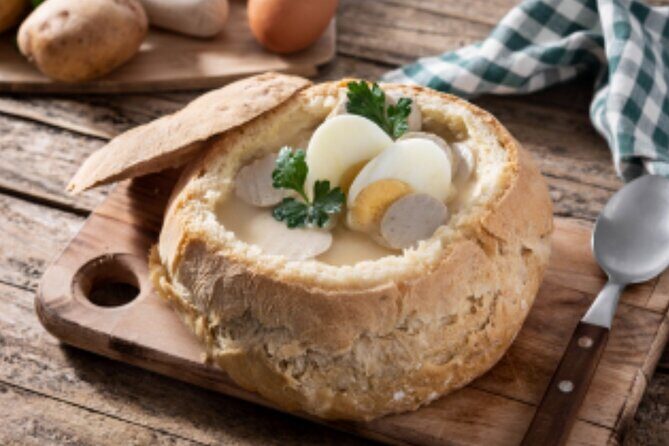
Your first tasting sets the tone: herrings with sausages and traditional Polish vodka made from potatoes. This is classic “pay attention” Polish food. It’s salty, bold, and meant to be understood in context—how preservation, regional tastes, and drinking culture overlap in the same meal.
If you’re new to Polish cuisine, this is one of the better ways to start. It’s not complicated to find on your own, but it is easier to get wrong if you’re ordering blindly. On a guided tour, you’re more likely to taste it in the right spirit and learn what to notice—texture, balance, and how the vodka functions alongside the flavors.
Possible consideration: herring isn’t everyone’s first love. If you’re unsure, go in with the mindset of sampling rather than committing. This starter is part of the bigger storyline of Polish comfort food and traditional drinks.
The Classic Restaurant Stop: Żurek in a Bread Bowl
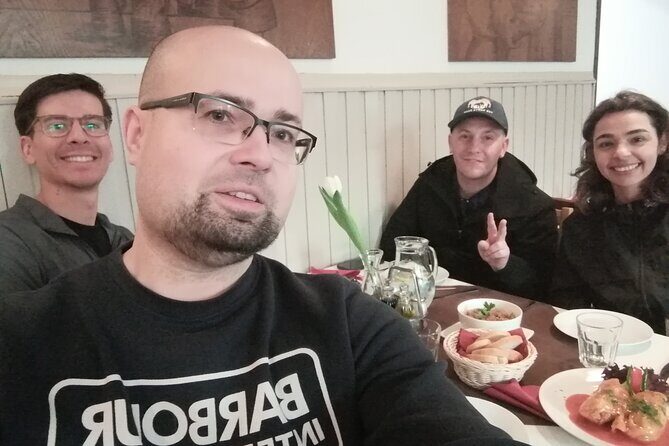
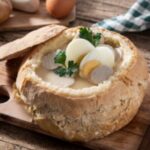
Next you head to an old-style restaurant for żurek—a traditional Easter sour soup with egg and sausage. What makes this stop feel special is the traditional serving style: it’s served in a bread bowl.
This is the kind of detail that turns a normal soup into an experience. The bread bowl is both practical and theatrical in a good way. It gives you a built-in way to eat slowly, to mix soup and bread, and to treat the meal as more than just a taste.
I like that żurek is presented as something tied to tradition and seasonal meaning. Even if you don’t know Polish holidays, the guide’s explanations help you place it. Food culture makes more sense when you understand the why behind the what.
If you’re sensitive to sour flavors, this is your checkpoint. Żurek is a sour soup, so be ready for that tang. But if you like soups with personality—this stop is a strong reason to book.
Comfort Food Pairing: Stuffed Cabbage and Bigos Stew
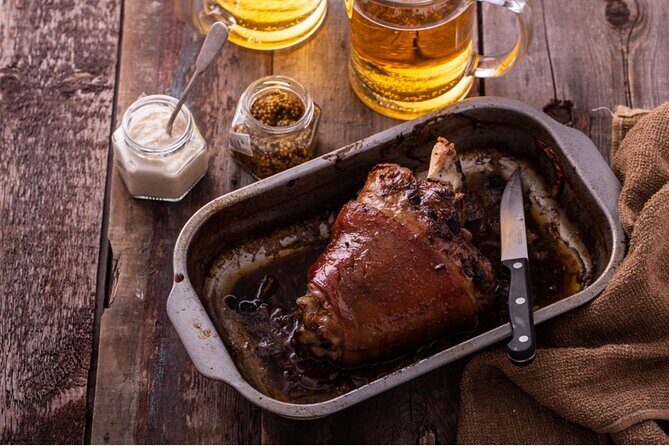
After the soup course, you move into the heart of Polish comfort: stuffed cabbage and winter stew bigos. Bigos is built from cabbage, mushrooms, and meat—one of those dishes that feels like it has been simmering in someone’s family tradition for generations.
This is where the tour leans into “stay warm and eat well” food. Stuffed cabbage offers that satisfying, wrapped comfort—something that’s hearty without needing fancy technique. Bigos brings the deeper, slower-cooked flavor profile: smoky, savory, and thick enough to feel like a meal, not a sample.
I also like that this pairing gives you contrast. You’re not just repeating cabbage. One dish is the wrapped, portioned comfort of stuffed cabbage; the other is the stew bowl version—same ingredient family, different experience.
If you’re traveling during cooler months, bigos especially makes sense. Even in warmer weather, it’s still one of those classic Polish comfort foods that feels like a “real dinner” moment.
A few more Warsaw tours and experiences worth a look
The Pastry Break: Donat with Rose Jam at an Old Café
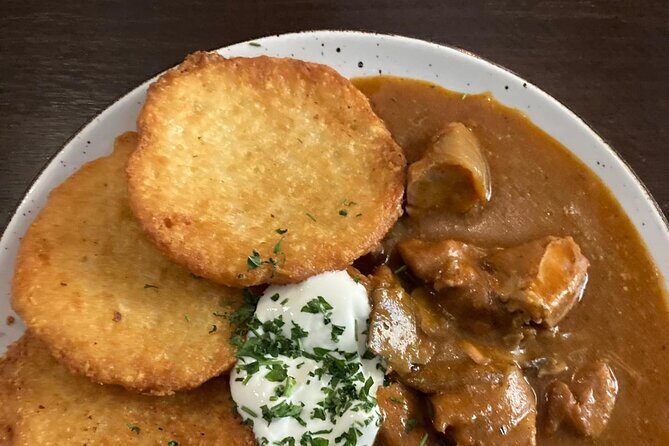
Now you get to switch gears with something sweet: donat with rose jam. The tour says this is from the oldest café in Warsaw—an instantly appealing detail because you’re tasting a local dessert with a sense of time behind it.
Donat is familiar enough to be approachable, but rose jam gives it that Polish signature. It’s floral in a way that doesn’t try too hard. The idea is simple: you want a dessert that feels local, not generic.
This stop also gives you a mental reset. After salty dishes, soup, and stew, pastry is welcome, and it helps you keep your appetite for the final tasting.
If you’re the type who always worries about desserts on food tours, this is one you can feel good about: it’s a classic dessert format, and the rose jam is clearly the local twist.
Final Sip: Three Types of Aperitif Liquor
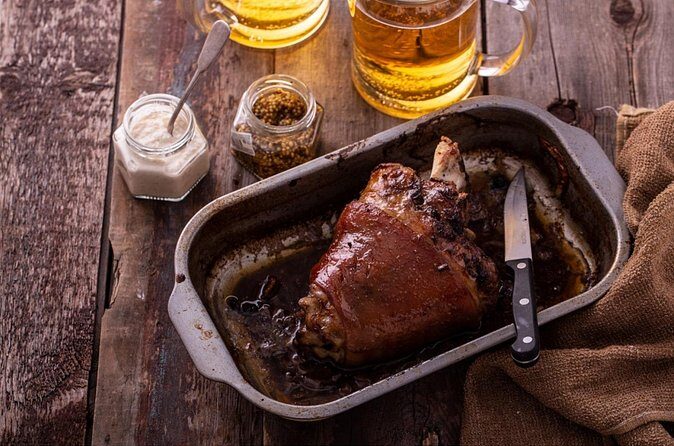
To wrap up, you finish with three different types of aperitif liquor. The tour frames it historically: these liquors were made and served on the manors of the Polish aristocrats.
This final stop works because it ties the meal to a broader culture. Food tours can sometimes end abruptly with a random drink. Here, the liquor serves as a narrative closer: a way to understand how alcohol traditions sat alongside cuisine and hospitality.
Practical reality check: this is an alcohol finish, and the earlier vodka starter means you’ll likely be drinking more than water. If you’d rather go easy, pace yourself. Ask questions. Sip, don’t chug. And if your group includes anyone who doesn’t drink, you’ll want to manage that expectation before the tour starts.
What I’d Be Looking For (If This Were My First Day in Warsaw)
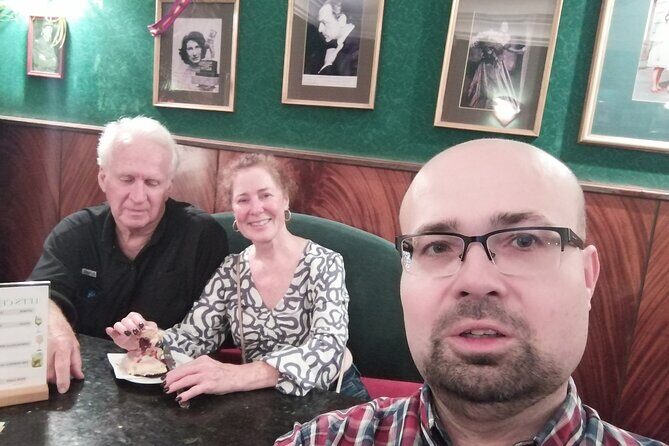
This tour works best as an early or mid-trip anchor. The reason is simple: you come away with a mental map of Polish flavors—sour soup, cabbage comfort, hearty stews, and pastry with a distinct local jam—plus the guide’s explanations help you recognize dishes later on menus.
It’s also a great way to stop making choices under pressure. When you’re jet-lagged or food-shopping across a new country, it’s easy to pick the wrong thing. A fixed menu with a local guide reduces that stress.
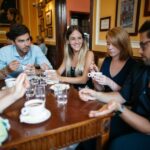
If you enjoy food history in plain language—what’s traditional, how dishes are served, and why ingredients show up—this fits nicely. Cesar is described as very informative, and the way the tour is built suggests you’ll get a steady stream of context during the walk and between courses.
Value Check: Is This Warsaw Food Tour Worth It?
Here’s how I’d judge the value of this experience.
You’re paying for:
- Five restaurant stops
- Dinner included
- A guide
- A set of specific tastings (vodka starter, sour soup bread bowl, bigos and stuffed cabbage, donat with rose jam, plus three liquor types)
At $82.90 for 2 to 4 hours, you’re not just paying for food. You’re paying for coordination, seating access, and guidance that helps you understand what you’re eating. In cities like Warsaw, that often means the tour price is less about the plates themselves and more about getting the right local dishes in the right order.
If you were to try all of those items on your own, you’d spend time figuring out which places serve what, how to order, and whether you’ll get the traditional style (like żurek in a bread bowl). The tour handles the ordering logic for you.
Value drops a bit if:
- you hate seafood flavors like herring,
- you strongly dislike sour dishes,
- or you want little to no alcohol.
But if you’re open to trying multiple categories of Polish food, this is a solid deal.
Who This Tour Suits Best (And Who Might Want a Different Plan)
This Warsaw Food Tour is best for you if:
- you like the idea of a guided “meal story”, not just a tasting menu,
- you want to start your trip with classic Polish comfort foods and dessert,
- you enjoy questions and back-and-forth with a real guide.
It may not be ideal if:
- you’re short on time and can’t spare a 2 to 4 hour block,
- your group can’t handle hearty servings,
- alcohol is a hard no for anyone in your party.
One more practical fit: since it’s private, it’s a good option for couples, small groups, and friends who want a more personal pace than a big group tour.
Should You Book the Warsaw Food Tour?
I’d book this tour if you want a straightforward way to experience Polish cuisine as a sequence, from savory starter to soup to stew to pastry, then a cultural drink finish. The best part is the structure: you’re not guessing what to order, and you’re guided to traditional versions of dishes like bread-bowl żurek.
I would not book it if you’re hoping for light bites only, or if your ideal Warsaw experience is mostly sightseeing rather than eating. This is food-first, and it’s designed to leave you full.
FAQ
FAQ
How long is the Warsaw Food Tour?
It runs for about 2 to 4 hours.
What time does the tour start?
The start time is 3:00 pm.
Where does the tour start?
You meet at Sigismund’s Column, Plac Zamkowy, 00-001 Warszawa, Poland.
Where does the tour end?
The tour ends back at the same meeting point.
What language is the tour offered in?
The tour is offered in English.
Is the tour private or shared?
This is a private tour/activity, so only your group participates.
What food and drinks are included?
Dinner is included, and the tasting lineup includes traditional dishes and vodka/liquor tastings.
What is the price per person?
The price is $82.90 per person.
Do I get a mobile ticket?
Yes, the tour includes a mobile ticket.
Is there free cancellation?
Yes, you can cancel for a full refund up to 24 hours in advance of the experience start time.
How far in advance is this tour usually booked?
On average, it’s booked 32 days in advance.