REVIEW · WARSAW
Warsaw City Tour – PRIVATE (4h)
Book on Viator →Operated by PT Team · Bookable on Viator
Warsaw packs a lot of meaning into a few streets. This private 4-hour city tour mixes major landmarks with the stories behind the city’s rebuild, from Old Town’s UNESCO comeback to the emotion of the Warsaw Uprising sites. You’ll have a professional local guide and (in most cases) comfortable transport between neighborhoods.
I especially like how the walk through Old Town isn’t just sightseeing. You get the why behind what you’re seeing: trade routes, fires and rebuilding, then the near-total destruction in 1944 and the long restoration that earned UNESCO status. I also like the pace because it balances “look up at the monuments” moments with green-space time in Lazienki Park, including time for the Rose Garden area.
One consideration: this is a private tour with mixed walking and driving, and traffic rules inside heritage areas can limit how close the vehicle can get. Also, since guides can vary, it helps to be clear about expectations for walking length and English comfort before you start.
In This Review
- Key things you’ll notice on this Warsaw private tour
- How the 4-hour format works (and why it’s useful)
- King Sigismund’s Column and Old Town’s UNESCO rebuild story
- Royal Castle and St. John’s Cathedral: Poland’s “before and after” in stone
- Rynek Starego Miasta and the Warsaw Mermaid: symbols you can actually spot
- Barbican Warszawski: what defense looks like when it’s not war
- Warsaw Uprising Monument, Krasiński Palace, and Miodowa Street’s power and faith
- Theatre Square, the Tomb of the Unknown Soldier, and the daily ritual at noon
- The Royal Route: St. Anne’s tower view, Curie’s work, and palaces with rules
- Lazienki Krolewskie: Chopin pianos, royal garden calm, and a smart break
- Palace of Culture and Science, the National Stadium, and Copernicus Science Centre
- Price and logistics: where the $195.18 per person fits best
- Who this Warsaw private tour is for (and who should skip it)
- Should you book this private Warsaw city tour?
- FAQ
- How long is the Warsaw City Tour – Private?
- Is this tour private?
- Do I get hotel pickup and drop-off?
- Is the tour guided, and in what language?
- Is there an air-conditioned vehicle?
- Are attraction entry fees included?
- Is Copernicus Science Centre admission included?
- Does St. John’s Cathedral have organ concerts on this route?
- Is there a special daily moment at the Tomb of the Unknown Soldier?
Key things you’ll notice on this Warsaw private tour
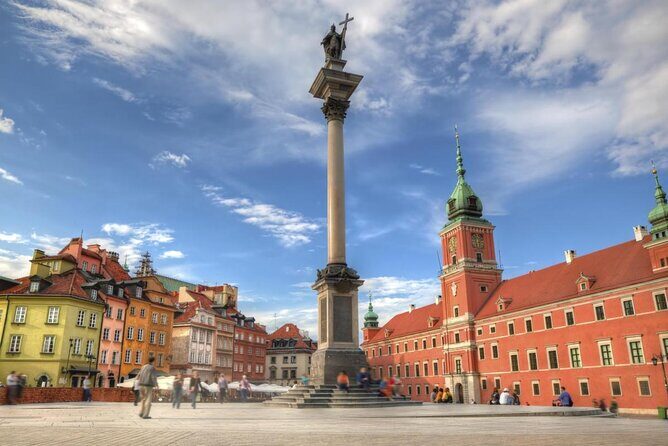
UNESCO Old Town with the real 1944 context so you understand why every wall and corner matters.
A guide who connects monuments to modern Warsaw (not just dates and names).
Lazienki Park downtime with the kind of pause your legs and brain both want.
Memorial stops that don’t feel like a checkbox—the Warsaw Uprising Monument lands hard in person.
Hop-by-hop city-center routing: you’re meant to see more than just one neighborhood.
Hands-on culture potential if you choose to add pay-at-site entry at optional attractions like Copernicus Science Centre.
How the 4-hour format works (and why it’s useful)
A good city tour in Warsaw should do two things fast: help you read the city’s layers, and show you where to go next on your own. In this format, you get a guided route that moves between the Old Town core, the Royal Route corridor, and the larger landmarks farther out—without wasting time figuring out transit.
You also get hotel pickup and drop-off, plus a professional local guide. That matters because Warsaw’s “best bits” are spread out, and for many travelers the biggest friction is simply getting from place to place efficiently.
Just keep your expectations grounded: this is not a slow museum day. It’s an organized highlights tour, with short stops that give you orientation and context. If you want deep time inside churches or buildings, you’ll likely plan that separately.
You can also read our reviews of more city tours in Warsaw

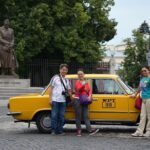

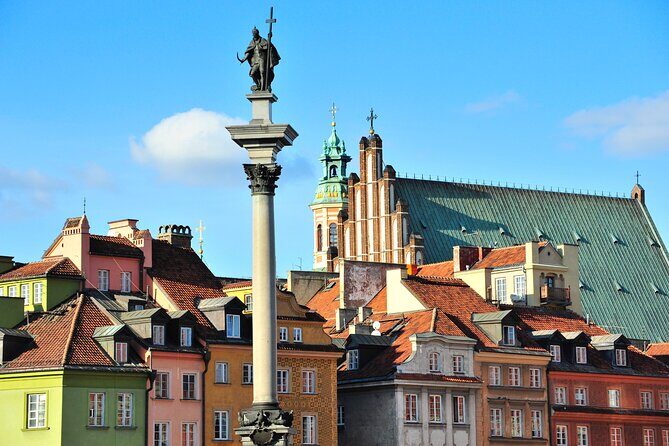
King Sigismund’s Column and Old Town’s UNESCO rebuild story
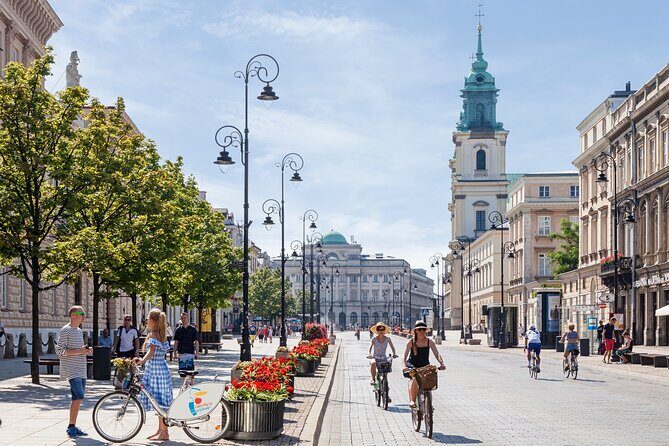
You start at King Sigismund’s Column, one of Warsaw’s key symbols. It’s also a reminder that even monuments can move: the column was relocated when the main street axis changed in the 19th century, and again after World War II during development of the WZ route. It was brought down on September 2, 1944 by German troops, then reconstructed and completed in 1949.
Why this stop works: it sets up the central Warsaw theme—destruction and reconstruction—without becoming heavy right away. You see a famous icon, then learn how the city’s physical layout and political history shaped that icon’s fate.
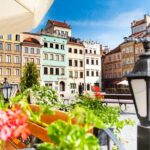
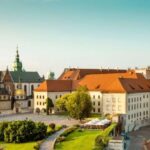
Then you head into Old Town, a place built on geography. Warsaw grew here because of its location on a river that supported trade between the Baltic Sea and the Black Sea. Over time, wood structures replaced with masonry tenement houses and ramparts replaced with stone walls—then 1944 hits, and about 90 percent of the Old Town area was razed.
The most powerful part is what comes after. The reconstruction took years and ended with UNESCO recognition. You’ll walk a historic area where the streets you’re stepping on are part rebuilt, part preserved, and part re-imagined so the city could keep its identity.
Practical tip: Old Town is best enjoyed slowly, but you’re on a timed tour. Wear shoes that can handle stone. If you’re temperature-sensitive, it’s smart to dress in layers because the open squares can feel exposed.
Royal Castle and St. John’s Cathedral: Poland’s “before and after” in stone
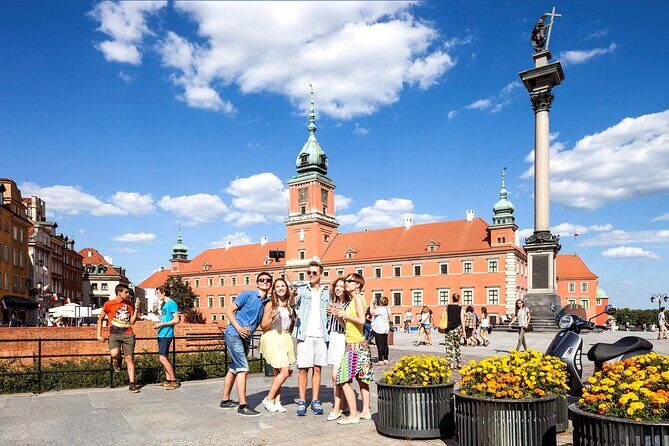
From Old Town, the focus shifts to the Royal Castle story—Warsaw’s big lesson in what’s lost and what gets rebuilt. The castle gained royal-residence status in the 16th century when the Masovia region joined the Crown. It was destroyed repeatedly across centuries, rebuilt again and again, and survived until World War II when it was bombed early and later almost destroyed by fire.
Some priceless works were saved by being carried out in time, then hidden. Still, remaining works were plundered, and in 1944 the castle was blown up in retaliation for the Warsaw Uprising. Reconstruction didn’t begin soon; the decision came much later, in 1971, and community generosity helped finance much of the work. The site opened to visitors in 1984, and later it joined the UNESCO World Heritage List as a faithful reconstruction.
Right after that comes the Archcathedral Basilica of St. John the Baptist, one of Warsaw’s oldest churches. In season, there’s an organ music program: Sundays at 4 PM from July to September (International Organ Music Festival). The cathedral is also connected to the Constitution of May 3 oath, described as the first of its kind in Europe—an important moment you wouldn’t guess just by looking at the exterior.
Inside this stop, you’ll also learn about the crypt, which holds tombs of historical figures. One highlight is the Chapel-Mausoleum of the Primate of the Millennium, which adds a more personal, memorial layer to what can otherwise feel like a walk-through of official history.
If you care about culture as well as politics, this pairing is strong. The Royal Castle speaks to state power and national memory. St. John’s Cathedral adds the human side—religious life, music, and burial traditions.
Rynek Starego Miasta and the Warsaw Mermaid: symbols you can actually spot
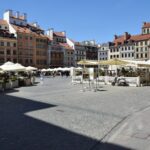
Next is Rynek Starego Miasta, the Old Town Marketplace, surrounded by tenement buildings with restaurants, cafes, clubs, galleries, and museums. This is the “look around” square of Old Town, where you can connect the history to how Warsaw lives now.
A big visual anchor here is the Warsaw Mermaid statue in the central square. The guide points out how the Mermaid is the city’s most recognizable symbol after (and often in conversation with) the King Sigismund’s Column story.
The square itself is also divided into four parts associated with enlightenment activists: Kołłątaj, Dekert, Barss, and Zakrzewski. Even if you only catch brief context, you’ll walk away knowing the marketplace isn’t random—it’s organized around intellectual history.
This stop is also where timing matters. It’s easy to wander longer than you should, especially if you’re hungry. On a tight schedule, I’d treat this as your short rest-and-look moment, not a long detour.
Barbican Warszawski: what defense looks like when it’s not war
After the open squares, you visit Warsaw Barbican. It was built in 1548 as a strategic part of the city’s defensive walls, once connected to about 4,000 feet of defensive ramparts.
Today, it’s also a creative space—painters exhibit there and musicians can be part of the experience. If you’re visiting between May and October, there’s an exhibition inside the Barbican’s walls with historical photos and models of the defensive lines and towers that no longer exist. The clever thing here is the comparison: you look at the Old Town shape today, then the old plans, and you start imagining what the city looked like before destruction reshaped everything.
Why this stop is worth the time: it teaches you to read architecture as function. You don’t just see a wall—you see why that wall existed.
You can also read our reviews of more private tours in Warsaw


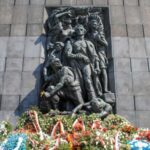
Warsaw Uprising Monument, Krasiński Palace, and Miodowa Street’s power and faith
From Old Town, the atmosphere shifts. The Warsaw Uprising Monument depicts insurgents during battle. The uprising ended in defeat, with the death of 200,000 Poles, and it’s one of the bloodiest and most painful moments in modern Polish history. Standing here is a reminder that Warsaw isn’t only about grand buildings—it’s also about survival and loss.
Nearby, you’ll hear about Krasiński Palace (Palace of the Republic), originally the residence of Jan Krasiński, then later used in ways connected to national collections. It currently hosts special collections for the National Library and is known as Warsaw’s most enchanting Baroque structure, with reliefs inspired by antique works. Behind the palace, the park is a good place to reset.
Then comes Miodowa Street, where you can spot a dense concentration of historic residences and institutions. You’ll pass the old Collegium Nobilium, the first school for young members of the ruling elite (now the Academy of Theatre). You’ll also see the residence of the Primate of Poland, the Palace of Warsaw’s Archbishops from the 18th century, plus Warsaw’s only Eastern Catholic Church.
This is also a street where religious history and personal symbolism show up. The Church of the Capuchins is noted for having the heart of Jan III Sobieski on the right side of the altar (Sobieski is the founder). And as you move along, you’ll get views of the Monument of Warsaw’s Heroes, commonly called the Monument of Nike.
If your attention span likes variety, this section works. It’s less “one huge monument” and more “a living timeline.”
Theatre Square, the Tomb of the Unknown Soldier, and the daily ritual at noon
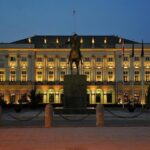
The tour continues toward Theatre Square, bordered by the Late Baroque Blank Palace. Jabłonowski Palace comes next behind it, and this one has a modern-history twist: it used to function as city hall before World War II, was razed during the war, then rebuilt in the 1990s. Only the façade and the clock tower remain from the original design, and you can also walk through the gate under the tower to see foundations laid in the 19th century.
Then you’ll face the Grand Theatre, a huge Classicist building for the National Opera and National Theatre. The opera stage is described as one of the largest in Europe, and you’ll get at least a sense of why this square mattered for public life.
After that, the Tomb of the Unknown Soldier brings the tone back to remembrance. It commemorates millions of soldiers who sacrificed their lives for Poland’s freedom. The tomb contains ashes of a defender of Lvov and an urn with soil from World War I battlefields, and it holds urns from every battlefield where Polish troops fell in the last century. An eternal flame burns beside it, with a military honor guard that changes daily at noon.
If you arrive near noon, plan around it. Even if you don’t, the guard ritual is a strong “Warsaw is serious about memory” moment.
The Royal Route: St. Anne’s tower view, Curie’s work, and palaces with rules
Next you move onto what’s known as the Royal Route, running from Zamkowy Square to Trzech Krzyży Square. The guide points out several must-see spots, and the best part is how the route teaches you Warsaw’s layout in a way that’s easy to reuse later.
Key stops on this route include St. Anne’s Church, plus the view from its tower. You’ll also hear about the Polonia House, once the Museum of Industry and Trade, where Maria Skłodowska-Curie worked. That’s one of those “Warsaw isn’t just political history” moments that sticks.
You’ll see Radziwiłł Palace, currently the residence of the President of Poland, along with the Warsaw University campus and Kazimierzowski Palace. There’s also Czapski Palace, associated with the Academy of Fine Arts.
And then you get Nowy Świat Street, described as an extension of Krakowskie Przedmieście, with elegant stores and restaurants. Even during a short stop, it helps you picture where you might want to wander later on your own.
One reality check: this route contains important buildings, so access and proximity can vary. That’s normal here. Don’t treat it as a flaw; treat it as a reminder that Warsaw is still a working capital, not just a stage set.
Lazienki Krolewskie: Chopin pianos, royal garden calm, and a smart break
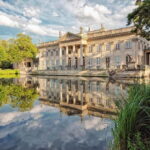
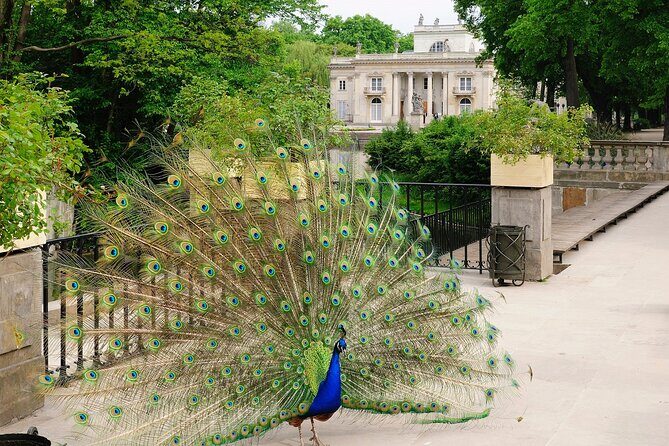
Finally, you arrive at Lazienki Krolewskie in Warsaw—Royal Łazienki Park, one of the most beautiful palace and garden complexes in Europe. The park includes historical monuments and a park in a formerly wild forest, which is why it feels calmer than the city streets around it.
You’ll also get time related to the Rose Garden area, which is a nice contrast after the denser Old Town stops. This is where your guide earns their keep: they’ll help you slow down enough to notice details rather than just moving past them.
There’s also a music tradition that makes Lazienki feel alive on weekends. For 50 years, free piano concerts have been held here on summer weekends next to the monument of F. Chopin. You’ll often find a mix of tourists and local classical music lovers gathering for the sound and the setting.
This stop is also practical value. Even if you came for history, you’ll leave with a “where to relax” map in your head, which is more useful than another photo.
Palace of Culture and Science, the National Stadium, and Copernicus Science Centre
As the tour moves outward, you get a contrast between old Warsaw and modern Warsaw.
First up is the Palace of Culture and Science, built between 1952 and 1955 as a gift from the Soviet people to Poland. It’s the tallest building in the country at 230.5 meters, and the big draw is the observation deck on the 30th floor. The building has about 3,000 rooms and functions as offices and institutional headquarters, plus it includes a post office, cinema, swimming pool, museums, libraries, theatres, a café, and two clubs.
Next comes the National Stadium. It’s tied to the 2012 European Football Championship and built on the site of the historic Tenth Anniversary Stadium, which hosted major events in the mid-1950s, including international football matches, Polish football cup finals, the Warsaw Derby, the Peace Race, and huge propaganda rallies. After 1989, Jarmark Europa operated around the top and surrounding land. That’s a neat way to think about how a single venue can serve very different eras.
If you have energy after those landmarks, there’s Copernicus Science Centre. It opened in November 2010 and is one of the most modern science centers in Europe. You’ll be introduced to hands-on attractions like an earthquake simulator and a magic carpet. There’s also a roof garden with observation decks, plus nearby options like an art gallery, a climbing wall, and a park with art exhibits.
Important practical note: admission to Copernicus Science Centre is not included. It’s still a great add-on if you enjoy interactive learning and you want a break from history-heavy stops.
Price and logistics: where the $195.18 per person fits best
At $195.18 per person for about 4 hours, this is priced for travelers who want a private guide plus pickup/drop-off and a smooth route through multiple zones. You’re paying for time saved, local context, and the convenience of not juggling transit while you’re already doing the work of learning the city.
That price makes the most sense if you:
- want a guided narrative rather than reading placards yourself,
- prefer a private pace (or need flexibility),
- and plan to squeeze in several neighborhoods in one half-day.
If you’d rather save money and don’t mind transit plus map time, a cheaper group tour might be your better match. But if you’re coming in for a short visit and you want your bearings fast, the private structure helps.
One more logistics reality: the tour is a mix of walking and transport, and some areas limit car access. That’s why you’ll want to plan for comfortable shoes and a mindset of short, efficient stops.
Who this Warsaw private tour is for (and who should skip it)
I’d point this tour toward you if you want history with context and you like a route that covers both the emotional and the scenic sides of Warsaw. It’s also a strong choice if your group value is clear: you want your guide to explain what you’re seeing and adjust how you move through the city.
It may not be ideal if you hate walking and you need minimal steps. Even on a private day, you’ll still spend time on foot in the Old Town core and around key monuments.
Guide style can vary, and you’ll do best if you communicate needs clearly at pickup. If you end up with a friendly, fluent guide like the ones known for being very complete and entertaining (names you might see include Anya, Margarita, Grazyna, or Karolina), you’re in great shape.
Should you book this private Warsaw city tour?
Book it if your goal is to understand Warsaw quickly and meaningfully, without spending your half-day on buses and trams. You’ll get a guided overview that ties UNESCO Old Town, the Royal Castle story, and the Warsaw Uprising remembrance into one coherent route—then you get park time at Lazienki.
Skip it (or at least plan to modify it) if your schedule can’t handle walking. In that case, ask for guidance on how much time will be on foot versus in the vehicle, and be ready to trade one extra stop for more sitting if the day runs hot or the group is tired.
Overall, this is the kind of tour that helps you return to Warsaw with a better map in your head—and that’s usually the best souvenir of all.
FAQ
How long is the Warsaw City Tour – Private?
It lasts about 4 hours.
Is this tour private?
Yes. It’s a private tour/activity, with only your group participating.
Do I get hotel pickup and drop-off?
Yes. Hotel pick-up and drop-off are included.
Is the tour guided, and in what language?
It includes a professional local guide, offered in English.
Is there an air-conditioned vehicle?
Private transportation is included, and the tour features an air-conditioned vehicle for the transport portions outside Old Town.
Are attraction entry fees included?
Entry or admission fees are not included (optional).
Is Copernicus Science Centre admission included?
No. Admission to Copernicus Science Centre is not included.
Does St. John’s Cathedral have organ concerts on this route?
Concerts are mentioned: every Sunday at 4 PM from July to September as part of the International Organ Music Festival.
Is there a special daily moment at the Tomb of the Unknown Soldier?
Yes. The military honor guard changes daily at noon, next to the eternal flame.