REVIEW · KRAKOW
The Best of Krakow – Old City guided tour by a STORYTELLER
Book on GetYourGuide →Operated by Discover_Poland · Bookable on GetYourGuide
Krakow works best when someone tells you what you’re really looking at. This Old City guided walk is a beginner-friendly way to see the key sights without feeling rushed, guided by Marta’s story-driven explanations. I especially liked the mix of big-name monuments with everyday local stops like Stary Kleparz and the Żywe Muzeum Obwarzanka, plus the practical where-to-go and what-to-eat advice. The one thing to think about: this tour is not built for everyone, since it’s marked as not suitable for hearing-impaired people, and the wheelchair info is a bit conflicting.
If you want a clean first taste of Krakow, you’ll get it in about two and a half hours of steady walking. I also liked that the tour ends at Wawel, so you finish with the city’s most important symbol rather than bouncing back and forth. The format is simple, but it’s still a lot of ground in daylight, so wear comfortable shoes and bring layers for changing weather.
In This Review
- Key highlights worth your time
- A 150-minute sampler of Krakow’s Old Town and Wawel
- Meeting at Matejko Square: easy start, clear orientation
- Stary Kleparz and Żywe Muzeum Obwarzanka: the local pulse before the icons
- Czartoryski Museum to St. Mary’s Basilica: major landmarks explained with human stories
- Cloth Hall and Main Market Square: the Old Town’s center of gravity
- Rynek Underground and Jagiellonian University: Krakow’s layers of power and learning
- Kanoniczna street to Wawel: finishing with Poland’s big symbol
- Price and value: $5 is mostly for guidance and pacing
- Who should book, and who should skip
- Should you book The Best of Krakow – Old City guided tour?
- FAQ
- How long is the Krakow Old City guided tour?
- What does the tour cost?
- Is the tour in English?
- Is the group small?
- What’s included in the tour price?
- Are museum and church entrance tickets included?
- Where do we meet for the tour?
- Does it require good weather?
- What if I cancel last minute?
- Is it suitable for wheelchair users or hearing-impaired people?
Key highlights worth your time
- Marta’s storytelling with humor: You get history explained in a way that sticks, and she’s ready with answers and helpful context.
- Local stops, not just postcards: Places like Stary Kleparz and the Żywe Muzeum Obwarzanka give you a Krakow rhythm before the major sights.
- Landmarks in a smart flow: You move through the Old Town toward Wawel, so the day makes sense as you go.
- Food and museum tips included: You’ll get guidance on what to see next and where to eat and drink.
- Good value for a 150-minute walk: At around $5 per person, you’re paying mainly for orientation, pacing, and local context.
- UNESCO in the mix: You’ll connect the city’s famous areas to their larger significance.
A 150-minute sampler of Krakow’s Old Town and Wawel
This tour is built like a strong intro: you walk, you listen, and you leave with a mental map. The total time is about 150 minutes, with a smooth rhythm of short guided moments and quick transitions between spots. It’s a great length if you’re trying to plan the rest of your trip without overcommitting.
What makes it feel worth it is the balance. You’re not only checking off major sights. You’re also getting story context for what those places meant, and what they still represent for Poles. That turns the Old Town from a list into a place with meaning, especially when the route gradually pulls you toward Wawel Castle.
The walking part matters. This is meant for people who enjoy being on their feet and don’t mind short outdoor stretches. If you’re expecting a sit-and-stare museum tour, this won’t match your style.
You can also read our reviews of more guided tours in Krakow
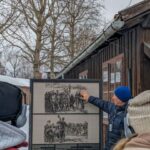

Meeting at Matejko Square: easy start, clear orientation
You start at plac Jana Matejki, at a monument in the middle of a very long square. Your guide meets you at the statue of a horse and waits at that landmark to collect the group.
That matters because Krakow can feel big when you’re new. A solid meeting point helps you avoid the stressful first-thing moment of trying to figure out where your group is before you even begin. Once you’re rolling, the pace stays friendly and beginner-proof, so you can follow along even if this is your first time in Poland.
You also get an immediate sense of how Krakow’s past is physically placed into the city. Starting at a monument instead of a museum entrance sets the tone: this is a walk-through-story, not just a photo tour.
Stary Kleparz and Żywe Muzeum Obwarzanka: the local pulse before the icons
One of my favorite parts of the route is that it doesn’t start by rushing you straight into the most famous postcard buildings. You spend time at Stary Kleparz, which helps you understand how Krakow lives when it’s not posing for visitors.
Then you pass by the Żywe Muzeum Obwarzanka. A living museum stop is exactly the kind of detail that makes a city feel real. You’re not just hearing generalities; you’re seeing how tradition can still be tied to everyday culture in Krakow. Even if you’re not a history-buff, these moments help you understand what locals might recognize instantly.
If you care about food culture, pay attention here and later. The guide’s practical advice comes up during the walk, and it makes those Old Town landmarks more than just buildings. You start connecting the city’s story with what you’ll actually want to do next.
Czartoryski Museum to St. Mary’s Basilica: major landmarks explained with human stories
Next up is the Czartoryski Princes Museum, where you get guided time and context, even though entry isn’t included. This is a smart approach when you’re deciding what to add later: you get orientation first, then you can choose whether museum time is worth it for your interests.
After that, you visit St. Mary’s Church (St. Mary’s Basilica) with guided explanation. This is one of those places where standing outside and looking up is easy. Understanding why it matters is the harder part, and that’s where a storyteller format helps. You get the “what you’re looking at” layer—plus the broader significance—so you’re not just reading captions off your phone.
A real value of this part of the tour is how it connects. The walk doesn’t treat each building as an isolated stop. You hear how different pieces of Krakow’s past link together, which makes the center feel coherent.
Cloth Hall and Main Market Square: the Old Town’s center of gravity
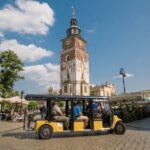
You spend guided time at the Cloth Hall (Sukiennice) after passing through Main Market Square. This area is the visual heart of Krakow, and a guide’s job is to prevent it from becoming background noise.
What’s useful here is learning what to notice while you’re there. Cloth Hall and the Market Square area don’t just impress; they explain how cities make money, power flows, and culture gathers in one place. The tour gives you the kind of historical fact-and-context pairing that makes the Old Town square feel like a living system, not a stage set.
There’s also practical benefit. If you plan to spend time here on your own later, you’ll know where to linger and what to look for first. That saves hours of wandering during your most precious travel day.
You can also read our reviews of more city tours in Krakow



Rynek Underground and Jagiellonian University: Krakow’s layers of power and learning
The route also includes Rynek Underground and time around Jagiellonian University (Collegium Maius). Like the earlier museum stop, entry for some of these is not included, but you do get guided orientation where it counts.
This is where Krakow shows its “layers.” Even without going deep into every exhibit, you can understand why underground or academic sites matter to how the city developed. The guide’s storytelling connects these places to wider themes—governance, knowledge, and how communities survive big shifts in history.
You’ll also pass the Krakow Museum – Underground Market Square, which helps reinforce that this city isn’t only on the surface. For planning, this section is a useful fork in the road: if you want deeper access, you’ll know what to target after the tour rather than guessing.
Kanoniczna street to Wawel: finishing with Poland’s big symbol
The walk then shifts into a more scenic, slower-feeling stretch outdoors on Kanonicza street, followed by a pass by the Archdiocesan Museum. Outdoors time matters because it gives your brain a break between heavy historical stops. It’s also the part of the tour where you get better “city-view thinking,” like how streets connect and where sightlines naturally pull you toward Wawel.
Finally, you end at Wawel Royal Castle, with Wawel Cathedral passing as part of the close. Ending here is a strong move. It turns your tour into a clear arc: you start in the city’s symbolic public areas and end in the place most tied to Polish identity.
Even if you only know Wawel as a name, you’ll leave with a better sense of why people treat it like a centerpiece. That’s the difference between seeing a building and understanding what a city centers itself around.
Price and value: $5 is mostly for guidance and pacing
At about $5 per person for a roughly 150-minute English-guided walk, you’re paying for three things: a local guide, a tight route, and context you’d otherwise piece together from multiple sources. That’s why the value here feels high. You’re not just buying access to buildings you can see on your own; you’re buying interpretation and direction.
What’s not included is the admission into several major interiors, including Czartoryski Museum, St. Mary’s Church, Cloth Hall, Jagiellonian University Museum (Collegium Maius), Wawel Royal Castle, and more. That doesn’t make the tour “not worth it.” It just means the walk functions like the best kind of sampler: you get the reasoning for where to spend your money next.
If you want the full day experience, think of this as your first stop. Do the tour, then choose which interiors deserve your ticket time. That strategy helps you avoid paying for everything and seeing nothing well.
Who should book, and who should skip
This is ideal for you if you’re:
- visiting Krakow for the first time and want a map in your head
- short on time but want context for major landmarks
- traveling with kids, seniors, or mixed ages who still enjoy walking
- someone who likes local details, not only famous monuments
It’s a weaker match if:
- you rely on accessibility support beyond what’s clearly stated
- you have hearing needs, since the activity is marked not suitable for hearing-impaired people
- you’re expecting lots of indoor museum time included in the price
Also note the “good weather required” guidance. If Krakow is wet and gloomy during your planned day, you may want a backup plan for your schedule, or be ready to rebook if the tour is changed due to conditions.
Should you book The Best of Krakow – Old City guided tour?
Yes, if you want an easy, story-driven introduction that helps you plan the rest of Krakow. I’d book it early in your trip. You’ll get a cleaner route for your next self-guided walks, plus practical food and museum suggestions that can save you time later.
The value is hard to beat at this price point, but be smart about expectations: the tour is about orientation and explanation, not a full package of paid entries. And double-check the fit for your needs if accessibility or hearing is part of your planning, since the provided info is not fully consistent.
If you like cities that feel lived-in and you want the Old Town to make sense fast, this is a solid bet.
FAQ
How long is the Krakow Old City guided tour?
The tour lasts about 150 minutes.
What does the tour cost?
The price is listed at $5 per person.
Is the tour in English?
Yes, the live guide provides the tour in English.
Is the group small?
It’s described as a small group experience.
What’s included in the tour price?
You get valuable city information, a professional guide, Krakow stories, and a small-group experience.
Are museum and church entrance tickets included?
No. Entrance is not included for several stops, including the Czartoryski Princes Museum, St. Mary’s Church, the Cloth Hall, Jagiellonian University Museum Collegium Maius, and Wawel Royal Castle and related sites.
Where do we meet for the tour?
You meet at plac Jana Matejki at the monument in the middle (the statue of a king on a horse).
Does it require good weather?
Yes. The experience requires good weather, and if it’s canceled due to poor weather, you’ll be offered a different date or a full refund.
What if I cancel last minute?
You can get a full refund if you cancel at least 24 hours in advance. If you cancel less than 24 hours before the start time, the amount paid is not refunded.
Is it suitable for wheelchair users or hearing-impaired people?
It’s marked as not suitable for wheelchair users and for hearing-impaired people, even though it also lists wheelchair accessible. If either applies to you, it’s worth confirming directly before booking.