REVIEW · GDANSK
Sopot Private City Walking or Bike Tour with a local architect
Book on Viator →Bookable on Viator
Sopot changes fast when you slow down. This private walk (or bike option) with a local architect turns a quick seaside stroll into a smart, story-filled route through spa-era Sopot and the streets that shaped it. You’ll also get historical pictures along the way, so the buildings don’t just sit there—they explain themselves.
I love the way the tour focuses on architecture you can actually see, from villa details to grand hotel glamour. I also like that guide Agnieszka Łasota keeps things readable: she pays attention to what your group needs and doesn’t drown you in facts. The main drawback to consider is the lighthouse steps at the end—walking might feel tiring, so you’ll want to decide in the moment how much climb you want.
In This Review
- Key highlights at a glance
- Sopot Through an Architect’s Eyes
- Timing, start point, and what the route covers in 2 hours
- Bohaterów Monte Cassino: Sopot’s main street, built from a sea road
- Dworek Sierakowskich and the quiet, off-the-track feeling
- Villas Street and the surprise nickname: Poland’s Montmartre
- Goyki 3 Art Inkubator: Tower Villa and the spa-resort logic
- Sopot’s spa architecture in practice: Skwer Kuracyjny and the Changing Rooms
- Per Oscar Gustav Dahlberg and the artist trail near the tour
- Haffner’s statue to Sofitel Grand Sopot: power, wealth, and sea air
- Skewered by the sea: pier views and the lighthouse choice
- Price, value, and why private is the point
- Who this tour suits best
- Should you book this Sopot architect tour?
- FAQ
- How long is the private Sopot architect walking tour?
- How many people are in a group?
- Is the tour offered in English?
- Is pickup available?
- Where does the tour start and where does it end?
- What’s included in the tour price?
- Is free cancellation available?
Key highlights at a glance
- Private group up to 9 with a route shaped for your pace
- A licensed local architect guide (Agnieszka Łasota) who explains design clearly
- Free-entry buildings and sites plus historical photos at key stops
- Sopot’s spa architecture storyline, from resort trends to changing rooms
- Villas Street and Poland’s Montmartre vibe without losing the plot
- Optional lighthouse climb for a payoff view when you feel like it
Sopot Through an Architect’s Eyes
Sopot can feel like a postcard at first glance. But this tour is different because it treats the town like a living design document—each era leaves fingerprints in façades, gardens, and public plazas.
A licensed guide leads the walk, and the big bonus is that the focus stays on what you can observe: proportions, details, and why certain buildings show up in a seaside town. With Agnieszka Łasota—an architect by training—you get explanations in plain language, plus enough personality and humor to keep it fun even when the wind off the Baltic has opinions.
This is the kind of tour that helps you stop asking What is this? and start noticing How does this work and who paid for it?
You can also read our reviews of more walking tours in Gdansk


Timing, start point, and what the route covers in 2 hours
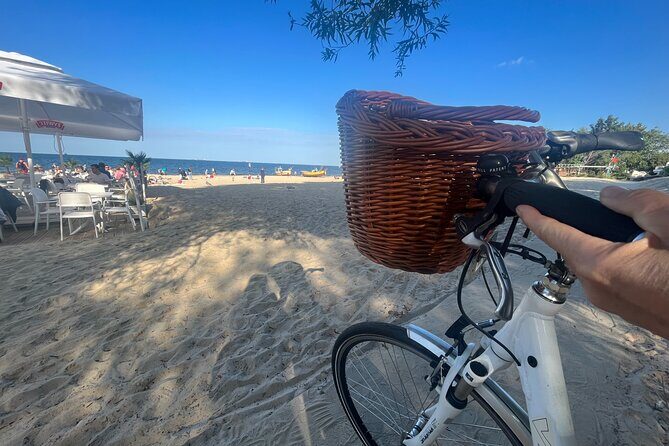
Plan for about 1.5 to 2 hours. The route is built around a tight loop through central Sopot, with a mix of outdoor walks and a few free-entry stops.
You’ll meet at Restauracja McDonald’s, Bohaterów Monte Cassino 21, 81-706 Sopot. Pickup is offered, so if you’re staying nearby you can often reduce walking time before you even start. The tour ends in a different location—at the area of the Changing Rooms built in 1905, with the pier and lighthouse as part of the final stretch.
One practical note: this route works best if you’re okay walking continuously for stretches. Even though it’s not described as a long hike, the lighthouse choice is real, and you’ll feel the steps.
Bohaterów Monte Cassino: Sopot’s main street, built from a sea road
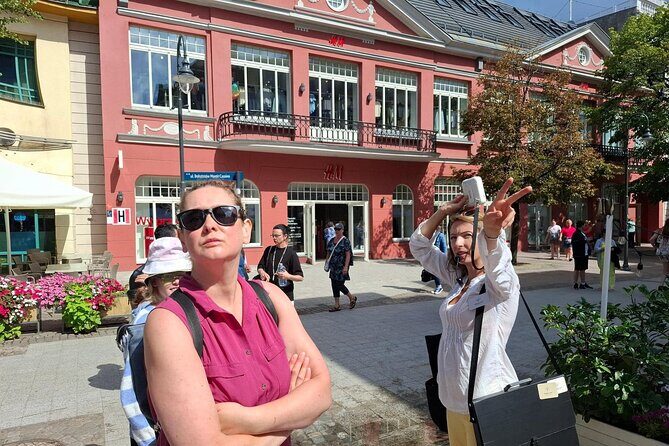
The tour kicks off at Bohaterów Monte Cassino. This is known as the first pedestrian street in Poland, and that title matters: it frames Sopot’s center as a place designed for people, not just traffic.
Here’s the story angle that makes it stick. Long ago, this road served fishermen traveling to the sea, meaning the street’s origin is practical and local—not just decorative. Expect the guide to connect those early uses to how the center looks today, including historical images showing the transformation over centuries.
What to watch for: as you walk this stretch, look at how “pedestrian street” planning changes the vibe. Even if you’ve been to Sopot before, you’ll likely notice different levels of importance in side streets and storefront placement when someone points out what used to happen here.
Dworek Sierakowskich and the quiet, off-the-track feeling
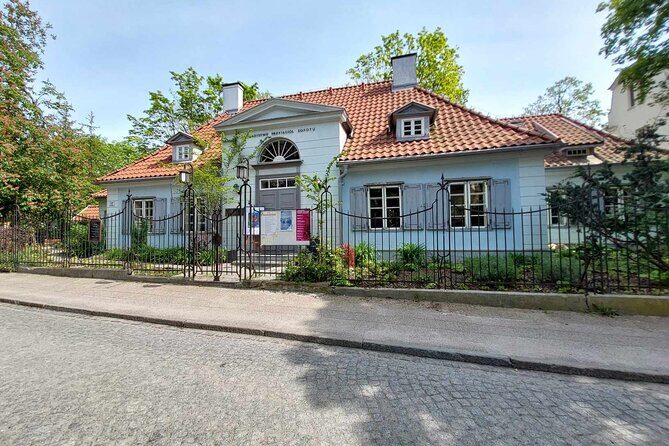
Next comes Dworek Sierakowskich, an 18th-century building that once functioned as a guest house linked to a bigger manor home. The big value isn’t just age—it’s atmosphere.
The interiors and back garden are described as calm and authentic, away from the busiest routes. And then there’s the Chopin thread: you’ll see a bust of Fryderyk Chopin, with the suggestion that he very probably stayed here during a holiday and played the piano. Whether that connection is something you want to chase with extra research later, it gives the stop a human scale.
Potential drawback: if you prefer very grand sights over intimate details, this might feel quieter. It’s still worth it if you like architecture and context more than big-name monuments.
Villas Street and the surprise nickname: Poland’s Montmartre
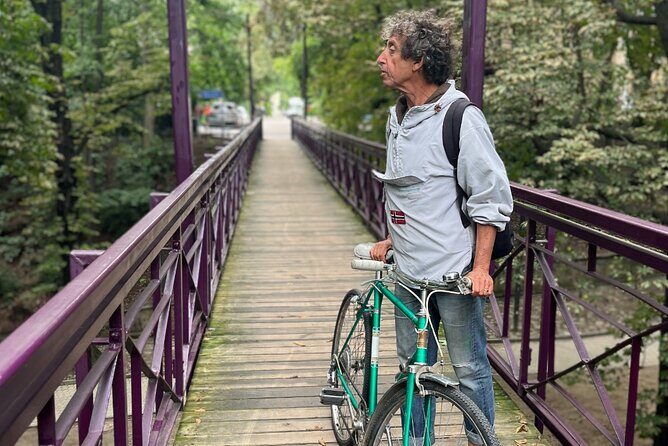
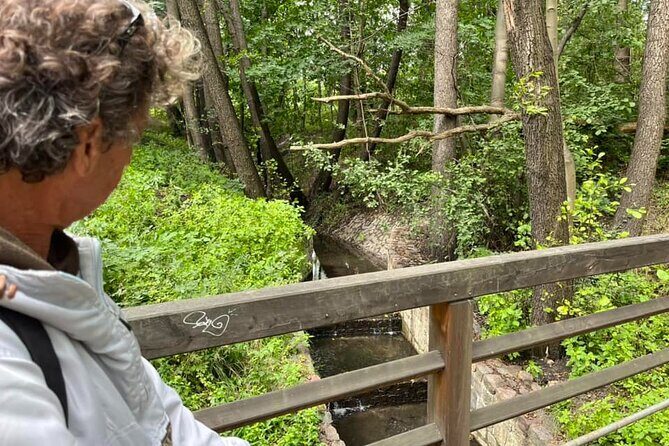
After that, you’ll pass over a picturesque bridge into a neighborhood where the street was once called Villas Street. This is where Sopot’s image shifts from classic promenade to design-forward residential charm.
The guide highlights classical architecture and calls out that the oldest house here dates to 1881. But the stop’s real fun comes from the later cultural nickname: in the second half of the 20th century, the street was known as Poland’s Montmartre.
That matters because it tells you something about how places earn identities. It’s not just who built the buildings; it’s who gathered around them, what kind of art and life clustered there, and how the street started to feel to locals over time.
You can also read our reviews of more cycling tours in Gdansk

Goyki 3 Art Inkubator: Tower Villa and the spa-resort logic
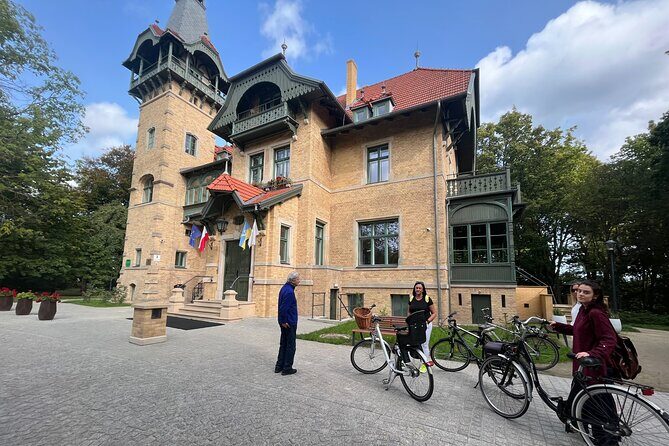
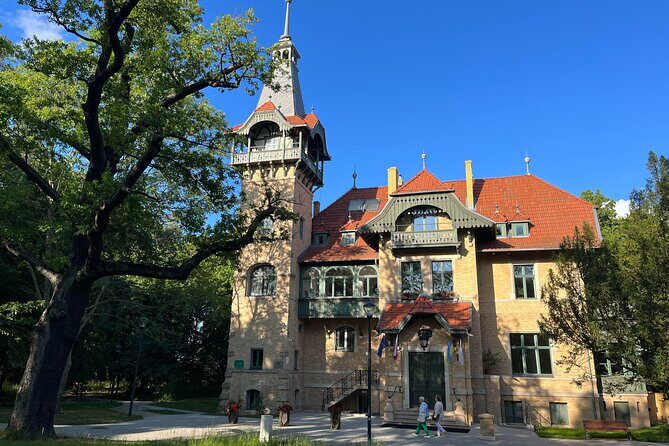
One of the most interesting stops is Goyki 3 Art Inkubator, centered on a major late-19th-century villa with a Tower Villa feature.
The building has a long, sad story linked with music, and today it’s used as an art institution in what the guide describes as Alpine Resort style. That sounds odd at first—why reference the Alps when you’re far from mountains?
Here’s what you should take away: you’re seeing how European spa-fashion spread. The guide explains a trend that started in the 18th century, when resort culture influenced what elite seaside towns chose to borrow in style. So even though the setting is Baltic beach, the design language comes from a wider European health-and-leisure fashion world.
This is the kind of stop that changes how you see Sopot’s whole theme. Instead of separate “cool buildings,” you start spotting a consistent story about prestige, leisure, and health.
Sopot’s spa architecture in practice: Skwer Kuracyjny and the Changing Rooms
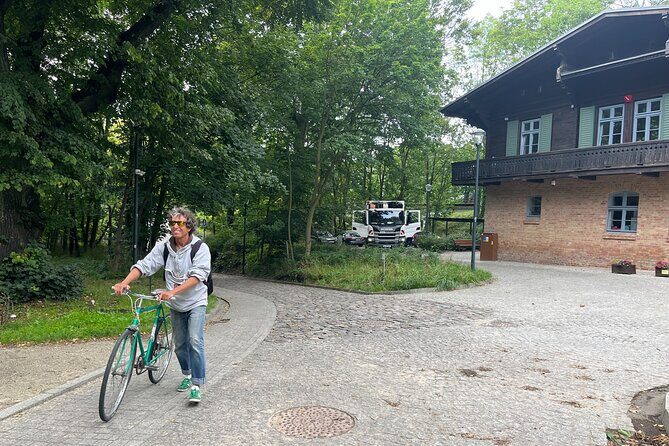
Sopot is said to have the richest complex of spa architecture in Europe, and the tour sets out to prove that idea in a walk-through way.
You’ll move through key spa-era settings, including Skwer Kuracyjny, a beautiful plaza created in 1925. The guide uses old photographs again to show how Sopot was once known across Europe as the Riviera of the North. You’re not just looking at present-day buildings—you’re seeing how the same spaces once hosted a different kind of life.
Then the tour ends at the Changing Rooms built in 1905. The guide shares funny stories behind them, and this is where the spa narrative gets more than architectural. You’ll also hear about the fishermen’s houses that were relocated in 1905, which ties everyday coastal life to the transformation of the area for visitors.
What to watch for: in spa architecture, details like entrances, circulation, and public spaces matter. If you’re into design, you’ll enjoy noticing how these places guide movement—where people enter, gather, and transition between outdoors and indoor spaces.
Per Oscar Gustav Dahlberg and the artist trail near the tour
A nice extra thread on this route is the art connection. The neighborhood includes a home and studio of Per Oscar Gustav Dahlberg, a Swedish artist who moved to Sopot in 1996 after falling in love with the place.
You may be able to stop by his house and studio and potentially buy graphics or an album that presents Sopot or Gdańsk architecture. If that interests you, the guide says you should tell them—it might be possible to arrange a meeting.
Then there’s the famous crooked house in Sopot, which is described as being inspired by Dahlberg’s drawings. Even if you’ve seen photos of it, you’ll get a better sense of where the creative inspiration fits into this broader architectural story.
Practical tip: if you want to spend extra time at art stops, mention it early. A private format means you can often adjust without derailing the entire route.
Haffner’s statue to Sofitel Grand Sopot: power, wealth, and sea air
The tour doesn’t stay in spa mode only. You also get landmarks that show Sopot’s social side.
A quick stop is the Jan Jerzy Haffner Monument, tied to the town’s “godfather.” The guide explains he was previously a surgeon in Napoleon’s army and that he chose to live in Sopot far before the area became widely known. That’s a good reminder: seaside fame didn’t appear overnight. People with influence helped shape where attention went first.
Then you’ll reach the Sofitel Grand Sopot. This grand hotel sits majestically on the beach, and the tour frames it as something the city decided to invest in during the 1920s—which is a big part of why Sopot’s prestige took off. The scale of the hotel makes sense once you’ve heard the spa and resort trend background. It wasn’t just tourism; it was a whole lifestyle project.
What’s good here: you get an easy photo moment, but you also get a reason for the grandeur—how Sopot marketed itself as a northern alternative to other European resorts.
Skewered by the sea: pier views and the lighthouse choice
At some point you’ll pass by the famous pier, and you’ll learn what to know so you can visit it after the tour. That’s smart. It prevents the pier from becoming a rushed glance, and it gives you a mini mission for later.
Finally comes the Sopot Lighthouse. The route includes time for it, but the steps are real. You can decide whether to climb. The view is described as worth it, so if you’re feeling good, this is your payoff moment.
If you don’t want extra strain, you can still enjoy the area without committing to every step. The guide’s job is to keep the experience enjoyable, not force fatigue.
Price, value, and why private is the point
The price is $204.04 per group, up to 9 people, for about 1.5 to 2 hours. That’s not “cheap by person,” but it can be good value because you’re booking a private route with a licensed guide who focuses on architecture and stories, with free-entry stops and included lighthouse access.
If you’re traveling as a small group, the math gets friendlier fast. For couples, it can still make sense because you’re getting targeted pacing and the chance to ask questions as you go. And because it’s booked about 8 days in advance on average, you’ll want to reserve early if you’re traveling in peak season.
What you’re really paying for is not only the walk—it’s the translation of the town’s design language into something you can actually enjoy in real time. With Agnieszka Łasota’s style, you get enough structure to make sense of what you’re seeing, without feeling like you’re trapped in a lecture.
Who this tour suits best
This works especially well if you:
- like architecture and design details more than checklists
- want a spa-era theme that actually explains why buildings look the way they do
- enjoy photos and then matching them to current streets and façades
- prefer a private group where you can ask about specific buildings, art, or history threads
It may be less ideal if you:
- hate walking for the duration, especially the lighthouse steps
- want only big, famous monuments with minimal “why” explanations
Should you book this Sopot architect tour?
If you’re coming to Sopot and you want more than pretty scenery, yes, book it. The tour is built around a clear theme—spa architecture, villas, and the resort world that shaped the town—and the guide connects those dots in a way that makes you notice details you’d otherwise miss.
Skip it only if you know you don’t want any sustained walking and you’re not interested in architecture-led storytelling. For most people, the payoff is worth the effort: you’ll finish with a town that feels readable, not random.
FAQ
How long is the private Sopot architect walking tour?
It runs about 1 hour 30 minutes to 2 hours.
How many people are in a group?
This is a private tour for your group only, with up to 9 people.
Is the tour offered in English?
Yes, it’s offered in English.
Is pickup available?
Pickup is offered.
Where does the tour start and where does it end?
It starts at Restauracja McDonald’s, Bohaterów Monte Cassino 21, 81-706 Sopot, Poland. It ends in a different location near the Changing Rooms area, with details provided after booking.
What’s included in the tour price?
A licensed guide is included, along with historical pictures. Sopot Lighthouse is listed as included, while other buildings are described as free entry.
Is free cancellation available?
Yes. You can cancel up to 24 hours in advance for a full refund. If you cancel less than 24 hours before the start time, you won’t receive a refund.