REVIEW · GDANSK
Gdansk: Museum of World War II – True Story of a Living Hell
Book on Viator →Operated by Rosotravel Tours Gdansk · Bookable on Viator
War history with a pulse. The Museum of the Second World War in Gdansk is one of the most powerful ways to understand how the catastrophe unfolded. I like this tour because it adds a licensed guide and a clear route through the museum’s story, not just a random walk in the dark.
I love how the exhibition lays the story out in 20 rooms, with easy-to-follow visuals and carefully researched context. I also like that you can use headphones/audio help in the museum if you want extra language support while you read and look at objects.
One consideration: the topic is heavy, and the full visit takes close to three hours. If you need frequent breaks, you’ll want to pace yourself rather than rushing to the end.
In This Review
- Key things to know before you go
- Entering Gdansk’s WWII Museum with a private English guide
- 20 rooms, one long corridor, and a story you can actually track
- The Danzig storyline: how World War I’s ending mattered
- Objects you can point at: Enigma, Stalin’s pipe, and the Sherman tank
- Daily life in wartime Gdansk: streets, shops, and the human scale
- Timing, pace, and what to expect during the 3 hours
- Price and value: what you’re really paying for at $217.08
- Who this tour fits best (and who should think twice)
- Should you book Rosotravel’s WWII Museum Tour?
- FAQ
- How long is the Museum of World War II tour in Gdansk?
- Is this tour private, and is it offered in English?
- What’s included in the tour price?
- Where do we meet the guide?
- Do you offer hotel pickup and drop-off?
- Is the museum difficult to access?
- Can I cancel for free?
- Are headphones or translation help available inside?
Key things to know before you go

- English guidance with a 5-star licensed guide, tailored to your group’s interests
- Museum tickets are included, so you’re not juggling paperwork on arrival
- 20 exhibition rooms arranged on a long corridor axis, with everyday life displayed along the way
- You’ll see standout artifacts and military objects, from an Enigma machine to a Sherman tank
- Plan for the full circuit (about 3 hours) and use on-site options like the cloakroom and café
- Accessibility basics exist, including lifts for access to lower levels
Entering Gdansk’s WWII Museum with a private English guide
Meet your guide at Plac Władysława Bartoszewskiego 1 by the Museum of the Second World War. From there, the visit turns into a guided story, not a ticket-and-go situation. Your tour is private, meaning only your group participates, and you’ll travel with a fluent guide in English.
There’s something practical here that I really value: the museum is big, the subject is complex, and it’s easy to miss the “why” if you just wander. With a guide, you get the connections explained at the right moment—politics, war events, and the personal cost—while you’re still looking at the objects that prove the point.
The tour duration is about 3 hours, which is enough time to see the main exhibition without turning it into a sprint. You’ll also have a mobile ticket for the museum, so check-in is straightforward.
You can also read our reviews of more museum experiences in Gdansk



20 rooms, one long corridor, and a story you can actually track
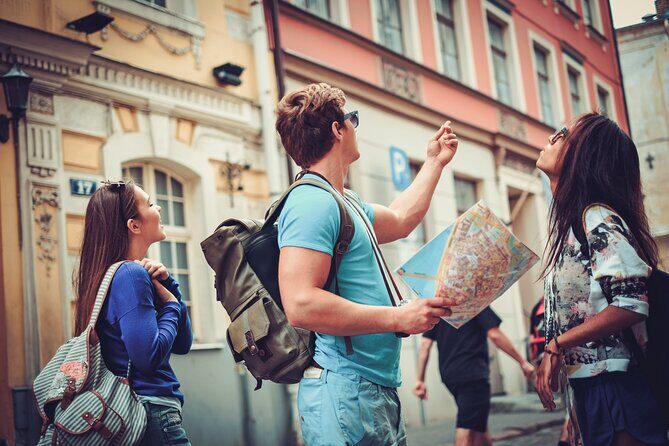
Inside, the museum’s layout does a lot of the teaching work for you. The main exhibition runs through 20 rooms positioned on either side of a long corridor axis. The corridor isn’t just hallway space—it’s where the museum places displays of everyday life during the war, so you keep seeing the human scale alongside the big events.
The flow starts with political context. Early on, you’ll see a semi-circular screen that frames how totalitarian regimes rose across Europe. It sets up what comes later, and it does it in a way that feels legible rather than vague. Then the exhibition moves forward with a mix of geopolitical context, military developments, and individual stories.
What works best is the rhythm. You’ll move between explanation panels, objects, and film/video footage that helps you visualize what you’re reading. The museum uses repetition in the story (sometimes to reinforce themes), but the guide can help you decide where to slow down and where to let the context land.
The Danzig storyline: how World War I’s ending mattered
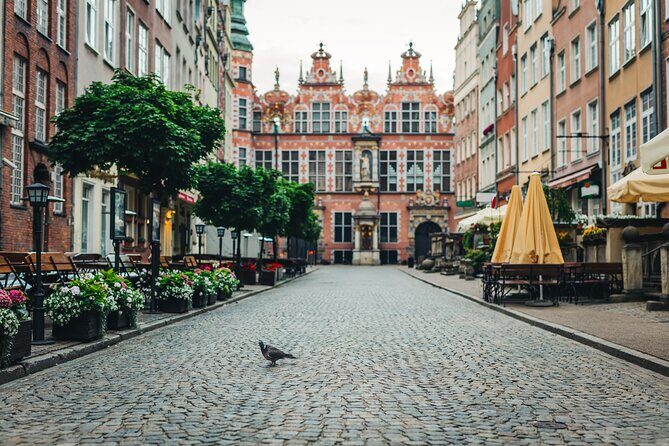
A key part of the museum’s power is that it doesn’t treat 1939 as the starting point. For Danzig (Gdansk), the story connects directly to the end of World War I and the Treaty of Versailles. That treaty left the city in a political in-between space—governed neither by the newly recreated Polish state nor by Germany, which had controlled the region for centuries after the earlier partitions.
When you hear that explained while you’re standing in the museum, it makes the later events feel less like sudden “shock” history and more like the result of a broken setup. You’re not only learning dates. You’re learning cause and effect: how politics, identity, and power struggles set conditions that violence can later exploit.
That’s why this guide-led structure helps. The museum presents the background and then you begin following the war’s movement across Poland, Europe, and beyond. You start to see that WWII wasn’t one straight line; it was different fronts, different pressures, and different experiences depending on where you stood.
Objects you can point at: Enigma, Stalin’s pipe, and the Sherman tank
One of the best parts of the exhibition is the mix of objects you can recognize instantly (or at least recognize as real, not abstract).
You’ll encounter artifacts such as Stalin’s pipe, an Enigma machine, and a Sherman tank. The museum also ranges across the spectrum of what WWII involved—technology, propaganda, the mechanics of control, and the physical tools of war.
This is where the museum stops being “a lesson” and turns into evidence. When you see an Enigma machine displayed, the story of code-breaking isn’t a concept anymore; it’s a concrete piece of hardware tied to real decisions and real danger. When you see a tank, you’re forced to think about what “strategy” means on the ground: firepower, mobility, supply, and the terror those systems bring.
The guide’s job here is important. You don’t just look at objects—you learn why those objects were chosen and what they represent in the larger story. That turns a gallery of items into an argument you can follow.
Daily life in wartime Gdansk: streets, shops, and the human scale
The museum makes a deliberate choice to show war through ordinary scenes, not only uniforms and battle maps. Along the corridor axis, you’ll find displays focused on daily life during the conflict. The experience includes realistic depictions of things like streets and shops, so you can picture how people lived, worked, feared, and adapted.
This matters because WWII wasn’t only something that happened to soldiers. It happened to families, neighborhoods, and routines. The museum alternates major events with individual fates, so history doesn’t become a distant timeline. You get a clearer sense of how large-scale decisions filtered down into personal suffering.
And yes, the museum doesn’t pull punches. It uses photos, films, and documentary footage, often in loops, and it names the horrors of war in plain terms. If you come hoping for a light afternoon out, this isn’t that. If you come wanting to understand, it’s effective—and hard to forget.






Timing, pace, and what to expect during the 3 hours

Give yourself real time here. The main museum circuit can take about 3 hours to do properly, and that’s without rushing. Even with a guide, you’ll want a pace that lets the story settle between rooms.
A few on-site practical points make the visit smoother:
- There are lifts for access, and the museum works across levels (with the entrance at street level and lower areas to reach).
- You’ll find a manned cloakroom, which is useful if you’re carrying a coat, bag, or extra layers.
- There’s a café on site, so you can take a breath without losing your place entirely.
- Headphones/headsets are available in the museum to help with translation if you want additional language support while you read.
Your tour is group-based in the sense that it follows a set route, but it remains private to your group. That helps you ask questions when something catches your attention—especially if you’re curious about Poland’s specific experience between the two major powers described in the exhibition.
If you’re sensitive to heavy content, I’d plan a slow day elsewhere too. This museum takes your mind to dark places, and you’ll likely need a little time afterward to reset.
Price and value: what you’re really paying for at $217.08
At $217.08 per person for about 3 hours, this isn’t a budget museum walk. But it also isn’t just buying entry.
Your price includes:
- a private tour with a 5-star licensed guide fluent in your selected language (English)
- museum tickets
- expert commentary focused on WWII events in Poland
- an experience tailored to your group’s interests
That combination is where the value lives. Tickets alone won’t explain why the museum places certain objects where it does, or how the Danzig storyline connects to the Treaty of Versailles and the larger war. You’re paying for interpretation—so you leave with meaning, not just memories of rooms.
Also, the tour uses a mobile ticket, which reduces friction on arrival. And it mentions group discounts, which can make sense if you’re booking with friends or family and want the same guide for everyone.
If you already read a lot about WWII and prefer to explore without guidance, you might decide to visit independently. But if you want the museum’s details organized into a clear story, a guided private tour is a strong value.
Who this tour fits best (and who should think twice)

This tour is for you if you:
- want a clear, guided path through a large museum
- care about how the war connects to Poland and the Baltic region
- like seeing objects and learning what they mean in context
- appreciate a real structure for a topic that can otherwise feel overwhelming
It may be less ideal if you:
- want a casual outing with minimal emotional intensity
- hate lengthy museum walks and struggle with heavy subject matter
- need frequent bathroom/coffee breaks and don’t want to manage pacing
The museum’s design supports most people, and the practical access points (like lifts) help. Still, the content is serious, so go in with the right mindset.
Should you book Rosotravel’s WWII Museum Tour?
If you’re serious about understanding WWII in Gdansk—not just seeing big rooms and photos—this is a solid booking. The biggest reason is control: the museum can feel endless without a guide, but with expert commentary you get clarity, connections, and the right emphasis while you’re standing in front of the evidence.
Book it if you value guidance and want your time to feel efficient. Skip it if you prefer self-guided museum wandering and you’re comfortable building your own thread through the exhibition.
My rule of thumb: if you’re spending only a short time in Gdansk and you want one museum stop that actually lands, this is the one. It’s not light, but it’s honest.
FAQ
How long is the Museum of World War II tour in Gdansk?
It lasts about 3 hours (approximately).
Is this tour private, and is it offered in English?
Yes, it’s a private tour/activity, and it’s offered in English.
What’s included in the tour price?
You get a private tour of the Museum of World War II in Gdansk, a 5-star licensed guide fluent in the selected language, tickets to the museum, and expert commentary focused on WWII events in Poland.
Where do we meet the guide?
You meet at Plac Władysława Bartoszewskiego 1, 80-862 Gdańsk, Poland, in front of the Museum of the Second World War. The tour ends back at the meeting point.
Do you offer hotel pickup and drop-off?
Hotel pickup and drop-off are not included, but transportation can be arranged on request for an additional fee of 20 Euro.
Is the museum difficult to access?
The experience is near public transportation, and the museum has lifts for access to lower levels.
Can I cancel for free?
Yes. You can cancel up to 24 hours in advance for a full refund.
Are headphones or translation help available inside?
Headphones are available at the desk to translate, and the tour is also guided in English. The museum also supports multi-language viewing through its audio options.