REVIEW · GDANSK
Gdansk Private Bike Tour
Book on GetYourGuide →Operated by Poland By Locals · Bookable on GetYourGuide
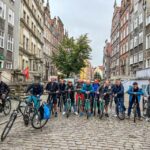
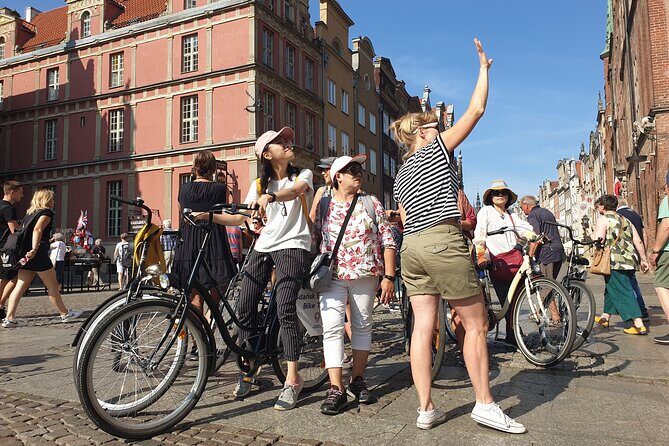
A bike lets Gdańsk tell its story in motion. On this private 3-hour ride (starting at Chlebnicka 19/20), you link the postcard sights of Old Town with the industrial drama of the shipyard, all with a live guide who keeps the narrative moving.
I especially like how the route threads key monuments together with the Solidarity movement and the struggle for freedom. Second, the cycling itself is comfortably paced: the terrain is flat, so the tour works well even if you are not a hard-core cyclist.
One consideration: this is not designed for people who cannot ride a bike (and there’s a footbridge crossing), so you’ll want to feel steady in the saddle before booking.
In This Review
- Key Things I’d Plan Around
- Why This Gdańsk Tour Works Better by Bike
- Meeting Point at Chlebnicka 19/20: Your Quick Start
- Old Town Loop: Neptune’s Fountain, Golden Gate, St. Mary’s
- Neptune’s Fountain (guided walk moment)
- Golden Gate (quick, focused stop)
- St. Mary’s Church (signature exterior-to-detail time)
- Museum of the Polish Post: A Smaller Stop With Big Context
- What to watch for
- Tradeoff
- Stocznia Cesarska and the BHP Hall: Solidarity Where It Happened
- Why this part lands
- Wind and mood check
- Time tradeoff
- Footbridge to Ołowianka: A Scenic Break and a Local-Feel Detour
- What you’ll likely notice
- Small drawback
- Low Town Regenerated: Łąkowa and the Motława Quays
- Łąkowa: the gentle, in-between space
- Nabrzeże Motławy: canal-and-building framing
- Price and Value: Is $120 Worth It?
- How Hard Is It, Really? The Flat-Ride Reality
- Who This Tour Suits Best
- Should You Book This Private Bike Tour?
Key Things I’d Plan Around
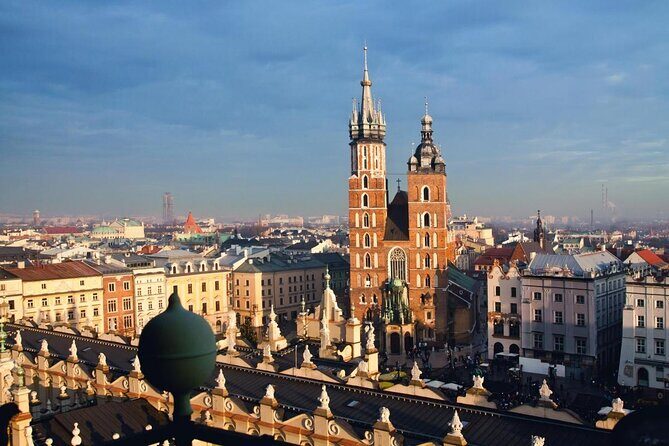
- Old Town stops on a timed loop: Neptune’s Fountain, Golden Gate, and St. Mary’s Church, without the wandering
- Solidarity history in the real industrial setting: Stocznia Cesarska and the BHP Hall along the shipyard cranes
- Canals and regeneration in Low Town: greenery, water views, and restored architecture in a calmer area
- Off-the-beaten-track angles: the footbridge to Ołowianka and stops that feel more local than tour-bus standard
- Private, guide-led format with English or Polish: you can match the pace and interests to your group
- Flat, pleasant ride: you should be able to do 3 hours without turning it into a workout
Why This Gdańsk Tour Works Better by Bike
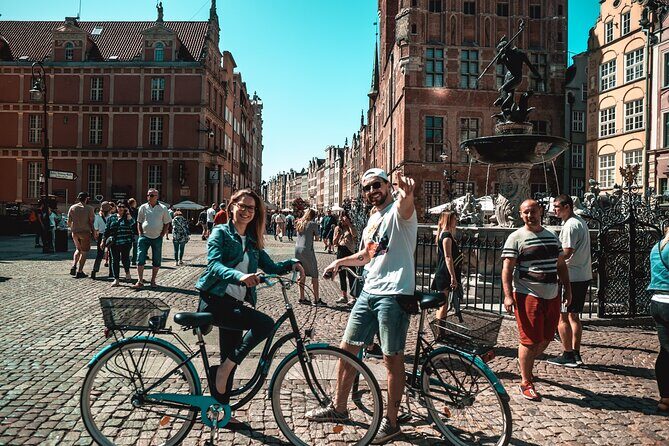
Gdańsk is one of those cities where walking is nice, but biking changes the feeling. You cover ground fast enough to connect distant neighborhoods, yet you move slowly enough to actually notice details. In a place like this, that matters.
This tour is built for flow. You start in the historic core, shift to the shipyard area where the story gets heavier, then finish in a regenerated Low Town with calmer water-and-greenery vibes. That mix is what makes the 3 hours feel like more than a highlight reel.
Also, the private format helps. You’re not stuck listening to a one-size-fits-all script, and the guide can adjust to how the group is moving that day. In real-world bookings, guides named Olga Ruebenbauer, Alicja, Bozena, Ali, and Sebastian show up, and the common thread is clear confidence in both the facts and the local feel.
You can also read our reviews of more cycling tours in Gdansk
Meeting Point at Chlebnicka 19/20: Your Quick Start
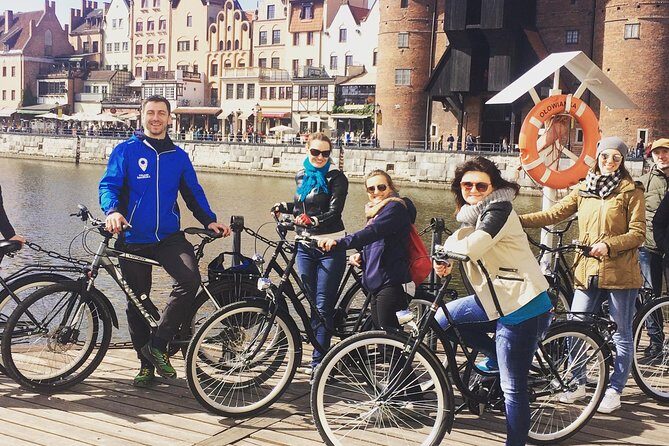
You meet at Chlebnicka Street 19/20 in Gdańsk Main Town. If you like tours that get going on time, this one has that advantage: it’s designed as a tight circuit within about 3 hours.
You’ll also get the bike and water as part of the experience, which is a practical win. Bring comfortable clothes and shoes, because you’ll do short guided moments at multiple stops, not just ride past everything. Dress for the weather—Gdańsk can bring changing conditions, and you will feel it more when you’re out on open stretches near the water or industrial zones.
Since the bike is provided, you can travel light. No scrambling for rentals after you arrive, and you’re already in “tour mode” from the first minutes.
Old Town Loop: Neptune’s Fountain, Golden Gate, St. Mary’s
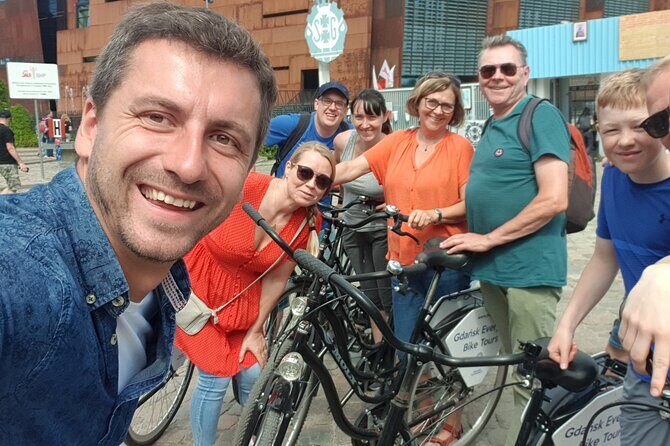
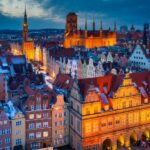
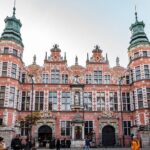
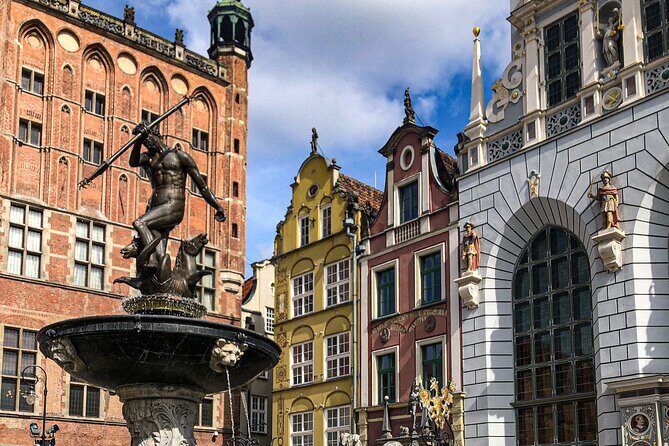
The first stretch puts you in the classic Gdańsk rhythm. You head to Neptune’s Fountain, then the Golden Gate, and then St. Mary’s Church. The timing per stop is short and purposeful, which is great if you don’t want to lose half your day reading captions.
Neptune’s Fountain (guided walk moment)
This is the kind of landmark you’ve probably seen in photos, but on a bike tour you get context fast. The guide uses these sights as anchors: they’re not just pretty; they help explain the city’s early character and why the Old Town still feels like the heart of town even after all the later changes.
Golden Gate (quick, focused stop)
The Golden Gate stop is brief, which means you should pay attention right from the start. I like short stops like this because the guide’s story sticks better when you’re still standing in front of the structure they’re describing.
You can also read our reviews of more private tours in Gdansk


St. Mary’s Church (signature exterior-to-detail time)
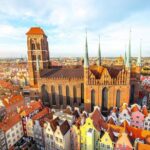
St. Mary’s Church is famous for a reason, but you can miss meaning if you only skim. With a guide, you’re more likely to notice what makes it stand out and how it fits into Gdańsk’s identity. The tradeoff: if you want long interior time, this tour is not designed for that kind of visit.
Potential drawback here: you’ll move on even if you still want to linger. If you like spending time photographing and scanning every corner, plan to add extra time later on your own.
Museum of the Polish Post: A Smaller Stop With Big Context
Next comes the Museum of the Polish Post, with a guided moment that lasts about 10 minutes. This is one of the stops that feels smarter than another generic photo stop, because it turns a daily-life theme—communication—into a lens for history.
Why it works in a bike tour: postal systems connect cities, borders, and social change. So even though the time is short, the guide can give you a framework for thinking about how messages and institutions mattered in Poland’s past and under political pressure.
What to watch for
Don’t treat this as a quick look. Use the guide time to orient yourself: what you’re seeing, why it mattered, and what details you might want to read later if the museum has more depth than the quick stop offers.
Tradeoff
The tour’s pace is set to keep you moving toward the shipyard. If you’re the type who wants museums in full, you’ll probably use this as a “starter course” and come back after.
Stocznia Cesarska and the BHP Hall: Solidarity Where It Happened
Then the tour shifts gear to the shipyard, where the story stops being tidy postcard history. You ride to Stocznia Cesarska (the information point), and the guided time here is about 20 minutes. After that, you continue to the BHP Hall for around 15 minutes.
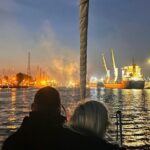
This is the backbone of the experience. The route passes industrial spaces and distinctive cranes, and the guide explains the pride and the struggle tied to the Solidarity movement and the broader fight for freedom. It hits differently when you’re seeing the setting in person rather than imagining it from a book.
Why this part lands
Industrial buildings can feel like background scenery unless someone gives them meaning. Here, the guide connects structures and place to people and pressure—why this area mattered, what solidarity looked like in real life, and how the struggle shaped modern memory in the city.
Wind and mood check
Practical note: shipyard and water-adjacent zones can be breezier than the Old Town streets. If you’re layering-challenged, you’ll want a light jacket or something that cuts wind. The tour includes short guided stops, but you’re still outside between them.
Time tradeoff
You get good time for explanation, but you’re not getting a full museum visit. If you want extended reading, plan a follow-up visit on another day.
Footbridge to Ołowianka: A Scenic Break and a Local-Feel Detour
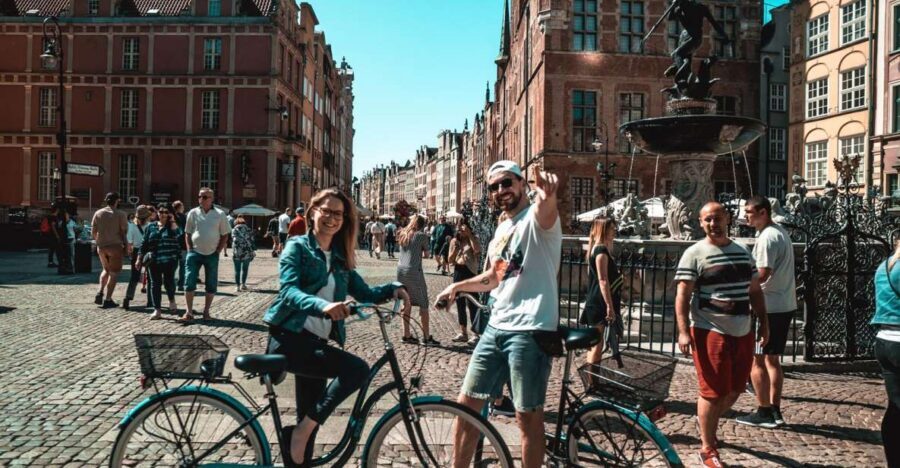
After the industrial area, the tour heads toward a calmer section of town. You cross to Ołowianka via a footbridge, with about 20 minutes of guided time.
This is one of those moments that makes the tour feel balanced. You’ve just been in heavy history; now you get a break with water views and a more relaxed setting. It also supports the tour’s theme of the city evolving—history isn’t just displayed; it’s lived alongside canals and daily life.
What you’ll likely notice
From a footbridge, you naturally look down and out, which is ideal for seeing how the city organizes space around water. The guide can point out the geometry of the canal edges and how the waterfront connects neighborhoods.
Small drawback
If you’re not comfortable riding near groups of pedestrians, expect a bit of shared space around popular foot traffic areas. The bike tour is private, but the city itself can be busy.
Low Town Regenerated: Łąkowa and the Motława Quays
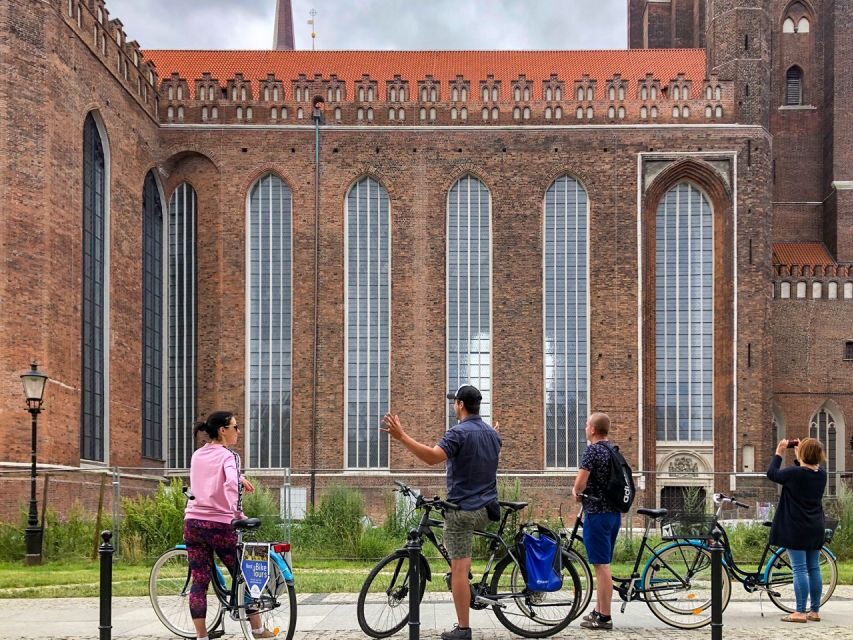
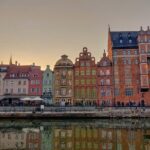
The last part focuses on regenerated Low Town, where you’ll see greenery, serene canals, and architecture that feels restored rather than frozen in time. The key stops are Łąkowa (about 15 minutes) and Nabrzeże Motławy (about 10 minutes) along the waterfront.
This section is often what people remember after the emotional shipyard moments fade: the city feels walkable and livable, not just historic. And because this tour includes both industrial and calmer water areas, you finish with a complete picture of how Gdańsk holds different layers at the same time.
Łąkowa: the gentle, in-between space
Łąkowa tends to function like a breather. It’s where the tour shows you the softer side of the city—green spaces and room to breathe after the tighter historic streets and the shipyard scale.
Nabrzeże Motławy: canal-and-building framing
Motława is your waterfront payoff. The guide’s timing is short here, so treat it like a framing exercise: notice how the quay lines up with buildings and what looks intentionally designed versus what simply developed over time.
Price and Value: Is $120 Worth It?
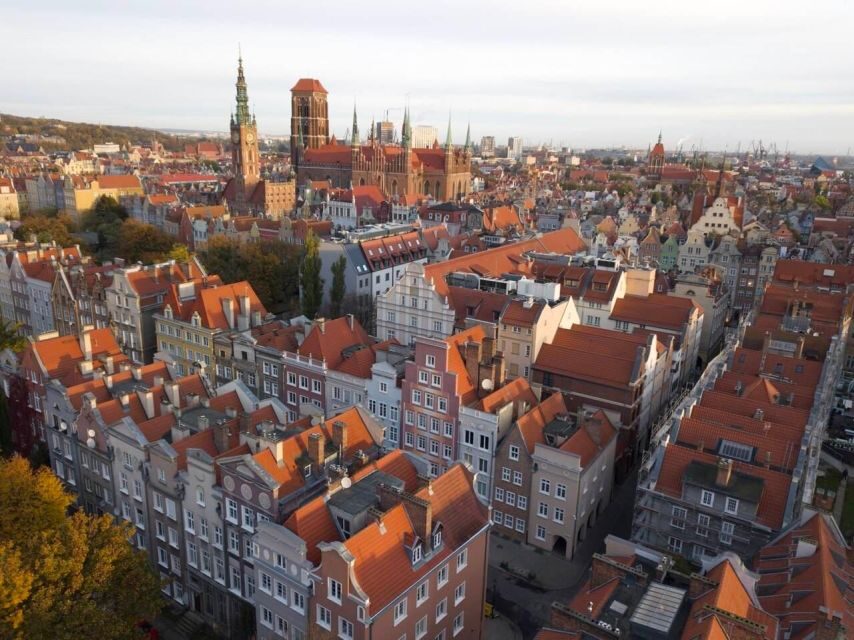
At $120 per person for about 3 hours, this is not a bargain-basement tour. It is, however, priced like a true private experience: guide time, a bike, and water are included, and the tour is tailored to a route that’s hard to assemble on your own without missing context.
Here’s how I judge value on tours like this:
- You’re getting a high-impact sequence (Old Town monuments → postal museum → shipyard Solidarity story → canal/Low Town regeneration) that would be time-consuming to plan and easy to get wrong.
- The bike format saves energy and helps you cover more than a walking-only route, especially with the shipyard distance.
- The guide’s job is not just to point at sights, but to connect them. In real bookings, guides like Olga Ruebenbauer, Alicja, Bozena, Ali, and Sebastian stand out for city passion and solid history explanations, and that’s the type of value you’re paying for.
If you like structured sightseeing, this price makes sense. If you prefer freedom and don’t care about guided interpretation, you might save money by going on your own—but you’d likely lose the Solidarity-to-place connections that make the shipyard portion so meaningful.
How Hard Is It, Really? The Flat-Ride Reality
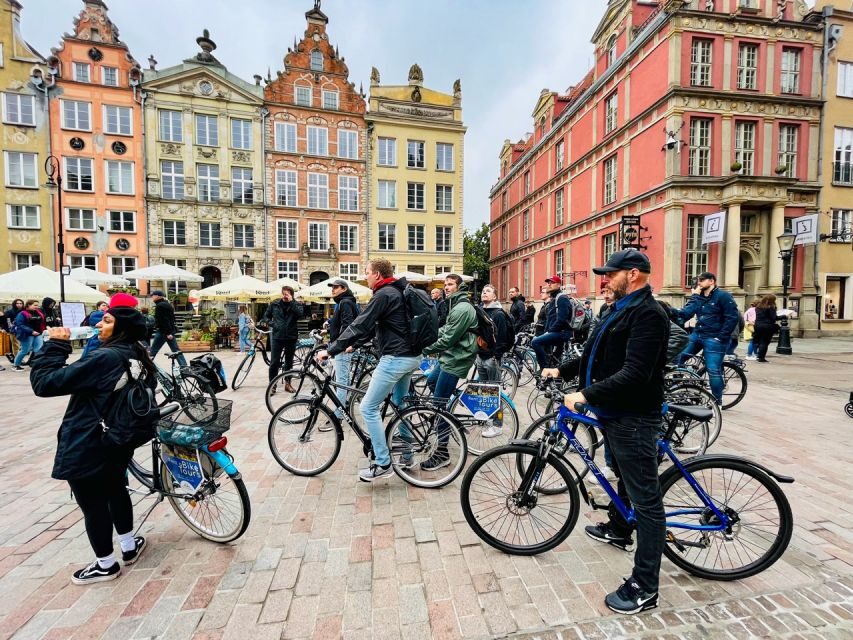
The good news is simple: the terrain is flat and very pleasant to ride on. The tour is designed so you can enjoy it regardless of age or fitness level, as long as you can ride a bike comfortably.
Still, don’t ignore the practical side. You’ll make multiple stops and switch between riding and standing during guided moments. This is not an all-day “sit and glide” scenario, but it’s also not technical biking.
What I’d do to make the day comfortable:
- Wear comfortable shoes for short walks and standing.
- Dress for the weather, since you’ll be outside for the full 3 hours.
- If you’re sensitive to wind or water spray, consider a light layer.
And if you can’t ride a bike or have mobility impairments, this is not suitable. The itinerary includes a footbridge crossing, and the tour is built around active biking.
Who This Tour Suits Best
This is a great fit if you want:
- A compact way to cover multiple Gdańsk areas in one go
- A guided explanation of Solidarity and the freedom struggle in the actual shipyard setting
- A break from pure museum days, without sacrificing meaning
- Off-the-beaten-track scenery through Low Town regeneration and the Ołowianka footbridge
It also works well for mixed groups—people who want history but also want movement and scenery, not just standing in lines.
Should You Book This Private Bike Tour?
Yes, I’d book it if you want a guided route that ties Old Town sights to the Solidarity story and then closes with canals and greenery. The private format, the bike-and-water setup, and the flat riding all add up to an experience that’s both easy to do and hard to replicate on your own.
I would not book it if you dislike biking, need mobility support, or expect long museum time at each stop. This tour is designed as a focused 3-hour circuit with guided highlights, not an all-day deep archive visit.
If you’re on the fence, here’s the quick decision rule: if you want history with context and you’re comfortable cycling for 3 hours, this tour is a strong choice.