REVIEW · WARSAW
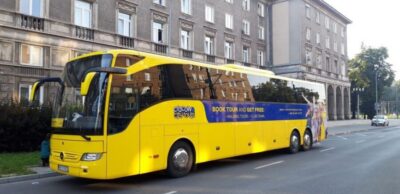
Private Warsaw City Tour with social-distance bus
Book on Viator →Operated by Warsaw Guided Bus City Tours · Bookable on Viator
Warsaw can feel like a big puzzle at first. This private city tour gives you the picture pieces in a tight 3-hour loop, built around major sights and the stories that explain them.
I especially like the included transportation—pickup from central hotels and apartments, then a social-distance bus that keeps things moving without you juggling trams and walking times. I also like that the stops include several free-admission moments, so your time goes to seeing and understanding, not paying entry fees or tracking tickets.
One consideration: it’s a schedule-fit overview. If you’re trying to stretch it for a long layover, the core tour timing is fixed unless you request extra time and pay for it.
In This Review
- Quick picks before you go
- A fast, focused Warsaw orientation with real emotional weight
- The Royal Łazienki Gardens: where Warsaw slows down (and history is still visible)
- From Ghetto Heroes to POLIN: understanding the story, not just the monuments
- Umschlagplatz: a brief stop with a brutal message
- Old Town and the rebuilt Warsaw: seeing survival in stone and brick
- Transportation, timing, and what “3 hours” actually means for you
- Price and value: what you’re paying for (and what you’re not)
- Guides make or break it: language and tone you can feel
- What to bring and how to make the most of it
- Should you book this private Warsaw city tour?
Quick picks before you go
- Private group with multi-lingual guides so you can match your pace and language needs (I’ve seen guides like George, Art, Joana, and Rafal mentioned).
- Hotel/central pickup makes it easy to start without sprinting across Warsaw.
- Transportation included on a social-distance bus, with water and Coca-Cola plus Polish chocolate candies to keep the energy up.
- Free-entry stops across the main landmarks, including WWII memorial sites and key Old Town sights.
- POLIN Museum option after the tour: you can continue on your own (interactive, no guide required) and the operator can drop you off.
- A clear historical arc: from 18th-century Royal Gardens to the Ghetto Uprising and Warsaw’s rebuilding.
A fast, focused Warsaw orientation with real emotional weight
This is the kind of tour I recommend when you want two things at once: a quick map of Warsaw and an honest sense of what shaped the city. In just about 3 hours, you cover iconic sights that most first-timers try to cram in across multiple days, plus the WWII sites that explain why the city looks the way it does today.
The private part matters more than people think. A guided bus tour can sometimes feel like you’re herded through checkpoints. Here, because it’s only your group, you get more control over how long you linger at viewpoints and how questions get answered—especially with guides who actually know how to explain the details without turning your day into a lecture.
And yes, the itinerary moves. You’re not meant to “do everything.” You’re meant to get oriented fast, with context you’ll remember later when you’re exploring on your own.
You can also read our reviews of more city tours in Warsaw

The Royal Łazienki Gardens: where Warsaw slows down (and history is still visible)
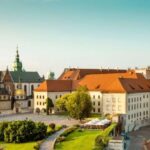
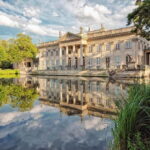
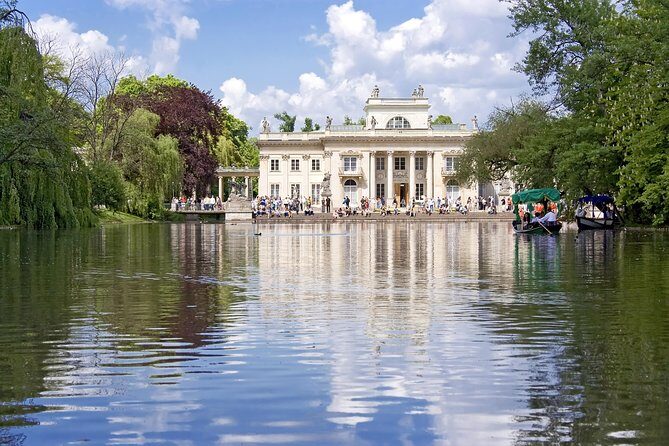
Your first stop is Łazienki Krolewskie (the Royal Gardens), and that choice is smart. The gardens are in a district that was not destroyed during the Second World War, which means many monuments you see here are original and date back to the 18th century.
This isn’t just a pretty warm-up. It’s a tonal shift from the harder WWII stops you’ll face later. You get to see a side of Warsaw that feels lived-in and established—architecture and landscape that survived the worst parts of the 20th century.
You’ll have about 45 minutes here. That’s enough time to wander, spot the key monument areas, and take photos without feeling rushed. Admission here is listed as free, which also helps make the tour feel like good value.
Practical note: gardens usually mean uneven paths and outdoor walking. Wear shoes you don’t mind getting a little dirty, and bring a layer for wind or rain.
From Ghetto Heroes to POLIN: understanding the story, not just the monuments
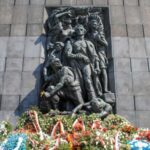
Next comes the Monument to Warsaw Ghetto Heroes—a memorial to the Warsaw Ghetto Uprising during World War II. Standing here, you get that immediate, heavy feeling you expect from this part of Warsaw. It’s not a place for vague sightseeing.
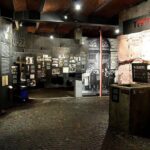
Right next to the monument is POLIN, the Museum of the History of Polish Jews. The tour’s approach here is useful: you’re not forced to do the museum with a guide on the clock. Instead, you get a short orientation (about 20 minutes at this stop), and after the city tour you can visit POLIN on your own. The museum is described as interactive, and it’s noted that you don’t need a guide to understand what’s going on.
One big advantage for you: if your group includes people who want to go deeper and others who want to move on, the museum option gives everyone flexibility. And the operator can drop you off at POLIN after the tour, which saves you from figuring out transit mid-day.
If you’re short on time, you can still do a meaningful sampling at POLIN. If you have more curiosity, this is the part of the day where you can spend longer once the tour ends.
Umschlagplatz: a brief stop with a brutal message
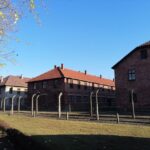
After the POLIN area, the tour heads to Umschlagplatz, described as one of Warsaw’s most heartbreaking places. This is the square where Nazis loaded Jewish people into carriages and transported them to Treblinka.
The stop is short—about 5 minutes—and that brevity can be either good or frustrating depending on your style. If you want a slow, reflective visit, you’ll likely want to come back later on your own for more time. If you want a guided overview that keeps the emotional context connected to the rest of the tour, this timing works.
Either way, don’t treat it like a “checkmark site.” Even with a quick stop, it hits harder when you remember that this square was part of a real deportation system.
Old Town and the rebuilt Warsaw: seeing survival in stone and brick
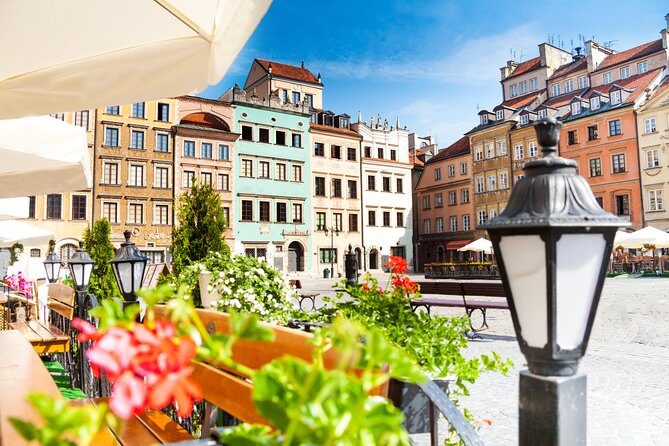
Then you shift into the visual payoff: Old Town. This is where the city’s post-war identity shows up in streets, walls, and viewpoints. Even if you’ve seen photos, it’s worth being there in person because Warsaw’s rebuilding is visible at street level.
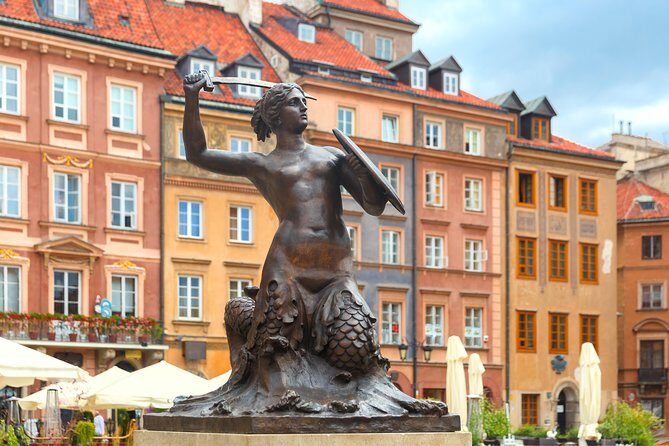
You’ll spend about 15 minutes walking with your guide through Old Town highlights. This is also where the tour includes an outside view of the Royal Castle—the residence of Polish kings that was blown up during the Warsaw Uprising in 1944 and rebuilt in 1984. Seeing it from the outside helps you place it in the area without eating up time inside a major site.
Next, you’ll walk past the Archcathedral Basilica of St. John the Baptist. The building is in the Masovian Gothic style, and it carries its own WWII scars: it was completely demolished during the Warsaw Uprising and rebuilt again in 1960.
The stop is about 10 minutes. In a short tour, that’s just enough to appreciate the architecture style and understand what you’re looking at, without pretending you’re doing a full church visit.
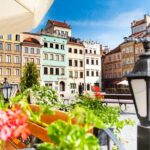
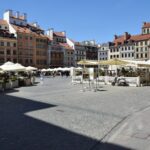
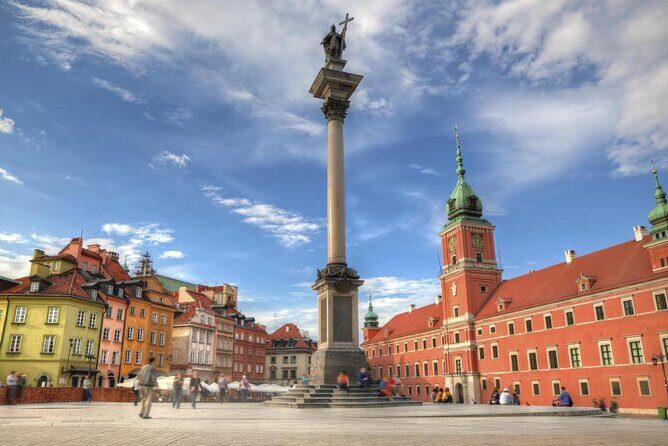
Then it’s onto Rynek Starego Miasta (Old Town Square). You’ll have about 20 minutes here, including guided highlights. The tour description points out that the square was also destroyed in the Warsaw Uprising, but it returns with a kind of “magical atmosphere” that you don’t expect after learning the wartime story. This is one of the reasons the tour works: you learn what happened, then you stand in the space that was rebuilt.
After the square, you pass the Warsaw Barbican (Barbakan Warszawski)—a defensive wall segment with red bricks and a Gothic look. You’ll spend about 5 minutes walking through or past it. It’s short, but it’s an important detail. Barbican-style defenses are part of how cities protected themselves long before modern borders.
Finally, you reach the Monument to Warsaw Uprising Fighters, with a short walk taking you there. The monument is described as one of the most expressive and symbolic in Warsaw, and the stop is about 5 minutes.
You can also read our reviews of more private tours in Warsaw

Transportation, timing, and what “3 hours” actually means for you
The tour is about 3 hours (approx.), and that duration shapes everything. You’re moving between sites by bus, which matters because Warsaw is wide. On a day with multiple stops like this, transit time can quietly eat half your energy.
Here, transportation is included and the tour is set up as an easy, guided loop—especially helpful if it’s your first time in Warsaw or you’re juggling limited daylight.
Still, the schedule is tight. You get set durations at each stop, so you won’t linger for long inside museums or do a full walking circuit. That’s normal for an overview, but it’s the trade-off.
A good “fit check” for your trip:
- If you want a strong introduction and then freedom to explore more later, this tour style works.
- If you’re trying to cover Warsaw in one long layover and need extra time, you’ll probably want to ask about extending the tour in advance rather than expecting flexible add-ons on the day.
Price and value: what you’re paying for (and what you’re not)
At $192.66 per person, this is not a budget “hop on/hop off” deal. But it isn’t just paying for a bus either.
You’re paying for:
- Private tour (only your group)
- Hotel/central pickup
- A guide in English (and multi-lingual options are offered)
- Transportation included
- Water, Coca-Cola, and Polish chocolate candies
- Several stops listed as free admission
That “free admission” part is quietly valuable. It means your overall cost stays predictable, and you don’t lose touring time waiting around for ticketing or deciding whether a stop is worth paying for.
Also, the tour mentions group discounts, which can help if you’re traveling with friends or family and want everyone together.
If you compare it to hiring a private driver and buying admissions and building your own route, the math often gets closer than you’d expect—especially on a short visit.
Guides make or break it: language and tone you can feel
One of the best parts of this tour is the emphasis on multi-lingual guides so your group can get explanations that actually land. The guide names you might run into include Rafal (noted for Spanish), Joana (French), George (English, praised for deep local knowledge), and Art (praised for friendliness and a funny, engaging style).
Even when the sites are fixed, the guide’s delivery changes everything. A good guide helps you understand why a monument exists, what a rebuilding decision meant, and how the geography connects to the story. Based on what’s been shared, that’s exactly the kind of experience you can expect here.
What to bring and how to make the most of it
Because the tour is partly outdoors and mostly walking inside compact areas, you’ll enjoy it more with a few basics:
- Weather-appropriate clothing (the tour notes this directly)
- Comfortable shoes
- A camera or phone with enough space for Old Town photos
- Light snacks are not included beyond the provided candies and drinks, so if you’re sensitive to hunger, plan accordingly (no food is included)
Also: if POLIN is on your must-see list, decide ahead of time how much time you want to spend there after the drop-off. The museum is described as interactive, so even a partial visit can feel meaningful.
Should you book this private Warsaw city tour?
I’d book it if you’re coming to Warsaw for the first time and want an easy, guided overview that connects major sights with the events that shaped them. It’s also a strong choice if you hate logistics: pickup, bus transport, and a guided walking loop do most of the work for you.
Skip it—or at least consider supplementing it—if you know you’ll want long museum time or you’re trying to fit Warsaw into a tight layover with room to spare. The tour is built to finish on schedule, and extending it usually means requesting extra time rather than assuming it will just happen.
If you want a first pass that helps you explore the rest of Warsaw with confidence, this one earns its reputation.