REVIEW · KRAKOW
Krakow Skip The Line Wawel Castle & Old Town Guided Tour
Book on Viator →Operated by Rosotravel - Wawel Castle and other Tours · Bookable on Viator
Wawel and Old Town in one smart loop. I like that this tour strings together the big Krakow highlights into a guided walking circuit while also giving you skip-the-line access to the Wawel Castle State Rooms. One drawback to keep in mind: it’s a 4 to 5 hour group format with lots of stops, so you’ll want comfortable shoes and patience at the busiest monuments.
I especially appreciate the planning. You get a licensed guide, the route is adapted to the group’s preferences, and you receive practical pointers on where to eat and drink in Krakow—exactly the stuff that saves time after the tour. Also note the operator messaging is a bit mixed: it’s described as both a private activity for your group and a group tour where other participants may join.
You’ll start at Wawel 3 (31-001 Kraków) and finish at the Kraków Barbican near Basztowa. The scheduled start time is 10:30 am, so being on time matters, especially with the early run into Wawel.
In This Review
- Key points before you go
- Why this Wawel + Old Town format works in real time
- Start at Rynek Główny, the medieval square that sets the tone
- St. Mary’s Basilica: two towers, one Gothic attitude
- Stare Miasto: the merchant-town layer that makes Krakow feel lived-in
- Wawel Castle State Rooms: quick entry, royal residence, heavy symbolism
- Wawel Cathedral: the Zygmunt bell and the royal resting place
- Sukiennice (Cloth Hall): shopping, but also the city’s old commercial engine
- Planty Park: the easy walking breath around the Old Town
- Franciscan Church with Stanisław Wyspiański’s stained glass
- St. Peter and St. Paul: church architecture and organ-concert energy
- Barbican + Museum of Krakow: medieval defense with an unusual style
- St. Florian’s Gate and the Old Town walls that survive
- Florianska Street to Little Market Square: photogenic streets, then a souvenir-friendly pause
- Eros Bound and the smaller squares: eye-catching art without the museum ticket
- More churches along the way: when entrances may be possible
- The Wawel Dragon and Town Hall Tower: playful then technical
- Slowacki Theatre and the Royal Way: Krakow’s stage and processions
- John Paul II statue and the final stretch near the Barbican
- The guide factor: language, pacing, and smart restaurant pointers
- Value for $198.08: what you’re really paying for
- Who this tour suits best
- Should you book it?
- FAQ
- How long is the Krakow Skip The Line Wawel Castle & Old Town guided tour?
- What time does the tour start, and where is the meeting point?
- Where does the tour end?
- Is the tour offered in English?
- Does the tour include skip-the-line tickets for Wawel Castle State Rooms?
- Are admissions included for the churches and squares on the walking route?
- Is hotel pickup included?
- Do I get a mobile ticket?
- What should I do the day before the tour?
- What is the cancellation policy?
Key points before you go
- Skip-the-line entry into the Wawel Castle State Rooms helps you beat the worst of the queues
- Old Town walking route covers major squares and churches, with frequent photo moments
- Wawel Cathedral highlights include the giant Zygmunt bell of 1520 and royal burial areas in the free opening sections
- Cloth Hall (Sukiennice) is treated like more than a storefront—expect food stops, small shops, and terrace-café vibes
- Food and drink tips are part of the tour, not an afterthought
- It’s flexible to the group, so the guide can adjust pace within the tour structure
Why this Wawel + Old Town format works in real time
Krakow’s center can feel overwhelming fast: squares, churches, gates, towers, and then you look at the map and wonder where the morning went. This tour solves that with a tight flow—Old Town first, then Wawel, with an efficient finish near the Barbican. The payoff is simple: you don’t waste half your day figuring out what to see next.
The other practical win is the Castle entry. Skip-the-line access to the Wawel Castle State Rooms means you spend less time standing around and more time inside seeing the rooms that most people come for. Even if you’re not obsessed with royal architecture, Wawel is one of those places where the scale hits you quickly.
You can also read our reviews of more guided tours in Krakow

Start at Rynek Główny, the medieval square that sets the tone
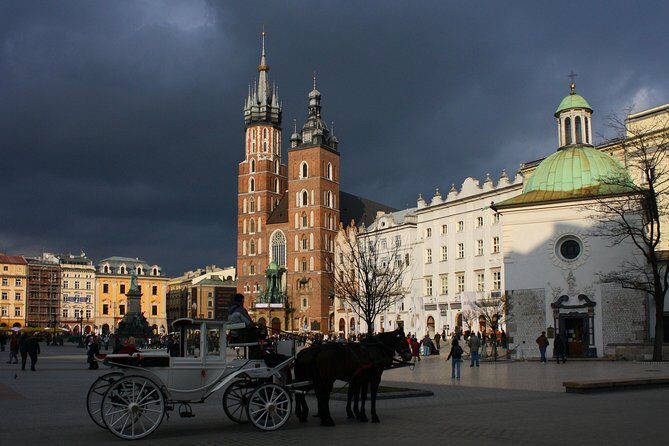
Your walk begins at Rynek Główny Central Square, described as the largest medieval city square in Europe, with a massive 10-acre footprint. It’s anchored by the Cloth Hall from the Renaissance era, and that matters because the square isn’t just pretty—it’s where the city’s commercial and civic life concentrated for centuries.
If you’re arriving before the crowd peaks, this is a good time to get your bearings. You’ll see the layout of Krakow’s historic core, plus you’ll be able to spot where the major walking lanes and landmarks connect later. It also gives you that “this is the center of things” feeling before the churches start stacking up.
St. Mary’s Basilica: two towers, one Gothic attitude
Next up is St. Mary’s Basilica, a famous Gothic church known for its two striking towers of different heights. Inside, the decoration is surprisingly rich, which helps because most people expect a church to feel austere. Instead, it comes off as detailed and intentionally dramatic.
Practical note: the stop is short. You’re not getting a full deep read of the building, so come in ready to look first and ask questions second. If the guide offers context about what you’re seeing in the interior, listen closely—these are the kinds of details that turn a quick visit into something you actually remember.
Stare Miasto: the merchant-town layer that makes Krakow feel lived-in
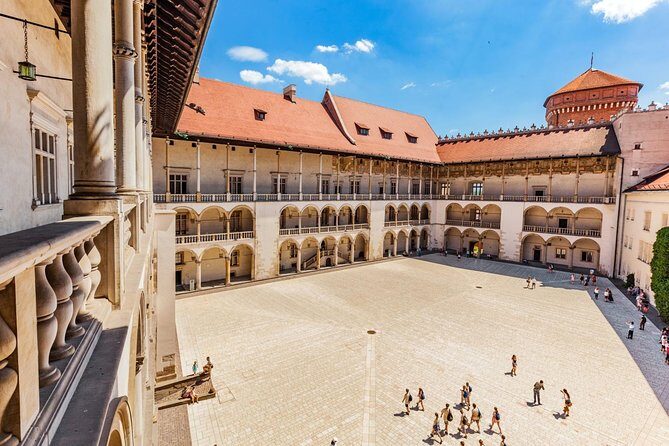
Then you move into Stare Miasto, the 13th-century merchants’ district. This part of town is all about old-world density: historical houses, palaces, and churches with notable interiors, plus fortification remains that speak to how Krakow protected itself.
Here’s what I like about this kind of stop: it helps you connect the dots. You start to see why the square matters and why the churches are placed where they are. It’s not just a list of buildings; it’s a map of how people lived and traded.
Wawel Castle State Rooms: quick entry, royal residence, heavy symbolism
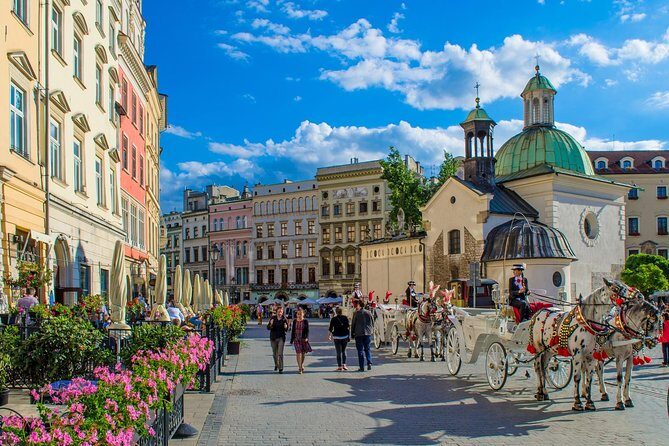
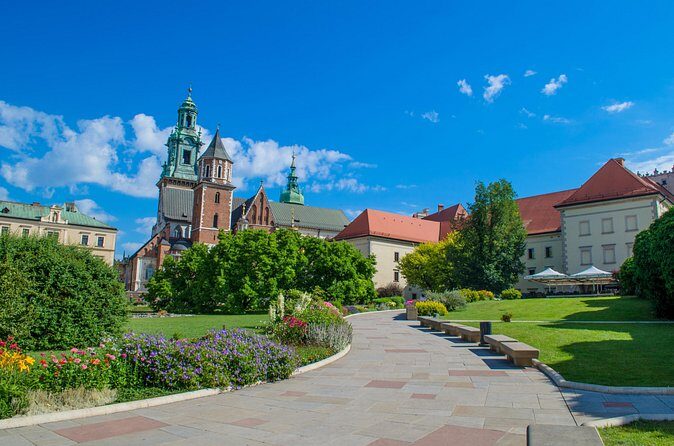
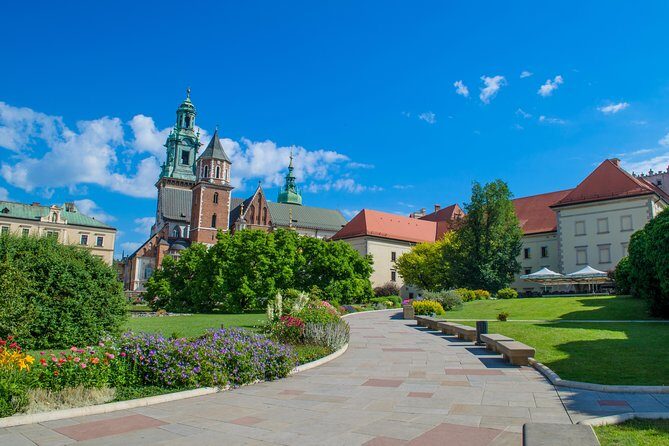
At Wawel Royal Castle, you’re stepping into the seat of power for Poland’s rulers for about five centuries. That’s a big claim, and the castle’s role as a symbol of the independent Polish state is one reason it’s such a defining visit.
The key practical benefit is that you enter the State Rooms quickly with skip-the-line tickets. That reduces wasted time right where lines often form. The itinerary notes entry is possible by request, so if you have questions during the stop—like what a room is used for or what to focus on—this is where that guided element pays off.
A few more Krakow tours and experiences worth a look


Wawel Cathedral: the Zygmunt bell and the royal resting place
From there, you head to Wawel Cathedral, the national shrine. This is where the scale gets real, including the giant bell of Zygmunt (1520)—one of the world’s largest. You also visit free sections during opening hours tied to religious art and the burial place of many Polish kings and their families.
The time on this stop is listed as about 20 minutes. In that window, the “what should I look for” guidance from your guide is especially valuable. If you’re the type who likes to understand why certain art or artifacts matter, this is one of the stops where your attention will pay off fast.
Sukiennice (Cloth Hall): shopping, but also the city’s old commercial engine
Sukiennice—the Cloth Hall—feels like a market hall because that’s still part of what it is. It’s called the world’s oldest shopping mall, and today the Renaissance structure dates from 1555. Inside, you’ll find small shops, food stalls, terrace cafes, and flower stands.
This is one of the best stops to turn sightseeing into a small break. Even if you don’t plan to shop, it’s a convenient place to grab a snack or just watch the flow of people. The guide’s timing can help you avoid the busiest moments.
Planty Park: the easy walking breath around the Old Town
Between the “big monuments,” you’ll get a calmer stretch at Planty Park, a scenic walkway that circles the park around the Old Town. It’s basically a breather for your legs and your eyes—good for photos, and also good for resetting your brain so every next church feels less like overload.
Franciscan Church with Stanisław Wyspiański’s stained glass
One of the standout artistic elements in the route is Bazylika Franciszkanów (St. Francis of Assisi). The church interior is noted for vibrant colors and Stanisław Wyspiański’s famous stained glass window called God the Father.
This stop matters because it’s not just about size or age—it’s about a specific creative work you can point to. In a short tour format, being able to identify one signature feature like this helps you remember where your time went.
St. Peter and St. Paul: church architecture and organ-concert energy
Next you’ll see the Church of St. Peter and St. Paul, described as a beautiful cathedral with organ concerts. The inclusion is short—about 15 minutes—so again the value is in quick orientation: what the building looks like from different angles, and what makes it notable beyond a quick glance.
If you’re into music, keep your eyes open. A church tied to organ performances often has a different mood than one that’s purely visual. Even without a concert happening in your visit window, the association is worth noting.
Barbican + Museum of Krakow: medieval defense with an unusual style
Then you reach Barbican, associated with the Museum of Krakow. The structure is styled after Arab defensive architecture, and it’s described as a masterpiece of medieval military engineering. It’s circular fortress-style fortification work added to city defenses in the late 15th century.
This stop is a nice palate cleanser because it shifts you from religious art and royal power to survival engineering. You’ll likely get a better appreciation of Krakow’s walls and gates if you connect this to the later fortification remains like St. Florian’s Gate.
St. Florian’s Gate and the Old Town walls that survive
St. Florian’s Gate is presented as a 14th-century gate with four towers—remnants of Krakow’s fortifications, many of which were destroyed in the early 1800s. This means the gate is a survivor: it’s a fragment that still lets you picture how the city used to be shaped and controlled.
If you like history that’s visible instead of theoretical, this is the kind of stop you’ll appreciate. You can actually see the fortification logic in the structure instead of just reading about it.
Florianska Street to Little Market Square: photogenic streets, then a souvenir-friendly pause
You’ll walk down Ulica Florianska, described as extremely photogenic. Then the route reaches Maly Rynek (Little Market Square), a smaller colourful square that’s great for a slow wander and souvenir browsing.
This portion is where you can take photos without feeling like you’re interrupting something important. It’s also a good time to notice how the city blends the grand sites with everyday corner activity.
Eros Bound and the smaller squares: eye-catching art without the museum ticket
The tour also includes the Eros Bound sculpture—described as a head sculpture in a prime position on the square and an easy photo moment. It’s the type of public art that makes a city feel current even when everything around you is old.
You’ll also see Szczepański Square, a smaller square where you can sit on benches and take a breather. Even though the tour is structured, these pauses keep you from feeling like you’re sprinting from landmark to landmark.
More churches along the way: when entrances may be possible
The route includes several churches where entry is noted as possible by request, such as:
- Dominican Church (admission ticket not included for that stop)
- Church of St. Adalbert with a domed ceiling
- University Collegiate Church of St. Anne in Baroque style
- St. Barbara’s Church, described as peaceful and tranquil inside
The “by request” note is important for you. In a guided walking tour, not every door is open every day, and time windows can shift. When an entrance is possible, you’ll usually have a better chance if you ask your guide quickly and clearly.
The Wawel Dragon and Town Hall Tower: playful then technical
The Monument of the Wawel Dragon is a fun inclusion. It’s described as a sculpture that can be seen breathing fire, with viewing possible by request. This is one of those stops that breaks the heavy tone without feeling random.
After that comes Museum of Krakow Town Hall Tower, a massive Gothic tower built at the end of the 13th century. It’s 70 meters tall and is noted as leaning 55 centimeters due to strong winds in 1703. That’s a very specific detail, and I like it because you can actually picture the tower’s situation rather than guessing what the “lean” means.
Slowacki Theatre and the Royal Way: Krakow’s stage and processions
The tour passes the Slowacki Theatre, a Baroque-style theatre built in 1892 and associated with regular plays and operas.
Then you walk part of the Royal Way (Droga Krolewska)—the historic route used for royal processions and funerals. This is one of those “you’re walking in the path of ceremony” moments, but it doesn’t require you to be an expert. Your guide can point out the significance as you move through the city core.
John Paul II statue and the final stretch near the Barbican
There’s also a Statue of John Paul II, described as a tribute to his legacy and connection to Kraków. Finally, the tour ends at the Kraków Barbican, tying the last big fortification stop to the route’s finish point.
It’s a satisfying end because you’re leaving from a strong landmark, not a random corner.
The guide factor: language, pacing, and smart restaurant pointers
The tour is offered in English and is led by a licensed guide. That matters most when the group is moving quickly and each stop is short. The value is in how the guide helps you decide what to look at first, and how to understand what you’re seeing without making it feel like a lecture.
The reviews also highlight how much people enjoy the guide’s clarity and friendliness. One compliment specifically calls out Javier as documented and fun, and that fits the vibe you want from a walking tour: clear explanations, answers to questions, and good suggestions for what to eat next.
If you’re planning your first full day in Kraków, those restaurant and pastry-pub tips can be as valuable as the monuments themselves—because they shape the rest of your trip.
Value for $198.08: what you’re really paying for
At $198.08 per person, this isn’t the cheapest way to see Old Town. But the price is easier to justify when you separate what’s included:
- A guided walking route through major highlights
- Skip-the-line tickets for the Wawel Castle State Rooms
- A program adapted to the group’s preferences
- Food and drink tips from the guide
A lot of the stops have “free admission” notes in the tour flow, but free doesn’t mean effortless. Lines and timing at Wawel can eat your morning. The skip-the-line component is the main cost driver, and it’s the one thing you can’t easily replicate on your own without planning time.
Also, you’ll likely feel the price more if you love churches, towers, and public squares—or if you want someone to steer you so you don’t waste the day “wandering with purpose.” If you prefer independent wandering and you already know exactly which rooms you want at Wawel, you might find the savings elsewhere. If you don’t, this format is a practical catch-up route.
Who this tour suits best
This tour is a good match if you:
- Want a structured introduction to Kraków’s core in about half a day
- Care about seeing Wawel Castle interiors without long lines
- Prefer English narration and short stops with clear takeaways
- Like getting real food and drink recommendations for your evening
It’s also a solid option for people who don’t want to build an itinerary from scratch. A 10-acre square, a pair of basilica towers, a royal castle, a cathedral bell story, then the fortifications—this route gives you that big-picture sense fast.
Should you book it?
I’d book this when you want Wawel plus Old Town in a single, guided arc—and you especially care about time saved at the Wawel State Rooms. If you’re coming for your first look at Kraków and you’d rather spend your energy looking at buildings than reading maps, this tour fits.
If you hate crowds at major sights, or you want a slow, do-everything-on-your-own pace, this might feel too stop-and-go. Since entrances are sometimes possible by request for certain churches, you’re also trading a bit of control for guidance.
If you do book, come prepared to move. A good morning here depends less on stamina and more on being ready to look, ask, and keep pace.
FAQ
How long is the Krakow Skip The Line Wawel Castle & Old Town guided tour?
It runs about 4 to 5 hours.
What time does the tour start, and where is the meeting point?
The start time is 10:30 am. The meeting point is Wawel 3, 31-001 Kraków, Poland.
Where does the tour end?
The tour ends at Kraków Barbican, Basztowa, 30-547 Kraków, Poland.
Is the tour offered in English?
Yes, it is offered in English.
Does the tour include skip-the-line tickets for Wawel Castle State Rooms?
Yes. Skip-the-line entry is included for the Wawel Castle State Rooms.
Are admissions included for the churches and squares on the walking route?
The tour information lists free admission tickets for many stops (such as St. Mary’s Basilica and major squares). Some church entries are noted as possible by request, and one listed church notes admission is not included.
Is hotel pickup included?
No. Pickup from hotels in Krakow is not included.
Do I get a mobile ticket?
Yes. The tour includes a mobile ticket.
What should I do the day before the tour?
Please check your email the day before the tour for important information.
What is the cancellation policy?
You can cancel for a full refund if you cancel up to 24 hours in advance of the experience start time. If you cancel less than 24 hours before, the amount paid is not refunded.