REVIEW · KRAKOW
Krakow: Schindler’s Factory Museum Small Group Guided Tour
Book on GetYourGuide →Operated by Krakow4you.pl · Bookable on GetYourGuide
Nazi-occupied Krakow leaves a mark fast. This Schindler’s Factory Museum small-group tour keeps the focus on real people and real choices, while the 90-minute guided format makes the story clear without turning it into a lecture. I especially liked how you start outside the museum and then connect street-level Krakow with what you see inside, and how your guide brings the human details to the front, including links to Schindler’s List and the real individuals behind the story.
One possible drawback: you’ll be walking through the museum across three levels, so you’ll want comfortable shoes and a little stamina for a packed, moving experience.
In This Review
- Key things you’ll notice on this tour
- Getting Oriented at Schindler’s Factory, Then Stepping Into 1939
- The Streets Walk: How Daily Life Changes, Even When You Don’t See It at First
- Inside Schindler’s Factory Museum: What Three Levels of Exhibits Teach You
- The Human Focus: Why This Tour Feels Less Like Politics and More Like People
- Small-Group Comfort: 14 or Fewer Changes the Whole Feel
- Price and Value for a Focused 90 Minutes
- Practical Tips Before You Go (So the Tour Stays Enjoyable)
- Who Should Book This Tour, and Who Might Want a Different Option
- Should You Book Schindler’s Factory in Krakow?
- FAQ
- How long is the Krakow Schindler’s Factory museum small-group guided tour?
- What is included in the tour price?
- How many people are in the small group?
- What languages is the tour offered in?
- Do I need to buy a museum ticket, or can I skip the ticket line?
- Is the tour wheelchair accessible?
Key things you’ll notice on this tour
- Meet at Schindler’s factory before you enter so the setting sets the tone right away
- Small group of 14 or fewer keeps questions in the air and not lost in the crowd
- Guided museum time plus street context helps the exhibits make more sense
- Focus on 1939 to 1945 changes in daily life rather than only big-picture politics
- Museum admission and skip-the-line access save time and reduce stress
- English or German live guide so you’re not piecing together the story alone
Getting Oriented at Schindler’s Factory, Then Stepping Into 1939
The tour starts at a very deliberate spot: the historic administrative building of Oskar Schindler’s factory, which is now the museum. Before you go inside, you’re looking for a guide with a sign reading GoGuide – Schinlder’s Factory guided tour and your chosen starting time. It’s a small detail, but it matters. You avoid the awkward wandering and you start in the right place, already framed for what you’re about to learn.
Then comes the core of the experience: your guide sets the scene for Krakow under German occupation. Not as a vague “war stuff happened” overview. You’re nudged into the timeline: how things changed after the German occupation took hold and how daily life hardened between 1939 and 1945. The goal is to help you see history as lived experience, not just dates on a wall.
I like that the tour doesn’t treat this like a museum tour where you sprint from display to display. Instead, it’s structured like a guided walk through context, where each stop answers a simple question: what changed, for whom, and why did it matter? That approach helps you process the emotional weight without losing the thread.
Also, this isn’t a long day. With a 90-minute duration, you get a focused hit of meaning without burning your whole afternoon.
You can also read our reviews of more guided tours in Krakow
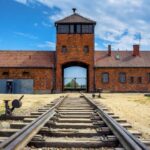
The Streets Walk: How Daily Life Changes, Even When You Don’t See It at First
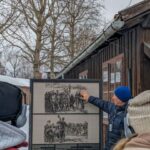
One of the most useful parts of this tour is that it doesn’t confine everything to indoor exhibits. You walk through Krakow’s streets and your guide connects what you’re seeing now to what was happening then, especially as life shifted from the start of the occupation in 1939 toward the brutal end years.
For you, that street walk is the bridge between two kinds of understanding:
- museum exhibits give you facts and artifacts
- the streets give you scale, direction, and the feeling of what it means to be in the same city with a different world pressing down on it
Your guide’s job here is to help you slow down. Not to romanticize anything, just to notice how a place holds layers. Even if you’ve been in Krakow before, this walk changes how you look at it. A street becomes a witness, and a corner becomes a reminder of how quickly normal life can be stripped away.
If you’re the type who likes to connect sights to story, you’ll probably find this part especially valuable. If you’re limited on mobility, remember you’ll still be moving during the museum visit across levels, so plan for a steady pace rather than stopping for long breaks.
Inside Schindler’s Factory Museum: What Three Levels of Exhibits Teach You
When you enter the museum, your guide takes you through exhibits on three levels. That structure matters because it turns the experience into a sequence rather than a single-room overview. Instead of seeing everything at once, you get the story in chunks: conditions, choices, and consequences—each one building on the last.
You’ll learn about the life of Oskar Schindler and his effort to save lives. The tour frames him as an extraordinary figure not because it was easy, or because he did it in isolation, but because the circumstances were designed to make humanity irrelevant. Your guide also emphasizes the broader system at work—how persecution was organized to devalue people who were different by religion or identity, and how that dehumanization functioned as policy.
In other words: it’s not just a hero story. You should expect to see the machinery of oppression in the way the museum tells it, and to understand why rescue required action inside a brutal system.
As you move upward and downward through the museum spaces, the message stays consistent: this wasn’t abstract. It was people. Names. Jobs. Families. Decisions under pressure. That’s also why guides often help connect the museum materials to the film version of the story. In past tours, guides such as Alicja Wrobel have been praised for making that connection clear—tying Schindler’s List to the real-life people and the real stakes behind it. The museum does the heavy work; the guide helps you connect the dots fast.
The Human Focus: Why This Tour Feels Less Like Politics and More Like People
This is one of those tours where the wording matters. The experience is built around how occupation life worked and how persecution changed people’s everyday existence. If you’re hoping for a purely ideological lecture, you may not get that. The tour tends to stay with the human reality: what happened to residents of Krakow, what changed between 1939 and 1945, and how survival and rescue played out in ordinary spaces.
In the standout guides’ style, the story often becomes more personal without becoming sensational. You’re encouraged to consider what it means for a city to be living under forced control, and what it means when the world decides some people don’t count.
The guide also brings in the scale of what Schindler accomplished. The tour highlights that he saved over 1,200 Jews. That number is important, but the way you’re guided through it is what makes it stick. You don’t just hear a statistic—you’re pushed to understand why the need for rescue existed in the first place.
This is also where you may notice the best versions of this tour feel almost like a guided conversation. You get time to ask questions, and your guide is there to connect what you’re seeing to the bigger why.
Small-Group Comfort: 14 or Fewer Changes the Whole Feel
At 14 people or fewer, this isn’t a cattle-call history stop. The small group size isn’t just for comfort. It changes how the guide can teach.
With a larger crowd, guides often have to speak like they’re broadcasting. Here, you’re more likely to get:
- clearer answers
- more room for follow-up
- a quicker pace of explanation that still feels attentive
It also helps if you have specific interests, like the timeline of the occupation or how the factory story fits into Krakow’s wartime life. You’re not forced to “guess what you missed” when something important gets said.
The tour also includes admission to the museum and skip-the-ticket line access. In practice, that means less waiting and fewer time-wasting delays, which is a big deal when you’re dealing with a museum experience that already has a tight 90-minute frame.
You can also read our reviews of more museum experiences in Krakow



Price and Value for a Focused 90 Minutes
The price is $52 per person for a 1.5-hour guided visit, including museum admission and a live guide. That can sound steep until you add what you’re actually buying.
You’re paying for three things that often cost more time and frustration on your own:
- a clear, structured walkthrough across museum levels
- context about Krakow’s wartime shift from 1939 to 1945
- a guide who can answer questions in English or German
If you’re the type who reads museum labels but still wants the story connected, this is often where guided tours become good value. A museum like this can be emotionally heavy and information-dense. Without a guide, you might get through it, but you may not get the deeper connections quickly. With a guide, you can make sense of the “why” while you’re still in the room where it matters.
And because the group is small, you’re not just paying for access—you’re paying for a better chance that the tour stays readable, human, and coherent.
Practical Tips Before You Go (So the Tour Stays Enjoyable)
This tour is short, so small choices make a bigger difference than usual.
Wear comfortable shoes. You’re walking through the museum across three levels and there’s also street walking. Plan on standing and moving for most of the 90 minutes.
Bring your passport or ID card. The tour calls this out, so don’t treat it like a “nice to have.” It’s part of keeping the visit smooth.
If you need to know about rules: alcohol and drugs aren’t allowed, so keep it simple.
Also, keep in mind the experience is run by a live guide in English or German. If you’re choosing between languages, pick the one you’ll understand best on a heavy topic day. Precision helps your brain keep up.
Finally, this is a museum and wartime story. You don’t need to be a history buff to appreciate it, but you should be ready for the subject matter to be intense.
Who Should Book This Tour, and Who Might Want a Different Option
I’d point most people here who want more than a self-guided museum scan. If you like a clear timeline, want street context, and appreciate guides who connect storylines to real people, you’ll likely find this tour does what many museum visits fail to do: it explains what you’re looking at while keeping the focus on human outcomes.
You might skip it if:
- you strongly prefer to go at your own pace without walking across levels
- you need a lighter tone during wartime history (this is not built to be casual)
- you dislike tours that are timed and structured rather than free-form
For many travelers, though, this is the kind of experience that makes the rest of Krakow feel more meaningful afterward. You’ll start noticing places as layers, not just sightseeing.
Should You Book Schindler’s Factory in Krakow?
If you’re trying to choose between a self-guided museum visit and a guided small-group tour, I’d lean guided—especially for a story this layered. The combination of small group size, skip-the-line entry, and a guide-led walk through three museum levels makes it easier to understand the timeline and the stakes without getting lost in details.
Book this tour if you want your Krakow history to connect street-level reality to what the museum is showing, and if you appreciate a guide who keeps the focus on people and choices. Guides like Anna and Alicja Wrobel have been specifically praised for keeping the topic clear and human, which is exactly what you want in a museum like this.
If you’re sensitive to heavy subject matter or you need long breaks, consider whether a 90-minute guided push is your pace—but for most visitors, this is a strong, focused way to experience Schindler’s Factory with context you can actually use.
FAQ
How long is the Krakow Schindler’s Factory museum small-group guided tour?
It lasts about 90 minutes (1.5 hours).
What is included in the tour price?
Admission to the Schindler’s Factory Museum and a guided tour are included.
How many people are in the small group?
The group is limited to no more than 14 people.
What languages is the tour offered in?
The live tour guide is available in English and German.
Do I need to buy a museum ticket, or can I skip the ticket line?
Admission is included, and you can skip the ticket line.
Is the tour wheelchair accessible?
Yes, the tour is listed as wheelchair accessible.