REVIEW · KRAKOW
Krakow: Schindler’s Factory & Ghetto Guided Tour
Book on GetYourGuide →Operated by Kraków Explorers · Bookable on GetYourGuide
A visit to Krakow’s darkest streets hits hard fast. This tour combines Schindler’s Factory with a guided walk through Podgórze, the WWII Jewish ghetto area, so you see the museum story and then follow it outside on real streets.
I particularly like the way the tour balances big-picture context with concrete details like the surviving ghetto wall section and street-level sites in Podgórze. I also like that you get a live guide in several languages, and at least one guide (Eva) clearly had energy and handled questions with care.
One thing to consider: this is a tightly scheduled group experience, and Schindler’s Factory does not admit late arrivals, so you’ll want to plan your timing carefully.
In This Review
- Key highlights you’ll remember
- Schindler’s Factory Museum: where the story gets specific
- The guided museum experience you’ll actually use
- Podgórze on foot: seeing the ghetto as a place, not a label
- The ghetto wall segment: why the “surviving” pieces hit harder
- Pod Orłem pharmacy: the landmark that anchors the walk
- Heroes’ Square and the Empty Chair with 68 chairs
- Duration, pacing, and group schedule: plan like a pro
- Meeting point clarity: where to find your guide
- Languages: you’ll get the same experience in multiple tongues
- Price and value: what $58 covers in real terms
- Who this tour suits best
- Practical info that can save you from surprises
- Should you book this Krakow Schindler’s Factory & Ghetto tour?
- FAQ
- How long is the Krakow Schindler’s Factory & Ghetto guided tour?
- Where do I meet the guide?
- What’s included in the price?
- What’s not included?
- Which languages are available for the live guide?
- Can I skip the ticket line?
- What documents do I need for Schindler’s Factory entry?
- What happens if I’m late to the museum?
- Is there free cancellation?
- Is there a reserve and pay later option?
Key highlights you’ll remember
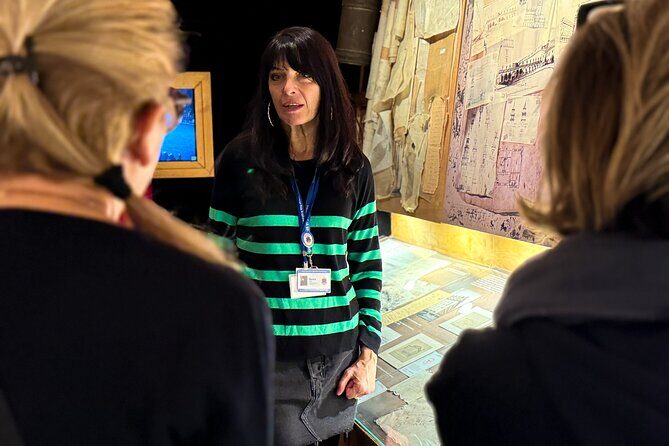
- Schindler’s Factory Museum with a professional guide for a guided wayfinding through the exhibits
- Podgórze walking segment focused on what happened to everyday life under Nazi occupation
- The “Kraków Under Nazi Occupation” exhibition built around a German entrepreneur’s help during the war
- A surviving ghetto wall section plus the houses where displaced Jews lived
- Pod Orłem pharmacy as a recognizable, street-level landmark
- Heroes’ Square and the Empty Chair Monument with its symbolic 68 chairs
Schindler’s Factory Museum: where the story gets specific
Schindler’s Factory is the kind of place where you stop thinking of history as a chapter in a book and start treating it like evidence. On this tour, you enter with a guide, which matters because the museum can feel dense if you’re trying to piece everything together alone.
Your visit centers on Oskar Schindler’s Factory and includes entry to the museum itself. The tour also points you to the exhibition Kraków Under Nazi Occupation, where the focus is on a German entrepreneur who helped many Jews during the war. That framing helps you understand the broader system around the city, not just the legend-level highlights.
I like the structure here: you begin in an indoor setting, then you step outside afterward. That order helps your brain make connections. Inside, you learn the context. Outside, you see what parts of Podgórze still carry the physical imprint of the ghetto era.
One practical note: the museum entrance is time-based and the tour keeps a strict schedule. The tour description also says you can skip the ticket line, which is a big deal in Krakow—time saved means less stress, and you’ll be better focused when you start walking.
You can also read our reviews of more guided tours in Krakow
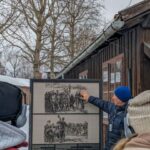
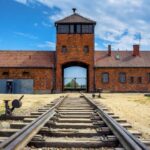
The guided museum experience you’ll actually use
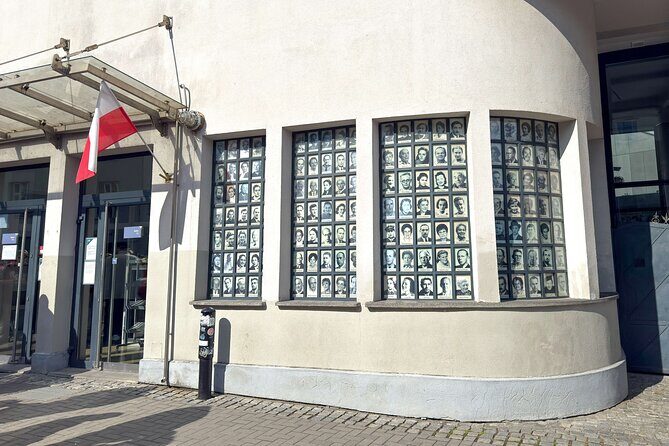
A guided museum visit should do two things: explain what you’re looking at and keep the visit flowing at a pace you can handle. This tour is built for both.
You’ll have a live guide (English, French, German, or Italian). Based on past experiences from the tour’s guides, the best moments tend to be when you can ask questions and get thoughtful answers. One review specifically mentioned Eva’s enthusiasm and how she answered questions in detail, and that kind of guide approach can completely change how a heavy museum visit feels.
This museum segment also sets you up for what comes next. The Podgórze walk is not just a scenic stroll. It’s guided by what you learned in the factory, so when you see sites tied to ghetto life—buildings, wall sections, and memorial landmarks—you know what you’re looking at instead of guessing.
If you’re the type who likes to leave sites understanding why they matter, this museum portion is where you’ll get it.
Podgórze on foot: seeing the ghetto as a place, not a label
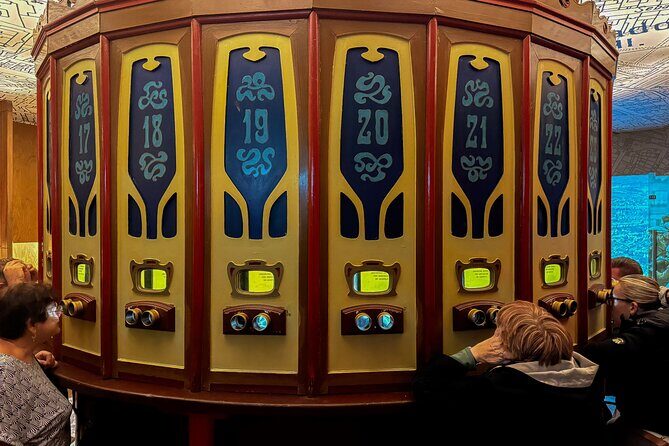
After the museum, you move into the Podgórze district, where the Jewish ghetto was located during the Second World War. This is where the tour becomes more than museum time. You’re walking through a neighborhood where the history is tied to real street layouts and real building footprints.
You’ll learn about daily life in Nazi-occupied Krakow. That matters because ghetto history isn’t only about dates and major events. It’s about routine—what people did, where they lived, what they could and couldn’t access, and how occupation shaped normal life into something unrecognizable.
The tour description specifically calls out several tangible points you’ll look for:
- part of the undestroyed wall around the ghetto
- houses where thousands of displaced Jews used to live
- the Pod Orłem pharmacy
- the Empty Chair Monument in Heroes’ Square
What I like about this approach is that it helps you build a mental map. After the walk, you’re not just thinking about tragedy in abstract terms—you can picture the area and connect the museum story to the geography you experienced.
The ghetto wall segment: why the “surviving” pieces hit harder
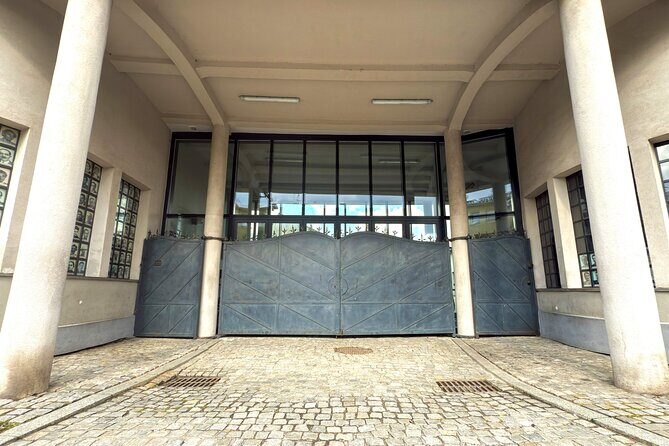
A surviving section of the ghetto wall is one of those details that feels almost unfair—like the past didn’t just happen; it left materials behind. Seeing a remaining wall section gives you a physical reference point for the scale of confinement.
On this tour, the wall is not treated like a prop for photos. It’s part of the guided explanation of how the ghetto functioned and how people’s lives were controlled. Even if you’ve read about the ghetto already, the presence of the wall can make the idea of boundaries and restrictions more real.
I find that this kind of stop is the turning point for many visitors. Up to this point, the museum gives the story. Here, the streets give the body of the story.
Pod Orłem pharmacy: the landmark that anchors the walk
The tour includes a stop at the Pod Orłem pharmacy, which sounds almost ordinary until you place it in the WWII context of Podgórze. When you see a named local landmark inside a historically loaded walk, it changes how you read the city.
Instead of thinking, This is where something happened, you think, People had errands, routines, and regular needs here too—only under brutal conditions.
That’s the value of guided street-level history. You’re not just scanning for major memorials. You’re noticing how daily life used to look, even when the reality underneath was catastrophic.
If you like tours that teach you how to look at a city, this inclusion is a strong point. You’ll leave with a better sense of how Podgórze fits into Krakow’s urban fabric—not floating separately as a historical “zone.”


Heroes’ Square and the Empty Chair with 68 chairs
The tour ends (or at least includes its later segment) with the Empty Chair Monument in Heroes’ Square, with its symbolic 68 chairs. Monuments like this work differently than museum exhibits. They’re not presenting information line-by-line; they’re giving you a visual metaphor to hold onto.
The “empty chair” idea is powerful because it forces you to confront absence. The number—68 chairs—adds a specific weight to the symbolism, so the memorial doesn’t feel vague. Instead, it becomes a point of reflection tied to a defined scale.
This is also a good place to slow down. You can look, read, and absorb without the pressure of moving on every few minutes. On a short 3-hour tour, that kind of pause matters.
Duration, pacing, and group schedule: plan like a pro
This is a 3-hour experience. That’s long enough to cover both the museum and a meaningful walking segment in Podgórze, but short enough that you won’t feel like you’re spending your whole day in heavy material.
The pacing is helped by the structure: museum first, streets second. Still, you should assume the schedule is strict, and it’s important to arrive on time.
Two things to know upfront:
- The tour says the museum definitely does not accept late arrivals. Groups enter punctually, and late visitors are not admitted.
- Timing can shift slightly because museum scheduling can affect exact timing.
So if you’re trying to line this up with lunch, other tours, or transit, give yourself buffer time before your meeting point. This is one tour where “I’ll be just a few minutes late” can turn into “you’ll miss it.”
Meeting point clarity: where to find your guide
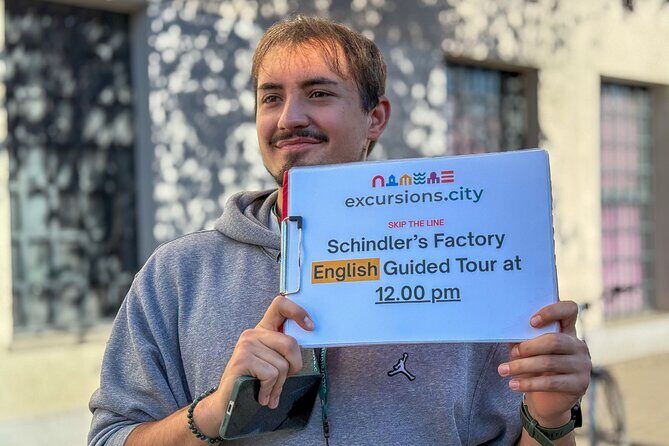
You meet your guide in front of the main entrance to Schindler’s Factory Museum. The guide should be marked with an inscription: excursions.city.
This kind of clear meeting point is helpful, especially with a group tour. The key is to arrive early enough that you’re not rushing around at the door—because the museum’s punctual entry rules are strict.
If your schedule is tight, I’d rather you under-plan than over-rush. A few minutes saved inside your head is worth more than trying to sprint to a late arrival.
Languages: you’ll get the same experience in multiple tongues
The tour is offered with a live guide in English, French, German, and Italian. That’s useful if you want explanations that go beyond basic translations.
Also, guided answers can be where the tour becomes personal and easier to understand. One past guide (Eva) was praised for being eager and answering questions thoroughly, which is a strong sign that the guide approach can make the content more digestible.
Price and value: what $58 covers in real terms
The price is listed at $58 per person for about 3 hours. On paper, that’s a pretty normal museum-plus-walk figure in Europe.
In value terms, what you’re paying for is not just “a ticket.” You’re getting:
- museum tickets
- a professional guide
- a walking tour through Podgórze with historical interpretation
That combination matters. If you did it on your own, you’d still pay museum entry and you’d spend time researching what to see and how to connect it all. Here, the guide does the connecting for you: what you learned inside ties directly to what you see outside.
Also, the tour mentions skipping the ticket line, which can reduce wasted time. In a city where time can disappear fast, that small practical advantage adds up.
Who this tour suits best
This one is a good fit if you want:
- a guided explanation rather than self-guided guessing
- a clear pairing of museum context plus Podgórze street history
- a structured 3-hour window that doesn’t sprawl all day
It may be less ideal if you hate group schedules or if you’re relying on very flexible timing. The tour’s strict entry rules at Schindler’s Factory make it tough for anyone who tends to run late.
If you’re traveling with kids, the content is serious and heavy. You might consider whether they can handle the subject matter and whether the 3-hour format will feel right.
Practical info that can save you from surprises
A few details matter for smooth entry:
- You must provide full names of all participants when reserving, and you need to bring a passport or ID for entry to Schindler’s Factory. If you don’t have the right documents, entry may be denied.
- Times are described as approximate and can change due to the museum’s scheduling.
- Food and drinks are not included, so plan a snack or drink nearby if you need it.
- The tour is offered with multiple languages, but the key is you’ll be moving as a group and sticking to the schedule.
For a tour like this, the best strategy is simple: arrive early, be ready, and keep your day lightly loaded around it.
Should you book this Krakow Schindler’s Factory & Ghetto tour?
Yes, I’d book it if you want a focused, guided way to understand Krakow during Nazi occupation—starting with Schindler’s Factory and continuing through Podgórze with the surviving ghetto wall, the Pod Orłem pharmacy, and the Empty Chair Monument.
Skip it only if you’re likely to miss punctual entry or if you prefer totally self-paced touring. The value here comes from the guide and the tight structure. When you match that style—on time, ready to walk, open to serious history—it’s an efficient way to see the city’s most important WWII story points in a single morning or afternoon block.
FAQ
How long is the Krakow Schindler’s Factory & Ghetto guided tour?
It lasts about 3 hours.
Where do I meet the guide?
Meet in front of the main entrance to Schindler’s Factory Museum. Look for a guide with the inscription excursions.city.
What’s included in the price?
The tour includes tickets to the Schindler’s Factory Museum, a professional tour guide, and a walking tour.
What’s not included?
Food and drinks are not included.
Which languages are available for the live guide?
The live guide is available in French, German, Italian, and English.
Can I skip the ticket line?
Yes. The tour includes skipping the ticket line.
What documents do I need for Schindler’s Factory entry?
You must provide full names of all participants when reserving and bring a passport or ID for entry. Without these, entry may be denied.
What happens if I’m late to the museum?
Schindler’s Factory Museum does not accept late arrivals. The group enters punctually, and late persons will not be admitted.
Is there free cancellation?
Yes. Free cancellation is offered up to 24 hours in advance for a full refund.
Is there a reserve and pay later option?
Yes. You can reserve your spot and pay nothing today.