REVIEW · KRAKOW
Krakow: Oskar Schindler’s Factory Guided Tour&Pickup Options
Book on GetYourGuide →Operated by GLUZINSKI CITY TOUR KRAKOW SP. Z.O.O · Bookable on GetYourGuide
Factory doors open to wartime Krakow. The Schindler’s Enamel Factory museum is one of the city’s biggest history stops, and a guided visit turns it from “interesting” into something you actually remember. I really like that you get a licensed expert guide plus skip-the-line entry, so you spend your time inside the galleries where the story hits hardest.
What I also like: the tour is built around the exhibition Kraków under Nazi Occupation 1939–1945, with a guided path through narrow, dim rooms designed to recreate fear and uncertainty. One thing to keep in mind is pacing and focus: if you’re hoping for a heavy emphasis on the factory itself in a hands-on way, the experience is more about the wartime context and Schindler’s role than a detailed production-floor visit.
In This Review
- Key highlights to watch for
- Entering Schindler’s Enamel Factory Without the Queue
- What the Guided Tour Actually Covers in 90 Minutes
- The Schindler Story: Why It Hits Harder With Context
- Narrow Rooms, Dim Light, and Your Attention Span
- Hearing the Guide: Quality of Storytelling and Language Options
- The Price and Whether It’s Good Value for $55
- Practical Tips for Getting the Best Experience
- Should You Book This Guided Tour?
- FAQ
- What is the duration of the Schindler’s Factory guided tour?
- Where do I meet for the tour?
- Is skip-the-line admission included?
- What languages are available for the live guide?
- What do I need to bring for entry?
- Is the tour wheelchair accessible?
Key highlights to watch for
- Skip-the-line entry so your 90 minutes start fast, not in a queue
- Kraków under Nazi Occupation 1939–1945 explained clearly by an expert guide
- Schindler’s factory story set against persecution, deportations, and Krakow’s Jewish community
- Atmospheric gallery design (narrow, dimly lit rooms) that makes history feel immediate
- Headsets for groups of 15+ so you can hear comfortably throughout
- English, French, German, Spanish, Italian for a smooth experience across languages
Entering Schindler’s Enamel Factory Without the Queue
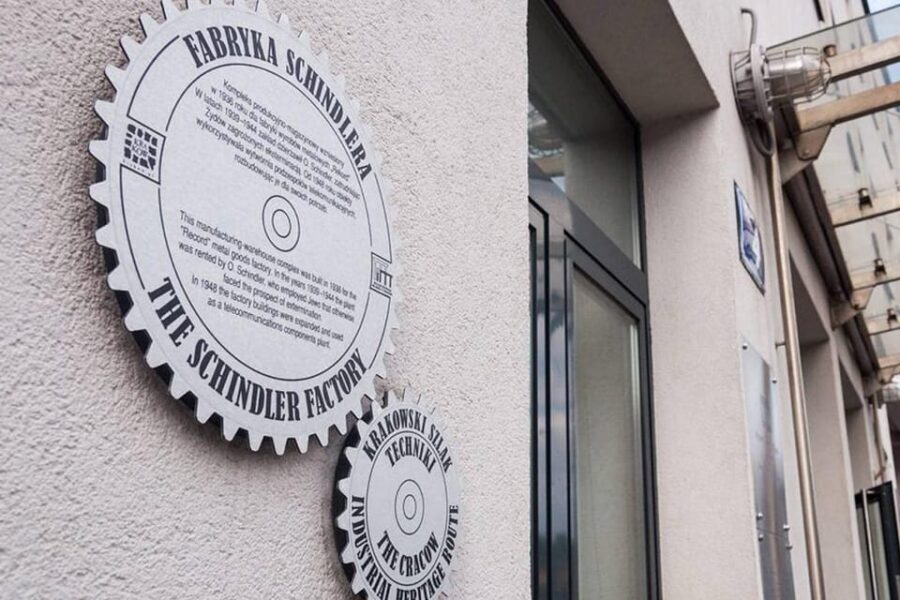
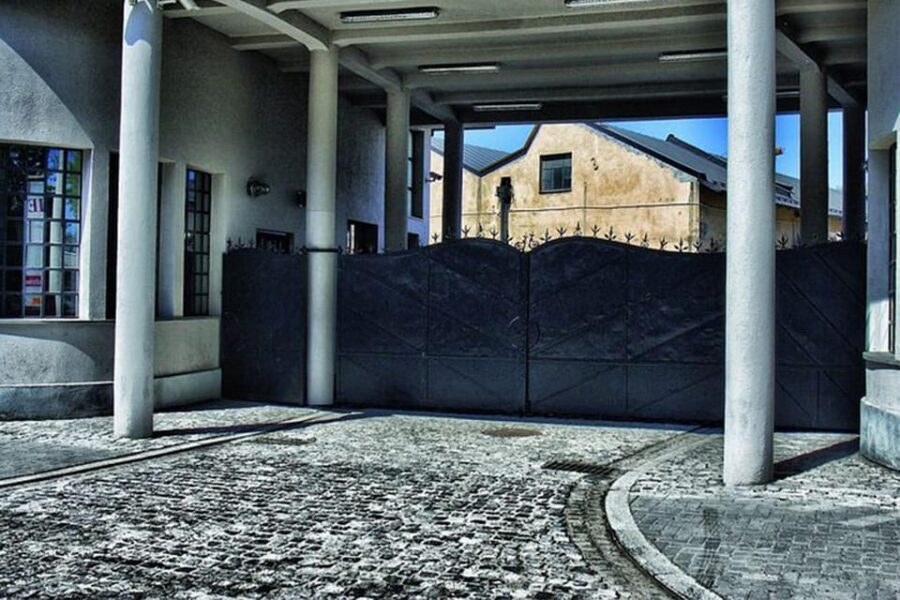
This tour is timed for 90 minutes and starts right where you’d expect: in front of the Museum Oskar Schindler’s Factory entrance. That matters because you’re not wandering first, trying to figure out where the museum actually begins. You meet, you check in, then you go inside with skip-the-line admission, which is a big deal at one of Krakow’s most popular museums.
Your group gets a licensed guide who leads you through the museum’s main experience rather than letting you “self-tour and hope.” And because the museum can be crowded, arriving during the guided window helps you avoid the most frustrating part of popular-history tourism: waiting while you’re already paying for a timed visit.
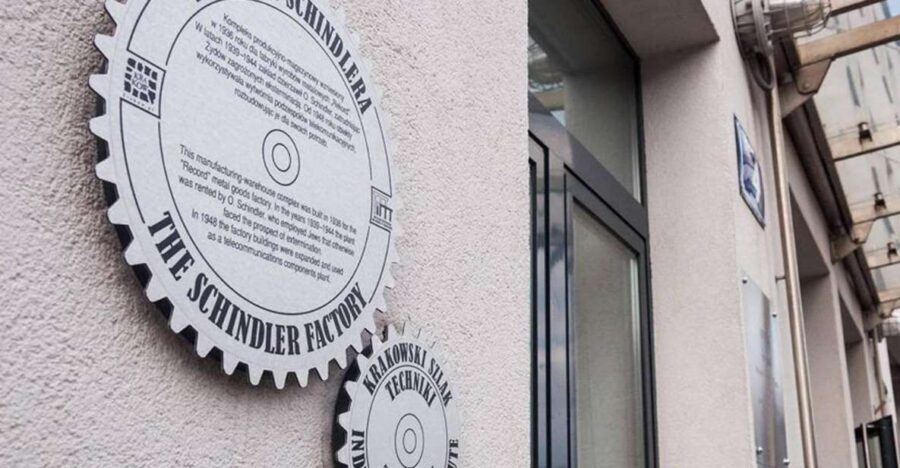
Inside, you’re in the real setting: Oskar Schindler’s former enamel factory, not a generic history hall. That physical fact changes the feeling. It’s easier to understand why the museum concentrates on how a factory workplace could become a place of refuge for more than a thousand Jewish workers. The building itself reinforces what the guide explains: wartime cruelty and wartime courage often happened within ordinary daily structures.
You can also read our reviews of more guided tours in Krakow
What the Guided Tour Actually Covers in 90 Minutes
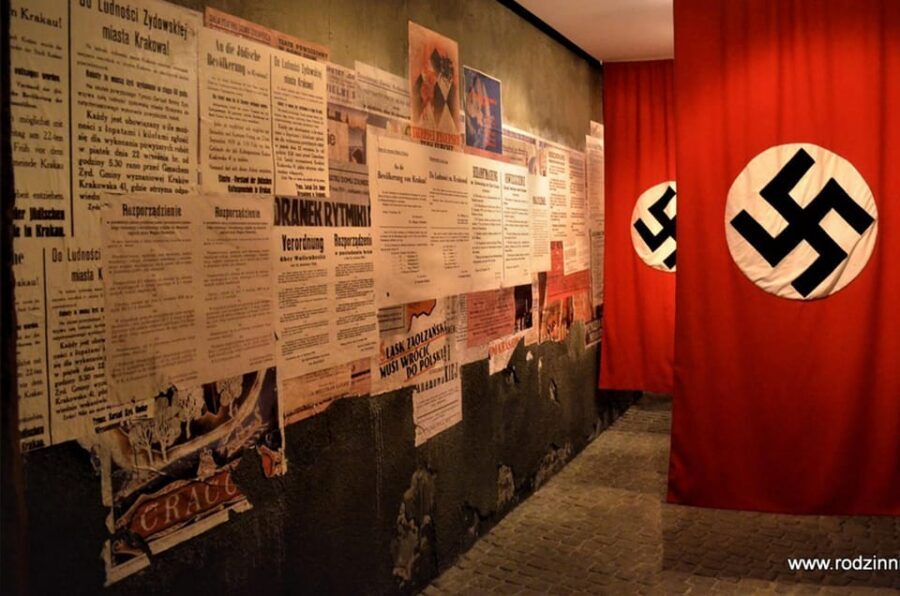
You should think of this as a guided walk-through of the museum’s meaning, not just a sequence of rooms. The core thread is the wartime transformation of Krakow under Nazi occupation, shown through the exhibition Kraków under Nazi Occupation 1939–1945.
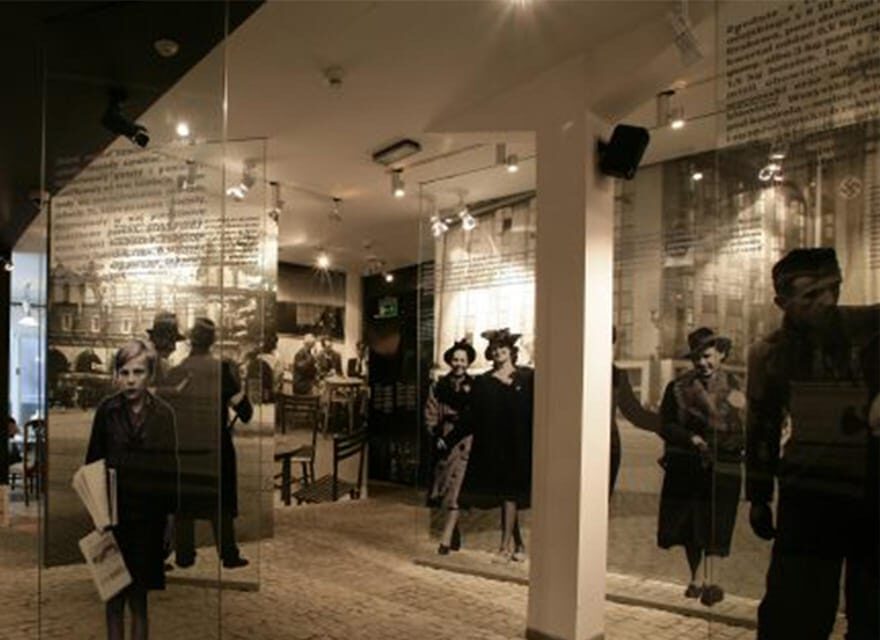
Most of the museum experience is intentionally designed to feel heavy. The galleries can be narrow and dimly lit, and that’s not for mood alone. It’s part of how the museum communicates fear, tension, and uncertainty—so you don’t just read captions and move on. With a guide, you get the story behind the atmosphere: what you’re looking at, why it matters, and how the pieces connect.
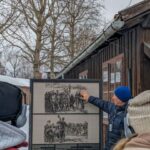
As you move through the galleries, you’ll encounter historical photographs and authentic artifacts, along with immersive reconstructions. That combination is useful. Photos help you place what happened. Artifacts help you picture the humans who carried it through. Reconstructed scenes help you understand relationships and everyday life, including what changed after occupation tightened its grip.
And then, the tour brings in Schindler’s role in a way that’s grounded in the larger city story. The guide frames how Schindler’s factory became a refuge during a period of persecution and deportations, and how the tragedy of Krakow’s Jewish community unfolded. The key here is balance: it’s not only about one man. The story includes the broader survival and resistance reality—how individual acts of courage fit into the larger system of terror.
The Schindler Story: Why It Hits Harder With Context
It’s tempting to approach Schindler’s Factory as a biography. This tour doesn’t let it stay that simple. You learn about Oskar Schindler and his actions, yes, but you also learn how the war reshaped Krakow—and how the occupation changed daily life for both Jewish and non-Jewish residents.
That context is what makes the experience more than a name-and-dates museum visit. The guide’s job is to connect three things that people often keep separate:
- the occupation timeline and what it did to the city
- the lived experience inside the Jewish community
- the factory as a specific site where persecution was met with human decision-making
This is where the most positive reviews make sense. Guides can explain the way ordinary structures—workplaces, schedules, bureaucracy—became part of who was trapped and who might be saved. And if you’re sensitive to emotional history, expect the museum to be direct. The lighting, room layout, and guided commentary are designed to make the reality feel immediate, not distant.
There’s also a human scale lesson built into the tour: Schindler’s efforts are highlighted, but you’re also shown that other individuals’ efforts mattered too. That approach helps you avoid the “one hero solves everything” storyline. It’s more realistic, and frankly, more moving.
Narrow Rooms, Dim Light, and Your Attention Span
This museum experience is not a quick scan. Many rooms are narrow and dimly lit, which can feel intense if you’re tired, sensitive to low light, or prone to claustrophobia. The upside is that these design choices support the theme: the physical setting helps you understand the mental setting.
For practical comfort, do what you’d do in a church or theater with controlled lighting: slow down, let your eyes adjust, and follow the guide rather than forcing your own pace. If your group is large, the tour includes headsets for groups of 15+, which helps a lot because you’ll be navigating quiet galleries and explanations without shouting over the room.
Also, since the whole experience is 90 minutes, you don’t have time to linger excessively in every display. The guide’s pacing is part of the value. You get an organized story arc instead of choosing randomly among rooms.
Hearing the Guide: Quality of Storytelling and Language Options
The tour runs with a live tour guide in multiple languages: English, French, German, Spanish, and Italian. That matters in Krakow, where you’ll often find major sites offering tours, but not always in your preferred language. Here, you have options.
One review mentioned a guide named Anna, and what stood out was how she personalized the experience to Polish people and used a timeline effectively. That’s exactly the kind of guide skill that changes comprehension. A timeline isn’t trivia. It helps you see cause and effect: what happened first, what followed, and how the city’s conditions tightened over time.
For you, the takeaway is simple: show up ready to listen. This isn’t just history you can “skim.” The guide’s storytelling is part of what makes the museum coherent.


The Price and Whether It’s Good Value for $55
At $55 per person for a 90-minute guided tour, this sits in the middle-to-upper range of Krakow museum experiences. The question isn’t whether you’re paying for a museum ticket. You’re paying for three things that add real value:
- Skip-the-line admission, which saves time at one of the city’s top museums
- A licensed expert guide who explains what you’re seeing instead of leaving you to interpret alone
- Headsets for larger groups, so the experience stays listenable and not frustrating
If you were to do this on your own, you’d still pay museum entry and then rely on your own reading. That can be fine, but it often leads to gaps: you miss connections between the occupation events and how Schindler’s story fits into the broader picture. Here, you’re buying interpretation and structure.
The tour also avoids extra costs tied to the experience length. It’s 90 minutes, not a half-day commitment, and there’s no mention of any included food or drinks—so plan on staying efficient rather than treating it like a long lunch break.
The one drawback for value is personal expectation. If you’re expecting a factory-focused walkthrough that feels like a production tour, the content you get is museum-exhibition focused. It’s more about what happened to people and how the factory became a refuge than about touring machines or workflow.
Practical Tips for Getting the Best Experience
A few things will help you get the most out of this visit:
- Bring your passport or ID card. The museum requires it for entry, and the tour info stresses that without proper identification, entry could be denied.
- If you’re booking with multiple participants (family or friends), make sure you provide full names that match IDs exactly.
- Dress for a museum setting. The lighting can be dim and the rooms can be narrow, so wear comfortable shoes and plan for slower movement.
- If you’re booking around changing schedules, note that the tour start times are described as approximate and may adjust due to museum scheduling.
Also, this tour includes the guide and skip-the-line admission, but it does not include a come-back transfer or food and drinks. So you’ll want to handle transport and meals separately. That’s not a flaw; it’s just how the tour is built.
Should You Book This Guided Tour?
Book it if you want a guided, organized experience at Schindler’s Factory, especially the Kraków under Nazi Occupation 1939–1945 context that connects the city’s wartime reality to Schindler’s choices. The skip-the-line setup and the licensed guide are the main reasons this works well for first-time visitors who don’t want to piece things together on their own.
Consider skipping or choosing a different option if you’re primarily shopping for a highly factory-technical visit. This experience is museum-based and story-driven, with emotional intensity and lots of exhibition content. It’s not designed to function like a behind-the-scenes industrial tour.
If you’re ready for history that feels close-up—photographs, artifacts, dim-room atmosphere, and expert explanation—this is one of the best ways to handle one of Krakow’s most important sites without wasting time.
FAQ
What is the duration of the Schindler’s Factory guided tour?
The tour lasts about 90 minutes.
Where do I meet for the tour?
You meet directly in front of the Museum Oskar Schindler’s Factory entrance.
Is skip-the-line admission included?
Yes. The tour includes skip-the-line admission to Schindler’s Factory.
What languages are available for the live guide?
The live guide is available in English, French, German, Spanish, and Italian.
What do I need to bring for entry?
Bring a passport or ID card. The tour info also notes you should bring ID for children as well.
Is the tour wheelchair accessible?
Yes. The activity is listed as wheelchair accessible.