REVIEW · KRAKOW
Krakow: Jewish Ghetto Walking Tour
Book on GetYourGuide →Operated by Thousand Miles Cracow Adventure Company · Bookable on GetYourGuide
One hour can teach you a lot about Krakow. This Jewish Ghetto walking tour is a focused walk through the former Poguzhe district, with stops at places like Ghetto Heroes’ Square and the surviving wall fragments that mark what happened here. You finish at the famous Under the Eagle pharmacy, where the guide helps connect the street-level scenes to the human story behind them.
Two things I really like: you’re not just looking at plaques—you’re shown where thousands of displaced Jews once lived in cramped conditions, and you get an on-the-ground sense of space and scale. Second, the guide’s live explanations (in English and several other languages) give you the timeline and meaning so the sites make sense fast. One thing to consider: the pharmacy stop is a great finale, but entry to Under the Eagle is not included in the tour price, so you may need extra money at the end.
In This Review
- Key things you’ll notice on this Krakow ghetto walk
- A Quick 1-Hour Walk Through Krakow’s Ghetto Area
- Meeting Point at Schindler Factory Museum (and how to not waste time)
- Plac Bohaterów Getta: Where Identification Turned Into Deportation
- Surviving Wall Fragments and What They Signal on the Street
- Walking Past Buildings Where Thousands Lived in Cramped Conditions
- Under the Eagle Pharmacy: The Famous Finale (and the extra ticket detail)
- The Guide Matters: How Live Storytelling Changes the Route
- Price and Value: Is $15 Worth It?
- Who This Tour Suits Best in Krakow
- Should You Book the Krakow Jewish Ghetto Walking Tour?
- FAQ
- How long is the Krakow Jewish Ghetto walking tour?
- What is the price?
- Where do I meet the guide?
- What sights will I see?
- Is a live guide included?
- Is food or drink included?
- Is entry to Under the Eagle pharmacy included?
- What languages is the tour offered in?
- Can I cancel for a refund?
- Is there a reserve now & pay later option?
Key things you’ll notice on this Krakow ghetto walk
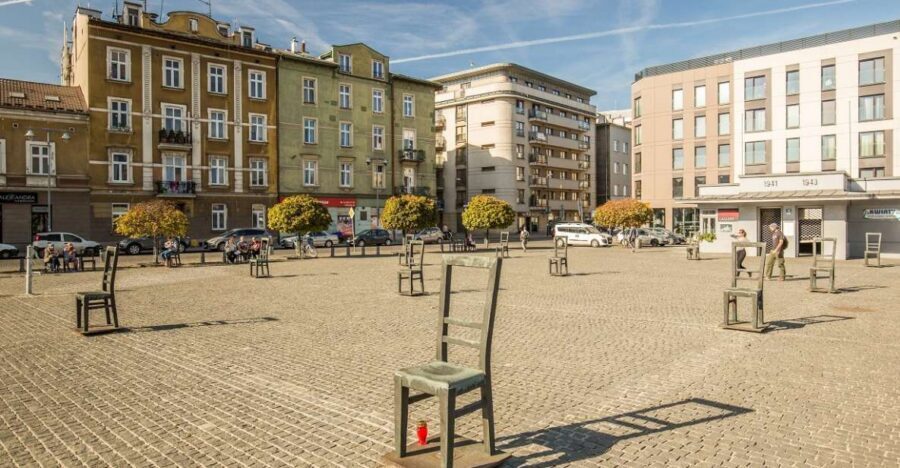
- Ghetto Heroes’ Square (Plac Bohaterów Getta): the place where Jewish inhabitants were identified and sent to concentration camps
- Surviving wall fragments: see the remaining piece of the ghetto wall that now serves as a monument
- Buildings from the former ghetto area: the guide helps you read the neighborhood in the context of wartime displacement
- Under the Eagle pharmacy: the tour’s final, famous landmark stop
- Live guide throughout: explanations in multiple languages for a quick 1-hour orientation
A Quick 1-Hour Walk Through Krakow’s Ghetto Area
This tour is built for people who want real context, not a long slog. You’re on the move for about 1 hour, walking through the Poguzhe district, the area that became the Jewish ghetto during World War II. Even though the war ended decades ago, this neighborhood still carries the marks of what was done here—so the walk works best as a careful, thoughtful introduction.
What you’ll be doing is simple: follow your guide from key memorial points to the streets and buildings tied to the ghetto. The guide’s job is to help you connect what you see (squares, walls, building facades) with what happened (identification, forced displacement, and the conditions people were trapped in). That’s why the tour is more than a sightseeing loop.
I also like that the pace matches how most people travel. If you’ve got other sights on your Krakow list—Schindler’s Factory Museum, the Old Town, Jewish quarter highlights—this fits cleanly into a day without hijacking it. You get structure, meaning, and the big landmarks in one compact block.
You can also read our reviews of more walking tours in Krakow



Meeting Point at Schindler Factory Museum (and how to not waste time)
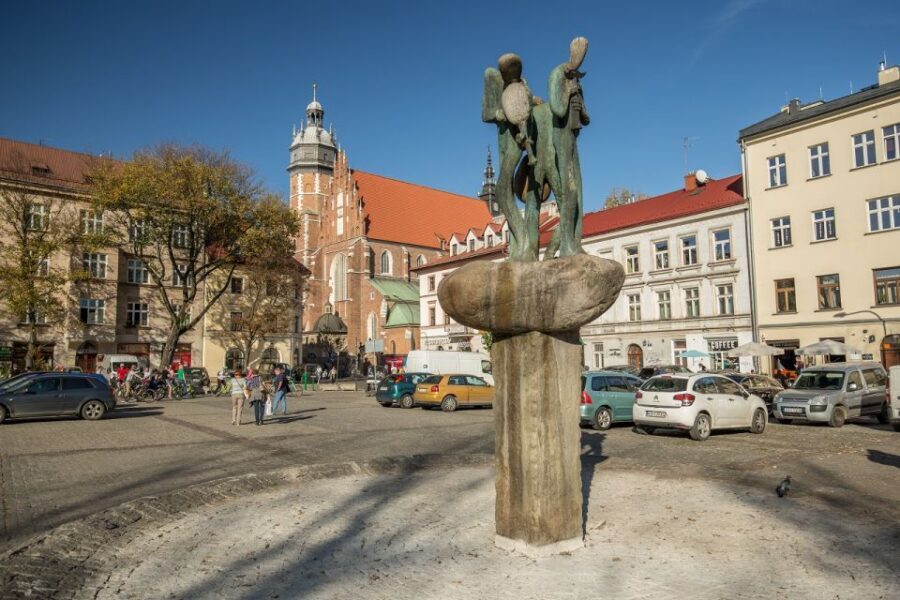
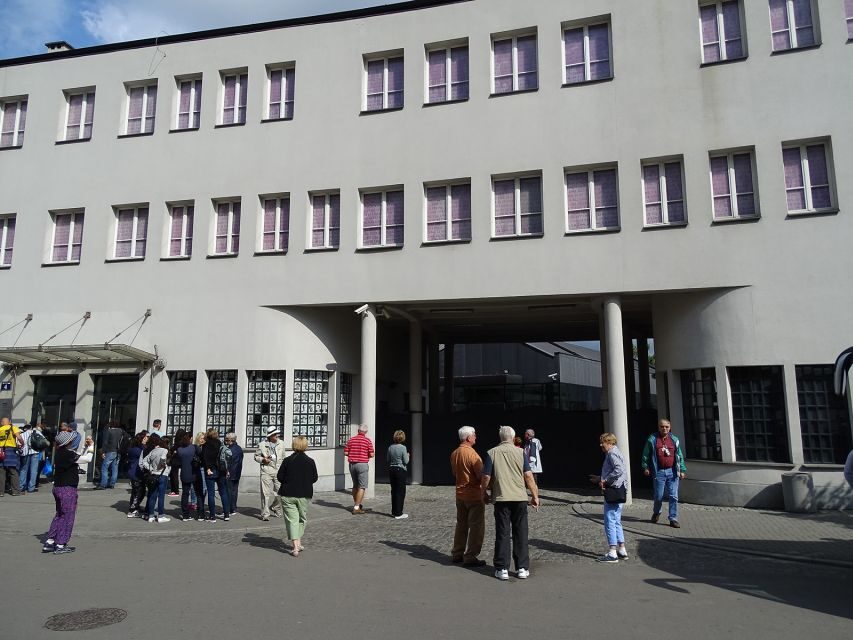
You meet at the entrance to the Schindler Factory Museum. Look for a guide holding an excursions.city sign. It’s a handy meeting place because a lot of people are already in the area, and you’re not trying to hunt down a random street corner.
Since the tour is only an hour, being on time matters. The tour’s main value is that you walk the route with an active guide, not that you just wander and hope the right story attaches itself. If you’re early, take a minute to settle your bearings near the entrance—then you’ll start the tour ready to focus.
Also, you can book with flexibility: there’s free cancellation up to 24 hours in advance and a reserve now & pay later option. If your Krakow plans are still shifting, that reduces stress.
Plac Bohaterów Getta: Where Identification Turned Into Deportation
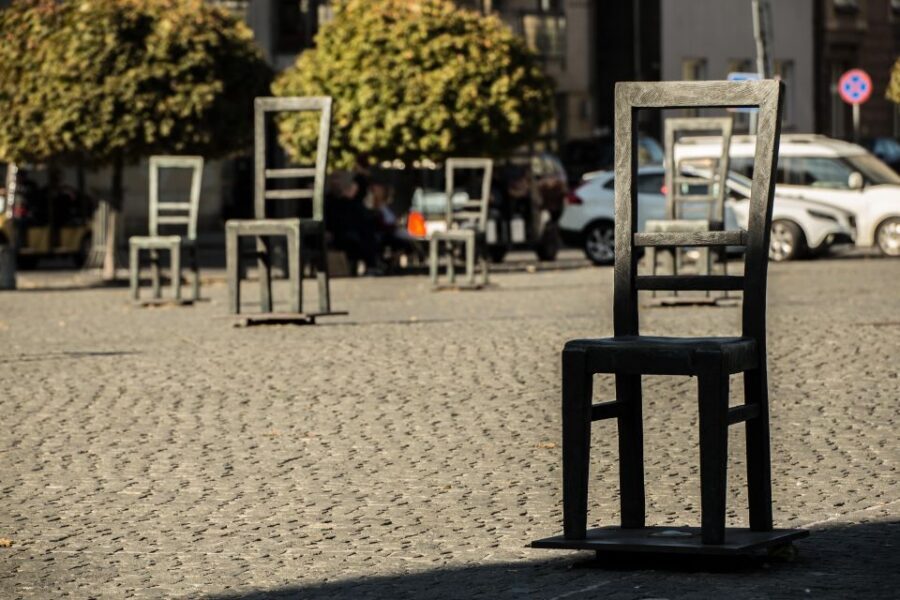
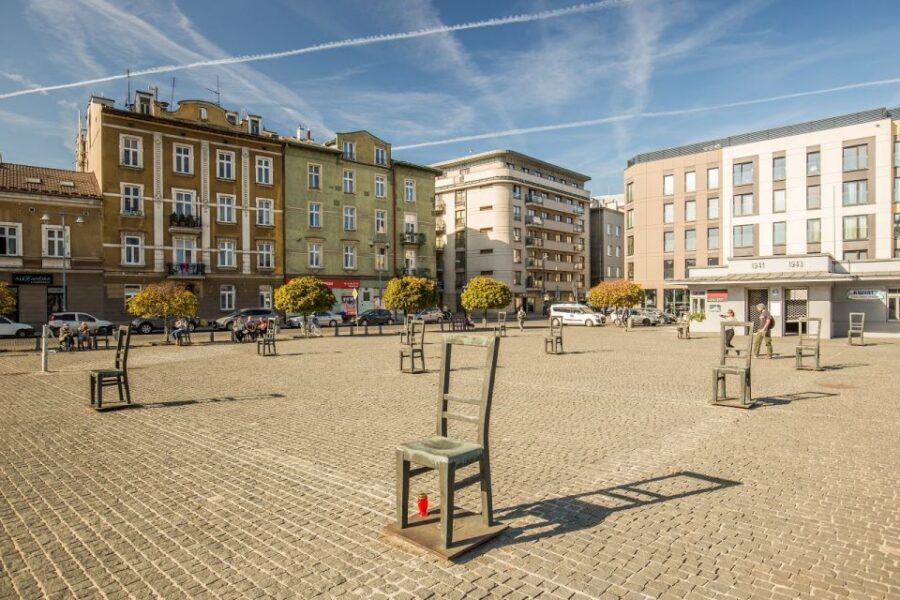
One of the first stops is Plac Bohaterów Getta (Ghetto Heroes’ Square). This isn’t a generic memorial stop. It’s the kind of place where the meaning is blunt: Jewish inhabitants of Krakow were identified here and then sent to concentration camps.
Your guide’s explanations turn this square from “a point on a map” into a moment in time. You’ll learn how the ghetto system worked and why the square matters in the larger story of Krakow’s wartime Jewish community. Even if you already read about the Holocaust, I find it useful to anchor facts to a real location you can stand in.
A practical note: squares are open and weather can hit you fast. Bring a layer if it’s chilly, and keep water handy if you’re walking in warm months. The tour is short, but the walk doesn’t pause for comfort the way a museum visit can.
Surviving Wall Fragments and What They Signal on the Street
Another key moment is seeing a fragment of the original ghetto wall. This remaining piece now functions as a monument and a place of pilgrimage for Jewish visitors from abroad. That detail matters. It’s not only local memory—it’s part of a wider network of commemoration.
Standing near the wall fragment changes how you interpret the whole area. Instead of imagining the ghetto as a concept, you see it as built space—something with boundaries. Your guide helps you understand why those boundaries were so central to the tragedy: they controlled movement, enforced separation, and concentrated people under impossible conditions.
What I like most here is how the guide helps you notice the “in-between” things: the relationship between the wall fragment and the surrounding streets, the shift from memorial site to daily-looking buildings. That contrast can be emotionally heavy, so the guide’s pacing and explanations help you stay oriented.
Walking Past Buildings Where Thousands Lived in Cramped Conditions
The tour doesn’t stop at memorial points. You also walk past buildings where thousands of displaced Jews used to live in cramped conditions. The guide’s job is to make you see these buildings with wartime context instead of just modern architecture.
This is one of the best parts of a walking tour like this. You learn to read the neighborhood like a document. Facades and entrances start to feel like evidence rather than background. You’ll hear how people were forced into limited space and what that meant for daily life. Even in just an hour, that kind of guided interpretation can stick with you longer than a photo album.
There’s also a respectful rhythm to this. This walk is essentially a route of remembrance, not a scavenger hunt. If you tend to rush when sightseeing, slow down here. Let the guide set the pace, and don’t be afraid to pause and look.


Under the Eagle Pharmacy: The Famous Finale (and the extra ticket detail)
The last stop is the famous Under the Eagle pharmacy. It’s a recognizable landmark, and your guide brings it into the story of the ghetto neighborhood instead of treating it like a separate attraction.
Here’s the main consideration: entry ticket to the pharmacy is not included. So when you reach the final stop, be ready for the possibility of paying separately if you want to go inside. That doesn’t ruin the tour, but it’s important for planning—especially if you’re budgeting or trying to keep a tight schedule.
If you love historical landmarks with a human-scale setting, this pharmacy stop tends to land well. It’s the kind of place where the setting is famous enough to anchor your memory, while the guide’s context keeps it meaningful.
The Guide Matters: How Live Storytelling Changes the Route
This tour lives or dies by the guide, and the structure is built for live interpretation. You’re with a live guide for the full walk, and the tour runs in multiple languages: Italian, English, Spanish, German, and French.
One standout detail you might appreciate is how some guides share personal storytelling, not just dates. For example, a guide named Aga has been praised for being superb and for sharing personal knowledge and experience. That’s exactly the kind of thing that makes a walking tour feel less like a lecture and more like understanding a city through someone’s care.
In a tour this short, the guide’s clarity matters. You want the story to land in the right order: what happened, where it happened, and why these specific points matter. When it’s done well, you finish the hour feeling like the places are connected, not isolated.
Price and Value: Is $15 Worth It?
At $15 per person for a 1-hour guided walk, this is positioned as an affordable “core context” tour. What you’re paying for is not a museum admission—it’s the live guide and the route that links multiple memorial points into one coherent walk.
To think about value, separate what’s included from what’s optional:
- Included: live guide for the walk
- Not included: food and drink, and entry to Under the Eagle pharmacy
For many people, paying $15 for an organized route with interpretation is good value, especially if you’re already spending time around the Schindler Factory Museum area. It’s also a smart choice if you want to get oriented quickly before choosing deeper add-ons later.
If you hate paying extra at the end, just remember the pharmacy entry ticket isn’t included. But if you’re fine with that and you want the guide’s explanation, the price feels reasonable for the amount of meaning you get.
Who This Tour Suits Best in Krakow
This is ideal if you:
- want a focused overview in a short time window
- appreciate guided historical context tied to real places
- are in Krakow for a few days and want to add a meaningful Jewish heritage stop beyond the big-ticket museums
It’s also a good fit if you like walking, but not endless walking. At one hour, you can do it without turning your entire day into a leg workout.
If you’re the type who needs deep, extended museum time, you might pair this with other sites afterward. Think of it as the “street-level story” piece. It sets the stage so whatever you explore next will make more sense.
Should You Book the Krakow Jewish Ghetto Walking Tour?
I’d book it if you want a short, well-directed introduction to Krakow’s Jewish ghetto story, with stops at Ghetto Heroes’ Square, a fragment of the ghetto wall, and a finishing point at Under the Eagle pharmacy. The live guide is the big win here—this tour is designed to help you connect what you see with what happened.
I’d hesitate if you’re mainly after museum-style depth, because the format is intentionally compact. And if you don’t want to handle any extra cost at the end, plan for the fact that pharmacy entry isn’t included.
If you can handle those two points, this is a solid, value-packed way to add real meaning to your Krakow day.
FAQ
How long is the Krakow Jewish Ghetto walking tour?
The tour lasts 1 hour.
What is the price?
The price is $15 per person.
Where do I meet the guide?
Meet at the entrance to the Schindler Factory Museum. Look for a guide holding an excursions.city sign.
What sights will I see?
You’ll visit Plac Bohaterów Getta, see a fragment of the ghetto wall, walk past buildings where thousands of displaced Jews lived, and end at Under the Eagle pharmacy.
Is a live guide included?
Yes. A live tour guide is included.
Is food or drink included?
No. Food and drink are not included.
Is entry to Under the Eagle pharmacy included?
No. Entry ticket to the Pharmacy Under the Eagle is not included.
What languages is the tour offered in?
The tour guide speaks Italian, English, Spanish, German, and French.
Can I cancel for a refund?
Yes. You can cancel up to 24 hours in advance for a full refund.
Is there a reserve now & pay later option?
Yes. You can reserve now & pay later so you don’t have to pay immediately.