REVIEW · KRAKOW
Krakow: Jewish Ghetto Guided Tour
Book on Viator →Operated by excursions.city · Bookable on Viator
A ghetto wall fragment hits fast. This 1-hour guided walk through Kraków’s Podgórze ghetto area connects the physical traces of confinement with the human stories behind them, including the Ghetto Heroes Square chair memorial. You’ll cover key sites on foot, so you reach corners a car tour would miss, and you won’t spend your time figuring out where to go next.
I love the way the guide turns places into clear wartime context, with in-depth insights about life during World War II. I also like the human-scale focus, especially the stop at the Under the Eagle Pharmacy (Apteka pod Orłem) and the story of Tadeusz Pankiewicz and staff who helped residents with medicine and hope.
One thing to plan for: admission to the Eagle Pharmacy stop is not included, so budget a little extra if you want to enter the museum.
In This Review
- Key things I’d prioritize before you go
- A one-hour Kraków ghetto walk that’s tight, focused, and worth your time
- Getting there: meeting point, timing, and how the day runs
- Stop by stop: from the ghetto wall remains to Heroes Square
- 1) Ghetto wall fragment: the reminder you can actually see
- 2) Ghetto Heroes Square: the chair memorial and the scale of loss
- A reality check: today’s streets won’t look like the 1940s
- Under the Eagle Pharmacy: medicine, courage, and a story you’ll remember
- The guides: what makes the experience feel humane
- Pacing and comfort: how to enjoy it without rushing
- Price and value: why $15.60 can be a smart spend here
- Who this tour is for (and who might want to choose another option)
- Should you book this Kraków Jewish Ghetto guided tour?
- FAQ
- How long is the Kraków Jewish Ghetto guided tour?
- What is the price per person?
- Is the tour offered in English?
- Where do I meet and where does the tour end?
- Do I need to pay for admission at the Eagle Pharmacy stop?
- Does the tour run in bad weather?
- What time should I arrive before the tour starts?
- Can I cancel for a full refund?
- Is there a limit on group size?
Key things I’d prioritize before you go
- Wall remains first: you start with what’s left of the ghetto barrier, not just an abstract talk.
- Heroes Square chair memorial: a simple visual marker for lives lost tied to deportations to extermination camps.
- Under the Eagle Pharmacy story: you learn how help and medicine were part of resistance and survival.
- Guided navigation: the route is set for you, so you can focus on the meaning, not directions.
- Small-group feel: the tour caps at 20 people, which usually keeps the pace and questions manageable.
A one-hour Kraków ghetto walk that’s tight, focused, and worth your time
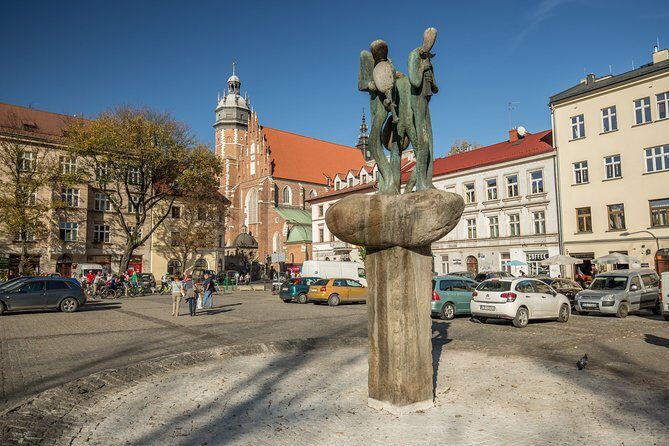
If you’re short on time in Kraków but want more than a quick photo stop, this tour is built for exactly that. It’s about 1 hour, and the route is designed so you hit the key memorial and reminder sites without wandering. You leave with a clearer sense of how the ghetto worked, what was taken from residents, and what some people risked to help others.
This isn’t a tour where you can casually drift. You’re walking through places where the architecture and layout matter, and the guide’s job is to help you connect the dots. Even if you know basic facts already, you’ll often pick up a new layer—how everyday life was squeezed, and how certain corners of the city became part of a larger wartime system.
And yes, it can feel heavy. The best guides handle the tone with care, and you’ll feel that in the pacing and wording. Several guides have been praised for a calm, sensitive way of explaining what you’re seeing.
You can also read our reviews of more guided tours in Krakow

Getting there: meeting point, timing, and how the day runs
The tour starts at Lipowa 4, 32-051 Kraków, Poland and ends at Apteka pod Orłem, Plac Bohaterów Getta 18 (33-332 Kraków, Poland). Knowing the end point matters because it means you’re not stuck hauling yourself back the way you came—your guide’s route sets up a logical finish near the memorial area.
Arrive 10 minutes early. Once the group leaves, latecomers can’t join, and tickets can’t be refunded. That’s a small rule, but it matters here—this is a walking experience, and timing is part of how it stays coherent.
You’ll also want to plan for practical comfort. It goes ahead in all weather (rain or shine), and you’re on your feet for multiple stops. Bring suitable footwear and expect it to take longer than your head thinks it will if you’re trudging through slick pavement.
Finally, expect a straightforward setup: it’s English-only for the group, and it uses a mobile ticket. That makes it easy to enter, but it also means you should confirm your language preference when booking.
Stop by stop: from the ghetto wall remains to Heroes Square
This tour is built like a story told through locations. Each stop shifts what you notice—from the physical boundary, to the heart of deportations, to what people did when there was still something they could do.
1) Ghetto wall fragment: the reminder you can actually see
You begin at a Ghetto Wall Fragment. The point of starting here is simple: you get a concrete sense of enclosure before you move into symbolism. The remains are a stark reminder that the separation wasn’t just something written in books—it was built into the city.
A lot of people think they’ll understand the ghetto from images alone. A wall remnant changes that. Even if the structure looks smaller than your imagination expects, it still gives your brain the right reference point: this was a boundary placed on real streets, with real consequences.
This stop is about 20 minutes, and since admission is free, you can focus on the explanation rather than ticket logistics.
2) Ghetto Heroes Square: the chair memorial and the scale of loss
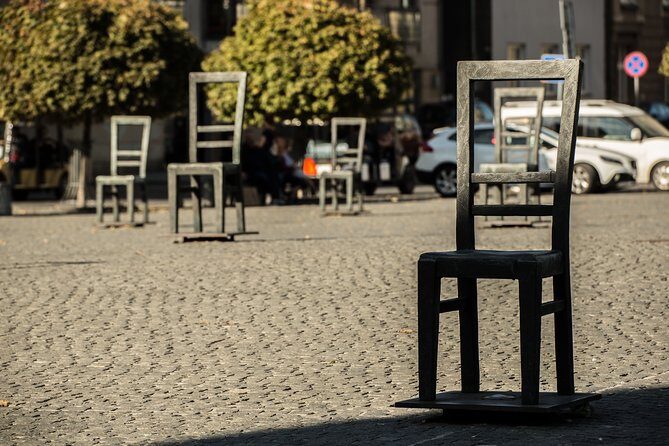
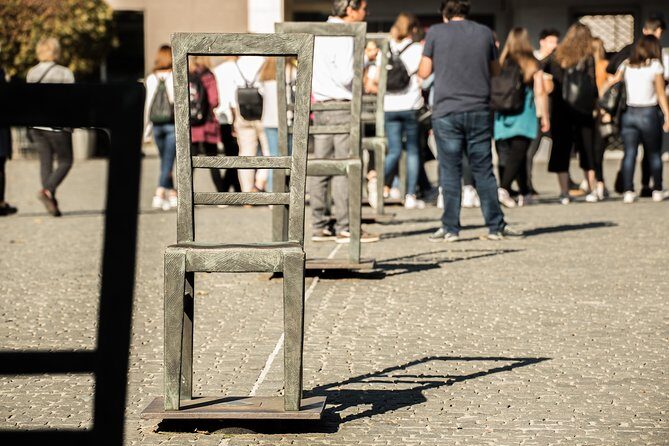
Next you head to Ghetto Heroes Square, which the tour treats as the emotional center of the walk. This is where deportations to extermination camps took place, and today the square is marked by the Chair Memorial, with each chair representing lives lost.
What I appreciate here is that the memorial doesn’t ask you to memorize a complicated list to feel what happened. It uses a clear, visual metaphor. You can stand there and let the meaning land while the guide connects it to what the square represents in the wartime system.
This is another 20-minute stop with free admission. If you want photos, be respectful of the setting—this is a place meant for remembrance, not just sightseeing.



A reality check: today’s streets won’t look like the 1940s
One consideration before you go: you’re seeing today’s Kraków. The ghetto spaces are real, but the city isn’t frozen in time. You’ll walk through an area that looks different now, so the guide’s job becomes especially important—turning modern streets and structures into a wartime map in your mind.
If you expect the ghetto to look preserved like a theme set, you may feel a bit let down. If you go ready to learn how the modern layout helps you understand what happened, it lands much better.
Under the Eagle Pharmacy: medicine, courage, and a story you’ll remember
The final stop is the Under the Eagle Pharmacy (Apteka pod Orłem), across from the square. This part of the walk matters because it balances the narrative. You’ve seen confinement and deportation. Now you learn about help.
The pharmacy is linked to Tadeusz Pankiewicz and his staff, who aided ghetto residents and helped preserve medicine and hope. That phrasing is the heart of it: when people are doing the work of saving lives, they’re often working in tiny windows of possibility. The guide’s explanations help you understand why a pharmacy could become part of that effort.
You’ll spend about 20 minutes here, but admission is not included. If you want to enter the museum space, plan for the extra cost. This is worth it if you like context you can see, not only hear. Even if you don’t enter, the stop is still meaningful, but your experience will likely be better if you budget for admission.
I also like that the Under the Eagle Pharmacy fits the tour’s tone: it’s not just tragedy. It’s also human choices made under extreme pressure.
The guides: what makes the experience feel humane
A guided walk lives or dies on the person leading it. In this case, the most consistently praised thing is the combination of strong knowledge with a calm, approachable delivery.
You may meet guides such as Olga or Anna, and names like Phil/Phillip show up as well. Across guides, the common thread is pace and clarity: the route is short enough that you notice everything, but the explanations don’t feel rushed.
Look for what your guide does with questions too. One of the best signs is when a guide slows down for your curiosity instead of just marching forward. If you’re the kind of traveler who likes to understand how small details connect to big events, this style works well.
Also, several guides are praised for sensitivity. That matters because the topic isn’t light. You should expect respectful wording and thoughtful pacing, not shock or spectacle.
Pacing and comfort: how to enjoy it without rushing
Because the tour lasts about an hour and has multiple 20-minute stops, it stays readable. You’re not stuck for hours in one place, and you’re not forced to keep moving before the meaning catches up.
Still, treat it like a walking tour, not a standing tour. Wear shoes that can handle wet stone and uneven sidewalks. One practical suggestion that keeps popping up is to wear comfortable shoes—and I agree. Your feet will remember the experience long after you’ve forgotten what the square looked like from your phone.
Group size also helps. The cap is 20 travelers, and smaller groups can make the whole thing feel more personal. Either way, the walk format makes it easy to follow along.
Price and value: why $15.60 can be a smart spend here
At $15.60 per person, this is positioned as a low-cost way to get a structured, guided introduction to the ghetto area. The value isn’t only that you’re paying for someone to walk with you.
You’re paying for three practical things:
- Interpretation on the ground: explanations where you stand, not hours later in a hotel lobby.
- Saved research time: you don’t have to build your own route and context from scratch.
- Navigation support: you avoid the stress of finding the right spots while trying to absorb the story.
That said, remember the Eagle Pharmacy stop has admission that’s not included. So your total spend might be a little more, depending on whether you enter the museum.
Even with that, this tour usually holds up well compared to self-guided options because so much of the meaning depends on guidance. You can walk through these sites independently, but you’ll likely lose the thread that makes them connect into a coherent narrative.
Who this tour is for (and who might want to choose another option)
This Kraków Jewish Ghetto walk is a strong match if you:
- Want a short, high-impact experience in a limited time window.
- Prefer a walking route where you don’t have to constantly check maps.
- Like guides who explain wartime life clearly, not in a lecture tone.
It’s also a good choice if you’re combining it with other popular Kraków activities, because the timing is easy to fit into a day.
You might want to consider an alternative if:
- You need wheelchair-friendly, low-mobility pacing and the idea of outdoor walking in rain doesn’t work for you. (The tour is described as usable by most travelers, but it’s still a walking format.)
- You strongly dislike tours with emotionally heavy topics. This is respectful and sensitive, but it is still about deportations and extermination.
Should you book this Kraków Jewish Ghetto guided tour?
I’d book it if you want the fastest way to understand what you’re seeing and why it matters. The route is tight, the stops are purposeful, and the guidance turns scattered sites into a connected story. The mix of Ghetto wall remains, Heroes Square chair memorial, and the pharmacy story makes it more than a checklist tour.
Also, the format helps you focus. You’re not trying to work out where to go next, and you’re not paying for time you don’t use. If the idea of adding the Eagle Pharmacy museum admission fits your budget, this becomes even more worthwhile.
Go with comfortable shoes, arrive a few minutes early, and give yourself permission to feel the weight of the place. The payoff is a clearer, more human understanding of what happened here.
FAQ
How long is the Kraków Jewish Ghetto guided tour?
The tour is approximately 1 hour.
What is the price per person?
It costs $15.60 per person.
Is the tour offered in English?
Yes. The tour is offered in English, and each group tour runs in only one language.
Where do I meet and where does the tour end?
You start at Lipowa 4, 32-051 Kraków, and the tour ends at Apteka pod Orłem at Plac Bohaterów Getta 18, 33-332 Kraków.
Do I need to pay for admission at the Eagle Pharmacy stop?
Admission to the Eagle Pharmacy (Under the Eagle Pharmacy) stop is not included.
Does the tour run in bad weather?
Yes. The tour goes ahead in all weather, rain or shine.
What time should I arrive before the tour starts?
Arrive 10 minutes before the tour begins. Latecomers can’t join once the group has departed, and tickets can’t be refunded.
Can I cancel for a full refund?
Yes. You can cancel up to 24 hours in advance for a full refund.
Is there a limit on group size?
Yes. The tour has a maximum of 20 travelers.