REVIEW · KRAKOW
Krakow: City Tour by Electric Golf Cart
Book on GetYourGuide →Operated by See Cracow Tours · Bookable on GetYourGuide
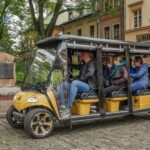
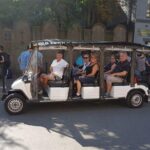
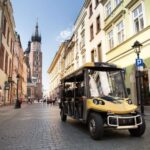
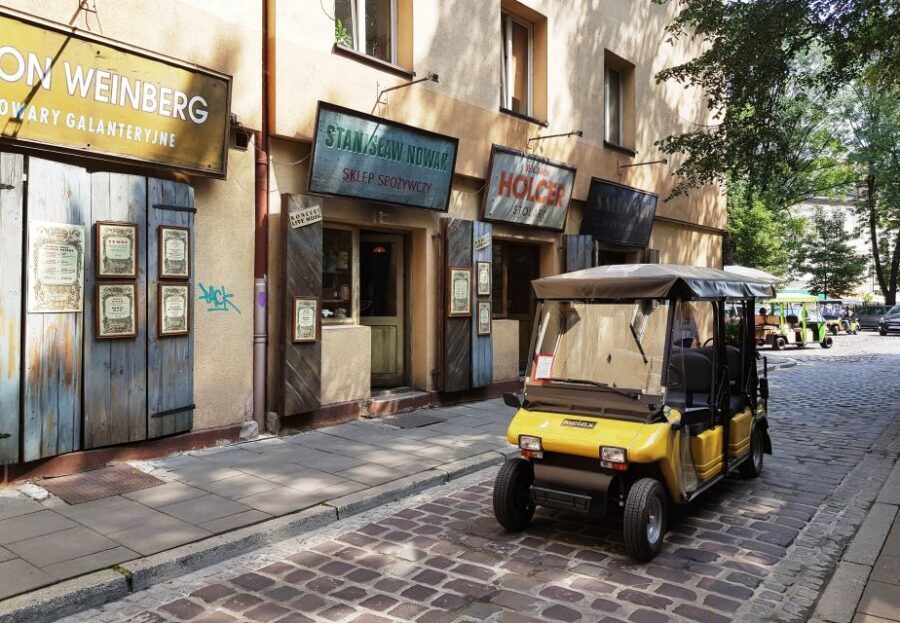
Krakow’s sights, minus the walking marathon. This 90-minute electric golf cart tour strings together the city’s top landmarks and the most important WWII story lines in a way that feels organized, not rushed. You’ll glide through Old Town, cut through Kazimierz, and then head to the WWII sites in Podgórze, guided by a driver plus a multi-language audio track.
I love the comfort factor: the carts are set up for real weather, including warm coverings, and people note cozy touches like blankets and the ability to adjust the cart’s sides. I also love how the experience splits the city into two distinct moods—Medieval Krakow first, then the Jewish Quarter and ghetto-era locations with clear context.
One consideration: the major stops are short, so the Schindler’s Factory stop is quick—more of a targeted viewing moment than a full museum-style visit.
In This Review
- Key things to know before you ride
- Krakow’s Highlights, 90 Minutes at a Time (and with less pavement)
- Where You Start by Plac Jana Matejki 3 (and why timing matters)
- Old Town on the Royal Route: Market Square, Jagiellonian University, and Wawel Views
- Kazimierz: The Jewish Quarter’s Streets, Synagogues, and Old Cemeteries
- Podgórze and the Ghetto Story: Ghetto Heroes Square, Eagle Pharmacy, and Wall Remains
- Schindler’s Factory in Ten Minutes: Seeing the Stop Without Expecting a Full Museum Visit
- Audio Guide in 28 Languages (and the driver-guide difference you’ll feel)
- Comfort, Weather, and What to Bring (since Krakow can be cold)
- Is $36 Good Value for This Electric Cart Circuit?
- Should You Book This Electric Golf Cart Tour?
- FAQ
- How long is the Krakow City Tour by Electric Golf Cart?
- What areas of Krakow does the tour cover?
- Is there an audio guide, and in how many languages?
- Is there an English-speaking guide?
- Is the tour wheelchair accessible, and can I bring luggage?
- Where do I meet the tour?
Key things to know before you ride
- A tight 90-minute loop connecting Old Town, Kazimierz, and Podgórze without a day-long walk
- Audio guide in 28 languages paired with an English-speaking driver
- Weather-friendly cart setup (people report warm covers, blankets, and side-panel options)
- WWII sites on the route including Ghetto Heroes Square, Eagle Pharmacy, and remains of ghetto walls
- Schindler’s Factory as a stop, not a long detour (the time is intentionally brief)
Krakow’s Highlights, 90 Minutes at a Time (and with less pavement)
This is one of the smartest ways to see Krakow when you’re short on time or you just don’t want to grind your way through cobblestones for hours. The electric golf cart does the heavy lifting, while the driver-guide focuses on what you’re looking at and why it matters.
The real value here is the combination. You get the classic “first-time in Krakow” hits—Old Town and the Wawel area view corridor—then you shift to a completely different story in Kazimierz and Podgórze. That change of neighborhoods is exactly what makes Krakow feel like more than one postcard.
At 90 minutes, you’ll finish with direction for the rest of your trip. Many guides naturally share recommendations along the way, and it helps you decide what deserves your next walk.
You can also read our reviews of more city tours in Krakow
Where You Start by Plac Jana Matejki 3 (and why timing matters)
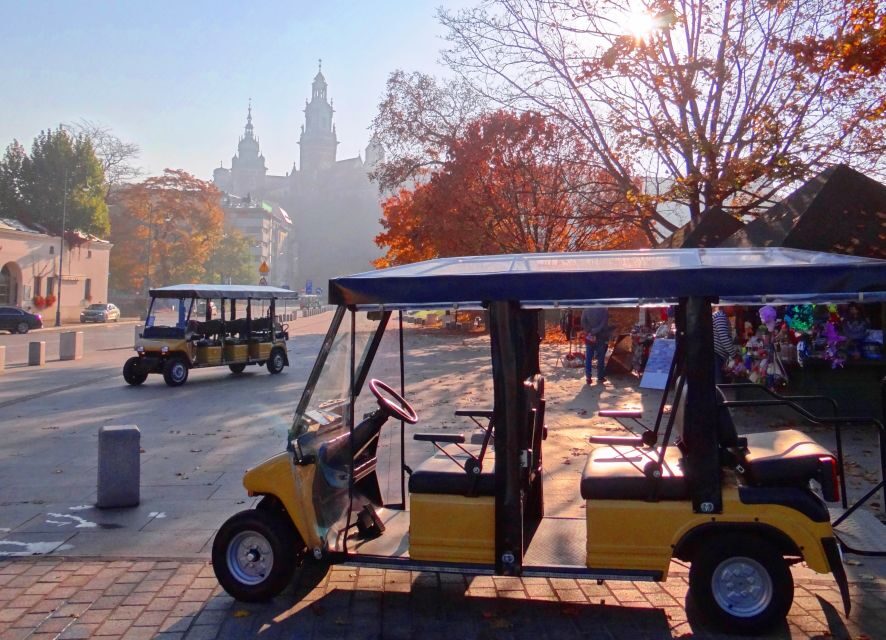
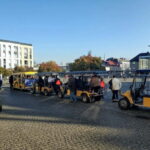
The meeting point is at the tourist bus stop (K+R BUS) at Kraków, Plac Jana Matejki 3. The day starts in the city center, and that matters because it keeps you from spending your limited time on getting to out-of-the-way pickup spots.
If you can, I’d do this early in your visit. You’ll come away with a mental map: where Old Town sits, where Kazimierz starts to feel different, and how Podgórze fits into the larger WWII story. After that, you’re better at choosing what to revisit on foot.
One practical note: luggage or large bags aren’t allowed. Keep your day pack small so you’re not dealing with bag management while everyone else is ready to roll.
Old Town on the Royal Route: Market Square, Jagiellonian University, and Wawel Views
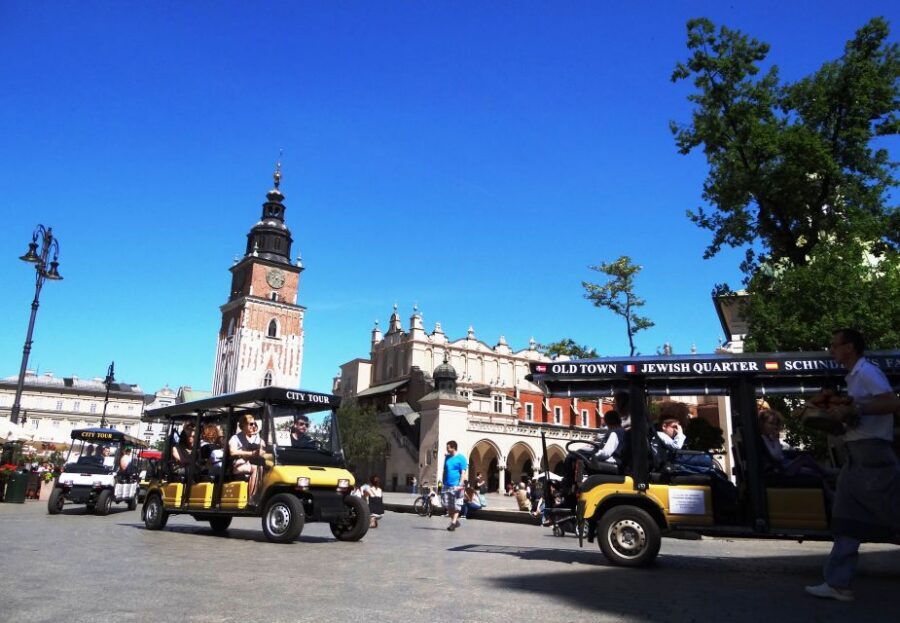
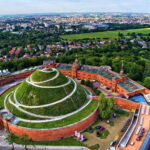
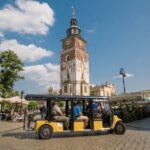
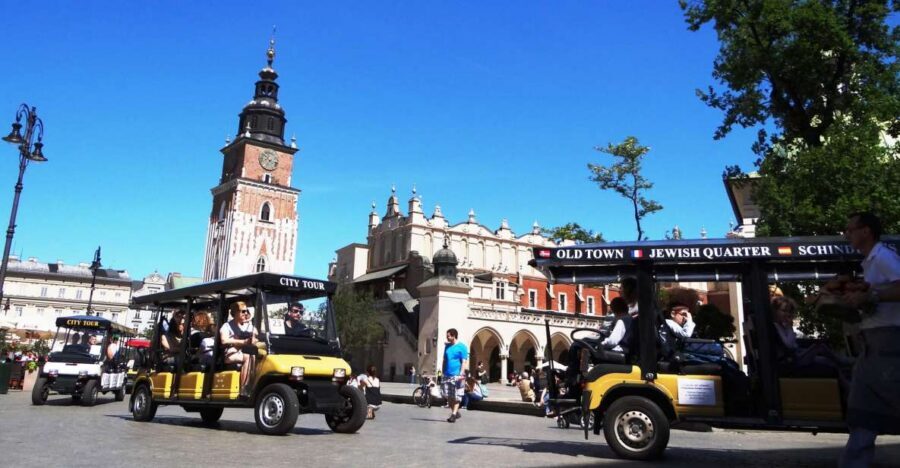
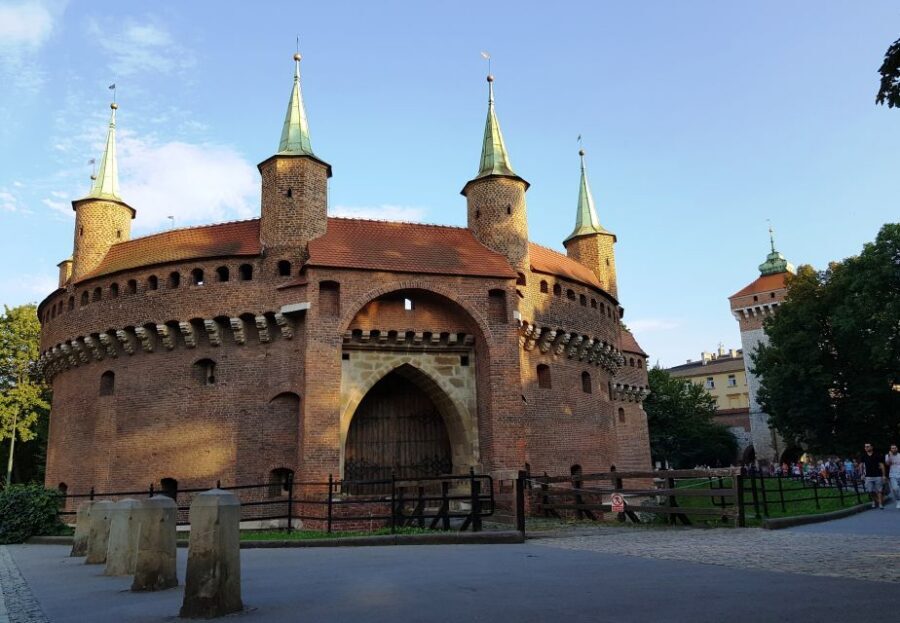
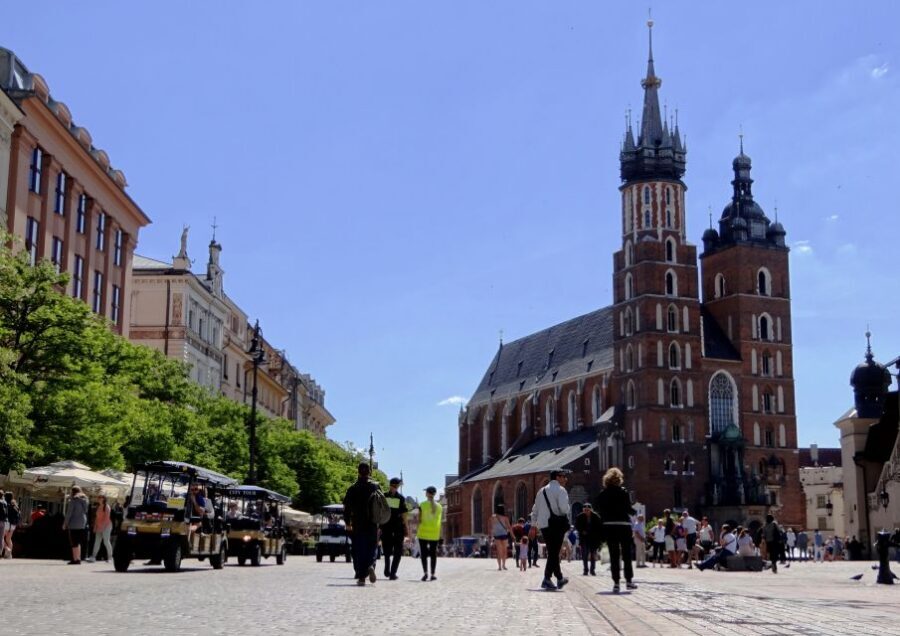
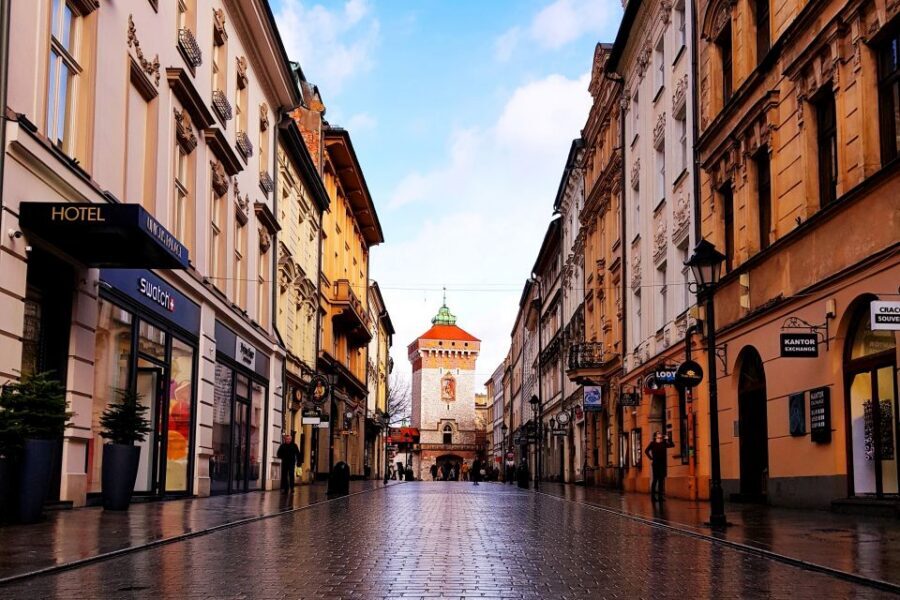
Old Town is the obvious crowd-pleaser, but what makes this stop list work is the way it stitches landmarks into a route. You’ll spend about 30 minutes seeing the highlights of Krakow’s Old Town area, including the largest medieval market square in Europe—Rynek Główny.
From there, the tour follows the Royal Route and passes defensive walls and fortifications. That defensive theme isn’t just trivia. In Krakow, it helps explain why the city’s layout and building styles feel the way they do—stone, gate-like corridors, and the sense that this was once a place built to withstand pressure.
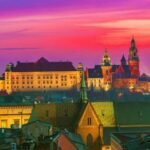
You’ll also see notable buildings along the way, including Jagiellonian University, Słowacki Theater, and the sightseeing corridor toward Wawel Castle. Even without a long stop inside, the cart gives you a calm way to orient. It’s especially useful if you want to save your energy for later walks—because once you get your bearings, you stop walking in circles.
Kazimierz: The Jewish Quarter’s Streets, Synagogues, and Old Cemeteries
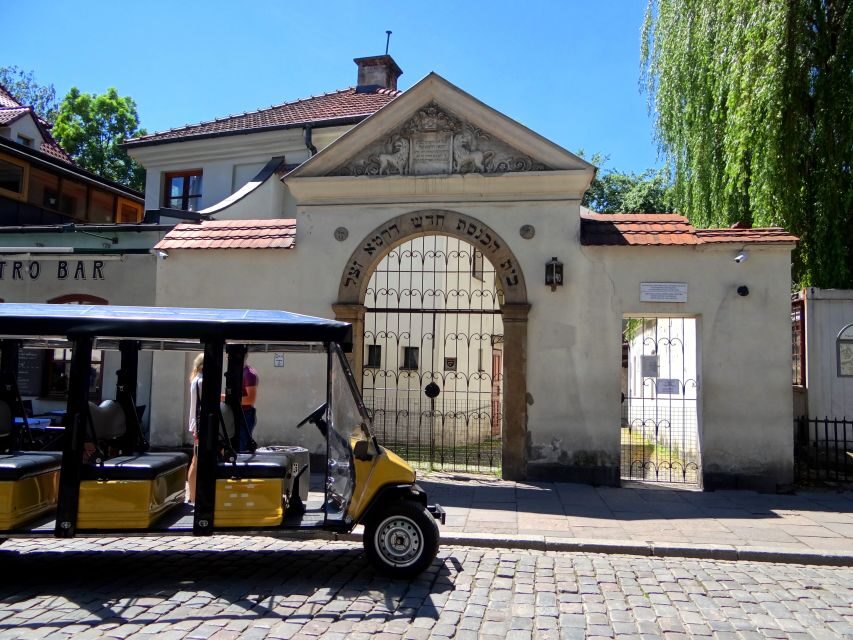
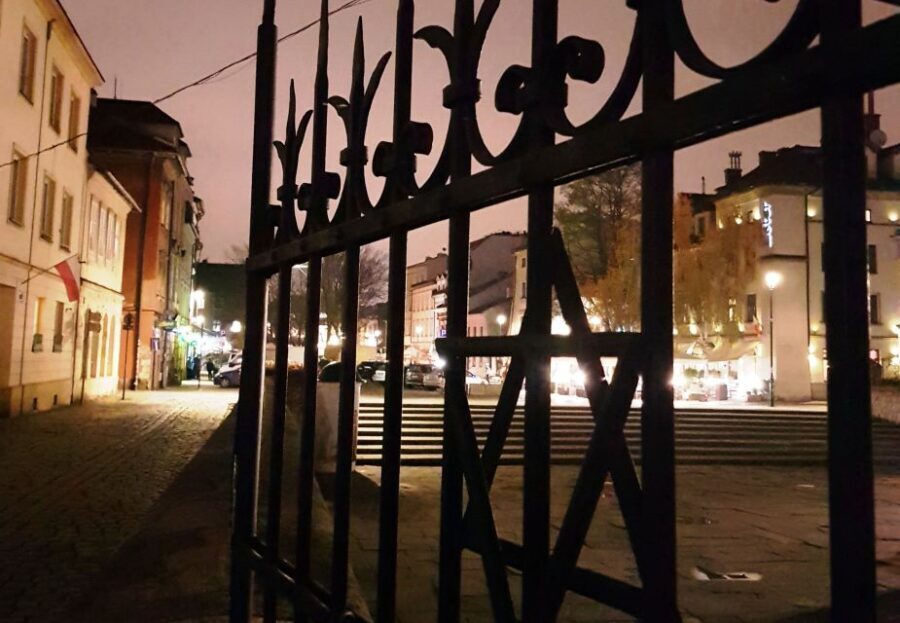
Then comes the shift—Kazimierz. The tour spends about 30 minutes here, and it’s built around atmosphere: the neighborhood’s synagogues, old cemeteries, and those compact streets and squares that make this district feel like a world inside the city.
This part matters because Kazimierz isn’t just a museum zone. It’s a living neighborhood with layers, and the tour approach helps you understand why people still associate Krakow with this part of the city. The drive-through also means you can pick up the layout faster than you would on foot.
You’ll get guidance on what you’re seeing, but Kazimierz is also a place where you’ll likely want to linger later. The cart time is designed to give context, not to satisfy a deep-dive visit. If you like walking slowly through neighborhoods, plan to return—especially if a particular synagogue or cemetery caught your attention.
Podgórze and the Ghetto Story: Ghetto Heroes Square, Eagle Pharmacy, and Wall Remains
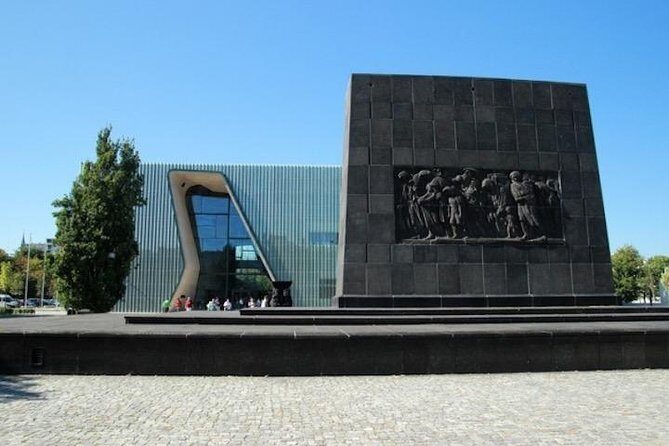
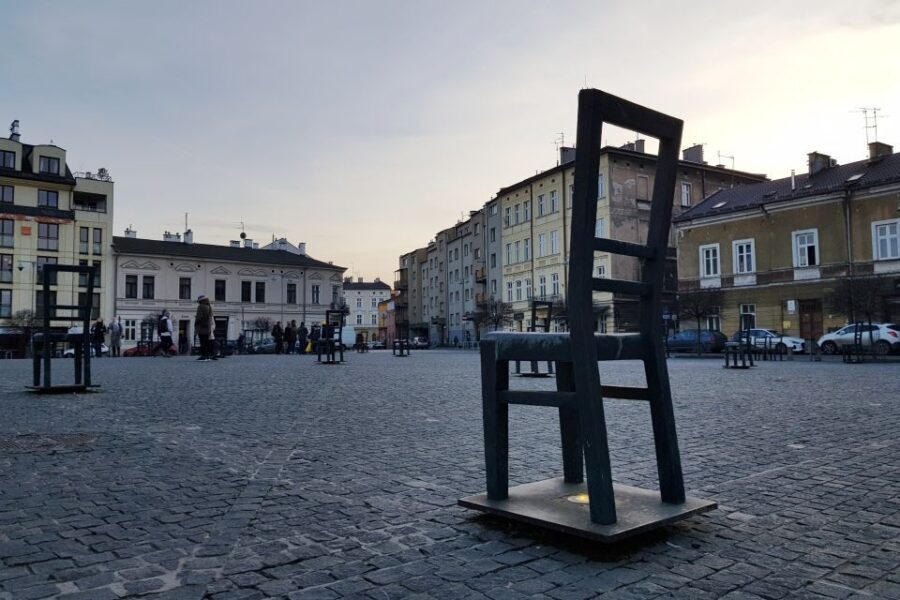
Next is Podgórze, where the tone turns heavier. You stop at Ghetto Heroes Square (about 15 minutes) and also pass by key locations connected to the WWII-era Jewish community.
The standout points here are:
- Ghetto Heroes Square as a focal memorial area
- Eagle Pharmacy (an important surviving reference point tied to the ghetto-era geography)
- Remains of former ghetto walls, so the story isn’t only names—it’s also physical boundaries
This segment is valuable because it gives you structure. After Old Town and Kazimierz, you finally understand the “how did the city change” question. The cart format also helps you stay oriented while thinking about the scale of what happened—because you can see the neighborhood shape rather than only reading plaques.
One practical consideration: this is not the place to rush. If you’re the type who likes to absorb quietly, take your time at the stops. Ten or fifteen minutes can feel short, but it’s the moment where you’ll want to slow down and let the significance land.
Schindler’s Factory in Ten Minutes: Seeing the Stop Without Expecting a Full Museum Visit
The tour includes Oskar Schindler’s Factory with a brief stop (about 10 minutes). That time limit is a big clue about what to expect. Think of this as a guided orientation and a meaningful viewing stop, not as a full, ticketed museum experience.
What you should do with that knowledge: if Schindler’s story is a must for you, plan a follow-up visit. Do not rely on this cart stop as your only exposure, especially if you want to read exhibits carefully.
Still, even a short stop can matter. In a route like this, Schindler’s Factory acts like a hinge between what you’ve already learned in Kazimierz and Podgórze and what you’ll want to do next. It helps you connect the neighborhood story to individual human outcomes—why the name shows up again and again in WWII history discussions.
Audio Guide in 28 Languages (and the driver-guide difference you’ll feel)
The tour uses an audio guide available in 28 languages, with options including English, German, French, Italian, Spanish, Dutch, Norwegian, Finnish, Danish, Russian, Ukrainian, Lithuanian, Czech, Slovak, Hungarian, Greek, Romanian, Serbian, Croatian, Portuguese, Turkish, Hebrew, Chinese, Korean, Japanese, and Arabic. If you pick a language you’re comfortable with, you’ll stay locked into the context throughout the drive.
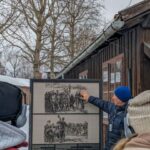
But the biggest difference-maker isn’t the audio itself—it’s the driver-guide. In the feedback I read, guides such as Valentino, Paulina/Paula, Flip, and Cary were praised for being friendly, responsive, and willing to add extra context beyond the pre-recorded track. That live element is what turns a ride into something you can ask questions about.
So here’s the practical trick: listen to the audio, then use the driver-guide time to ask for next steps. A good guide can point you toward where to spend your own walking time—restaurants, viewpoints, and which stops deserve a closer look later.
Comfort, Weather, and What to Bring (since Krakow can be cold)
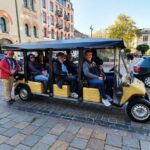
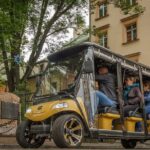
At this length and route, comfort isn’t a luxury—it’s part of the experience. People have described carts as clean and warm, with the ability to keep covers down in winter. There are also notes about side-panel options, like openings versus drop-down clear panels, which is exactly what you want when the weather changes fast.
Blankets have also come up as a nice extra. I’d pack accordingly for wind and cold anyway, but if you’re traveling in winter, this tour is a lot more doable than a full day on foot.
What to bring:
- A small day bag (no large luggage)
- Layers for shifting weather
- Water if you tend to get thirsty (food and drinks aren’t included)
And if you’re someone who wants to avoid stairs and long walks, this format is a strong fit. The tour is also wheelchair accessible, which makes it useful for a wider range of mobility needs.
Is $36 Good Value for This Electric Cart Circuit?
For $36 per person, you’re paying for time, comfort, and guided context. In practical terms, you’re buying a faster “first map” of Krakow—Old Town, Kazimierz, then the ghetto-era sites—without losing most of your day to transit and walking.
If you’re comparing this to self-guided sightseeing, the biggest advantage is sequencing. The tour keeps the story in order: medieval Krakow, Kazimierz’s Jewish Quarter, then the WWII locations in Podgórze, capped with a Schindler’s Factory stop. That structure can help you navigate Krakow more efficiently after the ride.
You are giving up depth at each stop. The trade-off is intentional: this is designed for overview and orientation. If you want long museum time, you’ll add it separately. But if your goal is to understand the city’s main arcs in 90 minutes, the value is hard to beat.
Should You Book This Electric Golf Cart Tour?
Book it if you want a low-stress way to see Krakow’s top neighborhoods and understand the WWII story beats without planning a whole route from scratch. It’s especially worth it on a first day when you want get-your-bearings fast confidence for the rest of your trip.
Skip or rethink it if you’re expecting long visits inside major sites or you want hours of museum-style reading. This tour is a guided circuit with short, purposeful stops. You’ll leave knowing where to go next, but you won’t fully replace a dedicated visit to Schindler’s Factory.
If comfort matters, and you’d rather spend your energy walking later—this one is a smart, practical way to start.
FAQ
How long is the Krakow City Tour by Electric Golf Cart?
The tour lasts 90 minutes.
What areas of Krakow does the tour cover?
It covers Old Town, the Jewish Quarter of Kazimierz, and the Podgórze area, including stops at Ghetto Heroes Square and Oskar Schindler’s Factory.
Is there an audio guide, and in how many languages?
Yes. An audio guide is included in 28 languages.
Is there an English-speaking guide?
You’ll have an English-speaking driver, and live tour guidance is listed as English and Polish.
Is the tour wheelchair accessible, and can I bring luggage?
The tour is wheelchair accessible. Luggage or large bags are not allowed.
Where do I meet the tour?
Meet at the tourist bus stop (K+R BUS) at Kraków, Plac Jana Matejki 3.