REVIEW · KRAKOW
Krakow: Jewish Quarter and Former Ghetto Tour
Book on GetYourGuide →Operated by Kraków Explorers · Bookable on GetYourGuide
One tour, two Krakows in your hands. Starting at the Old Synagogue on Szeroka Street, this 2.5-hour walk connects Kazimierz’s Jewish roots to the former ghetto and what followed in WWII. I especially like how guides such as Bart and Magda tell the story like people lived it—not like a textbook—and I like the extra lift of Schindler’s List filming spots that grounds the history in streets you can actually stand on. One consideration: the subject matter is heavy, and winter walking makes 150 minutes feel longer than you expect.
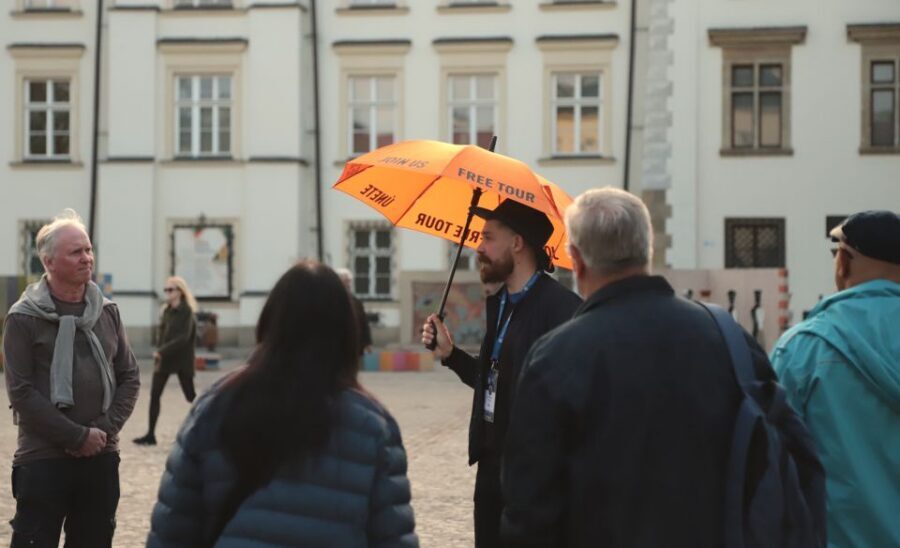
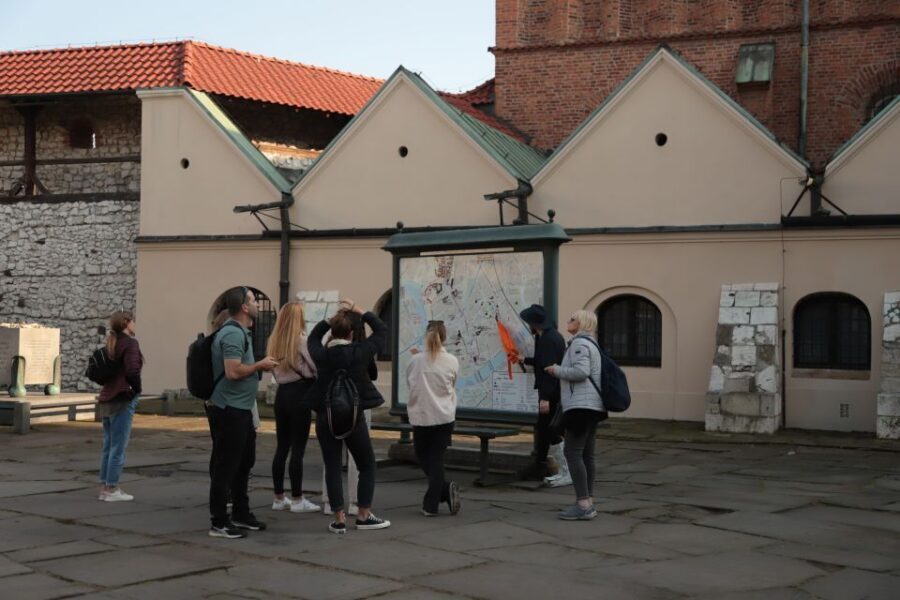
Meeting up is straightforward. You start in front of the Old Synagogue at ul. Szeroka 24, and you should spot your guide by the orange umbrella. This is an English-led walking tour with enough stops to catch your breath, ask questions, and reset your brain between the hardest moments.
In This Review
- Key highlights worth penciling in
- Kazimierz and the former ghetto: what this tour does better than wandering
- Starting at the Old Synagogue on ul. Szeroka 24 (and not losing the group)
- Holmes for history: Holocaust memorial stops without turning it into a lecture
- Heroes of Ghetto Square: where names and place start to connect
- Jewish cemetery visit: why this part lingers after the tour
- Schindler’s List filming spots: film trivia is easy, context isn’t
- The people and ideas your guide brings into the street
- Price, pacing, and what to bring so the 150 minutes feel worth it
- Who this Jewish Quarter and ghetto tour suits best
- Should you book the Kraków Explorers Jewish Quarter and ghetto tour?
- FAQ
- Where do I meet for the tour?
- How long is the Krakow Jewish Quarter and Former Ghetto Tour?
- How much does the tour cost?
- Is the tour in English?
- Are food and drinks included?
- Is the tour wheelchair accessible?
Key highlights worth penciling in
- Old Synagogue start point: you begin at ul. Szeroka 24 and get the story from the second oldest Synagogue in Europe
- Kazimierz before WWII: learn how Jewish life in this district grew after settlement and persecution in Western Europe
- Holocaust memorial moments: you pass remembrance sites tied to what happened in the ghetto
- Heroes of Ghetto Square: a focused stop that turns names and sites into a clearer human story
- Jewish cemetery: an important pause that shifts the tone from events to memory
- Schindler’s List filming spots: you see movie locations, but with the context that explains why they matter
Kazimierz and the former ghetto: what this tour does better than wandering
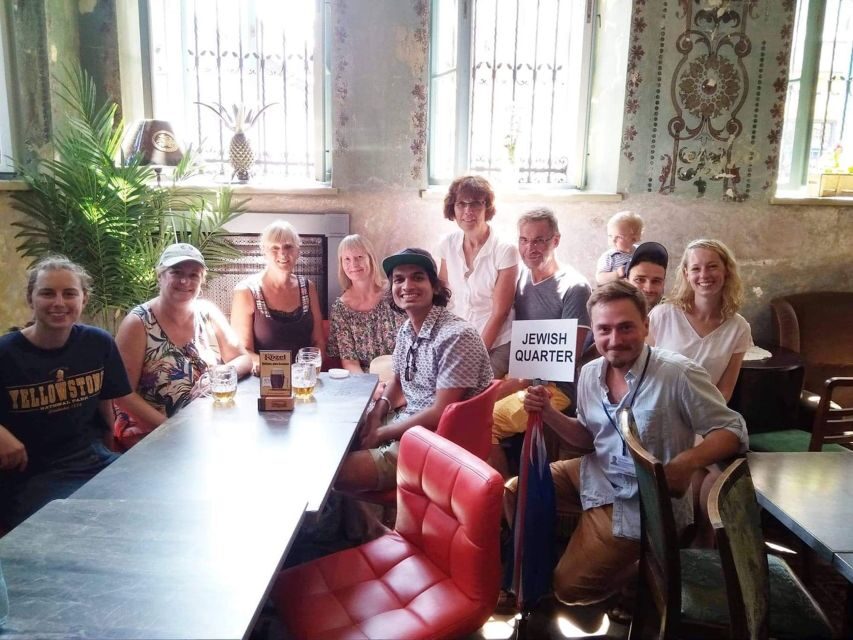
Krakow’s Jewish Quarter story isn’t something you can pick up in a quick loop around town. Kazimierz began as its own city on an island near Krakow, meant to compete with its bigger neighbor. Once Jewish communities were settling here, the district grew into a place of prosperity, with close, tiny streets where day-to-day life was lived out in real time.
What makes this tour useful is the way it moves between eras. You’re not just doing a tour of buildings. You’re walking a timeline: Jewish community and tradition in Kazimierz, then the catastrophe of WWII and the ghetto’s place in that story, and finally the “after” of memory through memorials and the cemetery.
This is also why the time feels right. At about 150 minutes, you get to hit major sites without turning the day into a marathon. If you only walk on your own, you might notice the streets—but miss how the clues connect.
You can also read our reviews of more tours and experiences in Krakow.
Starting at the Old Synagogue on ul. Szeroka 24 (and not losing the group)
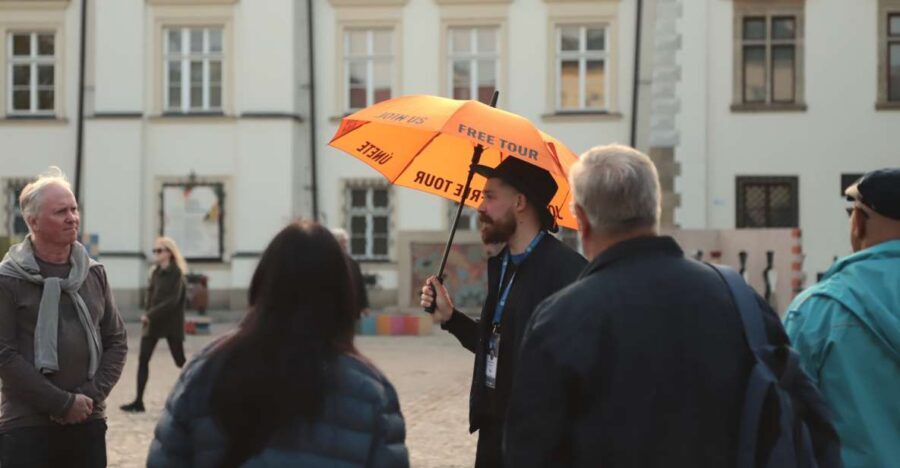
Your meeting point is hard to miss once you know what to look for: in front of the Old Synagogue at ul. Szeroka 24. The guides carry an orange umbrella, and you should treat that umbrella like your lifeline in a tight old district.
The tour begins here for a reason. One of the highlights is the second oldest Synagogue in Europe, so you’re starting your story at a symbolic anchor. Instead of drifting into Kazimierz like a tourist, you’re stepping into the narrative from the first stop.
Practical tip: if you like taking photos, keep your timing tight. One common issue on walking tours in busy areas is getting separated near key sights. So pause for pictures, then immediately re-check where the umbrella is, especially around the more popular filming spots.
Holmes for history: Holocaust memorial stops without turning it into a lecture
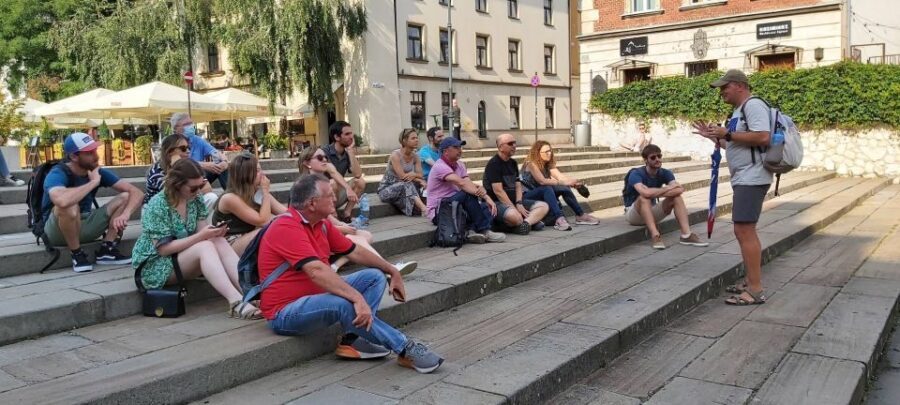
WWII history in Krakow can hit like a wall. This tour includes Holocaust memorial stops, and the emotional tone matters because you’re not just reading about the past—you’re standing in the present beside reminders of what happened.
The best versions of this tour keep the tone respectful while still giving you context. Here, that context comes through how your guide explains what life was like in the Jewish quarter before the catastrophe, then what the ghetto system did to the community. The story doesn’t jump randomly; it follows the logic of geography and time.
I like that the tour doesn’t try to make the subject “lighter.” Instead, it builds meaning step by step, including moments like the Holocaust memorial and the next structured stop at Heroes of Ghetto Square. If you tend to get overwhelmed easily, plan a little buffer time afterward. You’ll likely want to process before you jump into dinner and sightseeing.
Heroes of Ghetto Square: where names and place start to connect
Heroes of Ghetto Square is one of the tour highlights, and it’s the kind of stop that turns background knowledge into something sharper. A square like this matters because it gives you a focal point where the story can land.
This is where your guide’s storytelling becomes practical. You’re walking through Kazimierz’s streets, but the tour keeps pointing you toward what to notice: how the area’s layout shaped lives, what the ghetto era meant for the community, and why remembrance is built into the public space.
If you only see a memorial from a distance, you’ll miss the purpose. This stop is designed to slow you down just enough to grasp the human side of the history.
Jewish cemetery visit: why this part lingers after the tour
The Jewish cemetery stop changes the rhythm. After memorials tied to WWII, you shift to remembrance in a more quiet, personal sense—especially because cemeteries ask you to slow your thoughts.
This is also a smart inclusion for the overall flow. When you only focus on events, the past can feel like dates. A cemetery makes it harder to think in abstractions. It pushes you toward the reality of individuals and continuity.
You don’t need to be a cemetery expert to benefit. Just show up ready to be reflective. Then give yourself a few minutes at the end of the stop to breathe before continuing to the next sights—your guide will likely move you along, but your brain will take longer.

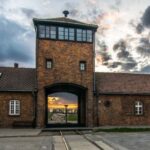
Schindler’s List filming spots: film trivia is easy, context isn’t
Here’s the thing about movie locations. They can turn into photo ops fast. But this tour includes Schindler’s List filming spots as part of a broader historical walk, which is what makes it worth doing rather than just checking names on a map.
You’ll see filming spots, but you’ll also get the explanation for how the streets and sites connect to the ghetto story and the community that lived there. That connection is the difference between a fun scavenger hunt and an experience that actually teaches.
One more practical note: because these locations can get busy and people take photos, keep your group position. If you drift while shooting pictures, it’s easy to follow the wrong cluster—especially when multiple people step out to photograph the same corner.
The people and ideas your guide brings into the street
This tour doesn’t only cover places. It also brings ideas and names into the walking story. You’ll learn who Ashkenazim and Sephardim are, which helps you understand how Jewish communities were organized and discussed historically. That little piece matters because it turns “Jewish history” from one general label into something more specific.
You’ll also hear about figures connected to Jewish life in Poland, including Helena Rubinstein, Roman Polanski, Ludwick Zamenhof, and Maximilian Faktorowicz. What I like here is the human scale. Instead of only focusing on tragedy, you’re shown that Jewish culture produced people who shaped art, language, and public life—even when their lives were shaped by the times they lived through.
And then there’s the Kazimierz backstory: Jewish settlement in the area after prosecution in Western Europe. That context helps you see the quarter as a living community first, not only as a historical set piece.
Price, pacing, and what to bring so the 150 minutes feel worth it
The price is listed at $19 per person for about 2.5 hours with an experienced local guide, and that’s where the value sits. A tour like this earns its cost when it saves you from two common problems: missing context while self-walking, or spending money later on separate lessons to patch the gaps.
At this price, you’re paying for guided interpretation across multiple key sites: the Old Synagogue, memorial stops, Heroes of Ghetto Square, the Jewish cemetery, and Schindler’s List filming locations. That’s a lot of stop-and-explain time for the money, especially in a city where self-guided time can feel shallow if you don’t know what to look for.
What to bring:
- Comfortable shoes for a long walk in an old district
- A warm layer if you’re going in colder months
- Water, since food and drinks aren’t included
- A phone camera, but use it in short bursts and stay aware of the orange umbrella
Pacing is another big factor. Guides on this tour tend to keep things moving with frequent stops, and they also leave space for questions. Some people find 2.5 hours packed, so if you like to absorb slowly, plan your day so you’re not rushing to your next booking right after.
Who this Jewish Quarter and ghetto tour suits best
This tour is a strong match if you want:
- A structured way to understand Kazimierz and the former ghetto without getting lost in facts
- A mix of sacred sites and remembrance sites, not just one type of stop
- Movie-location context that doesn’t rely on casual trivia
It may not be your perfect fit if you dislike somber WWII history or if long walking distances wear you out quickly. It’s also not designed for party-group energy, and alcohol and drugs are not allowed.
Should you book the Kraków Explorers Jewish Quarter and ghetto tour?
If you’re spending at least a day in Krakow, I think this is one of the smarter history choices you can make. The price-to-time ratio is good, and the tour adds meaning by connecting street-level sights to the full arc of Jewish life in Kazimierz and the ghetto era. For many visitors, the guides are the difference: they bring the story forward with clarity and careful attention to tone.
Book it if you want your time to count, and you’re okay with emotionally heavy stops. If you’d rather keep it lighter, you could still walk Kazimierz on your own—but you’ll likely miss how all these specific sites work together as one story.
FAQ
Where do I meet for the tour?
The tour starts in front of the Old Synagogue at ul. Szeroka 24. Look for the guides with an orange umbrella.
How long is the Krakow Jewish Quarter and Former Ghetto Tour?
It lasts 150 minutes, about 2.5 hours.
How much does the tour cost?
The price is listed as $19 per person.
Is the tour in English?
Yes, the live tour guide provides the tour in English.
Are food and drinks included?
No. Food and drinks are not included.
Is the tour wheelchair accessible?
Yes, the tour is listed as wheelchair accessible.
If you want, tell me your travel month and whether you prefer early or late tours, and I’ll suggest the best way to pair this with the rest of your Krakow day.