REVIEW · KRAKOW
Krakow: 2h World War II, visiting the Ghetto walking tour
Book on GetYourGuide →Operated by Krakow tours - segway, scooter, bike, walking tour in Krakow · Bookable on GetYourGuide
Cracow has a second war map in its streets. In just 2 hours, you walk Podgórze and the former Jewish Ghetto area, and I love that it spotlights Heroes of Getto Square and the Under the Eagle pharmacy. One thing to consider: the subject matter is heavy, so if you prefer upbeat sightseeing, this is not that kind of outing.
The tone is serious, but the delivery sounds human. Guides like Irene and Vlad are praised for staying welcoming, explaining clearly, and patiently answering questions (even the uncomfortable ones), which makes a big difference on a topic this difficult.
In This Review
- Key highlights you’ll feel on this walk
- WWII and the Podgórze streets: why this walk hits
- What you’ll cover in 2 hours (and what you won’t)
- Heroes of Getto Square: the reminder stop that sets the tone
- Schindler’s Factory story on the walk: names, labor, survival
- Under the Eagle pharmacy: the daily-life detail that feels real
- The Ghetto walls and wartime scars: what’s left to see
- Podgórze main square and the Bridge of Love detour
- Guides who handle hard questions well (I’m glad this matters)
- Price and value: is $36 for 2 hours fair?
- Who should book this tour (and who should think twice)
- Practical tips so you get the most from it
- Should you book this Krakow Ghetto and WWII walking tour?
- FAQ
- How long is the Krakow WWII and Ghetto walking tour?
- How much does the tour cost?
- What highlights will I see during the tour?
- Is there a live guide, and what languages are available?
- What’s included in the ticket price?
- Are food and drinks included?
- Does the tour skip the ticket line?
- Is free cancellation available?
- Can I reserve and pay later?
- Are tips accepted?
Key highlights you’ll feel on this walk
- Heroes of Getto Square: a focal point for the area’s WWII story
- Schindler’s Factory story: including photos of workers and what survival looked like
- Under the Eagle pharmacy: noted as the one and only pharmacy in the Ghetto
- Physical remnants: see remaining Ghetto walls and buildings that survived shootings
- Podgórze main square: a quick history stop beyond WWII
- Small conversation energy: guides who encourage questions and dialogue
WWII and the Podgórze streets: why this walk hits
Krakow’s WWII story isn’t stuck behind glass. This tour keeps it close to the street level—Podgórze district, the former Jewish Ghetto area, and the marks the war left behind. That matters, because it turns history into something you can point at: a square here, a building there, a wall line you can actually see.
I also like that the tour doesn’t pretend the story is simple. You’re shown multiple angles: remembrance (through the Heroes of Getto Square focus), daily life details (like the pharmacy), and the bigger WWII narrative linked to Schindler’s Factory. When you connect those dots in order, the whole thing lands harder than a one-stop museum visit.
Finally, it’s paced for real-world timing. At 2 hours, you’re not stuck for half a day. You get a structured walk, then you can decide how much deeper you want to go afterward.
You can also read our reviews of more walking tours in Krakow


What you’ll cover in 2 hours (and what you won’t)
This is a guided walking tour that takes you through the former Jewish Ghetto area in Podgórze, with stops tied to major WWII references. You’ll get a mix of:
- remembrance points
- specific places linked to Jewish life in the Ghetto (including Under the Eagle)
- visible traces like remaining Ghetto walls
- a Schindler’s Factory overview tied to survival stories and worker photos
- a Podgórze main square orientation
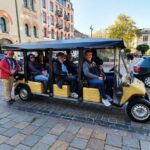
- extra scenic/short diversion segments via a drive that may include Bridge of Love and wind-swing sculptures of athletes
What you won’t get is a long, museum-style deep dive or a full-day crawl across every WWII site in Krakow. If you’re hoping for a super-detailed, minute-by-minute history lecture with lots of indoor time, you may feel the boundaries of the 2-hour format. But if you want a strong overview and meaningful place-based context, the time box works.
Heroes of Getto Square: the reminder stop that sets the tone
You start with Heroes of Getto Square, and that’s not just a random name-drop. This is the kind of stop that frames what you’re about to see: it signals that you’re walking through memory, not just sightseeing.
I like anchoring early. Your brain prepares for a darker route, and you’re less likely to treat the rest as a checklist. You also get a clear focal point to return to emotionally—especially if you’re the type who needs one key place to keep the broader story grounded.
Practical note: because the subject is serious, give yourself permission to slow down. You’ll get more out of the walk if you pause to take in what’s in front of you, not just what’s said out loud.
Schindler’s Factory story on the walk: names, labor, survival
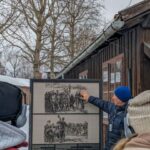
One of the headline parts is the unfolding story of Schindler’s Factory. Instead of keeping it abstract, the tour includes references to photos of workers who survived the war thanks to Schindler. That humanizes the narrative fast.
I think this stop earns its place because it links tragedy to specific people and work. Even without going into every historical detail, the tour is clearly trying to give you a framework: what the factory represented, and why survival mattered.
You may find it emotionally intense, especially if you’re visiting Krakow for the WWII sites for the first time. The good news is that the experience is led by a live guide, and the guides connected to this tour are described as patient and welcoming when people ask questions. That’s ideal here, because you’ll likely have more than one thought as you listen.
Under the Eagle pharmacy: the daily-life detail that feels real
The Under the Eagle pharmacy is one of the highlights, and the tour emphasizes a specific detail: it was the one and only pharmacy in the Ghetto. That’s a striking kind of fact. It turns the location from a name into a question—how did people get medical help, and what did one pharmacy mean when everything else was restricted?
I like when a tour includes at least one “daily life” anchor. It helps the story move past headlines. You’re not only seeing the war’s big machinery; you’re also seeing the small, practical needs that kept people going.
If you tend to remember places more than dates, you’ll likely remember this stop the longest. The “one and only” phrasing is the kind of detail your brain stores easily, even later.
A few more Krakow tours and experiences worth a look



The Ghetto walls and wartime scars: what’s left to see
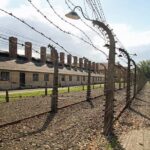
A major part of the experience is seeing the remaining Ghetto walls and getting a glimpse of buildings that survived shootings. This is where the tour becomes very visual.
And that’s important. When you can see remnants of the boundary—actual wall lines, surviving structures, war-scarred building shapes—you get a physical understanding of confinement and danger. It stops being just story content and becomes spatial reality.
You should also expect a respectful atmosphere. This isn’t a “take selfies and move on” stop. If you’re traveling with kids, you’ll want to gauge maturity and readiness, because you’ll be hearing about the tragedy of the Ghetto’s inhabitants as you walk near what’s still there.
Podgórze main square and the Bridge of Love detour
Not everything on this walk stays strictly inside WWII. You’ll also reach the main square of Podgórze, with history tied to the area as a city—so you can place what you’re seeing into a broader sense of Krakow.
Then there’s an extra shift via a drive that may include Bridge of Love and beautiful sculptures of athletes swinging in the wind. This part works best if you treat it like a palate cleanser. After heavy stops, a brief change of mood can help you keep your footing for the rest of the experience (and it gives you a different kind of Krakow photo opportunity than the WWII sites).
If you prefer never to switch mood away from the heavy topic, you might find this diversion unnecessary. But it’s optional-feeling in practice because it’s described as part of the route, not the core theme.
Guides who handle hard questions well (I’m glad this matters)
What stands out from the feedback is the guide quality. Irene and Vlad are both described as very informed and, importantly, welcoming—encouraging conversation and patiently answering questions. That’s exactly what you want on a tour like this, where people naturally ask: what happened here, who was affected, and why does this place matter today?
I also like that the tour explicitly offers live guiding in multiple languages: English, Polish, and Russian. If you’re not traveling in English or you’re bringing a friend who isn’t fully comfortable, this helps you keep the experience from becoming a translation blur.
On a topic that can feel emotionally complicated, being able to ask your own questions makes the walk feel less like a lecture and more like a conversation with a local expert.
Price and value: is $36 for 2 hours fair?
At $36 per person for a 2-hour guided walking tour, you’re paying for three things: a live guide, a structured route through specific WWII and Ghetto-related points, and the value of skipping the ticket line.
Is it a bargain compared to a self-guided walk? Not really. But that misses the point. The value is in interpretation. You’re not just walking past names; you’re getting the story tied to those places—Heroes of Getto Square, Schindler’s Factory references, the pharmacy Under the Eagle detail, remnants of Ghetto walls, and buildings that survived shootings. Those connections are hard to assemble on your own unless you’ve done serious pre-reading.
Also, you’re not paying for food here. That’s a plus if you like planning your own meals. It’s a drawback only if you expected the price to include snacks and didn’t plan for a post-tour bite.
For $36, I’d treat it as a solid “best first step” tour if WWII sites are your priority and you want a guided overview without taking over your whole day.
Who should book this tour (and who should think twice)
This tour is a strong fit if:
- you want a guided WWII and Krakow Jewish Ghetto route in a tight time window
- you like place-based history you can actually walk to
- you appreciate guides who answer questions and keep the tone welcoming
- Schindler-related stories and specific Ghetto landmarks like Under the Eagle pharmacy matter to you
You might think twice if:
- you’re looking for a light, cheerful day out (this is not that)
- you get overwhelmed by heavy historical topics quickly
- you want a longer, more museum-style experience with more stops and more time per site
Practical tips so you get the most from it
A few small choices will make your visit easier and more meaningful:
- Wear comfortable shoes. You’ll be walking through multiple stops in one session.
- Plan for a slow, respectful pace. If you rush, the story won’t land the way it’s meant to.
- If you have questions, ask them. The vibe from the guide feedback is that questions are welcomed, not brushed off.
- If you’re pairing it with other Krakow sights, give yourself breathing room afterward. You’ll likely need a meal or a quieter walk to reset.
Should you book this Krakow Ghetto and WWII walking tour?
I’d book it if WWII and the former Jewish Ghetto area are on your Krakow must-see list and you want a focused route that connects major points—Heroes of Getto Square, the Schindler’s Factory story, and the especially memorable detail of Under the Eagle pharmacy. The live guide element is a big reason to choose this over a solo wander, and the encouragement of questions helps you process the story instead of just hearing it.
Skip it only if you want something upbeat, or if you know you don’t handle heavy historical material well. Otherwise, this is a high-impact 2 hours: structured, guided, and built around the places you’ll remember.
FAQ
How long is the Krakow WWII and Ghetto walking tour?
It lasts 2 hours.
How much does the tour cost?
The price is $36 per person.
What highlights will I see during the tour?
You’ll visit Heroes of Getto Square, hear the story of Schindler’s Factory, and see Under the Eagle pharmacy (described as the one and only pharmacy in the Ghetto). You’ll also see remaining Ghetto walls and a glimpse of buildings that survived shootings, plus the Podgórze main square.
Is there a live guide, and what languages are available?
Yes, it’s a live tour guided experience. The tour is offered in English, Polish, and Russian.
What’s included in the ticket price?
A tour guide is included.
Are food and drinks included?
No, food and drinks are not included.
Does the tour skip the ticket line?
Yes, it includes skip-the-ticket-line service.
Is free cancellation available?
Yes. You can cancel up to 24 hours in advance for a full refund.
Can I reserve and pay later?
Yes, reserve now and pay later is available.
Are tips accepted?
The tour information notes that tips are accepted and appreciated.