Katowice’s past walks right beside you. I love how the route links old Market Square to the modern symbol Spodek, so the city feels whole. I also love the guide-driven storytelling that explains why Silesia keeps shifting between cultures and rulers. The one catch is you’ll walk about 6.5 km, so bring comfy shoes and go when the weather is good.
This is a private 3-hour tour in English, starting at the Silesian Theatre near Rynek 10 and ending back there. You get a tight route with short stops, so you’ll move through the center without spending half the day in transit.
For $81.62 per person, the value is strong if you want context, not just photos. You’ll hit major landmarks—churches, civic buildings, monuments, and the iconic arena—while the stops listed are admission ticket free, meaning you’re paying mainly for the guide and the walking plan.
In This Review
- Key highlights worth your attention
- Why this Katowice old-town walk works (and who it suits)
- Market Square to Skarbek and Zenit: where everyday life meets power
- Kosciol Mariacki and the Academy of Music: art you can see up close
- Silesian Parliament and Christ the King: faith and governance in the same block
- Stawowa via Miarka Square, Dworcowa, and 3 maja: tenements, memory, and real streets
- The Silesian Insurgents’ Monument and Spodek: from uprisings to a city symbol
- Price and time: is $81.62 a good deal for 3 hours?
- Practical tips so you enjoy every stop
- Should you book this Katowice Old Town Walking Tour?
- FAQ
- How long is the Katowice Old Town Walking Tour?
- How far do we walk during the tour?
- What is the price per person?
- Is the tour offered in English?
- Where does the tour start?
- Are the stops included with paid admission tickets?
- What’s the cancellation policy like?
Key highlights worth your attention
- Old Town to Spodek in one sweep: you see how Katowice mixes memory with reinvention.
- Silesia’s church contrast: Catholic-like exterior, Protestant-like interior at the Cathedral of Christ the King.
- Communist-era shopping still in the story: Skarbek and Zenit are part of how people lived and spent money.
- Music culture has a home: the Academy of Music in Katowice gets a spotlight.
- Monuments with clear purpose: the Silesian Insurgents’ Monument ties together uprisings and identity.
- A calm pace, but not a short one: ~6.5 km over about 3 hours means steady walking.
Why this Katowice old-town walk works (and who it suits)
If you want Katowice to make sense fast, this is the kind of tour that does it. The route is built like a timeline you can walk—square to church to institutions to monuments to the city’s signature arena. And the best part is the “why,” not just the “what.”
You’ll get explanations that connect architecture and institutions to Silesia’s complicated background—how the region’s identity formed through changes in power and faith. One review even called out hearing about Silesia swapping hands between Slavs and Germans, which is exactly the kind of context that turns buildings into story.
This also suits people who like a small-group feel. The tour is private, so you’re not competing with a big crowd for attention when you ask questions. If you prefer structure and quick stops over wandering alone, you’ll likely enjoy the format.
The main consideration is simple: moderate walking. Even with short stops, you’re covering 6.5 km in total, so plan for a steady pace and wear shoes that won’t punish you by hour two. And this tour requires good weather, so if rain is common in your dates, be ready to adjust.
You can also read our reviews of more walking tours in Krakow



Market Square to Skarbek and Zenit: where everyday life meets power
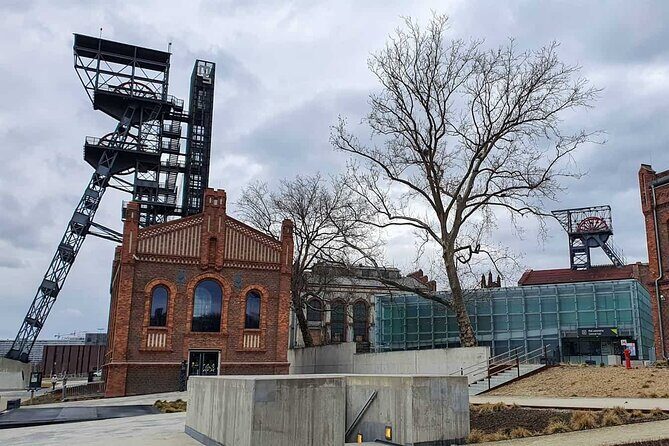
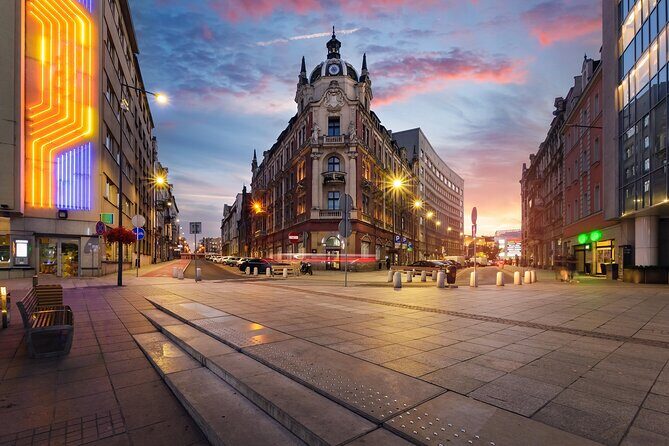
You start in the area around the Silesian Theatre at Rynek 10, and that sets the tone: this is a center where civic life, culture, and commerce collide.
From Market Square, you move through some of the city’s key visual anchors. You’ll see the Silesian Theatre, plus the shopping sites Skarbek and Zenit—described as a shopping dream place from communistic Poland. Even if you’re not into architecture lectures, these stops matter because they show how people actually spent time and money, not just how leaders posed for statues.
This is also where you feel the “old and new” split in a very real way. Market Square brings the sense of long-settled urban life, while Skarbek and Zenit give you a window into a more recent chapter—how public spaces changed when politics changed.
A practical tip: bring your eyes, not just your phone. In this area, details like façades, street layout, and building age help you understand what’s older and what was rebuilt or reimagined for later eras. Your guide’s job here is to point out what to notice, and the reviews strongly suggest they do that well.
You’ll also pass by ideas of Silesia as a place to gather—an eating and drinking-out zone. Even without a sit-down meal planned in the tour, it’s useful to know where locals tend to hang out after the museums close.
Kosciol Mariacki and the Academy of Music: art you can see up close
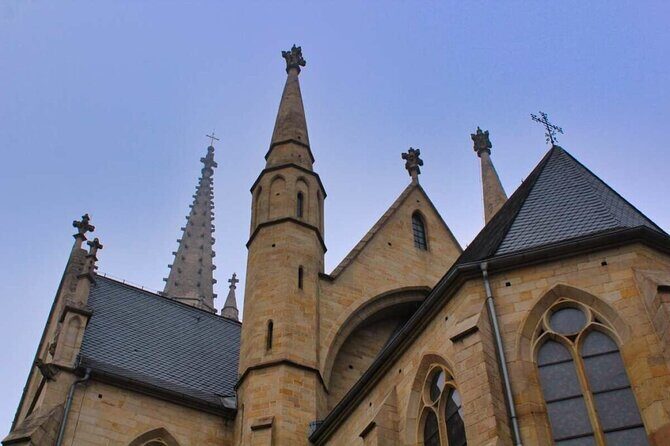
Next up is Immaculate Conception Catholic Church (Kosciol Mariacki). From the outside, the architecture is described as breathtaking, which matters because church exteriors often telegraph style even before you step inside. When you do enter, the focus shifts to artworks by top Polish artists.
This stop is short on paper, but it’s the kind that can change how you read the entire walking route. Once you’ve seen a church like Kosciol Mariacki, other buildings in the tour stop feeling random. Everything becomes part of a larger pattern: art, faith, and public life shaping each other.
Then you head toward the Academy of Music in Katowice, called the most prestigious music academy in Poland. You’re not going to a concert here, but you’re visiting a place that signals what the city values. It’s a reminder that Katowice isn’t only remembered through politics and monuments—it also builds institutions for culture and training.
If you’re the type who likes learning how cities produce artists, this combination works nicely: church art in one direction, music education in the other. It’s an easy way to get a fuller sense of what “culture” means in Katowice.
One more thing I’d watch for: how the guide connects the arts to identity. Silesia’s story isn’t only about borders. It’s also about what people invested in, practiced, and taught.
Silesian Parliament and Christ the King: faith and governance in the same block
The tour then turns toward civic history with Silesian Parliament. You’ll see it as the former seat of parliament of the Autonomous Silesia Region. That matters because it helps explain why you’ll keep spotting symbolism around the city: Silesia’s identity has been political for a long time, not just cultural.
This is the point where the “why” grows teeth. A guide who’s good at answering questions can connect these buildings to the region’s shifting control and self-image. In past tours, the storytelling got praised for covering those repeated changes in hands between Slavs and Germans, and this stop is a natural place for that theme to land.
After that, you visit the Cathedral of Christ the King. Here’s the cool contrast: it’s described as Catholic-like from the outside, but Protestant-like inside. The symbolism is blunt and useful—the cathedral represents the mixed origins of Silesia’s spirituality.
That’s the kind of detail that turns a quick stop into a lasting mental image. If you’ve ever wondered why religious spaces can feel “half one thing and half another,” this is one of the clearest examples on the route.
Practical note: churches can vary in lighting and interior layout. Move slowly, and give yourself a moment to look before you rush to the next stop. The tour schedule is tight, but taking 20 calm seconds inside can make the whole thing feel more meaningful.
Stawowa via Miarka Square, Dworcowa, and 3 maja: tenements, memory, and real streets
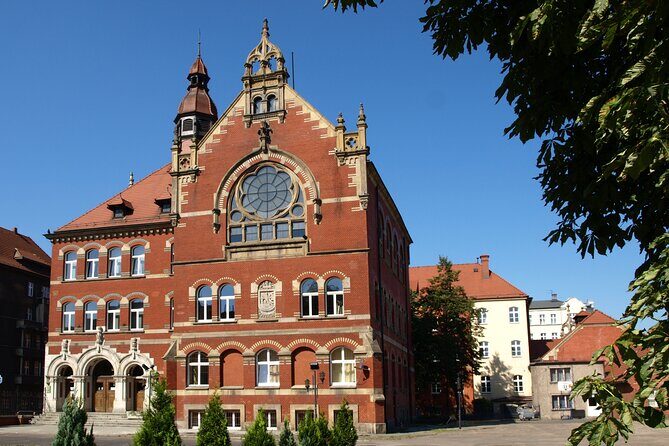
Now you shift into the side streets and neighborhood texture of Katowice. You’ll pass through Miarka Square, Dworcowa street, and 3 maja street to reach Stawowa.
This stretch is where the tour becomes a walk through everyday architecture. The focus is on 19th-century tenements, which give you a sense of how the city housed people and how urban neighborhoods evolved over time. It’s not only about pretty buildings—it’s about the scale and density of city life.
You’ll also see the oldest high-school in Katowice. Again, the tour isn’t just dropping landmarks like souvenirs. It’s showing institutions that long outlast political changes, which is often what people care about once they’ve left the city center.
Stawowa also connects to a more specific memory: a monument commemorating Silesian scouts opposing Nazis in 1939. That’s heavy subject matter, but it’s placed in an ordinary urban setting, which is powerful. You don’t just learn about history in a museum—you see where memory sits in the streets.
And this area is described as a venue for art exhibitions, international meetups, and other events. That’s a big deal for how the tour feels. It shows that Katowice doesn’t only preserve the past as a static thing. It keeps using parts of the city as social and cultural space.


The Silesian Insurgents’ Monument and Spodek: from uprisings to a city symbol
The tour’s later stops step up the scale.
First comes Silesian Insurgents’ Monument (Pomnik Powstancow Slaskich). It commemorates 3 Silesian uprisings, which is exactly the kind of anchor you want when you’re learning the region’s identity. Without a quick guide, these big monuments can feel like just another photo spot. With context, they become a summary of how people fought and what they believed they were protecting.
From there you reach Spodek, the city’s symbol. Spodek is iconic for a reason: it’s the kind of landmark you can spot and recognize even before you understand its story. The tour keeps the visit brief, but the impact sticks because it closes the loop from earlier themes. You’ve been walking through civic buildings, religious contrast, and memory. Spodek lands as a modern statement of who Katowice is now.
In my opinion, that pairing—uprisings monument, then city symbol—does a great job of making the city feel continuous, not chopped into separate eras.
Price and time: is $81.62 a good deal for 3 hours?
Let’s talk value in plain terms.
You’re paying $81.62 per person for about 3 hours and roughly 6.5 km of walking, in English, with a private setup for just your group. That’s a strong deal if you value interpretation: the route is packed with meaning, and the guide’s explanations are a central part of the experience.
You’ll also be hitting major points where the listed stops are admission ticket free, which reduces the usual “surprise costs” you sometimes get on walking tours that include museums. You’re paying for the guide’s plan and the time, not a collection of entrance fees.
Where it gets especially good is if you like asking questions and moving at your group’s pace. Private tours can feel expensive on paper, but they often feel fair when you’re getting clear answers and a smooth route, not just a checklist.
My practical take: if you’re the type who reads every sign when traveling and you want context quickly, this pricing makes sense. If you just want to hit the highlights for photos and you’re comfortable self-guiding, you might decide differently.
Practical tips so you enjoy every stop
A few small choices make a big difference with this tour:
- Wear walking shoes. The route adds up fast to 6.5 km.
- Go in good weather. The tour depends on it, so plan for flexibility.
- Start with your questions ready. If Silesia’s history is new to you, ask early and it’ll make later monuments hit harder.
- Use the mobile ticket. It’s provided, so have your phone handy when meeting.
- Expect a city-center pace. Stops are timed (think minutes, not long museum hours), so focus on the “big idea” each place represents.
- If you need public transit access, the start area is listed as near public transportation, which makes it easier to pair with other sightseeing plans.
Also, service animals are allowed. If that applies to you, it’s good to know you won’t have to worry about the tour being one-size-fits-all.
Should you book this Katowice Old Town Walking Tour?
Book it if you want Katowice to feel like a story, not a set of buildings. The strongest reason is the blend: church architecture, civic institutions, monuments tied to uprisings, and Spodek—all linked into one walk that explains Silesia’s mix of cultures and faiths.
I’d also recommend it if you care about guidance quality. The experience earns top marks for responsive, fact-focused guiding, with Malwina specifically mentioned for making it a true learning session while still keeping it engaging.
Skip it (or at least reconsider) if walking 6.5 km in about 3 hours sounds like a stretch on your trip. And if you’re traveling in rough weather, this one depends on conditions, so make sure your schedule can flex.
FAQ
How long is the Katowice Old Town Walking Tour?
It runs for about 3 hours.
How far do we walk during the tour?
You walk about 6.5 km during the tour.
What is the price per person?
The price is $81.62 per person.
Is the tour offered in English?
Yes, it’s offered in English.
Where does the tour start?
You start at the Silesian Theatre, Rynek 10, 40-003 Katowice, Poland.
Are the stops included with paid admission tickets?
The stops listed on the tour have admission ticket free.
What’s the cancellation policy like?
Free cancellation is available, and you can cancel up to 24 hours in advance for a full refund.