REVIEW · KRAKOW
From Krakow: Live Guided Tour Auschwitz-Birkenau
Book on Viator →Operated by ExcitingKrakow · Bookable on Viator
This visit has weight, and it moves fast. A licensed guided tour of Auschwitz I and Birkenau, plus entrance fees included, makes the day simple to plan, even if you’re nervous about logistics. One possible drawback: the time inside can feel rushed, so you’ll want to mentally prepare for a structured route rather than a slow stroll.
From Krakow, you’re looking at about a 7-hour day trip, with roughly 4 hours at the museum site. If you want a clear sense of what you’re seeing—without having to figure out tickets and transport on your own—this format is practical. Just note it’s not recommended for kids age 13 and under, and there are strict limits on luggage and strollers inside the museum area.
In This Review
- Key Things to Know Before You Go
- A 7-hour Auschwitz-Birkenau Day Trip: What That Time Really Buys You
- Getting From Krakow: Pickup, Air-Conditioned Coach, and Small Groups
- Auschwitz I and II: How the Guided Route Helps You Make Sense of It
- The Hard Parts You Should Plan for: Gas Chambers, Crematoria, and the Rail Ramp
- Price and Logistics: Is $73.44 a Good Value?
- Pace, Group Size, and Your Expectations Inside the Museum
- Getting the Most Out of Your Day: Practical Tips That Actually Help
- Should You Book This Auschwitz-Birkenau Tour From Krakow?
- FAQ
- How long is the Auschwitz-Birkenau tour from Krakow?
- Is admission to Auschwitz-Birkenau included in the price?
- Where is the meeting point in Krakow?
- Is this tour suitable for children?
- Are there restrictions on luggage or strollers?
- What is the cancellation policy?
Key Things to Know Before You Go
- Small group cap (up to 7 travelers): More chance to ask questions and stay with the guide.
- Round-trip, air-conditioned coach: Comfortable travel helps, because the destination is emotionally heavy.
- Admission to Auschwitz-Birkenau is included: You don’t need to add another ticket purchase step.
- You’ll cover Auschwitz I and Auschwitz II-Birkenau: The guided route connects the two sites into one story.
- Museum rules affect what you bring: No baby carriages, and large luggage isn’t permitted inside.
A 7-hour Auschwitz-Birkenau Day Trip: What That Time Really Buys You
This is one of those tours where the clock matters. About 7 hours total in the day means you’re not just “going to a museum”—you’re completing a guided, high-impact route with transportation time built in.
Roughly 4 hours are spent at the Auschwitz-Birkenau museum site. That’s enough time to see both Auschwitz I and Auschwitz II-Birkenau and to understand the big themes the guide is focusing on. But it’s also short enough that you can’t expect to linger everywhere. If you have a strong need for slow pacing, quiet absorption, and reading every label word-for-word, you may find the schedule tight.
Here’s the practical way to think about it: this tour is designed to help you get oriented fast and leave with a coherent picture. It trades a deeper, self-paced wander for a guided route that keeps you moving through the most important pieces of the site.
You can also read our reviews of more guided tours in Krakow


Getting From Krakow: Pickup, Air-Conditioned Coach, and Small Groups
The meeting point is Hotel Maltański at Floriana Straszewskiego 14, in Krakow. The tour is built around a centrally located pickup, which is a big deal on a day trip like this. When you’re dealing with early departures and a strict museum schedule, starting at a simple, known place reduces stress.
Once you’re on the coach, you’re traveling in an air-conditioned vehicle with a return trip included. You also get an English-speaking driver, plus a licensed guide in your chosen language. The guide is the key here: Auschwitz-Birkenau isn’t a place where you can easily “wing it” and still feel the full weight of what you’re seeing. A licensed guide helps you connect the physical remains and documents into a clearer, more understandable narrative.
Group size matters too. This experience is capped at a maximum of 7 travelers per booking, which is much smaller than the huge coach crowds you sometimes see. Smaller groups generally mean less time getting herded and more chance to ask questions (especially if your group has a few people who want the “why” behind what you’re looking at).
One practical note: the start and end are at the same meeting point, and the activity ends back at that location. It’s straightforward. No complicated transfer juggling.
Auschwitz I and II: How the Guided Route Helps You Make Sense of It
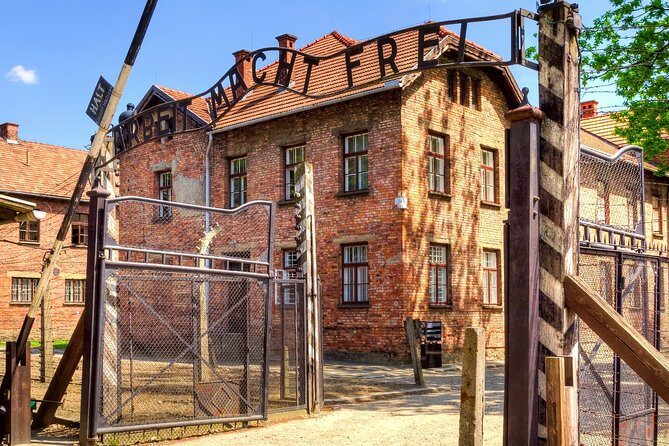
The heart of the tour is visiting Auschwitz I and Auschwitz II-Birkenau. The museum aims to show you the place as the symbol it’s become, but also as an actual system of Nazi persecution—against Poles, Roma, and other targeted groups.
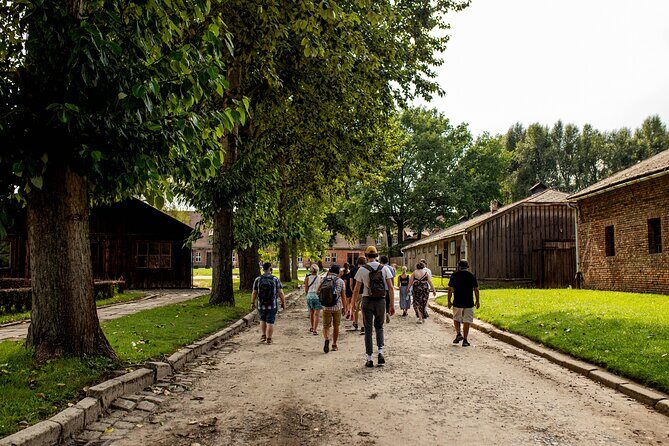
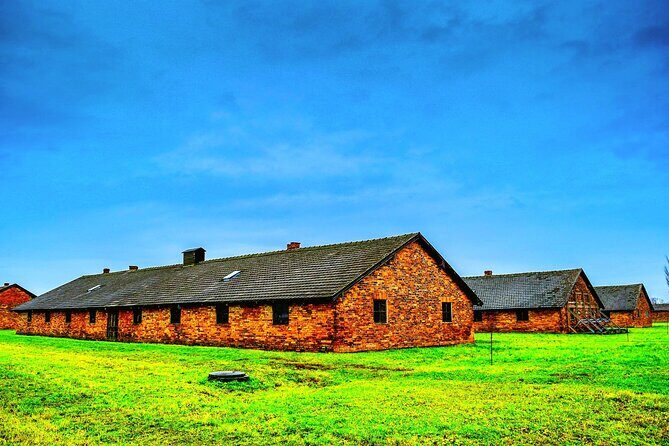
A good guided route is what turns “a list of buildings” into understanding. At Auschwitz I, you’re taken through areas that help explain how the camp functioned and how the site evolved. You’ll see surviving prison blocks and other areas that remain as part of the historical record. Even though you’ll be surrounded by preserved structures, the guide’s job is to help you interpret what you’re seeing instead of treating it like a photo stop.
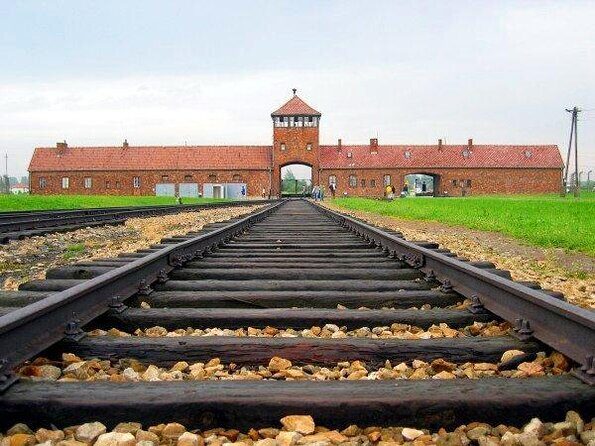
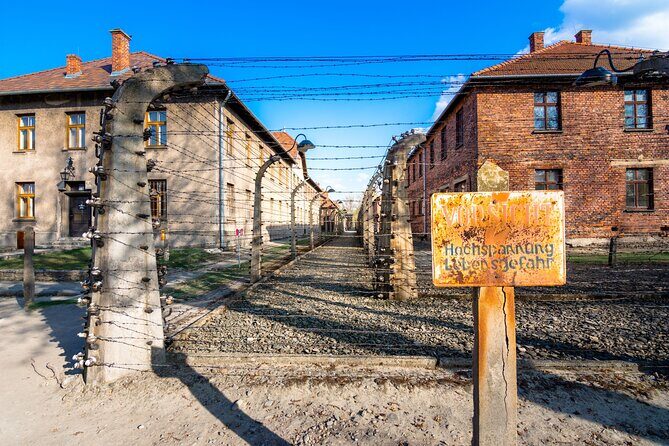
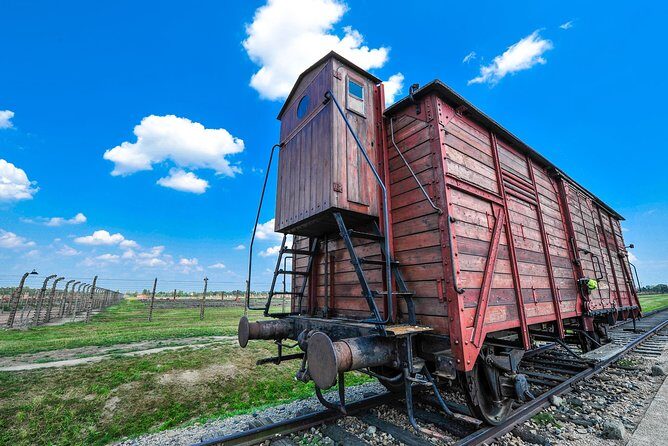
Then comes Auschwitz II-Birkenau, where the scale shifts. Birkenau is where you see the remains of the railway ramp—part of how prisoners were transported into the camp system. Seeing Auschwitz I first often helps you understand the “machinery” of imprisonment; Birkenau then shows the mass processing side of the system.
This is exactly why the tour spends time on both locations. If you only visited one, you’d miss an important piece of the overall picture. The value here is that the tour is built as a two-site story, not a single-location sightseeing outing.
The Hard Parts You Should Plan for: Gas Chambers, Crematoria, and the Rail Ramp
If you’re considering Auschwitz-Birkenau, you already know it’s emotionally difficult. Still, it helps to understand what you’ll specifically be facing so you can plan your attention.
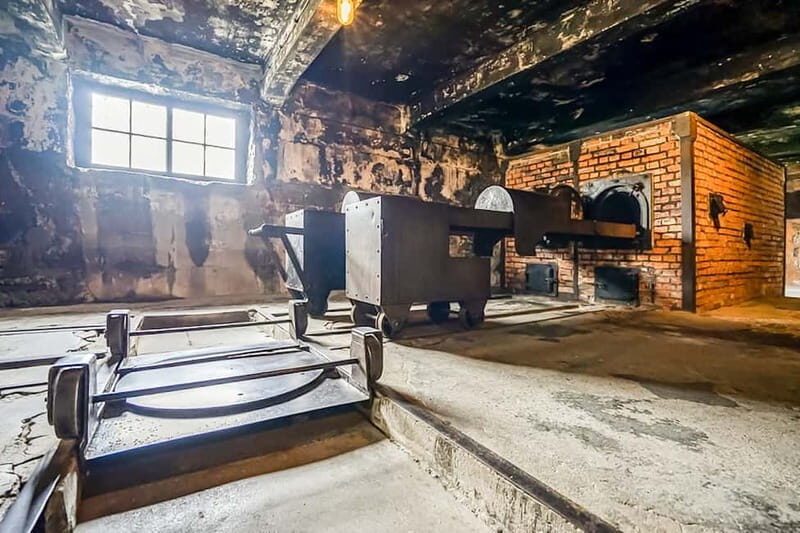
You’ll visit areas that include gas chambers and crematoria buildings. These spaces are part of the museum’s explanation of how the Nazi regime carried out mass murder. Even with a guide narrating, these are not moments for multitasking or skimming. If you’re the type who processes by reading, taking notes, or asking lots of questions, the time limits can feel sharp.
You’ll also see the remains of the railway ramp in Birkenau. That detail matters because it connects the site to logistics—how people were moved and processed. It’s one of those physical features that turns abstract history into something you can literally point at.
Here’s the practical takeaway: if your emotions spike, that’s normal. Give yourself permission to pause when you need a second. If the group is moving quickly, you can still take a breath, look again, and rejoin. The tour’s structure shouldn’t stop you from taking in what’s in front of you.
Price and Logistics: Is $73.44 a Good Value?
At $73.44 per person, this is priced as a full-day, guided, ticket-included experience rather than a bare-bones transfer. What you’re getting for your money is the combination of:
- Round-trip transport from Krakow in an air-conditioned coach
- A licensed guide (in your chosen language)
- Entrance tickets to Auschwitz-Birkenau
Most people underestimate how much time and hassle ticketing and scheduling can cost on a major memorial site. Here, entrance fees are handled, which saves you from timing mistakes and last-minute ticket stress.
What’s not included is food and drinks. That matters because the museum day can be draining. Plan for a meal either before you go or after you return to the meeting point. Even if you don’t want to overpack, having some water and snacks outside the museum rules (where allowed) can help you stay steady through the day.
Also keep in mind the group cap and the total duration. The museum portion is about 4 hours, so you’re paying for guided efficiency. If you want a longer, slower independent visit, a tour like this may feel more like a structured overview than a full, unhurried museum experience.



Pace, Group Size, and Your Expectations Inside the Museum
One thing that can make or break your experience is pace. This tour is guided and time-structured, and that can be a double-edged sword.
On one hand, a structured route prevents you from getting lost in too many details. With a good guide, you can leave feeling you understood the big picture: Auschwitz I and Auschwitz II-Birkenau together, and the meaning of what survives.
On the other hand, the museum is dense and the subjects are intense. If your expectation is a very long, relaxed reading-and-wandering visit, you may feel squeezed. In particular, you should be prepared for the possibility that time inside could feel shorter than you hoped.
So I recommend you adjust your expectations in advance:
- Plan to focus on the guide’s explanations rather than trying to do everything yourself.
- Choose what you care about most (for example, camp layout, how transports worked, or how the site is presented as a memorial).
- If something hits hard, take a moment. A few seconds to reset helps you absorb more, not less.
The tour isn’t recommended for children aged 13 and under, which makes sense given the nature of what’s shown. If you’re going with teens or adults who can handle difficult history and long hours, it’s more likely to feel appropriate.
Getting the Most Out of Your Day: Practical Tips That Actually Help
Even when a tour is planned for you, your prep still matters. Here are practical moves that help on this exact kind of trip.
Bring what you can carry comfortably. There are museum restrictions: baby carriages aren’t permitted, and luggage larger than 30 x 20 x 10 cm is not allowed inside the museum. If you travel with a larger bag, you may need to plan how you’ll manage it before and during the visit.
Check your tech and ticket readiness. The tour uses a mobile ticket, and confirmation is received at booking time. Make sure your phone battery is healthy. If you rely on a second device or you travel with shared plans, keep the confirmation details accessible offline.
Dress for the site conditions. The data doesn’t specify weather gear, but Auschwitz-Birkenau is outdoors in parts and you’ll spend hours on site. Dress in layers so you don’t fight the weather while trying to stay mentally present.
Expect a guided focus, not a free roam. This is a licensed guide experience with structured stops. That’s a benefit, but it changes how you should approach it: listen closely, ask questions if your guide allows it, and let the route do its job.
Should You Book This Auschwitz-Birkenau Tour From Krakow?
If you want a straightforward, ticket-included way to see both Auschwitz I and Auschwitz II-Birkenau with a licensed guide, this tour makes sense. The strongest value points are the included entrance fees and the round-trip coach that handles the big logistics from Krakow. The small group size also tends to feel more manageable than the biggest-departure formats.
I would think twice if your top priority is a long, slow, self-paced museum experience. The day is structured, and the museum time is limited, so you may feel the pace more than you want. Also, if you’re going with younger kids, this tour isn’t recommended for ages 13 and under.
Overall, I’d book this kind of tour when you want clarity and convenience on a day that’s already emotionally heavy. You’ll spend your energy on understanding what you’re seeing—not on figuring out transport, tickets, or timing.
FAQ
How long is the Auschwitz-Birkenau tour from Krakow?
The tour lasts about 7 hours in total, with approximately 4 hours spent at Auschwitz-Birkenau.
Is admission to Auschwitz-Birkenau included in the price?
Yes. Entrance tickets to Auschwitz-Birkenau are included, along with return air-conditioned transportation from Krakow.
Where is the meeting point in Krakow?
The tour starts at Hotel Maltański, Floriana Straszewskiego 14, 31-101 Kraków, Poland, and it ends back at the same meeting point.
Is this tour suitable for children?
It is not recommended for children aged 13 and under.
Are there restrictions on luggage or strollers?
Yes. Baby carriages are not permitted inside the museum, and luggage larger than 30 x 20 x 10 cm is not allowed inside.
What is the cancellation policy?
This experience is non-refundable and cannot be changed for any reason. If it’s canceled because a minimum number of travelers isn’t met, you’ll be offered a different date/experience or a full refund.