REVIEW · MEMORIAL AND MUSEUM AUSCHWITZ BIRKENAU
Auschwitz-Birkenau Skip-the-Line Guided Tour
Book on GetYourGuide →Operated by Royal Tours Krakow · Bookable on GetYourGuide
Auschwitz hits hard, and this tour keeps you moving. You get a licensed guide plus official headsets, so you can actually hear the story instead of losing details in the crowd noise. It’s a structured visit to Auschwitz I and Auschwitz II–Birkenau that also helps you avoid wasting hours in lines.
I especially like the pacing promise: roughly 1.5–2 hours at Auschwitz I, then about 60–75 minutes at Birkenau. That split matters because both sites feel complete on their own, and you need time to process without feeling like you’re getting rushed from one stop to the next. I also like that transportation between the camps is built in, so you’re not trying to figure out local logistics while you’re already mentally overloaded.
One consideration: the memorial can change the preferred tour time, and that shift does not qualify for a refund. Also, even with skip-the-line tickets, you may still encounter crowding at security, so plan for a calm, patient start.
In This Review
- Key things to know before you go
- Auschwitz-Birkenau in 4 Hours: Why skip-the-line beats DIY
- Meeting at Męczeństwa Narodów 14: Getting started without chaos
- The Auschwitz I segment: 2 hours where context matters most
- Bus transfer and Birkenau setup: the 10-minute reset
- Auschwitz II–Birkenau: 60–75 minutes that change how you see scale
- Guide style, headsets, and what you’ll hear on the mic
- Food and timing: the lunch box option is convenient, not always loved
- Price and value at about $55: what you’re paying for
- Who should book this Auschwitz-Birkenau tour (and who might not)
- Should you book this Auschwitz-Birkenau skip-the-line guided tour?
- FAQ
- Where is the meeting point?
- How long is the Auschwitz-Birkenau skip-the-line guided tour?
- What time is spent at each camp?
- What’s included in the tour price?
- Do I need a passport or ID?
- What should I know about allowed and not allowed items?
- Are transfers from Krakow included?
- What languages is the live guide available in?
- Is the memorial wheelchair accessible?
- Can I cancel for a refund?
Key things to know before you go
- Skip-the-line tickets help you avoid the longest ticket queues, especially at Auschwitz II–Birkenau.
- Official guide + headsets mean the facts and context land clearly, even in large groups.
- Two-camp flow gives you enough time to see the core areas without turning it into a speed run.
- Guide names you might hear in past tours include Anna, Joanne, Marta, Veronika, Simon, Wojciech, and Beata.
- Pace is set on site: break timing depends on the memorial’s visitor service, not the tour company.
- Dress and ID rules matter: bring an ID/passport and avoid short skirts, oversize luggage, alcohol, and drugs.
Auschwitz-Birkenau in 4 Hours: Why skip-the-line beats DIY
A visit to Auschwitz-Birkenau isn’t like other sightseeing. The value of a good guided format isn’t just convenience. It’s also about staying oriented—where you are, what you’re seeing, and why it matters—without burning time on logistics.
With this tour, you’re not going in cold. You’re met with a local host, then guided through Auschwitz I and Auschwitz II–Birkenau with an official authorized guide. Add the headsets, and you’re less likely to miss key explanations when you’re standing in a dense group.
For me, the biggest practical win is time management. The tour duration is about 210 minutes (close to 4 hours). That doesn’t sound long, but the on-site experience is intense, and the schedule is designed around realistic visit time for both camps.
You can also read our reviews of more guided tours in Memorial And Museum Auschwitz Birkenau
Meeting at Męczeństwa Narodów 14: Getting started without chaos
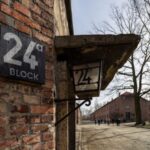
The meeting point is Męczeństwa Narodów 14, marked by a logo board on the main building. From there, you get a short coach transfer—around 10 minutes—before you reach Auschwitz I.
Here’s what I’d treat as your small checklist:
- Bring your passport or ID card (you’ll need it for entry).
- Plan for a security moment even with skip-the-line tickets.
- Wear weather-appropriate layers. Some of the walking is open-air, and your comfort affects how well you can focus.
One thing to watch: your exact meeting time depends on the Auschwitz guide reservation, and you’ll get details about it about 24 hours before the tour. On top of that, the memorial can adjust the preferred time. In at least one case shared in past experiences, the start time moved later the day before. That doesn’t mean it’s a disaster—just means you should avoid building your schedule around one fixed minute.
The Auschwitz I segment: 2 hours where context matters most
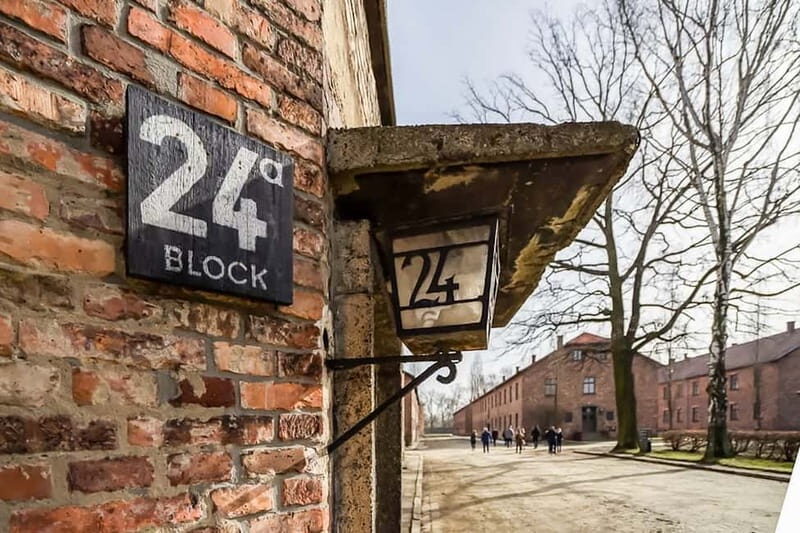
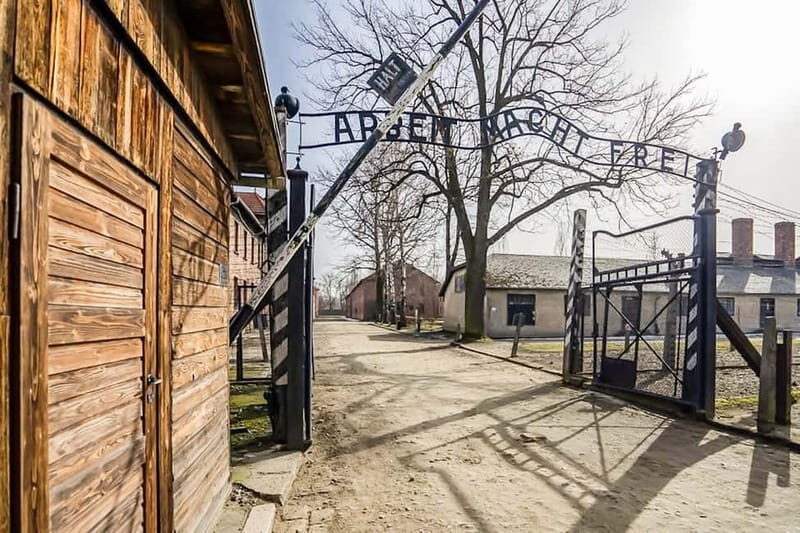
Auschwitz I is the heart of the story, and your tour gives it the longer slot—about 2 hours. You’ll pass through the main entrance gate with the Arbeit Macht Frei sign, then follow your official guide through the camp areas.
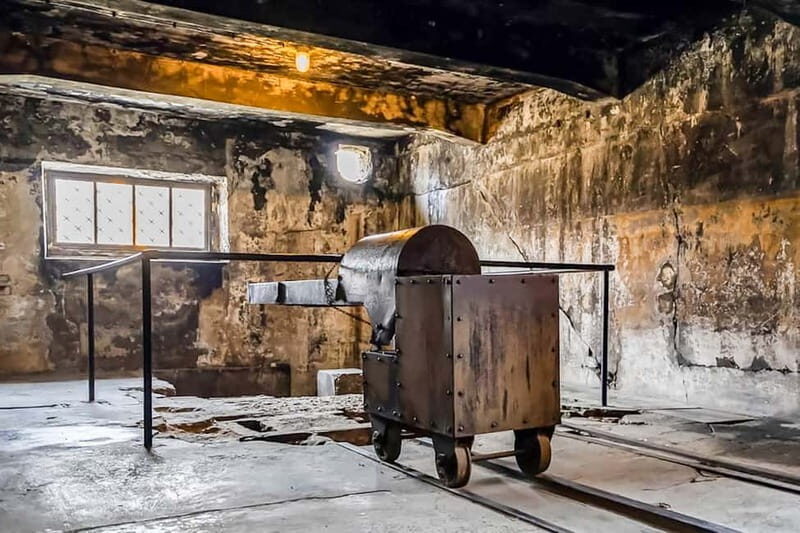
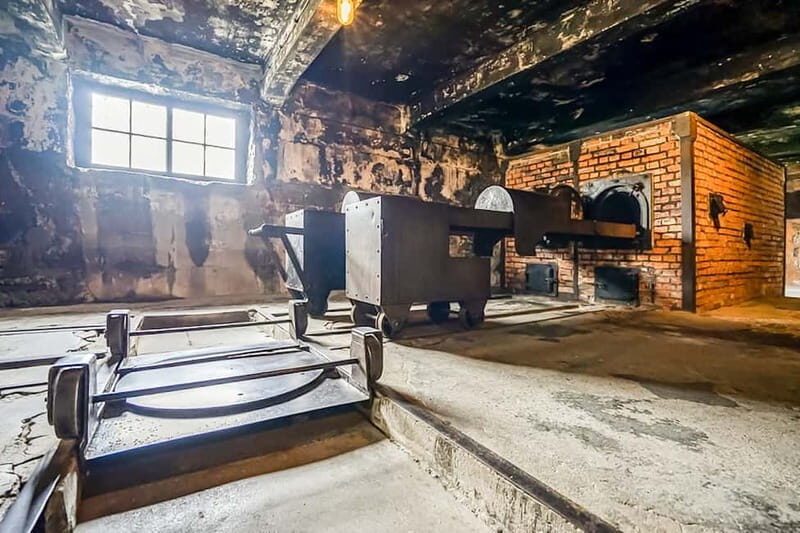
Why this first stop is so important: it frames everything you’ll see at Birkenau. Auschwitz I helps you understand the camp’s structure and the machinery behind the system. Without that context, Birkenau can feel like a powerful but confusing set of ruins. With it, the details start to line up.
Expect a respectful, narrative-style walkthrough. You’ll move through key areas while the guide explains historical background and what prisoners were facing. The headsets help you catch the guide’s wording even when your group shifts or pauses near crowded spots.
Drawback to plan around: even with a guided schedule, you can’t control how long you stand in certain areas. The memorial sets the pace based on visitor flow, and you’ll feel that on a heavy site like this. If you’re hoping for a super-fast “checklist” tour, this format won’t cater to that. It’s built for learning and reflection.
Bus transfer and Birkenau setup: the 10-minute reset
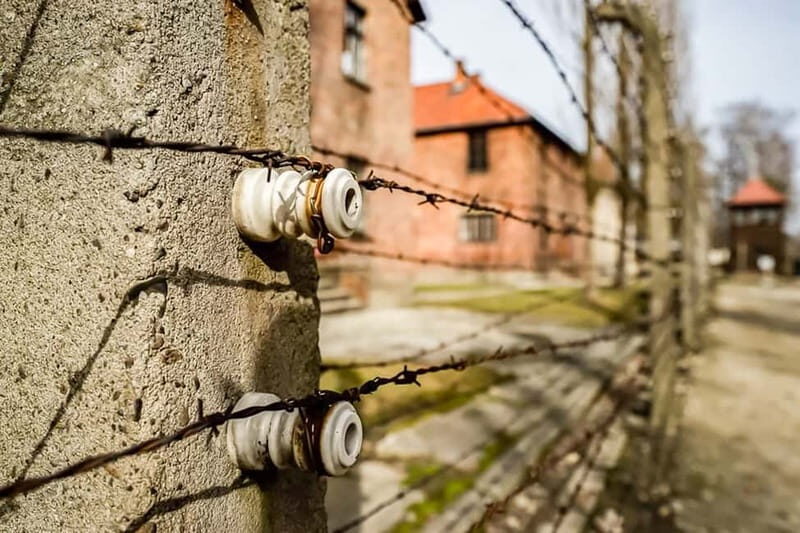
Between camps, you take another coach ride of about 10 minutes. It’s short, but it works as a psychological reset. You get a real break from walking through one concentrated space, then you shift to the scale and layout of Birkenau.
Also note that there’s a short break during the Birkenau portion—around 15 minutes. One practical reason this matters: you can use it to regroup, grab water (you’re given water if you select the lunch box option), and handle restroom needs. If you wear contact lenses or you’re sensitive to cold or sun, this is the moment to adjust before you continue.
Auschwitz II–Birkenau: 60–75 minutes that change how you see scale
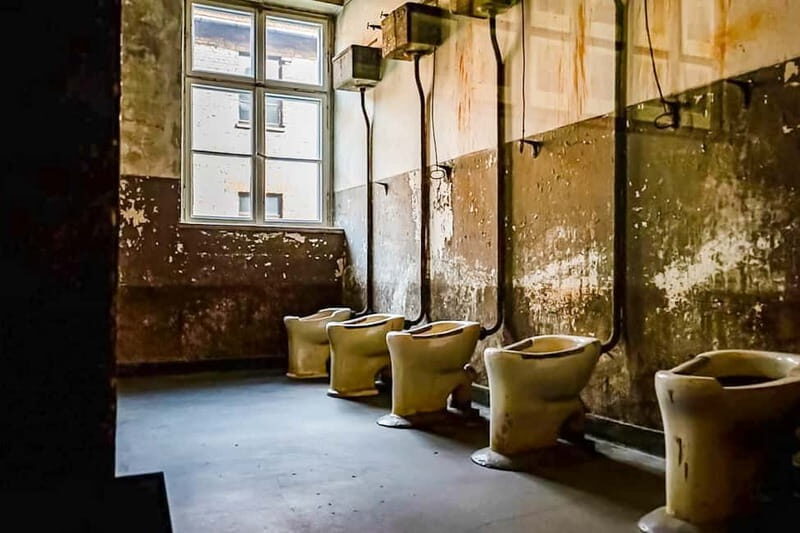
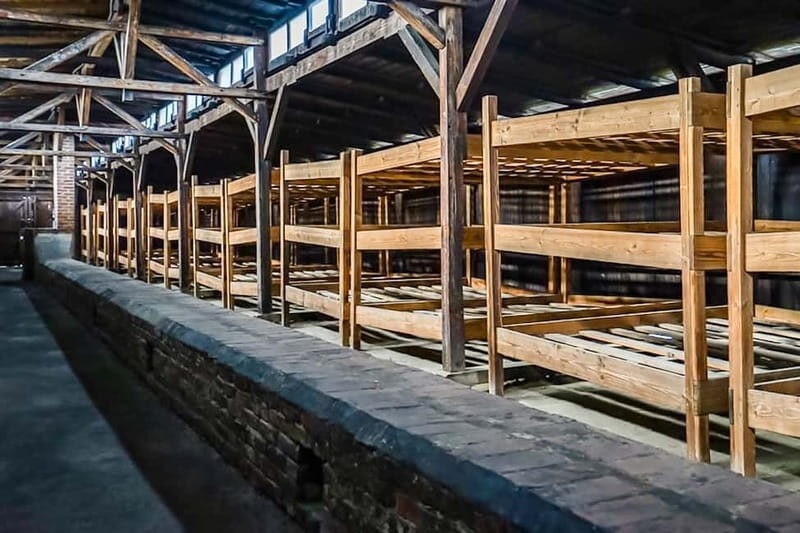
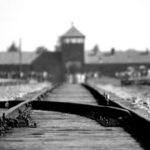
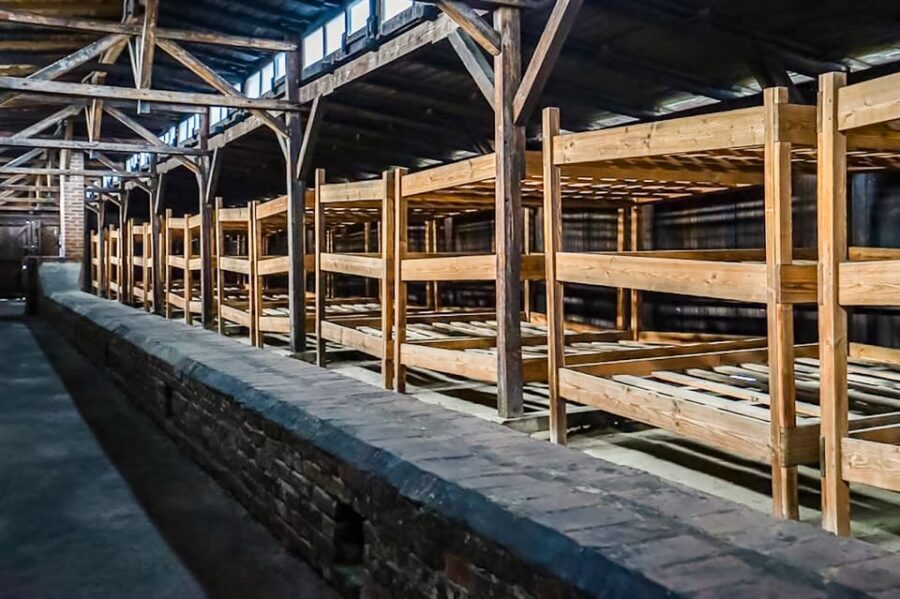
Birkenau is where the site’s size hits you. Your guided time here is about 1.5 hours. The tour focuses on the emotional nature of the camp while giving you historical framing—so you’re not just looking at remains, you’re understanding what that space was designed to do.
What I’d keep in mind: Birkenau is often crowded, and groups flow in waves. That can make the pace feel less “in control” than you might expect from a tour company schedule. Still, the official guide’s job is to keep the group together and maintain a respectful, ordered path through the most important areas.
Past visitors mention a wide range of guides and tones. Some guides are noted for being very empathetic and for managing questions smoothly within the group. If your guide is particularly strong, you’ll feel it here—the Birkenau segment is where context turns into reality.
A few more Memorial And Museum Auschwitz Birkenau tours and experiences worth a look
Guide style, headsets, and what you’ll hear on the mic
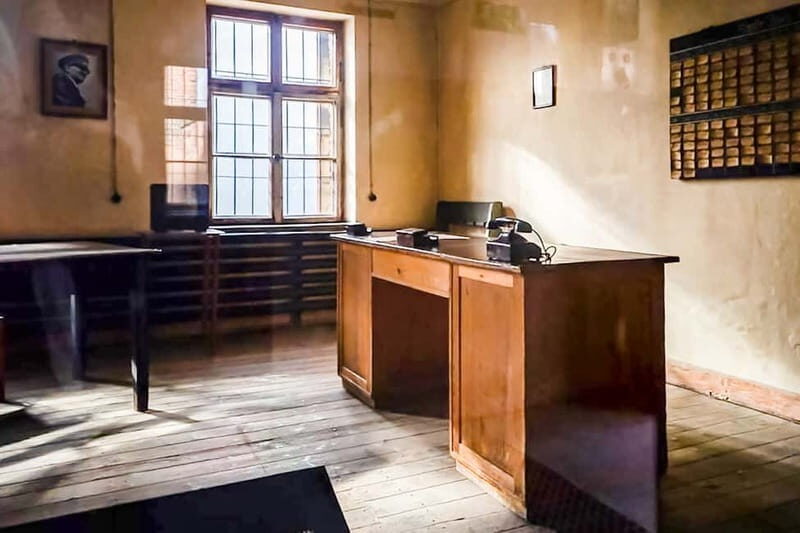
This tour stands or falls on the guide. The good news: lots of past bookings praise the way guides communicate the message with respect and clarity.
Names that pop up in the feedback include:
- Anna (praised for knowledge and passion)
- Joanne (praised for being exceptional and thorough)
- Marta (praised as phenomenal and clear)
- Veronika (praised for structured explanations and depth)
- Simon (praised as exceptional)
- Wojciech (praised for clarity, detail, and answering questions)
- Beata and Emanuel (praised for organization and care)
I also like that you get headsets. On-site sound can be chaotic, and when you’re paying attention to the story, missing a sentence feels unfair to the subject matter.
One reality check: the memorial provides some guidance that affects how the tour is delivered. In one case, a guide was described as being in training, which reduced the depth of personal stories and anecdotes. That’s not something you can fully control when booking any tour tied to museum staffing, but it’s worth knowing.
Food and timing: the lunch box option is convenient, not always loved
Included lunch is optional. If you select it, you get a packed box with two bread roll sandwiches (meat, vegetarian, or vegan), an apple, banana, and a dark chocolate wafer, plus 500ml still water.
Here’s the balanced take: convenience is real. When you’re touring a site like this, having food handled for you can prevent decision fatigue and keep you from ending up hungry mid-day. But at least one past booking called the lunch not worth the extra cost, so if you’re picky, you might prefer to bring your own simple snack outside the package system.
Also keep in mind you’re dealing with a fixed overall tour window. Break timing is determined by the memorial’s visitor service. That means you might get less time than you want for a long meal sit-down.
Price and value at about $55: what you’re paying for
At $55 per person, this isn’t a budget add-on. You’re paying for three things that matter on this specific trip:
- Pre-booked entry for Auschwitz I and skip-the-line tickets for Auschwitz II–Birkenau
- Transportation between the camps (the coach ride saves time and stress)
- An official museum guide plus headsets so the experience is structured and audible
If you’re doing this without help, you’re usually paying in other ways: time spent sorting out entry windows, time lost in lines, and the extra mental load of figuring out where to go while also trying to understand what you’re seeing.
That said, you should know the fine print of expectations. One past booking reported that even with skip-the-line included, they still queued similarly to other groups, though the line was manageable. So don’t treat “skip-the-line” as “zero waiting.” Treat it as “less waiting than you’d likely face on your own.”
Who should book this Auschwitz-Birkenau tour (and who might not)
This tour fits best if:
- You want an official guided structure across both Auschwitz I and Birkenau.
- You’d rather spend your limited time learning than negotiating logistics.
- You appreciate a group pace that’s realistic for the memorial’s visitor flow.
It may be less ideal if:
- You need full mobility support. The camps are not adapted for wheelchair use.
- You’re the type who wants an ultra-private, slow, independent experience. This is guided and scheduled, and it moves at the site’s pace.
For most people visiting Kraków, it’s an efficient plan because the only travel covered is between the two camps. Transportation to and from Kraków isn’t included.
Should you book this Auschwitz-Birkenau skip-the-line guided tour?
If you’re going to Auschwitz-Birkenau once, book something that gives you structure and clear audio. I think this tour is a strong fit because it combines skip-the-line entry, between-camp transport, and an official guide with headsets. At this price point, those items are exactly what you’d pay extra for if you tried to DIY it the stressful way.
Book it if you can handle a scheduled pace and you don’t mind that the memorial can adjust timing. Skip it (or pair it with extra planning time) if your day is too tight, if you’re relying on one fixed departure minute, or if you need wheelchair accessibility.
FAQ
Where is the meeting point?
The meeting point is at Męczeństwa Narodów 14. It’s marked by a logo board on the main building.
How long is the Auschwitz-Birkenau skip-the-line guided tour?
The total duration is about 210 minutes (roughly 4 hours).
What time is spent at each camp?
You spend about 1.5–2 hours at Auschwitz I and about 60–75 minutes at Auschwitz II–Birkenau.
What’s included in the tour price?
You get pre-booked tickets for Auschwitz I, skip-the-line tickets for Auschwitz II–Birkenau, transportation between the camps, a local host at the meeting point, an official museum guide, headsets, and a lunch box only if you select that option.
Do I need a passport or ID?
Yes. You should bring your passport or ID card.
What should I know about allowed and not allowed items?
Pets aren’t allowed, oversize luggage isn’t allowed, short skirts aren’t allowed, and alcohol and drugs aren’t allowed.
Are transfers from Krakow included?
No. Transportation to and from Krakow or other cities is not included.
What languages is the live guide available in?
The live tour guide is available in French, English, and German.
Is the memorial wheelchair accessible?
The camps are not adapted for wheelchair use.
Can I cancel for a refund?
Yes. Free cancellation is available up to 24 hours in advance for a full refund.