REVIEW · KRAKOW
From Krakow: Auschwitz-Birkenau Trip with Transport
Book on Viator →Operated by Krakow Tours by KrakowDirect · Bookable on Viator
Auschwitz is heavy. So is planning—this trip helps you handle both. The value here is round-trip transport from Krakow plus an English-speaking guided visit that turns the sites into something you can actually understand while you’re standing there.
I also like the on-the-way documentary, which gives you a timeline and context before you ever cross the first gate. The one thing to watch is the real-world timing: your museum entry depends on ticket windows, and that can mean long waits before the guided part starts.
From start to finish, you’re moving in a structured way. Stop 1 and Stop 2 each have a clear purpose, and you get headset support so you don’t lose the story when crowds get loud. The drawback is that admission tickets are not included, and the tour isn’t skip-the-line—so you’ll want to budget extra time (and patience) for ticketing.
In This Review
- Key points
- Krakow to Auschwitz-Birkenau: the transport that sets your day up right
- The bus documentary: why that 1-hour film matters once you’re there
- Auschwitz I: entering through the gate and learning how to read the site
- Auschwitz II-Birkenau: where the scale and cruelty are harder to comprehend
- Price and what is really included (and what costs extra)
- The big timing variable: ticket windows and long waits before the guided tour starts
- Group size and hearing the guide: what 35 people feels like at a memorial
- Who this Auschwitz-Birkenau day trip is best for
- Should you book this Krakow Auschwitz-Birkenau trip with transport?
- FAQ
- Is the entrance ticket included in the tour price?
- How long is the Auschwitz-Birkenau trip?
- Do I need to bring ID for the Auschwitz memorial?
- What language is the tour in?
- Where do we meet in Krakow?
- Can I cancel for a full refund?
Key points
- Air-conditioned round-trip transport from Krakow saves you the stress of arranging buses and trains
- Onboard documentary helps you get oriented before you enter Auschwitz
- Headsets at Auschwitz I make it easier to hear your guide clearly in a large site
- Two focused sites in one day: Auschwitz I (concentration camp) and Auschwitz II-Birkenau (Birkenau)
- Group capped at 35 people keeps the experience more manageable inside the memorials
Krakow to Auschwitz-Birkenau: the transport that sets your day up right
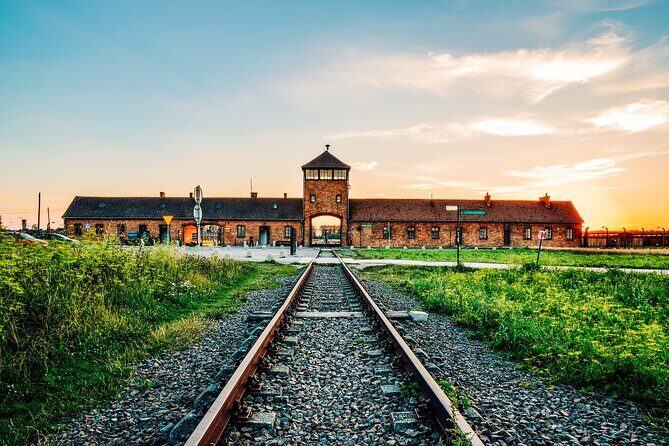
This is a classic Krakow-to-Auschwitz full-day layout. You start at Radisson Blu Hotel Krakow (Floriana Straszewskiego 17), then you go straight to the memorial with round-trip transportation in a modern, air-conditioned vehicle. For most people, that’s the main appeal: you get a plan, not a puzzle.
Real talk about the timing: pickup is early, and it can feel intense. Some schedules reported very early departures (think pre-dawn) to match what the museum allows. The total trip time is listed as about 7 to 10 hours, but your day can stretch longer if ticketing moves slowly. The big win is that you’re not figuring out transit while mentally preparing for a site that demands your attention.
The vehicle is also part of the comfort equation. It matters because you’ll likely spend time outside or in queues. Cold mornings and waiting indoors don’t always match your brain’s readiness, so having air-conditioning on the drive back is a small mercy.
You can also read our reviews of more tours and experiences in Krakow.
The bus documentary: why that 1-hour film matters once you’re there
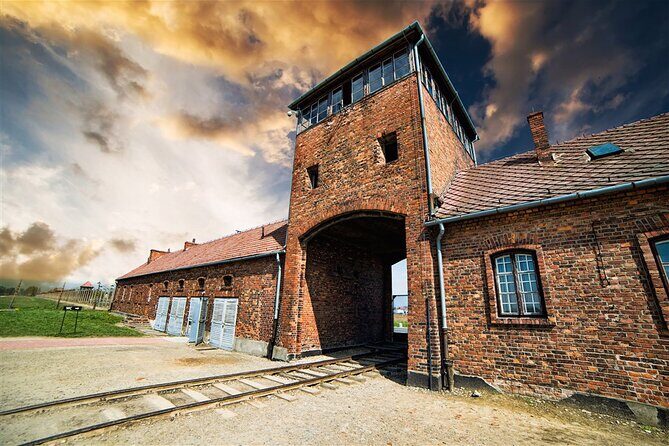
Before you ever walk through the memorials, the tour includes a documentary film on the way to Auschwitz-Birkenau. This isn’t entertainment. It’s orientation. You get a structured look at the liberation and what the camps were, which helps you build a timeline while you’re hearing your guide explain what you’re seeing.
If you’ve ever visited a museum after a long day of travel and felt lost in details, this is the fix. When you arrive at Auschwitz I, you’ll immediately notice how the story has to be told in layers: what happened, how it functioned, and what survivors and liberation meant. The film helps you connect those pieces quickly.
Also, your guide runs the day in English, and you’ll have headset support at Auschwitz I. Headsets sound minor until you’re trying to listen while groups shift around you. This setup keeps you from constantly straining to hear.
Auschwitz I: entering through the gate and learning how to read the site
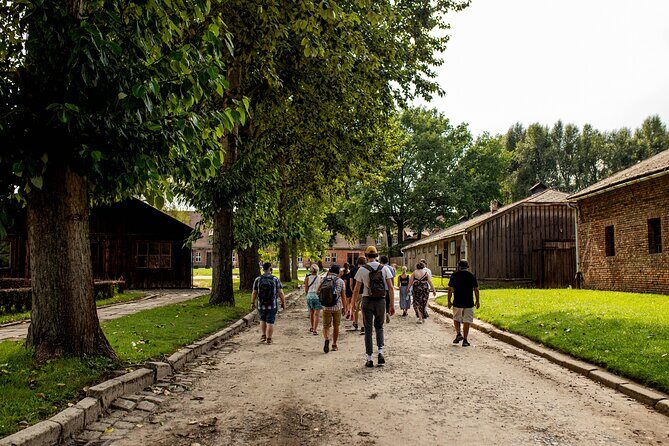
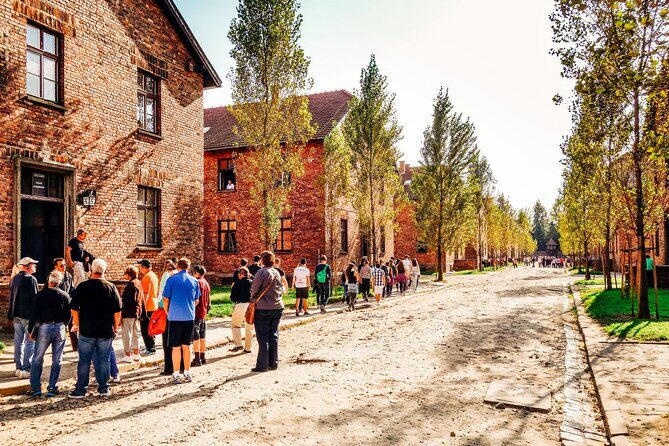
At Panstowe Muzeum Auschwitz-Birkenau (Auschwitz I), the tour begins with you walking through the camp’s entrance, under the Arbeit Macht Frei sign. This is the first concentration camp area tied to the German occupation after 1939, particularly the arrest and imprisonment of Polish citizens. Standing there, the scale is hard to grasp at first. The guide’s job is to help your brain organize what you’re looking at.
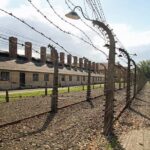
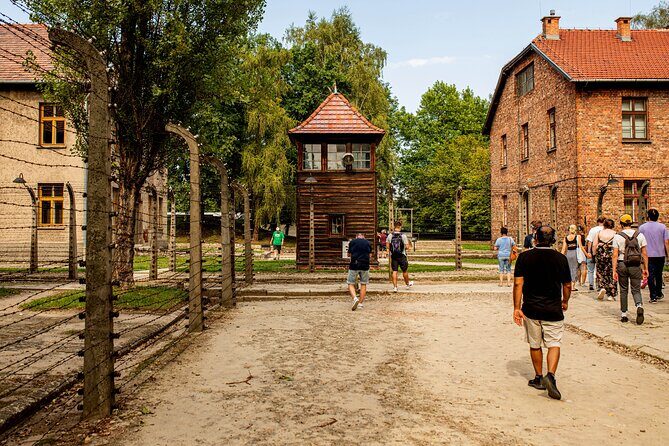
You’ll typically spend about 2 hours at Auschwitz I. Admission tickets aren’t included in the tour price, so you’ll pay separately onsite. The visit includes major memorial elements such as the original barracks, fortified walls, barbed wire fences, and the sites associated with gas chambers and crematoria. Those words don’t prepare you for what it feels like in person, but the guided structure does help you avoid getting stuck on random facts without context.
Headsets matter here. Your guide’s commentary gives you the why behind what you’re seeing, not just the what. And because the group size is limited to 35, the tour feels more controlled than the free-for-all you can get on your own—especially when you want to pause and look without losing your place.
Possible drawback: you’re walking in a real memorial. The pace is shaped by memorial rules, and you may not be able to wander slowly at every turn. If you prefer totally self-paced visits, you might feel slightly constrained.
Auschwitz II-Birkenau: where the scale and cruelty are harder to comprehend
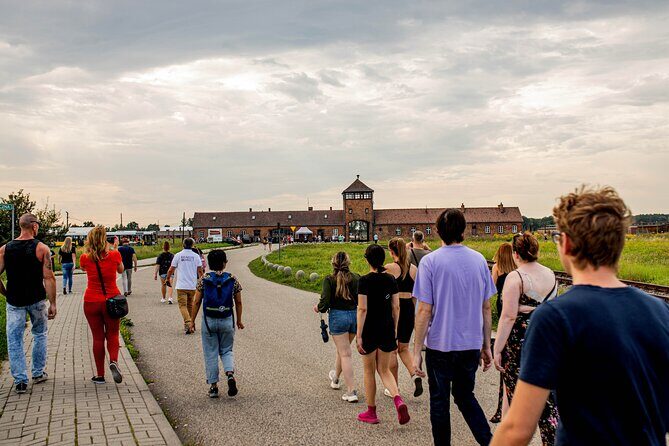
After Auschwitz I, you move to Auschwitz II-Birkenau, located extremely close—about 3 minutes away. This is where the scale can hit you twice: once in your first visual impression, and again when you understand what the camp was designed to do.
Birkenau is the larger camp, built and operated with the purpose of making Europe Judenrein (free of Jews). The tour explains how the camp could hold around 90,000 prisoners, and it connects that scale to how the system worked on an industrial level. You’ll hear about brutal living conditions and the selection process, plus the pseudo-scientific medical experiments performed by Nazi doctors, including Josef Mengele.
Your time at Birkenau is about 2 hours, and the story doesn’t end on the horror. The guided narrative reaches liberation, including the fact that on January 27, 1945, soldiers from the 60th Army of the First Ukrainian Front opened the gates of Auschwitz. That ending matters. It keeps the visit from becoming only destruction; it frames it in terms of prevention—what you must never allow again.
One practical note: Birkenau can feel exposed compared with Auschwitz I because of the layout and outdoor areas. Dress for cold or wind if you’re visiting in shoulder season or winter. If it’s hot, you’ll still want water because your day is long and the memorial experience isn’t something you can rush through.
Price and what is really included (and what costs extra)
The tour price is $62.31 per person, and it includes several pieces that save you real hassle: pickup from your Krakow meeting point, round-trip transport, a documentary onboard, English-speaking guide assistance, and insurance.
But here’s the cost reality check: entrance tickets are not included. The admission fee you must pay onsite is listed as PLN 130 per person (about 30€). And importantly, the tour does not claim skip-the-line entry for the museum tickets. Waiting for entry tickets is part of the day.
So how does this pencil out? You’re paying for transportation, guidance, and time structure—but you still have to handle the memorial ticket process yourself at the museum level. That can be totally fine on a smooth day. On busy days, it’s where frustration often shows up.
If you’re budgeting, treat the total cost as tour price plus the museum admission ticket. Then plan for time. For many people, the money feels reasonable. The time cost is the bigger question.


The big timing variable: ticket windows and long waits before the guided tour starts
Here’s the part I want you to think about before booking: at Auschwitz-Birkenau, entry is controlled by the memorial, not by your bus driver’s schedule. Your tour’s guided start time depends on when your tickets are issued and which time slot you’re assigned.
Even with a scheduled day, it’s possible to face a long queue for tickets onsite. Some schedules described waiting of around 2 to 3 hours just to get tickets, and then additional waiting for a guide to start the group visit. When that happens, you end up spending more of your day standing, waiting, and feeling anxious about being late.
There’s also the “time slots” aspect. Tickets are individual with a quota per time slot, so you may not enter and leave exactly together in the way you’d expect from a simpler guided attraction. If your day has other plans in Krakow right after the tour, don’t assume you’ll return on the first possible minute.
Practical advice from my perspective:
- Bring layers. You could be outdoors or in a queue before your entry window.
- Keep your ID ready. The museum requires personal details confirmation.
- Accept that your day runs on memorial rules, not your schedule.
And yes, the bus does have a departure back to Krakow. Some reports mentioned departure as late as 5:30 pm, so you can’t plan to stay for extra hours on your own if things go sideways.
Group size and hearing the guide: what 35 people feels like at a memorial
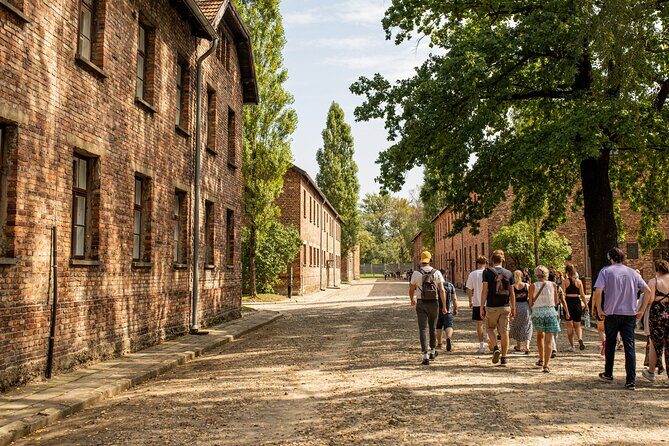
A group cap of 35 travelers is a meaningful detail. It doesn’t guarantee a silent experience—Auschwitz isn’t quiet—but it does help your guide manage pacing and directions. It also makes logistics easier for headset distribution and for keeping everyone moving through checkpoints and designated areas.
At Auschwitz I, you get headsets to hear your guide clearly. That’s one of those features that feels “techy” until you’re using it for something serious. When groups compress in narrow areas, your guide’s narration can make the difference between feeling overwhelmed and feeling anchored.
At Birkenau, the guided portion continues with the story centered on camp function and human impact. The key is that you’re not left to assemble the meaning alone.
The one consideration: with a capped group, you still might experience the rhythm of a larger coordinated visit. If you need total privacy or quiet reflection without any group motion, you may find this format less satisfying than independent visiting.
Who this Auschwitz-Birkenau day trip is best for
This kind of tour is ideal if you want structure. You’ll like it if:
- You’re visiting Auschwitz-Birkenau for the first time and you want an English narrative to explain what you’re seeing.
- You’d rather not spend your energy on transport logistics from Krakow.
- You value time-saving round-trip transport in a comfortable vehicle.
It might be a less-than-perfect fit if:
- You’re extremely sensitive to schedule changes and long waiting times. The ticketing process is the biggest wildcard.
- You plan a tight itinerary in Krakow afterward and can’t tolerate delays.
In other words: if you can handle a long day and you want your visit guided and coherent, this works. If your biggest priority is total control and zero waiting, you’ll want a different approach.
Should you book this Krakow Auschwitz-Birkenau trip with transport?
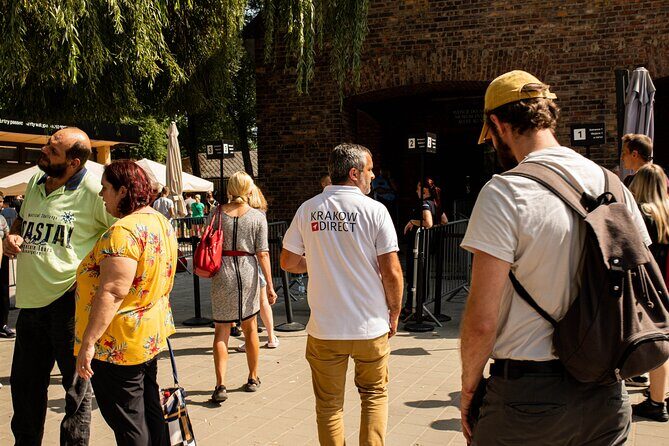
I’d book it if you want a guided, structured Auschwitz-Birkenau day that starts with transport taken care of and includes orientation before you arrive. The combination of round-trip comfort, English guide assistance, headsets, and focused time at both Auschwitz I and Birkenau is strong value—especially if you’re traveling without local know-how.
But I would not book it blindly if you hate waiting or you’re relying on an exact arrival time. The admissions step costs extra (PLN 130 per person) and the day can slow down if tickets take time to process. That’s not a minor issue—it’s the main risk.
My suggestion: treat the tour as a day built around the memorial. If you plan for waiting, bring your ID, dress for lines, and keep your Krakow schedule flexible, you’ll get the most out of the guided experience.
FAQ
Is the entrance ticket included in the tour price?
No. Entrance fees are not included. You pay onsite PLN 130 per person (listed as about 30€).
How long is the Auschwitz-Birkenau trip?
It’s listed as about 7 to 10 hours total. The exact pacing depends on the memorial’s visitor service regulations, so the times are approximate.
Do I need to bring ID for the Auschwitz memorial?
Yes. You’re required to bring your passport or ID for mandatory confirmation of your personal details at the entrance. If you forget it, you may not be allowed to enter.
What language is the tour in?
The experience is offered with an English-speaking tour leader (the offer is written in English).
Where do we meet in Krakow?
Pickup starts at Radisson Blu Hotel Krakow, Floriana Straszewskiego 17, 31-101 Kraków.
Can I cancel for a full refund?
Yes. The policy allows free cancellation up to 24 hours in advance for a full refund. Cancellation less than 24 hours before the start time is not refunded.