REVIEW · KRAKOW
Auschwitz-Birkenau Tour with Transfer
Book on Viator →Operated by AT Cracow · Bookable on Viator
That early pickup feels like a time machine.
This Auschwitz-Birkenau tour is built for stress-free Krakow hotel pickup plus admission to both camps with headsets and an English-speaking tour leader, so you can focus on the site instead of logistics. The trade-off is simple: expect very early starts and a lot of walking, with food not included.
What makes it work well for most people is the structure. You get a guided Auschwitz I visit with a professional museum guide, then a bus ride to Auschwitz II Birkenau, where you see the biggest remaining pieces and ruins—fast enough to fit the day, slow enough to understand the layout. One thing to consider: this is not a tour where you can wander freely, because the museum controls the pace and you’ll be moving with the group.
Even with the heaviness of the subject, the day can feel organized and humane if you show up prepared. I’d treat this as a full-day plan, dress for weather, and bring your own snacks for the gaps between camp sections.
In This Review
- Key things to know before you go
- How the Krakow-to-Auschwitz Transfer Really Works
- Auschwitz I: Security, the Underground Tunnel, and the Main Memorial Route
- Birkenau (Auschwitz II): Ruins, Wooden Barracks, and That Scale You Can Feel
- Timing, Queues, and the Real-Life Meaning of a Full-Day Plan
- Price and Value: Why $132.75 Can Be a Good Deal, If It Fits Your Style
- Guided vs Non-Guided: Getting Structure Without Losing Your Personal Pace
- Respect Rules You’ll Want to Follow From the First Minute
- Potential Snags: What Can Go Wrong and How You Keep Control
- Who This Auschwitz-Birkenau Transfer Tour Is Best For
- Should You Book This Auschwitz-Birkenau Tour With Transfer?
- FAQ
- How long is the Auschwitz-Birkenau tour from Krakow?
- Does the tour include admission to both Auschwitz I and Auschwitz II Birkenau?
- Is pickup from Krakow included, and how early can it be?
- Do I get headsets for the English tour?
- What’s the biggest difference between Auschwitz I and Birkenau on this tour?
- Are meals included in the price?
- What documents do I need to bring?
- What are the bag size limits?
- What is the cancellation window for a full refund?
Key things to know before you go
- Multiple Krakow pickup points, including Podgórze and Hotel Maltański: you choose your meeting place at booking, and your exact pickup time comes by message the day before.
- Early starts are common (even 3:00–4:00 AM): the schedule depends on museum entry rules, so be ready for a very early wake-up call.
- Auschwitz I is the guided core: you’ll go through security, the underground tunnel, and major focal points like Block 11 and the gas-chamber area.
- Birkenau is about scale, not comfort: expect open ground, ruins, and some cold and rain exposure with limited shelter.
- Small group structure (up to 30 with a guide): headsets are provided so you can hear instructions clearly.
- Food is on you (or order a lunchbox): there are only limited options on-site and not much time for a full lunch.
How the Krakow-to-Auschwitz Transfer Really Works
The day starts in Krakow with pickup from selected areas, with meeting points that include south-of-Krakow areas such as the Podgórze district. Depending on your selection, the last pickup stop is listed as Straszewskiego 14, Hotel Maltański. In practice, it means you join a group, then the vehicle makes a quick run through multiple points.
The drive to Auschwitz-Birkenau is about 1 hour 15 minutes one way (roughly 65 km). During the ride, you’re not left on your own: the tour includes an English-speaking tour leader who can help if you have questions. Some groups have seen clear support from tour leaders such as Renata, Jacob, Phillip, or Daniel, depending on the departure, though the exact staffing can vary.
A big part of the experience is the timing of the pickup window. The tour notes that the exact pickup time is sent after 5 pm the day before, and it can be very early—sometimes 3:00–4:00 AM—because the museum schedule is the boss. Even if you pick a later start time option at booking, you’re still dependent on real entry conditions.
On the way back, the return drop-off is designed to avoid sitting in Krakow traffic. Your drop-off will be at one of the tour’s meeting points, and the tour leader advises the best nearby option based on current road conditions and one-way streets.
My advice: plan to be flexible. If you’re the type who schedules an afternoon flight without a buffer, build in extra time. Auschwitz days don’t run on your ideal timeline—they run on museum rules.
A few more Krakow tours and experiences worth a look


Auschwitz I: Security, the Underground Tunnel, and the Main Memorial Route
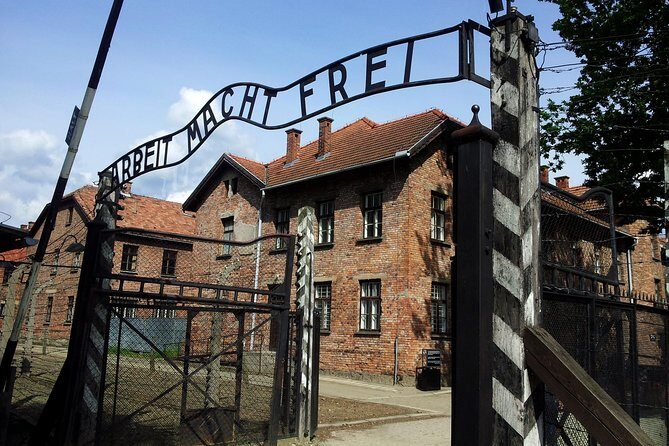
Once you arrive, the tour starts with a short break for coffee or the bathroom before you head into the museum portion. Then you enter Auschwitz I, which is where the guided portion becomes the backbone of the day.
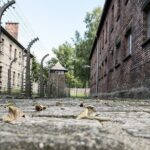
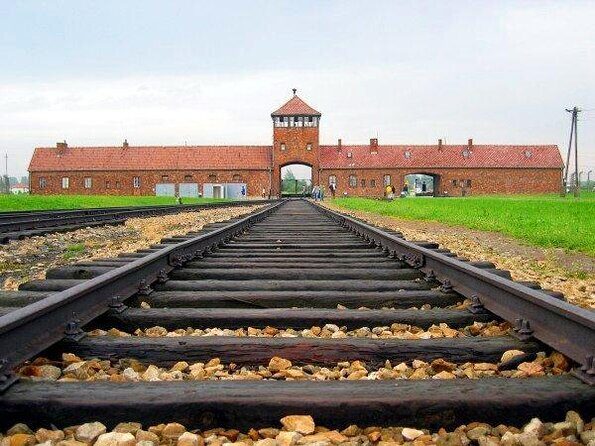
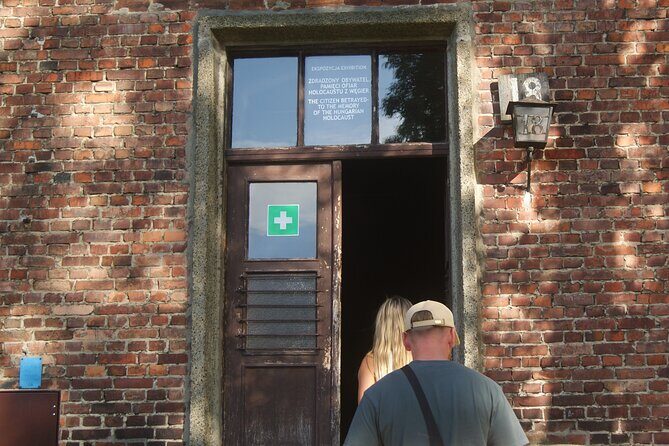
The route begins with an airport-style security check using metal detectors. After that, you walk through an underground tunnel to reach the original gate area, marked with the sign Arbeit Macht Frei. It’s a key moment because it shifts you from travel mode into memorial mode immediately.
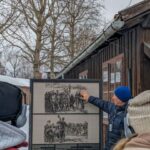
From there, the guided walk focuses on exhibits across the camp: items and artifacts like human hairs, prisoner pottery, and prisoner pictures, plus other documentation-style displays. It’s not just a walkthrough; the guide’s job is to connect what you’re seeing to how the camp operated.
You’ll also go to some of the most emotionally intense stops within Auschwitz I, including Block 11, the site associated with the first gas chamber. The tour then moves you past what’s described as the death wall, and you’ll see the area connected to Rudolf Höß being hanged. After that, you enter the gas chamber and crematorium area in Auschwitz I, which is designed to show scale and system, not just individual stories.
A few practical details matter here:
- The tour notes that headsets are provided so you can hear the guide clearly.
- Groups can be up to 30 people with a guide, which keeps things controlled.
- You’re not really doing this at your own pace. Even with headsets, you’ll follow the museum and guide timing.
What I like about this approach: Auschwitz I is the camp where context is easiest to lose if you go fully on your own. This tour’s guided structure helps you understand what you’re looking at before you move to Birkenau.
Possible drawback: the pace can feel brisk, especially if you’re hoping for long stops at exhibits. Come ready to absorb in short bursts, then let the memory land after.
Birkenau (Auschwitz II): Ruins, Wooden Barracks, and That Scale You Can Feel
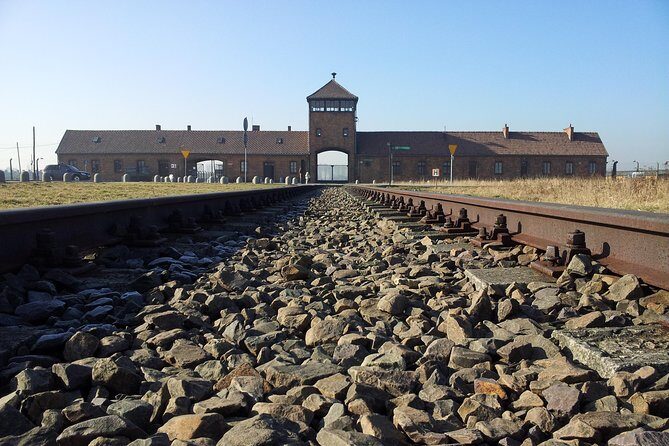
After Auschwitz I, you get a short break. Then you’ll go by bus to Auschwitz II Birkenau, about 3 km away, and continue with your guide.
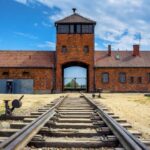
Birkenau is described as the larger camp area, around 171 hectares, with close to 100,000 prisoners held there. This stop is less about artifacts in enclosed buildings and more about the physical reality of space: distance, remnants, layout, and how the camp functioned as a system.
During the Birkenau portion, you’ll see:
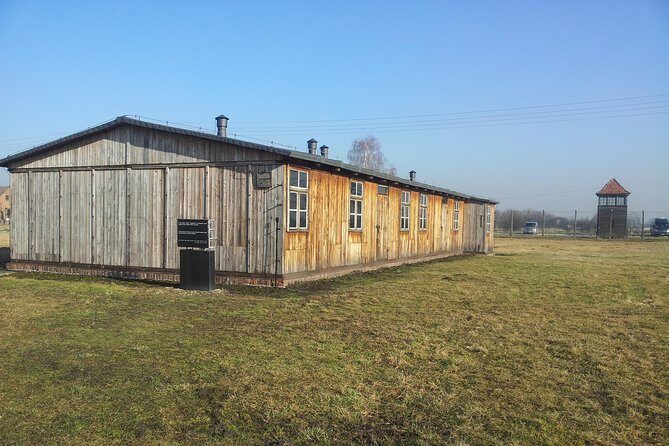
- Wooden barracks, originally designed as horse stables
- The original freight wagon used to transport prisoners
- The ruins of four gas chambers and crematoria
Time here is listed as about 1 hour, and that’s another reason the tour includes structure. Birkenau is huge and open. Without a guide, many people would wander and miss the points that make the history make sense.
Weather matters more here than at Auschwitz I. The open ground at Birkenau means wind and rain can cut through. The tour also warns there’s essentially no place to pause for comfort while traversing the memorial grounds.
My advice: bring layers you can handle outdoors. If you’re visiting in colder months, consider choosing an earlier departure when there’s a better chance of daylight while you’re walking the Birkenau grounds.
Timing, Queues, and the Real-Life Meaning of a Full-Day Plan
This is one of those tours where the itinerary reads like a map, but the day runs like a schedule. The experience recommends you reserve the whole day because the start time may shift based on Auschwitz rules, and there can be waiting time before entry.
You should also expect some downtime between main segments:
- A short break on arrival for coffee and bathroom
- Time to pass security
- Moving from Auschwitz I to Birkenau
- A break near the end for parking-area rest, bookstore browsing, and a restaurant option
Some departures have flowed smoothly with faster movement through entry areas, especially when the guide leads the process well. Other departures include waiting in lines. Either way, you should treat the schedule as variable.
Then there’s a timing reality in Krakow traffic. Your tour’s return drop-off strategy aims to keep you from being stuck, but road delays can still shift how quickly you’re back in town. This is why a later restaurant plan should be optimistic rather than certain.
What I’d do if you’re planning around flights or trains: build in cushion. Even if the tour runs on time, you still have museum entry timing and weather exposure in the mix.
Price and Value: Why $132.75 Can Be a Good Deal, If It Fits Your Style
At $132.75 per person, the value is strongest when you want three things all together:
- Admission to both Auschwitz I and Auschwitz II Birkenau
- Round-trip transportation from Krakow in an air-conditioned vehicle
- A structured guided approach, including an English-speaking support leader and headsets
If you were to DIY, you’d likely spend money on separate tickets and then fight the planning stress: getting out to the site, timing entry, and coordinating the sequence of camp areas. This tour’s combo package is designed to remove that friction.
The cost is also shaped by group size and museum rules. The tour notes the guided group count can reach up to 30, and tickets depend on ticket and guide availability. That affects your experience even if the tour price looks straightforward.
Two value cautions:
- Food isn’t included. The tour suggests bringing snacks or ordering a lunchbox (listed at 30 zloty, delivered during the tour if ordered the night before).
- The day can feel packed. If you’re hoping for lots of free time to sit, read slowly, and linger without pressure, you may feel the schedule.
My take: if your top goal is a well-run day with admission handled and a clear route, this price is reasonable for what’s included. If you prefer maximum flexibility and you’re okay managing transfers and entry yourself, DIY could be cheaper—but that also means more effort and more uncertainty.


Guided vs Non-Guided: Getting Structure Without Losing Your Personal Pace
The tour highlights flexibility between guided and non-guided options. In practice, this choice changes what you’ll rely on during the visit.
With a guided option, you’re getting a professional Auschwitz Museum guide for the camp interior sections, plus headsets so you can follow instructions clearly. The guided approach is built around what the museum wants people to see and how it wants people to move.
With a non-guided option, you still enter the memorial grounds, but you’ll depend more on your own reading and the official museum materials. One practical reminder: the museum controls the pace, so even non-guided visitors won’t have total free roaming.
Where this matters emotionally: Auschwitz-Birkenau isn’t a site where you can skim. The right choice is the one that helps you process what you see without turning it into a race.
If you’re sensitive to pacing, pick the option that gives you enough time to absorb. If you’re a first-timer and worry you’ll miss key context, go guided.
Respect Rules You’ll Want to Follow From the First Minute
This is a memorial site. The tour clearly signals expected behavior and what you’re allowed to do.
You should be ready for rules such as:
- Casual dress is fine, but be respectful
- No eating, smoking, or loud behavior in the museum sights
- No flash photography (some areas may also restrict photos)
There are also document rules you can’t ignore. The tour notes you must provide full names of all participants and bring a picture document that may be checked at entrance. If the names on your booking don’t match your documents, you can hit problems on arrival.
Bag limits matter too: maximum bag size is 30 x 20 x 10 cm. The tour suggests you can leave belongings in the vehicle or at the luggage store at Auschwitz.
My advice: travel light. Use a small day bag, bring layers, and keep key documents easy to grab.
Potential Snags: What Can Go Wrong and How You Keep Control
No tour is perfect, and this one is dealing with a site that has tight rules and daily demand. Still, there are patterns you can plan around.
- Pickup-time changes happen. The tour states exact pickup time comes after 5 pm the day before and may be very early. It also states that preferred times aren’t guaranteed because entry depends on ticket and guide availability. If you have flights, assume your pickup could move earlier.
- Weather and walking time are real. The tour warns there can be long entry waits and that weather-appropriate clothing is important because you’ll be outdoors.
- Food delivery confusion can occur. The tour offers a lunchbox option ordered in advance, but there have been reports of lunchbox problems tied to messaging links. If you order food, double-check confirmation directly with the tour’s support channel, and keep proof in case anything goes sideways.
- Groups can feel rushed if traffic or timing shifts. Some departures have run with tighter movement windows, so you might end up with less time at the end than you wanted for toilets or reading.
Here’s how you reduce the risk:
- Bring snacks and water so you’re not trapped by limited on-site options.
- Save the pickup details and meeting point address offline.
- If you’re dependent on exact timing for later plans, keep that plan flexible.
- Use the listed support channels (WhatsApp/email/phone) if you need help quickly.
This tour includes professional support for issues, which is useful when the start time is early or changes.
Who This Auschwitz-Birkenau Transfer Tour Is Best For
This experience is a strong fit if you want:
- A structured day that handles transport and admission
- An English-speaking support leader on your side in Krakow and during travel
- A guided approach at Auschwitz I and a full camp overview without having to plan every step
It can be a tough fit if you’re hoping for lots of seating breaks or minimal walking. The memorial sites are large, and the tour guidance emphasizes respectful behavior, outdoor walking, and the lack of comfort features while traversing the grounds.
If you’re visiting with mobility limitations, you should think carefully. Even if you feel capable, this is still a long day with outdoor sections and limited chances to stop.
For families, the tour notes it’s not recommended for children below 13 years. It also says children’s ticket rules differ for receivers and headphones, which can affect how well your child participates in the guided experience.
Should You Book This Auschwitz-Birkenau Tour With Transfer?
Book it if you want a straightforward, admission-included day with organized transport from Krakow and a guided route through Auschwitz I. The headsets, the bilingual support approach through an English-speaking tour leader, and the two-camp structure are what make this value-based for most first-time visitors.
Skip it (or at least think twice) if your schedule is rigid, because pickup can be extremely early and the day depends on museum timing. Also reconsider if you need lots of free time, heavy shade, or frequent long sit-down breaks.
If you do book, make your decision easy on yourself: pack light, bring warm layers, plan for queues, and keep your afternoon open. Then you’ll be ready to do the one thing this tour can’t replace with any website checklist: pay attention, take in what you’re seeing, and let it stay with you after you leave.
FAQ
How long is the Auschwitz-Birkenau tour from Krakow?
It runs about 8 to 9 hours. The exact timing depends on museum entry rules, travel time, and how the day flows between Auschwitz I and Birkenau.
Does the tour include admission to both Auschwitz I and Auschwitz II Birkenau?
Yes. Entry fees to Auschwitz I and Auschwitz II Birkenau are included as part of the tour.
Is pickup from Krakow included, and how early can it be?
Pickup is included from multiple Krakow meeting points, and the tour notes that pickup times can be very early, sometimes 3:00–4:00 AM, depending on the museum schedule.
Do I get headsets for the English tour?
Headsets are included to help you clearly hear the guide. The tour also notes that headset rules can differ for younger children based on ticket type.
What’s the biggest difference between Auschwitz I and Birkenau on this tour?
Auschwitz I focuses on the core camp route with a guided walk through key areas and exhibits, while Birkenau is a larger, more open site where you see ruins such as gas chambers and crematoria and understand the camp’s scale.
Are meals included in the price?
No. Food and drinks are not included, though the tour mentions a lunchbox option that can be ordered separately in advance.
What documents do I need to bring?
You must provide full names of participants, and you should bring a picture document for entrance checks, since documents can be verified at the museum.
What are the bag size limits?
The tour lists a maximum bag size of 30 x 20 x 10 cm. You can leave larger items in the vehicle or use the luggage store on-site.
What is the cancellation window for a full refund?
The tour offers free cancellation: you can cancel up to 24 hours in advance of the experience start time for a full refund.