REVIEW · WARSAW
Warsaw’s Old Town A Self-Guided Audio Tour
Book on Viator →Operated by VoiceMap Audio Tours · Bookable on Viator
Old Town stories, in your headphones. This self-guided walk through Warsaw’s Old Town delivers offline access to audio and maps, and I love how it keeps you moving with a smooth pace; one catch: you’ll need your own headphones and a working phone.
You’ll start at Sigismund’s Column at Plac Zamkowy and finish near the Strong Man statue with a view toward the Vistula. The tour runs about 1 hour 30 minutes to 2 hours, and the audio is in English, so it’s a good fit if you want clarity without waiting for a group schedule.
One more thing to know up front: this is not a guided museum ticket. You’ll hear stories as you pass major sights, but if you want to go inside (and you might), you’ll pay for entries separately.
In This Review
- Key highlights worth your time
- Warsaw’s Old Town: a story you can walk through
- Price and value: $7.99 for a lifetime audio walk
- What you need (and the setup that prevents frustration)
- Starting at Sigismund’s Column in Plac Zamkowy
- Fortifications and the Royal Castle atmosphere
- Jan Kiliński: resistance you can point to
- Mały Powstaniec: remembering child soldiers
- Rynek Starego Miasta: the square while you hear it
- The Jesuit church and St John’s Archcathedral
- St Martin’s Church and Lech Wałęsa’s inspiration
- Castle Square again: looping back with meaning
- Dzwon na Kanonii and the long fight for survival
- How to make this work smoothly on your phone
- Who this audio walk is best for
- Should you book this Warsaw Old Town A Self-Guided Audio Tour?
- FAQ
- How long is Warsaw’s Old Town self-guided audio tour?
- Where does the tour start and where does it end?
- Is the tour available in English?
- Do I need an internet connection to use it?
- Do I need to bring anything?
- Does the tour include entrance to museums or attractions?
Key highlights worth your time
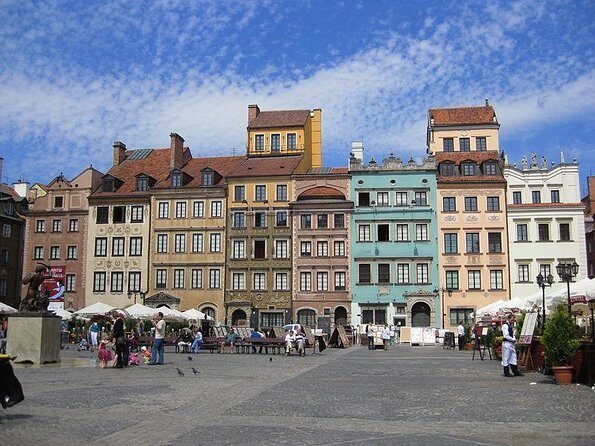
- WWII rubble-to-rebuilt-streets storytelling, including how Warsaw recreated the Old Town using old photos, building plans, and Canaletto paintings
- Plac Zamkowy as your launch point, starting by the Royal Castle and moving through fortifications
- Named local figures and symbols, like Jan Kiliński and Mały Powstaniec (the Little Insurgent)
- Churches with political meaning, including the hunger strike at St Martin’s Church and Lech Wałęsa’s role in Solidarity
- Offline audio and offline maps through VoiceMap, so you’re not dependent on signal
- A satisfying ending near the River Vistula, close to the Strong Man statue after Dzwon na Kanonii
Warsaw’s Old Town: a story you can walk through
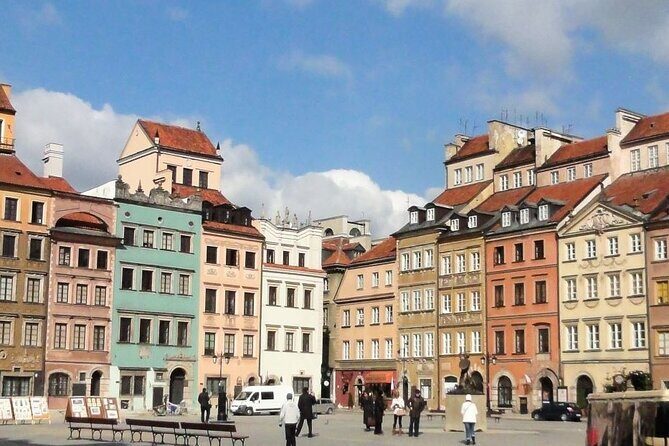
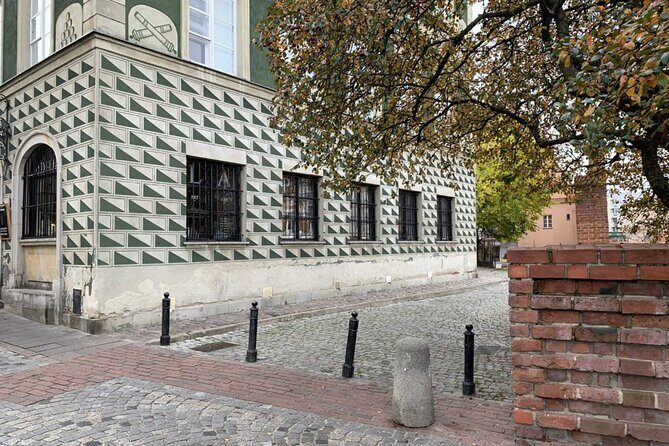
Warsaw’s Old Town is famous because it looks like a postcard—but it’s also a place with scars. During World War II, the city was reduced to rubble, and the Old Town was nearly lost forever. What makes this walk worthwhile is that you don’t just see pretty buildings. You hear how the area was pieced back together after the destruction, using old photographs, original building plans, and even paintings of Warsaw street scenes by the Italian artist Canaletto.
That framing matters. When you walk past the lanes and facades after hearing how reconstruction happened, you start noticing details with new eyes. You’ll also get the repeated-rise-and-fall theme: the Old Town has encountered dukes, kings, warriors, Nazis, and Communists—and it kept coming back. It turns the area from a “nice place to stroll” into something more human.
I also like the way the narration brings the past down to street level. Instead of staying abstract, it points you toward statues and specific markers that represent resistance and survival. Even if parts of the telling feel a bit theatrical (which some people seem to enjoy), the structure is clear enough to keep you oriented.
You can also read our reviews of more guided tours in Warsaw



Price and value: $7.99 for a lifetime audio walk
At $7.99 per person, this is priced like a small add-on—until you look at the payoff. You get lifetime access, and it’s in English. That means you can repeat it later, use it when you need a quick orientation to Old Town, or redo sections if you want to linger by a church or statue.
The time budget is also friendly: around 1.5–2 hours. For many visitors, that’s exactly the amount of walking they can manage without exhausting themselves. And because it’s private, you won’t be forced into a one-size-fits-all group pace—your rhythm is the point.
Still, keep expectations realistic. You’re paying for audio guidance and route support, not for museum entry. If you’re the type who loves going inside churches, galleries, or exhibits, budget extra money for those stops. The tour is best when it acts like your “moving background guide,” helping you understand what you’re seeing as you pass.
What you need (and the setup that prevents frustration)
This experience depends on a phone. The tour includes the VoiceMap app for Android and iOS and offline access to audio, maps, and geodata. What it does not include is the phone itself or headphones—so plan to bring both.
Here’s the practical checklist I’d follow:
- Install VoiceMap before you arrive
- Download the audio for offline use when you have a solid connection
- Pack headphones (even basic wired ones work)
- Make sure location services are enabled so the app can route you correctly
One technical note is worth taking seriously. A small portion of people have had trouble getting the tour to start, with the app redirecting them to phone settings even after location services seemed to be on. That’s not the fault of Warsaw—it’s a phone permission problem. My advice: do a quick test run near the start point before you walk away. If you hit a snag, contact VoiceMap support rather than trying to brute-force it once you’re already moving.
Starting at Sigismund’s Column in Plac Zamkowy
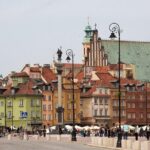
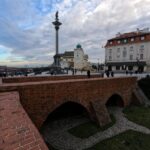
The tour begins at Sigismund’s Column in Plac Zamkowy. This is a smart start because it’s a visual anchor. Even if you don’t know Warsaw well, you can orient quickly: the square feels like the city’s formal front yard, and the Royal Castle provides a dramatic backdrop.
From there, the narration sets the stage for the Old Town’s character—turbulent and colorful—and links it to the destruction and rebuilding after World War II. It’s also where you start to understand the Old Town as a fortified area, not just a collection of buildings. You’ll hear about fortifications as you move, and you’ll pass structures and viewpoints that help you picture how protection and power worked.
If you like history that’s tied to specific places, this start works. You’re not trudging through empty streets with vague commentary. You’re listening while standing in the kind of public space where major events leave physical clues.
Tip: arrive a little earlier than you think you need. The tour length is about 1.5–2 hours, but your comfort comes from not rushing while your phone finds its footing.
Fortifications and the Royal Castle atmosphere
After the square launch, the route pushes you toward the Old Town’s defensive story. The audio doesn’t treat fortifications like a textbook topic. It connects them to why this area mattered, repeatedly.
This is a walking tour with a “moving lesson plan.” You’re listening as you walk past the fortifications area, which means you get two benefits at once:
- You keep momentum (no long stops)
- You learn while the space is still around you
That makes the sights feel more “attached” to meaning. Even if you’re not a big architecture person, you’ll likely come away with a better sense of why the Old Town was worth fighting over and worth rebuilding.
A few more Warsaw tours and experiences worth a look



Jan Kiliński: resistance you can point to
One of the tour’s most memorable stop types is the statue moments. It brings in people whose names you might never stumble upon on your own.
You’ll see a statue of Jan Kiliński, a shoemaker who opposed the Russian invasion in the late 1700s. That detail does something important. It shows resistance wasn’t only military or royal. Ordinary workers, tied to neighborhoods and trades, played roles too.
I like these statue segments because they’re quick and concrete. You can look, listen, and then keep walking without feeling like you missed a classroom explanation. The audio turns a stone figure into a shorthand for a bigger conflict.
Mały Powstaniec: remembering child soldiers
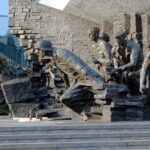
Next comes Mały Powstaniec, the Little Insurgent. The statue honors child soldiers who resisted Nazi occupation. It’s heavy subject matter, and the narration helps you slow down for the emotional weight even though you’re still walking.
This is one of those moments where a guided group might offer a buffer—extra context, extra pacing. In a self-guided format, it lands more directly. That can be good if you want a personal moment. It can also feel intense if you’re traveling with very young kids or you’re sensitive to war topics.
If that’s you, consider shortening your listening on that section and taking a breath before you continue. You won’t be “ruining” the experience by adjusting your pace.
Rynek Starego Miasta: the square while you hear it
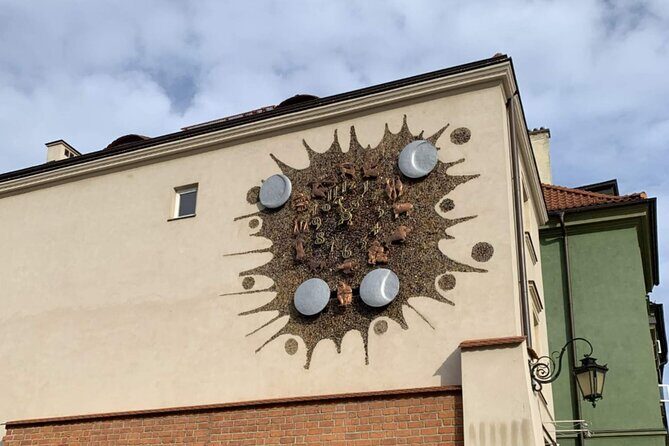
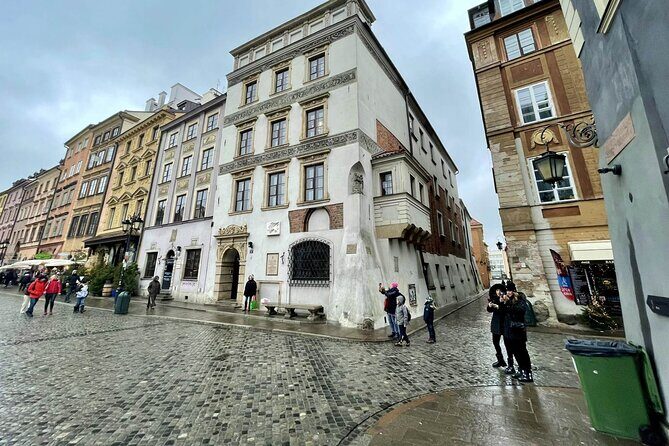
As the route passes Rynek Starego Miasta, the audio explains it while you’re walking through the space. The key value here is timing: you hear the story in sync with the environment.
Old Town squares tend to attract photos and café stops. This tour doesn’t ask you to ignore the charm. Instead, it helps you read the square as more than a backdrop—something shaped by events, power, and rebuilding.
It’s also a relief that the narration doesn’t demand you stand still. You keep moving, which often means you get more out of Warsaw’s pedestrian flow instead of getting stuck under the weight of your own sightseeing list.
The Jesuit church and St John’s Archcathedral
A self-guided audio tour can either connect you to what you see—or feel like background noise. Here, the church stops work well because the route passes prominent religious landmarks in a logical sequence.
You’ll pass by:
- the church of Jesuits
- St John’s Archcathedral
The audio describes them while you’re walking, so you get context without needing to decide on the spot whether to enter. If you do want to go in, the tour doesn’t lock you into anything—you just pay separately and explore at your own pace.
For me, this is a smart balance. Churches in Old Town are often visually stunning, but they can also be time-consuming to visit if you’re in “finish the tour” mode. This format lets you decide: listen while passing, then optionally take the detour if it feels right.
St Martin’s Church and Lech Wałęsa’s inspiration
One of the most practical pieces of context on the route comes at St Martin’s Church. The audio connects a hunger strike against Communist oppression to Lech Wałęsa and his role in forming the Polish Solidarity Trade Union movement.
This is why I like audio tours that cover politics through specific sites. The Old Town becomes a map of ideas, not just a map of streets. You’re reminded that the city’s story didn’t end with World War II—it continued through Communist rule, resistance, and labor organizing.
Even if you know the broad outline of Solidarity, linking it to a concrete church scene makes it stick. It also gives you a reason to care about what you’re passing, beyond architecture and aesthetics.
Castle Square again: looping back with meaning
The tour passes through Castle Square more than once, and that repetition is useful. It’s easy to walk through a square and treat it as a waypoint. Hearing different strands of history as you circle back helps you notice the square as a stage where power and change played out over and over.
By the time you’re looping through again, the tour’s biggest theme is clearer: the Old Town keeps getting knocked down and keeps being rebuilt—with new rulers, new threats, and new forms of resistance.
Dzwon na Kanonii and the long fight for survival
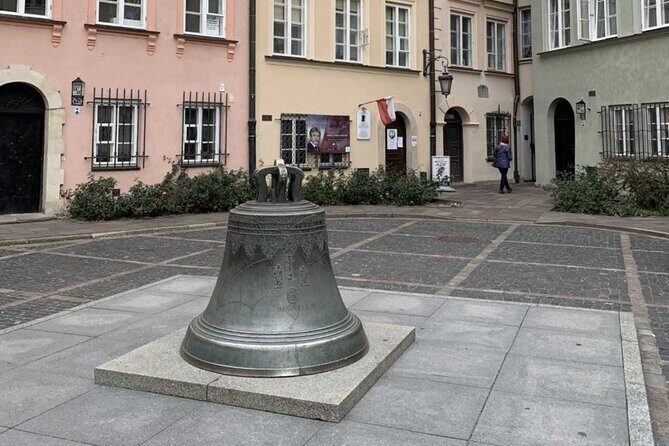
The tour ends near Dzwon na Kanonii after a 75-minute stroll focused on how the Old Town repeatedly flourished and fell under different powers: dukes, kings, warriors, Nazis, and Communists.
You’ll leave with a sense that Warsaw didn’t preserve the Old Town by luck. It preserved it by effort, by planning, and by people stubborn enough to restore what was broken.
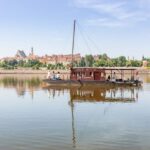
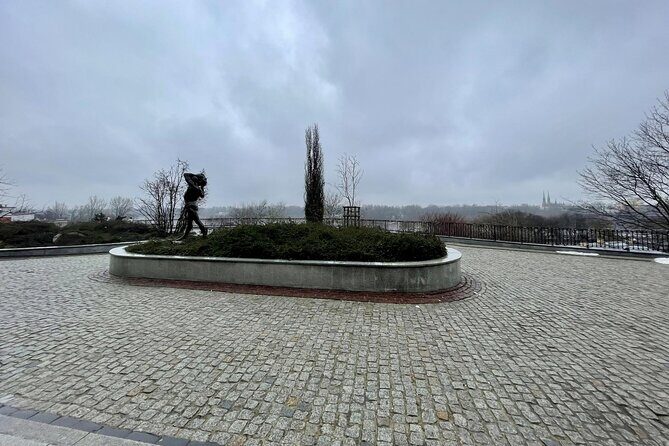
And you’re not stuck in a closed loop. The ending has a view toward the River Vistula near the Strong Man statue. That final scenery shift matters. It gives you a psychological reset after heavier topics and lets the walk feel complete rather than abrupt.
How to make this work smoothly on your phone
Self-guided tours are great—until they aren’t. Here’s how to keep your experience smooth:
- Start with the right permissions
If your phone is conservative about location settings, the tour might have a hard time routing you. Turn on location services and don’t keep the app background-restricted.
- Download offline audio early
You’re given offline access to audio, maps, and geodata, which is exactly what you want for Old Town foot traffic and potential signal dips.
- Use headphones for clarity, not volume
Old Town streets can be loud. Clear sound makes the narration easier to follow while you’re walking past churches, statues, and squares.
- Expect a story pace, not a stop-and-go pace
The narration is designed for walking while you pass sights. If you pause to take lots of photos, just recognize you may slightly change your timing.
- Skip the pressure to see everything
Since no museum entry is included, treat this tour like a guided understanding of the area. Then add museum time only if you’re genuinely curious.
Who this audio walk is best for
I think this tour fits best if you:
- want a fast, efficient introduction to Warsaw’s Old Town
- like learning while walking, with a pace you control
- enjoy stories tied to statues and specific landmarks (Jan Kiliński, Mały Powstaniec, St Martin’s Church)
- prefer English audio without hiring a live guide
It’s not the best match if you:
- want guaranteed museum entry or inside-the-building narration
- dislike phone-based navigation or aren’t willing to troubleshoot permissions
- need a strict itinerary with timed stops and group coordination
Should you book this Warsaw Old Town A Self-Guided Audio Tour?
If you’re trying to understand Warsaw’s Old Town beyond the surface look, I’d book it. The value is strong: $7.99, English audio, lifetime access, and offline support. The best parts are the way the tour connects place to events—World War II reconstruction, resistance figures like Jan Kiliński and Mały Powstaniec, and the political link at St Martin’s Church involving Lech Wałęsa and Solidarity.
The main reason not to book is simple: you’re relying on your phone. If you’d rather have a person explain things or you’re worried about app glitches, consider a live guided option instead.
FAQ
How long is Warsaw’s Old Town self-guided audio tour?
It takes about 1 hour 30 minutes to 2 hours.
Where does the tour start and where does it end?
It starts at Sigismund’s Column, Plac Zamkowy, and ends near the Strong Man statue on Brzozowa 1, with a view of the River Vistula.
Is the tour available in English?
Yes, it’s offered in English.
Do I need an internet connection to use it?
No. It includes offline access to audio, maps, and geodata.
Do I need to bring anything?
Yes—you’ll need a smartphone and headphones.
Does the tour include entrance to museums or attractions?
No. The tour does not include museum or attraction entry, even when those places are mentioned along the route.