REVIEW · WARSAW
Warsaw: WWII Private Tour by Retro Minibus with Hotel Pickup
Book on GetYourGuide →Operated by Warsaw Behind the Scenes · Bookable on GetYourGuide
Three hours can change how you see Warsaw. I love the way the guide builds a clear WWII story from 1939 onward, and I love standing by a real Ghetto Wall fragment instead of only reading about it. The one drawback to plan for: this is a vintage minibus setup, and some vehicles may not have air conditioning.
You’ll ride a retro Żuk minibus between meaningful stops, then walk short stretches at each one. I also like that the tour leans on what you can actually see, using archival photographs to compare past and present street scenes. If you get guides like Konrad, Lucas, or Adam, you’ll likely get a mix of calm context and a human feel for what you’re looking at.
In This Review
- Key Highlights You Should Not Miss
- Getting the Big Picture Before You Hit the Street
- Retro Żuk Minibus: Comfortable Transfers, Real-World Constraints
- Ghetto Wall Fragment and the Power of Physical Evidence
- Waliców Street Ruins and the Wooden Bridge Over Chłodna
- Muranów Rubble, Ghetto Heroes, and the POLIN Area
- Soviet Repression: Deportations to Siberia and Katyń
- Warsaw Uprising of 1944 and January 1945 Change
- Price and Practical Value for a 3-Hour Private Session
- Quick Practical Tips That Make the Tour Easier
- Should You Book This WWII Private Tour with Hotel Pickup?
- FAQ
- How long is the Warsaw WWII private tour?
- Is hotel pickup included, and where does it work?
- What’s included in the price?
- Are food and drinks included?
- Is the guide available in English?
- Is the tour suitable for kids and teens?
- What should I wear or bring?
- Do the minibuses have air conditioning or seat belts?
- What is the cancellation policy?
Key Highlights You Should Not Miss
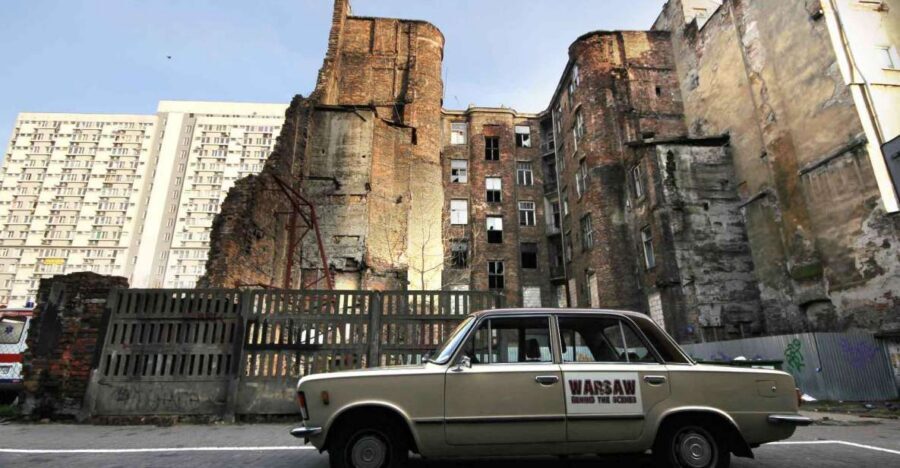
- Retro Żuk minibus transport that keeps the pace comfortable for a 3-hour tour
- Hotel pickup within 3 km of the city center to reduce time lost before you even start
- Warsaw Ghetto evidence like preserved wall fragments and bullet-marked buildings
- Waliców Street and Chłodna Street sites that explain daily life inside and around the ghetto
- Muranów and the Ghetto Heroes memorial area, built from wartime rubble
- Soviet repression stops tied to Siberian deportations and the Katyń massacres
Getting the Big Picture Before You Hit the Street
The tour starts with context, not just dates. You get the international situation leading up to 1939, then the German invasion of Poland—and the second crushing reality coming from the Soviet side in eastern territories. That matters because Warsaw wasn’t just experiencing one occupation. You’re seeing how two brutal systems shaped daily life and resistance in different ways.
As you move through the story, you’ll hear how these events pushed people into impossible choices: survival, hiding, workarounds, and organized resistance. The guide keeps you anchored to what that meant on the ground in Warsaw, so the later stops don’t feel like random monuments. They feel like chapters.
And for me, this is where the tour earns its value. A short 3-hour format can’t cover everything. But it can give you the “why” behind the “where.” Once you understand the setup, each ghetto-era site lands with more clarity.
You can also read our reviews of more private tours in Warsaw
Retro Żuk Minibus: Comfortable Transfers, Real-World Constraints
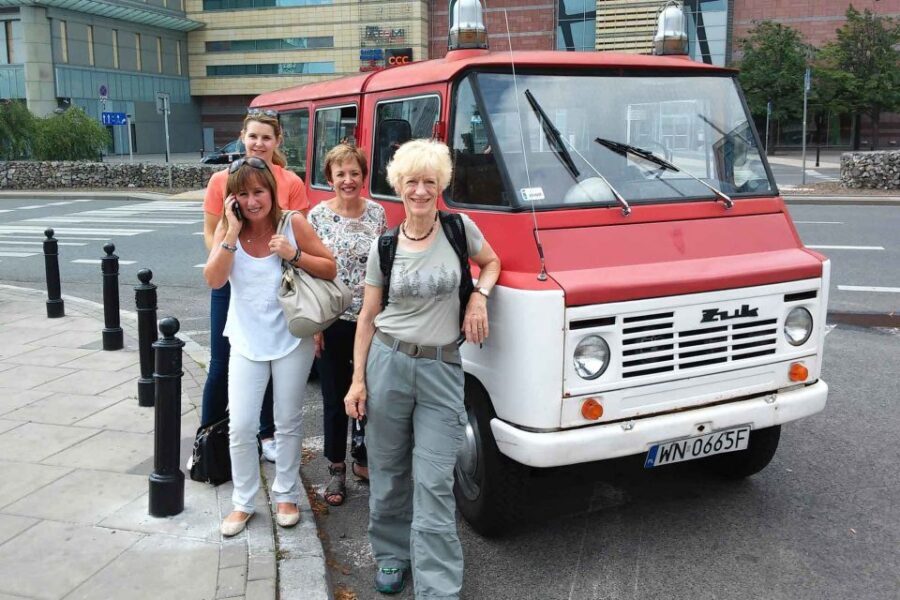
One of the smartest parts of the experience is the transport. This runs by a retro communist Żuk minibus, with walking segments at each stop. In practice, it helps you cover several key areas without spending your day in transit.
That said, it’s not a modern vehicle experience. These classic minibuses are not equipped with air conditioning, and some may not have seat belts (historic-vehicle rules allow this). The upside is that the minibuses do have heating, so winter touring is more manageable.
I’d plan for two things: comfortable footwear and layers. You’ll be outside enough times to feel the weather, but not so long that you’ll be exhausted by walking alone. Also note the luggage rule—no large bags—so pack lightly.
Finally, it’s a private group, and each minibus can handle up to 8 passengers. That small size helps the guide keep the story moving without turning into a lecture for a crowd.
Ghetto Wall Fragment and the Power of Physical Evidence
The tour’s Jewish Ghetto section centers on preserved material evidence. You’ll visit a preserved fragment of the former Ghetto Wall, which is one of those objects that changes the way you think about history. It’s not just a symbol. It’s a construction, a boundary, and a system made visible.
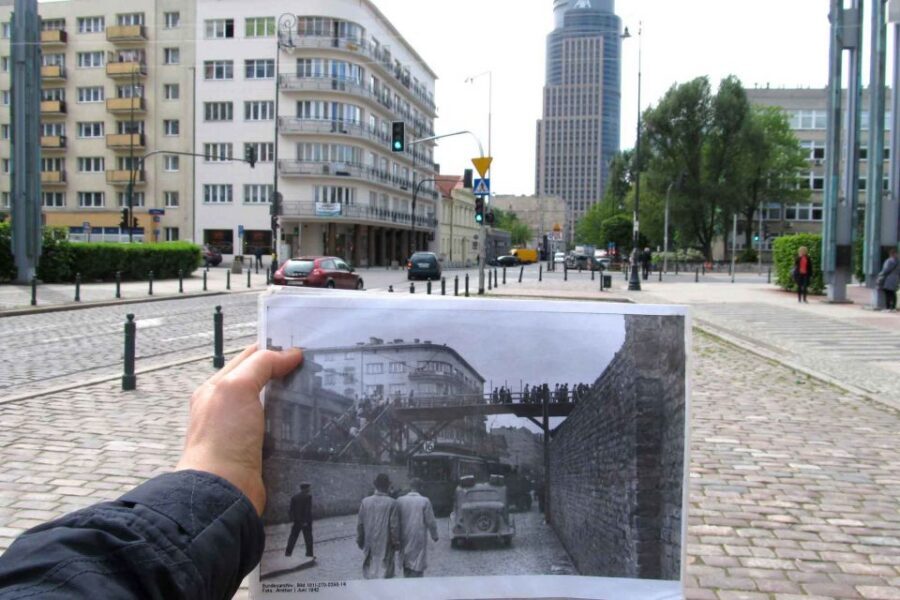
The guide also uses archival photographs throughout the route. You’re encouraged to compare wartime images with the present streets. That method works because it forces your brain to connect two time periods in the same place. You start seeing the city as it was, not as a generic “history setting.”
Another detail that sticks is the tour’s attention to preserved ruins and memorials, including buildings marked by bullets. Those scars are hard to ignore. They turn the story from something abstract into something concrete: people were living, working, hiding, and fighting inside a space where violence was part of the design.
This is also where the emotional weight becomes real. The tour deals with persecution and dehumanization on a large scale. If you know you prefer lighter sightseeing, this might be harder than a typical afternoon.
Waliców Street Ruins and the Wooden Bridge Over Chłodna
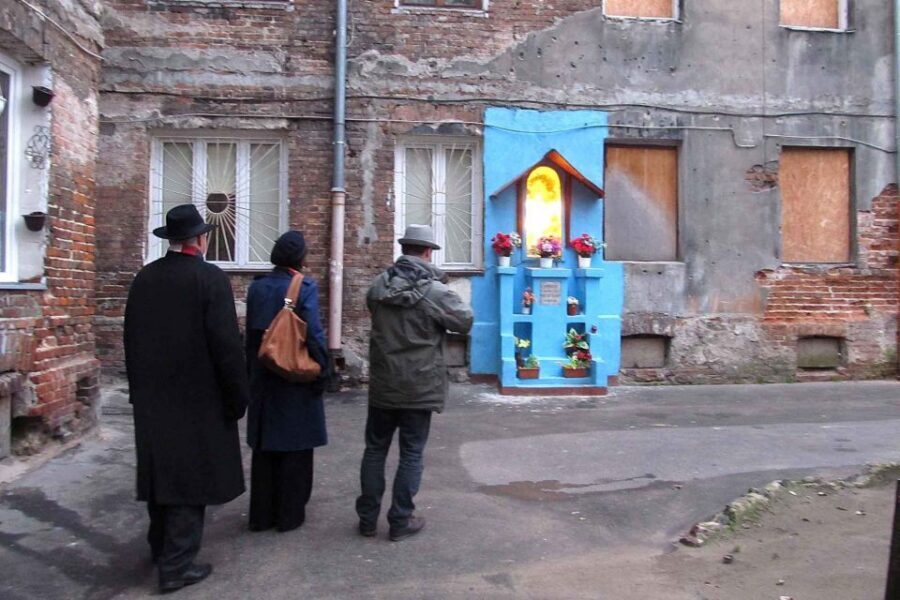
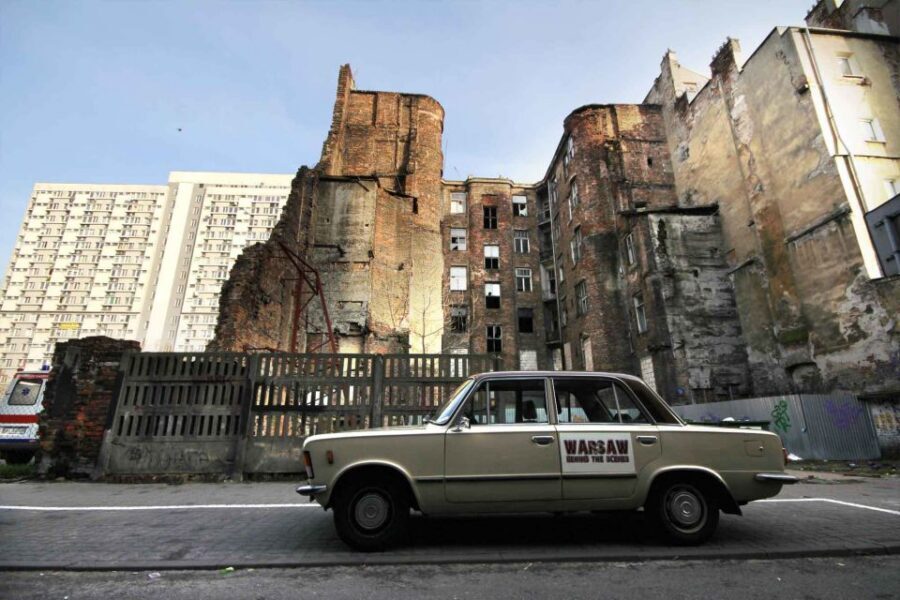
Next comes Waliców Street, one of the most striking “witness” stops. You’ll see one of the last ruined tenement houses left intentionally unrestored. That phrase matters. The site wasn’t cleaned up into something pretty. It’s kept as a deliberate reminder that the past wasn’t erased by time—it was destroyed on purpose.
From there, the route shifts to the ghetto’s internal geography. You’ll learn about the wooden ghetto bridge over Chłodna Street, built high above street traffic to connect sealed sections of the ghetto. Hearing why it existed makes the structure feel logical in the most terrible way: movement had to be controlled, and even transit became part of confinement.
This section is smart storytelling, because it explains how infrastructure reinforced isolation. You’re not only looking at remnants. You’re understanding the design logic behind the cruelty.
Practical note: this is still a walking-and-looking portion. Wear shoes that can handle uneven sidewalks and don’t plan to bring anything bulky. It’s a short stop style, but you’ll want to stay comfortable.
Muranów Rubble, Ghetto Heroes, and the POLIN Area
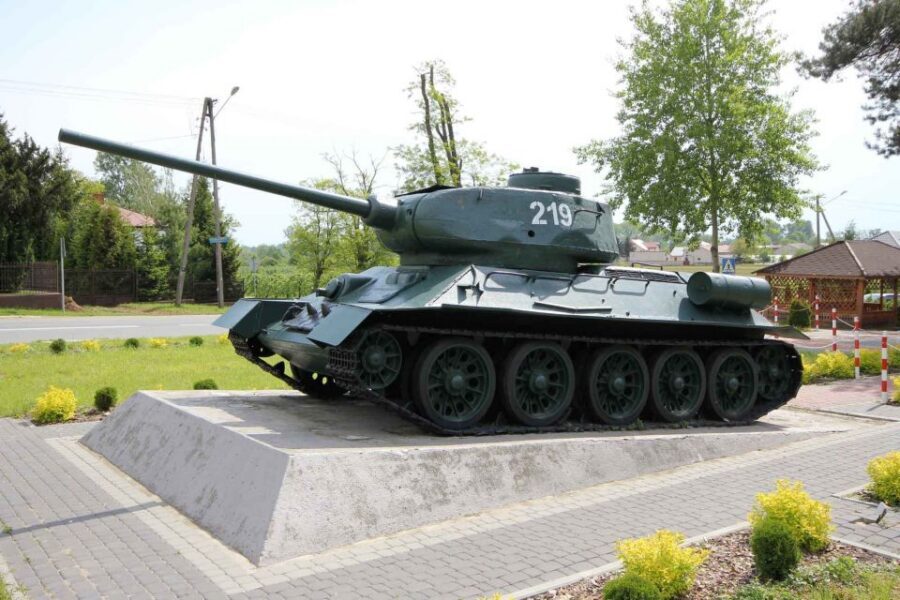
The tour moves into the Muranów district, known for being constructed entirely on wartime rubble. That fact alone gives you a different lens for the neighborhood. Buildings here don’t just sit on ground. They sit on aftermath.
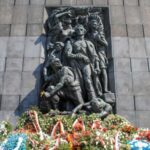
You’ll visit the area around the Monument to the Ghetto Heroes, and you’ll also stop near the POLIN Museum of the History of Polish Jews. The tour places this area in the timeline of the 1943 Ghetto Uprising, near where the first armed clashes took place. Even if you don’t go inside a museum, the location helps you picture the moment when resistance turned from hidden struggle into open action.
One of the most valuable aspects here is how remembrance is treated today. This part of the route functions as a place of reflection and dialogue, not just a backdrop for photos. The guide frames it in a way that encourages respectful attention. You’ll likely feel the difference between looking at a memorial and actually understanding what it protects.
If you like history that connects people and place, this segment delivers. It’s also a good time to slow down mentally. After the ghetto boundary and confinement details, resistance needs space to land.


Soviet Repression: Deportations to Siberia and Katyń
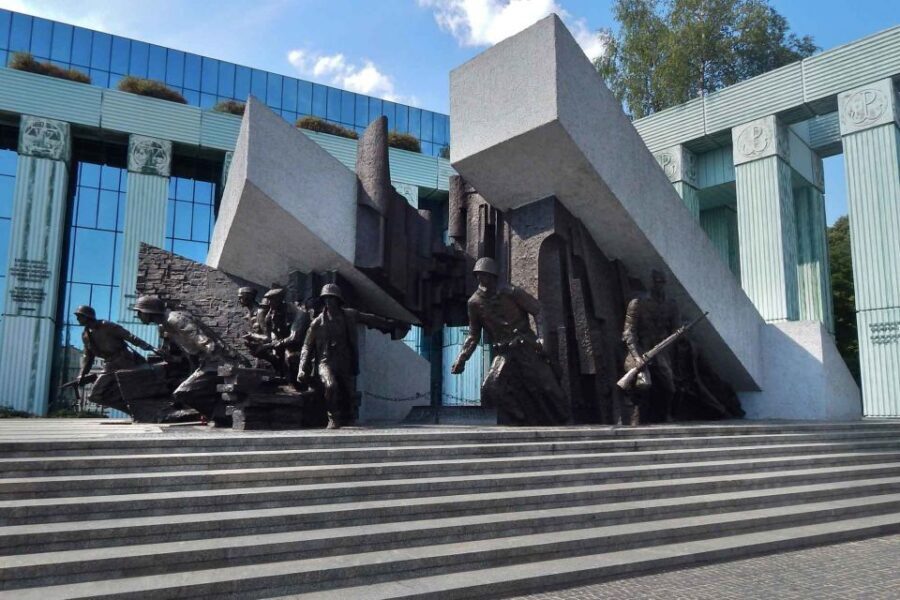
A major reason this tour stands out for many people is that it doesn’t stop at Nazi occupation. It also covers Soviet crimes against Polish citizens, including mass deportations to Siberia and the Katyń massacres.
You’ll see the commemoration at the Monument to the Fallen and Murdered in the East. The guide uses this to explain how fear and repression operated differently than the ghetto system, but with the same end result: terror, loss, and forced outcomes for ordinary people.
This is an important balance point. In much WWII sightseeing, the story can feel lopsided or oversimplified. Here, Warsaw is treated as a city caught between two authoritarian forces. That’s not just politically complicated. It also helps you understand why Poland’s experience after the war took a sharp turn in a new direction.
If the ghetto and uprising themes hit you hard, this segment may feel heavy in a different way. It’s not designed to shock for effect. It’s designed to explain.
Warsaw Uprising of 1944 and January 1945 Change
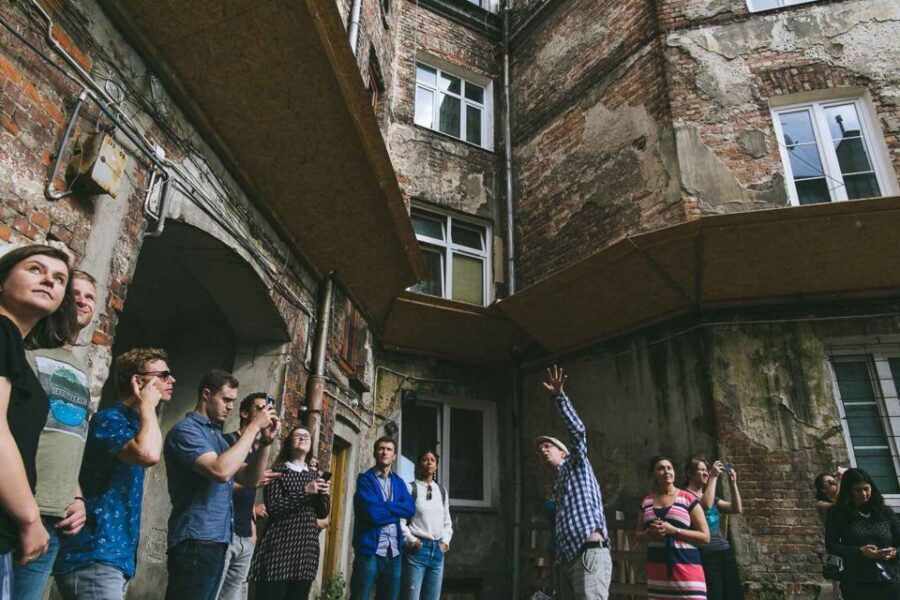
The final chapter focuses on the Warsaw Uprising of 1944—the city’s last attempt to regain independence before the arrival of the Red Army. The guide frames it as a desperate calculation as much as a heroic one. You’ll hear how the uprising played out and why its defeat had consequences beyond the battlefield.
After the defeat, the Nazi forces deliberately destroyed most of Warsaw. Then you get the shift that changed everything politically: the Soviet army entered the ruins in January 1945. That timing isn’t a footnote. It’s the hinge between occupation and a new regime, with a different kind of control.
This section works well because the story has already taught you what occupation did to daily life earlier in the tour. Now you’re watching the consequences stretch into the city’s physical survival. You might notice how the route moves from ghetto-scale confinement and resistance toward a city-wide attempt at liberation and its devastation.
It’s a fitting end for a short tour. You finish with the sense that Warsaw didn’t just suffer. It fought, endured, and then faced a new political reality almost immediately.
Price and Practical Value for a 3-Hour Private Session
The price is $165 per person for about 3 hours, with hotel pickup and drop-off within a 3 km radius of the city center. On paper, that can sound steep if you only compare it to group walking tours. In practice, you’re paying for three things that are hard to replicate cheaply: a private-style experience, local English-language guiding, and transport by retro minibus.
The duration is short, but the route is dense. In 3 hours you cover multiple zones tied to major themes: invasion and occupation, the ghetto system, resistance uprisings, and Soviet repression. For many people, that means the tour does the hardest job—connecting sites into a story.
Two value cautions. First, food isn’t included, so you’ll want to plan for water and snacks elsewhere if you need them. Second, because pickup time can be counted inside the total tour time, meeting closer to the center can sometimes make your experience feel less rushed if your hotel is near the edge of the 3 km radius.
If you want WWII context you can actually use on a future day in Warsaw, this is the right format.
Quick Practical Tips That Make the Tour Easier
Bring weather-appropriate clothing. That sounds basic, but it matters because you’ll step out frequently for short walks and photo comparisons. Comfortable footwear is a must. Some sidewalks can be uneven, and you don’t want sore feet halfway through the ghetto and memorial areas.
Skip large luggage. The tour doesn’t allow luggage or large bags, which is typical for vehicles plus short stop walking. Also keep in mind the age suitability: it’s not suitable for children under 15.
For vehicle comfort, remember the heating system in winter and the lack of air conditioning. If you’re touring in hot weather, dress accordingly and plan for the vintage-vehicle style.
Finally, if you’re picky about photo timing, give yourself a calm mindset. Archival photographs are a core method here, and the guide will likely time stops to let you compare past and present without feeling rushed.
Should You Book This WWII Private Tour with Hotel Pickup?
Book it if you want a guided WWII narrative that connects the Jewish Ghetto story, both resistance uprisings, and Soviet repression into one understandable timeline. You’ll get lots of direct “see it, then understand it” moments: the ghetto wall fragment, Waliców Street’s unrestored tenement, the wooden bridge over Chłodna Street, Muranów’s rubble-built terrain, and memorials for Katyń and deportations.
You should think twice if you’re looking for light sightseeing or you’re not ready for heavy subject matter. This tour includes persecution, deportations, mass violence, and deliberate destruction of the city.
For many travelers with limited time in Warsaw, it’s a smart pick. The 3-hour format is just long enough to make the history stick, without turning the day into an all-day grind.
FAQ
How long is the Warsaw WWII private tour?
It runs for 3 hours. Hotel pickup and drop-off within the time are included, and transfer time can be part of the total duration.
Is hotel pickup included, and where does it work?
Yes. Pickup and drop-off within a 3 km radius of the city center are included. If your hotel is farther out within that radius, transfer time may reduce your on-street time, so meeting in the center can sometimes be better.
What’s included in the price?
The tour includes pickup and drop-off, a professional English-speaking local guide, and transportation by a retro communist minibus.
Are food and drinks included?
No. Food and drinks are not included.
Is the guide available in English?
Yes. The tour has a live English-language guide.
Is the tour suitable for kids and teens?
It is not suitable for children under 15. It can be booked for adults and children over 150 cm. For a child under 150 cm, seat boosters are mandatory under Polish law, so you need to contact the operator in advance to check availability.
What should I wear or bring?
Wear weather-appropriate clothing and comfortable shoes for the walking segments between stops. Also remember there is no luggage or large bags allowed.
Do the minibuses have air conditioning or seat belts?
The minibuses are not equipped with air conditioning, though they do have heating in winter. Some vehicles may not have seat belts; this is permitted for historic vehicles.
What is the cancellation policy?
You can cancel up to 24 hours in advance for a full refund. You can also use the reserve now & pay later option.