History here moves slowly.
This Auschwitz-Birkenau tour from Kraków gives you the rare gift of time: you can spend as long as you want inside the exhibitions, guided by an English speaker. I like that the visit is structured, with clear explanations for what you are seeing, and that you get guidebooks with maps to help you make sense of both camps without feeling lost.
A second thing I really appreciate is the way the day is split: Auschwitz I first (with a route through the permanent exhibition in former barracks and access to original artifacts), then Birkenau later, where you focus on the remnants of barracks, crematoriums, and the unloading ramp. It’s not just a photo stop loop. You’re being walked through the meaning of places as well as the layout.
One drawback to keep in mind: the tour experience can be time-sensitive on the day itself—especially around pick-up. A few past bookings flagged late pick-ups or confusion after last-minute changes, so I’d plan your morning with a buffer and confirm details clearly before you head out.
In This Review
- Key points before you go
- Auschwitz-Birkenau From Kraków: What the Day Actually Feels Like
- Auschwitz I With an English Guide: How the Visit Works
- Birkenau (Auschwitz II): Remnants, Ramps, and Time to Absorb
- Transport, Group Size, and the Midday Break
- Price and Value: Is $138.44 Worth It?
- Who This Tour Fits Best (and Who Should Skip It)
- Practical Tips for Getting the Most From Auschwitz I and Birkenau
- Should You Book This Auschwitz-Birkenau Tour?
- FAQ
- Is the Auschwitz-Birkenau tour guided in English?
- How long is the tour from Kraków?
- Is pickup included?
- Do I need to buy admission tickets separately?
- How much time do you spend at Auschwitz I and Birkenau?
- What transportation is used from Kraków?
- What is the maximum group size?
- Is this tour recommended for people with walking problems?
- Can I choose how long I stay inside the exhibitions?
- What if the tour is canceled because of minimum traveler numbers?
- Is free cancellation available?
Key points before you go
- Self-paced time inside the exhibits so you can slow down where it matters
- A guide in English who explains what you’re seeing at Auschwitz I and Birkenau
- Guidebooks with maps to help you follow the two sites without guesswork
- Air-conditioned van transfer from Kraków with a break on the way
- Max group size of 50, which is big enough for logistics but usually still manageable
Auschwitz-Birkenau From Kraków: What the Day Actually Feels Like
This is one of those days where your brain keeps asking, What am I looking at? And the best tours are the ones that help you answer that question without rushing you past it.
You start in Kraków and travel by a comfortable, air-conditioned van for about 1.5 hours, then there’s a short break before the camp visits. That matters more than it sounds. After a lot of travel time (and often nerves), you don’t want your first minutes on site to be pure fatigue. The setup gives you a moment to get your head straight before you enter.
The day is long—about 9 hours in total—but it’s paced around the camps rather than around checkpoints. You’ll spend roughly 5 hours at the camps, and admission is included, so you’re not juggling ticket lines and timing anxiety at the last minute. For many people, that’s the difference between a meaningful visit and a stressful one.
Also, this is a high-demand site. On busy days, museum organization can feel stretched. If you’re going during a holiday period, I’d expect crowds and give yourself extra patience for the flow of people once you arrive.
You can also read our reviews of more guided tours in Krakow


Auschwitz I With an English Guide: How the Visit Works
Auschwitz I is approached in a direct way: you go through the permanent exhibition placed in former prisoner barracks. That layout is the whole point. Instead of seeing buildings from the outside only, you move through areas that were used as part of the camp system, and you’re given context to connect exhibits to real human stories and everyday objects.
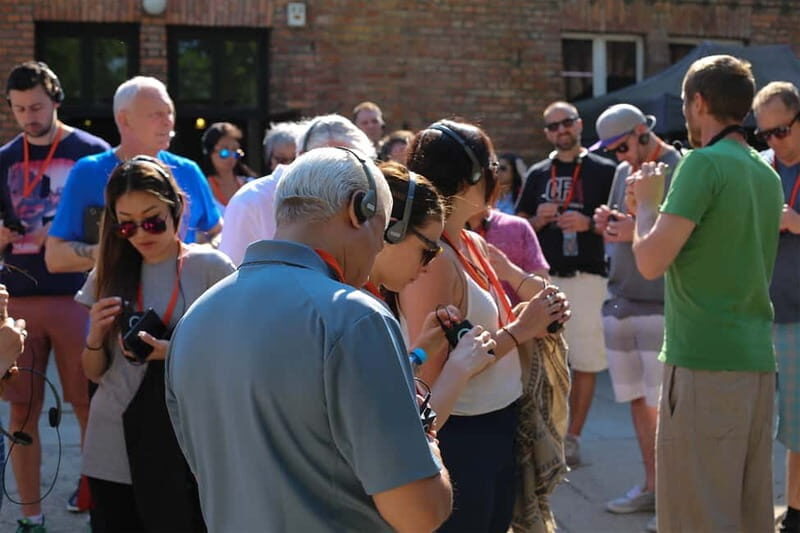
The tour includes time where the guide explains the exhibits. That’s crucial because Auschwitz is easy to misunderstand if you only have generic facts. Here, you’re shown original artifacts that belonged to prisoners, and the commentary helps you read what you’re seeing instead of treating it like a museum display.
What makes this format especially useful for you: the tour is not locked into a rigid “move every 10 minutes” rhythm. The experience is designed so you can spend as much time as you want in the exhibitions. That means you can pause to process a room, go back to reread a display, or just stand for a moment without feeling like you’re holding the group back.
One practical note: Auschwitz I involves walking and standing in an on-site setting. The experience asks for moderate physical fitness, and it is not recommended for travelers with walking problems. If mobility is a concern for you, this is where you should slow down your decision, because this isn’t the kind of site where you can easily avoid rough surfaces or long distances.
Birkenau (Auschwitz II): Remnants, Ramps, and Time to Absorb
Then you shift to Birkenau, the larger and more open part of the Auschwitz complex. You’ll visit for about 2 hours as well, but it doesn’t feel like a “second stop” so much as a change in scale.
Birkenau is where you see the remnants of numerous barracks, along with crematoriums and the unloading ramp. The ground looks different, the spaces are wider, and there’s a greater “grid” effect when you try to imagine how the camp functioned. This is also where a self-paced approach helps most. If the place is big and emotionally heavy, you need time to walk slowly enough to take in what the structures imply.
Your English guide plays a key role here, but you’re still in control of your pace. You’re getting explanations, then you can manage your own time while you look around. If you’re the type who wants to photograph less and read more, this format gives you permission to do that.
One caution: because the site is spread out, Birkenau can be physically demanding even when the visit is only a couple hours. If you’re deciding between tour options, don’t assume that short duration automatically means low effort.
Transport, Group Size, and the Midday Break
The logistics are pretty straightforward: pickup is offered, then you’re in the van together, and the driver takes you between key points. The tour limits the group size to up to 50 travelers, which helps keep things organized, even if it still means you’ll be in crowds.
A handful of guides/drivers have been praised for being friendly and helpful, and in at least one experience there’s a restaurant stop at the halfway point. That’s a real value add. It gives you a place to reset, use the restroom, and eat without having to figure it out while your day is already running.
That said, this is also where you should manage expectations. Restaurant breaks can slow things down. If you prefer faster turnaround, bring small snacks for the ride and keep your meal timing flexible so you don’t feel stuck. (And yes, do check your day-of plan—some past bookings experienced last-minute communication changes around pickup times.)
If you want the smoothest day, do two things:
- confirm your pick-up details in advance, not just at booking
- keep your phone ready if the operator contacts you close to departure
A “45 minutes late” situation was reported in one case, and it’s the kind of disruption that ruins morning plans if you don’t leave margin. You don’t have to panic, but you do want a buffer.
Price and Value: Is $138.44 Worth It?
At $138.44 per person, this isn’t a budget outing. But it also isn’t a bare-bones drop-off. For that price, you get:
- English guide for the Auschwitz I and Birkenau visits
- admission ticket included
- transport from Kraków by air-conditioned van
- a format that emphasizes time inside the exhibitions, not just quick viewing
- guidebooks with maps to help you navigate and understand the two sites
For me, the real “value” piece is the time component. A tour that rushes you forces you to settle for headlines. This one is built so you can slow down, reread, and process at your own speed.
Is it perfect value? The rating overall is modest, and there are complaints tied to service problems like confusion about cancellation or pickup changes. That doesn’t automatically mean your day will go sideways—but it does mean you should treat this as a high-meaning, high-stakes outing. If being on time is essential for your personal schedule, double-check everything early and keep a little cushion.



Who This Tour Fits Best (and Who Should Skip It)
This tour fits you best if:
- you want an English-speaking guide and structured explanations
- you appreciate having control over how long you stay in exhibits
- you like having a map guidebook, so navigation isn’t one more stress
- you’re able to walk for the time on site and handle uneven areas
It may not fit you as well if:
- you have walking problems or mobility limitations, since the site requires moderate physical fitness
- you are extremely sensitive to timing changes, because pickup timing and day-of communication have been inconsistent for some past bookings
- you need a tightly timed schedule with zero surprises
Also, consider your expectations around crowds. If you go during peak or holiday periods, museum flow can feel chaotic—ticketing and on-site processing are sometimes a bottleneck. The tour structure helps, but it doesn’t erase crowding at a world-famous memorial.
If you want to reduce hassle, plan smart:
- wear comfortable shoes
- keep layers in mind because weather can change and you’ll be outdoors in parts
- keep a snack mindset if you dislike waiting around during breaks
Practical Tips for Getting the Most From Auschwitz I and Birkenau
You’ll learn more when you can focus. So set yourself up for that.
Use the guidebook maps before you start walking. The layout can feel overwhelming on first glance, especially once you get to Birkenau. Having maps makes your mind do less guessing and more understanding.
Choose your own pace where you feel pulled in. The tour design allows you to spend as long as you want inside the exhibitions. If a room is heavy and you need time, take it. If you want to move on quickly, you can do that too.
Plan your day around the slow parts. This is not the kind of outing where you can tack on extra sightseeing right after unless you’re ready to be emotionally and physically drained.
And yes, pick your guide carefully when you can. One name that came up in positive feedback is Pavel (sometimes called Pablo). When guides bring clear, patient explanations—and when they support you during the day—you get a better experience out of both the exhibits and the open-air spaces.
Should You Book This Auschwitz-Birkenau Tour?
My honest take: I think you should book it if you want an English-guided Auschwitz I + Birkenau visit with admission included, practical transport from Kraków, and—most important—time to think inside the exhibitions instead of being rushed.
I would hesitate if:
- your schedule cannot tolerate pickup delays or last-minute changes
- you have significant mobility issues
- you’re hoping for a fully hands-off experience where you never wait or never encounter crowds
If you do book, do it with eyes open: confirm your pick-up details, carry a little buffer time, and wear shoes you can trust for walking. Then go in with one goal—use the guide’s explanations and the map guidebook to make the places click.
That’s when the price starts to feel fair, and the day starts to feel like more than ticking off a stop.
FAQ
Is the Auschwitz-Birkenau tour guided in English?
Yes. The tour is offered with an English guide.
How long is the tour from Kraków?
The duration is approximately 9 hours.
Is pickup included?
Pickup is offered.
Do I need to buy admission tickets separately?
Admission ticket(s) are included.
How much time do you spend at Auschwitz I and Birkenau?
You visit Auschwitz I first, then Birkenau. The time at Birkenau is about 2 hours, and the overall camp time is about 5 hours.
What transportation is used from Kraków?
You travel in a comfortable, air-conditioned van for about 1.5 hours each way as part of the schedule.
What is the maximum group size?
The tour has a maximum of 50 travelers.
Is this tour recommended for people with walking problems?
It is not recommended for travelers with walking problems. It requires a moderate level of physical fitness.
Can I choose how long I stay inside the exhibitions?
Yes. The guide provides information about the two camps and then you can manage your time in the exhibitions as you want.
What if the tour is canceled because of minimum traveler numbers?
If it’s canceled because the minimum isn’t met, you’ll be offered a different date/experience or a full refund.
Is free cancellation available?
Yes. You can cancel up to 24 hours in advance for a full refund.