REVIEW · KRAKOW
Tour via Kazimierz Quarter by Golf Cart with Schindler’s Museum in Krakow
Book on Viator →Operated by CRACOW LOCAL TOURS · Bookable on Viator
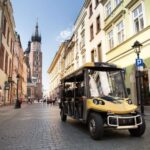
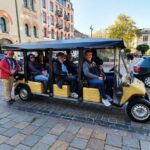
Auschwitz stories are heavy. This one is local, human, and well paced. I love the golf cart ride with an audio guide, because it lets you cover ground in Kazimierz without burning your legs. I also like that the visit to Schindler’s Factory connects WWII history to day-to-day life, not just dates. One thing to consider: part of the experience is real walking inside the museum, so wear comfy shoes and expect a bit of movement.
You’ll spend about 3 hours total, and the tour ends after the museum visit. That’s handy if you’re staying nearby, but you’ll want a plan for getting back to your hotel on your own.
In This Review
- Key Points You’ll Care About
- Krakow by Golf Cart: How Kazimierz Gets Easier
- Stop 1: Kazimierz’s Jewish District, Szeroka Street, and Plac Nowy
- Szeroka Street: Four Synagogues Concentrated on One Street
- Plac Nowy: From Plac Żydowski to Cafés, Casseroles, and Markets
- The Ghetto’s Footprints: Wall Fragment and Umschlagplatz
- Stop 2: Fabryka Emalia Oskara Schindlera and WWII Through Everyday Spaces
- Multimedia Scenes: From Atelier to Tram to the Płaszów Camp
- Price and Logistics: Is It Good Value for $81.88?
- Timing Tips for a 3-Hour History Tour
- Who This Tour Suits Best (and Who Might Want to Skip)
- Booking Thoughts: Should You Book This Krakow Combo?
- FAQ
- FAQ
- How long is the tour?
- Where does the tour start?
- What language is the tour in?
- Is museum admission included?
- Do I need an ID for the museum?
- Is there walking during the tour?
- Does the tour include transportation back to the hotel?
- What if I need to cancel?
Key Points You’ll Care About
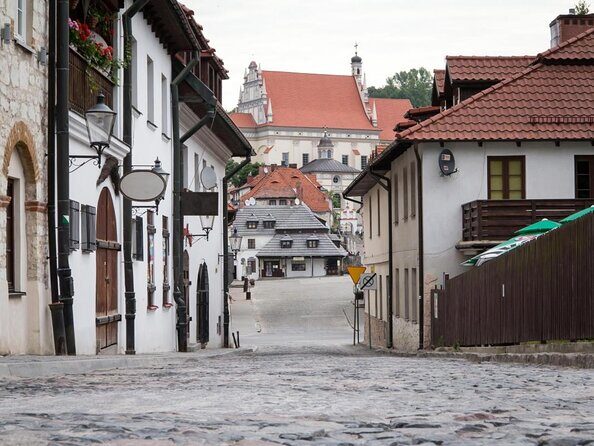
- Golf cart transportation through Kazimierz keeps the pace friendly while you still get city context fast
- Szeroka Street’s four-synagogue cluster explains why this street mattered so much
- Plac Nowy’s everyday-food history traces how a Jewish square became a modern café-and-market meeting spot
- A preserved ghetto-wall fragment plus a plaque anchors the darker WWII story on physical ground
- Schindler’s Factory multimedia scenes move from real-world spaces to Płaszów camp imagery through staged exhibits
Krakow by Golf Cart: How Kazimierz Gets Easier
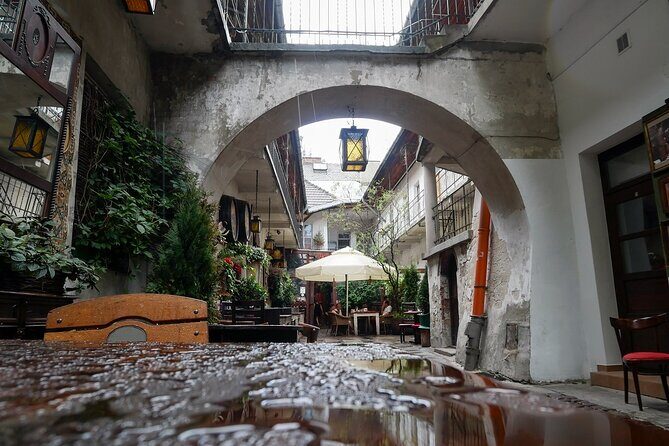
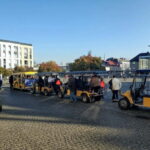
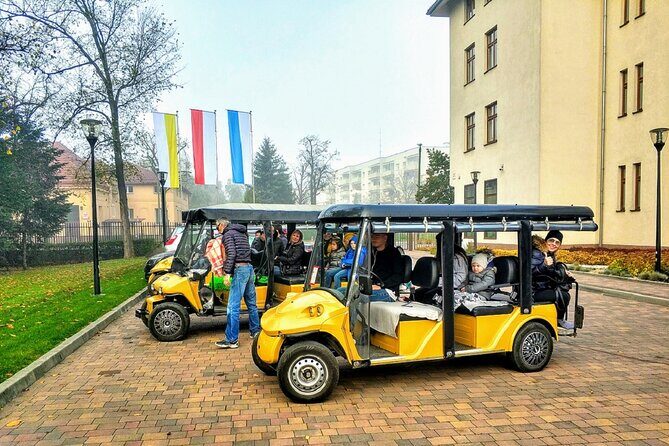
Kazimierz is one of those neighborhoods where the streets feel like they have memory. The trick is not just seeing buildings, but understanding how Jewish Krakow evolved—before WWII, during the German occupation, and after. This tour handles that in a smart way: you get golf cart transport for the Kazimierz portion, plus an audio guide while you ride.
That format matters more than it sounds. You’re covering multiple stops across districts and squares, and you’re learning history as you move. If you tried to do it all on foot, you’d either go too slow or you’d rush. Here, the cart keeps the rhythm up, and the audio guide helps you follow along even when you’re turning corners and getting oriented.
The group size is also kept reasonable (maximum 24). You won’t feel lost in a crowd, and the vehicle logistics help keep the schedule stable.
You can also read our reviews of more museum experiences in Krakow
Stop 1: Kazimierz’s Jewish District, Szeroka Street, and Plac Nowy
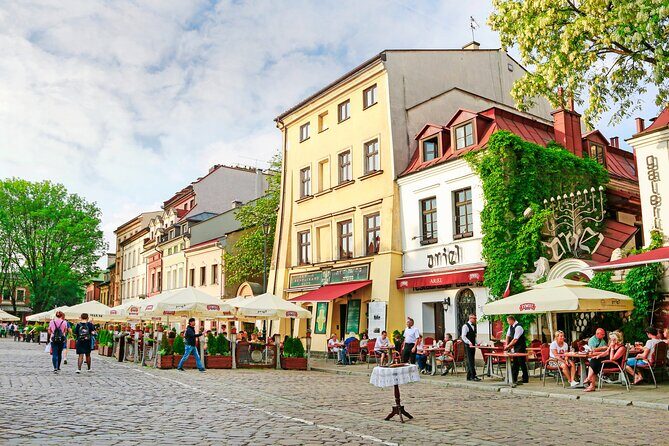
The first stop is the former Jewish district of Kazimierz. Once independent and located south of Wawel, this area was a center of Jewish life for centuries. Today it’s one of the easiest places in Krakow to connect old community life to what’s still visible.
Szeroka Street: Four Synagogues Concentrated on One Street
Szeroka Street is the tour’s first big anchor. The standout detail is that four synagogues used to stand on this street—an arrangement that was unusual anywhere else in Europe. That’s not just an interesting fact; it explains why Kazimierz doesn’t feel like a generic historic district. The religious and community functions were concentrated, which shaped everyday routines.
As you walk through the area, you’ll also hear about one of the oldest synagogues in Poland that’s preserved in especially good condition. In other words, you’re not only seeing where things once happened—you’re seeing where they still can be recognized.
Plac Nowy: From Plac Żydowski to Cafés, Casseroles, and Markets
Next comes Plac Nowy, which today is a popular meeting place and festival venue. In the past it was known as Plac Żydowski, or Jewish Square. One detail I really like here is the origin story of the space itself: in 1900, a circular pavilion was built in the middle, with small grocery and butcher shops, plus a fast-food bar serving casseroles that later became famous in Krakow.
That kind of food-history link is a clever way to make the neighborhood feel lived-in. You’re not only absorbing architecture; you’re learning how people ate, bought essentials, and gathered. It helps you picture Kazimierz as a working community, not a museum.
You’ll also get a sense of how the square changes with the day:
- Weekdays: vegetable and antique stalls show up
- Sunday mornings: a clothing market takes over the area
- Warm summer nights: cafés and pubs spill into the square, turning it into one big beer garden
Even if you’re not there at the same time of day as these patterns, the tour framing helps you interpret what you see around you.
The Ghetto’s Footprints: Wall Fragment and Umschlagplatz
Kazimierz isn’t only about pre-war life. The tour also brings you to physical remnants tied to WWII tragedy.
You’ll see a small fragment of the original wall around the former ghetto, preserved with a plaque commemorating the fate of the inhabitants. This is the kind of stop that hits quietly but hard. The wall piece is small, but it’s real material, not just a photo or a name on a list. It forces you to slow down and register that the occupation left permanent marks.
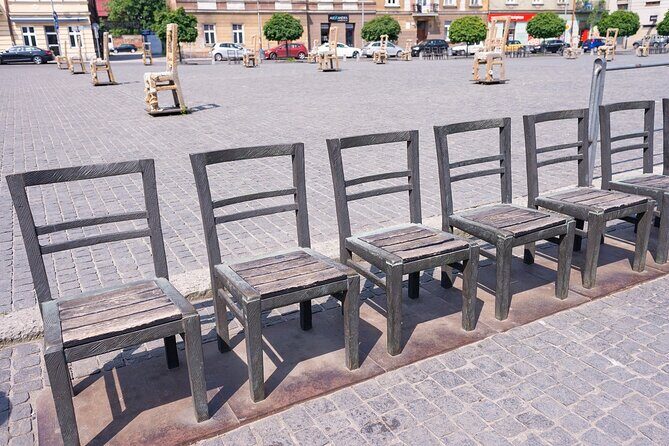
Then the tour shifts to the Podgórze district, which in 1941 was turned into the Krakow Ghetto. Here’s the crucial place name: Plac Zgody, also referred to as Concord Square, was designated Umschlagplatz under Nazi occupation—the gathering point where Jews had to congregate before deportations.
If you’ve seen other memorials in Europe, you’ll recognize the pattern: the sites often feel ordinary until someone explains their function. This tour does that explaining in a way that keeps the focus on place and purpose. It’s history with location weight.

Stop 2: Fabryka Emalia Oskara Schindlera and WWII Through Everyday Spaces
After Kazimierz, you move into the Fabryka Emalia Oskara Schindlera, the Schindler’s Factory Museum. Entrance is included, and this part runs with a live guide inside the museum. That’s a good choice because museums can get overwhelming. A live guide helps you stay oriented, and you’re not left to interpret everything alone.
This stop’s theme is plain and important: learning WWII history through its impact on ordinary people in multicultural Krakow. You also get to see the real headquarters of Deutsche Emailwarenfabrik. The tour connects that factory setting to Oskar Schindler, an entrepreneur known from the Spielberg film who saved many of his employees from inevitable death.
What I like about the museum framing is how it makes the story feel both specific and human. The factory administration building holds a preserved office of Schindler, and there’s a symbolic ark of survivors made of thousands of pots—replicas of the kind his employees made during the war. It’s a visual way to connect survival to craft, labor, and daily effort.
Multimedia Scenes: From Atelier to Tram to the Płaszów Camp
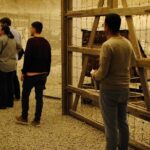
Inside, you walk along cobbled streets in the museum and experience a sequence of spaces via a modern multimedia installation. The goal isn’t to shock you. It’s to show how life could change step-by-step—from normal urban settings to enforced confinement.
Based on the tour description, you’ll move through scenes that include:
- a photographer’s atelier
- a hairdresser
- getting on the tram
- a typical apartment in the Jewish ghetto
- and then the Płaszów camp, with its inhabitants
You can think of it as a guided walk through versions of reality. The museum uses staging and media to help you understand transitions that were anything but gradual for the people living them.
A quick practical note: this museum portion includes walking and is operated by a live guide. The tour materials also stress that no large bags or backpacks are allowed. If you travel light, you’ll have an easier time.
Price and Logistics: Is It Good Value for $81.88?
At about $81.88 per person for roughly 3 hours, the big value isn’t just the ticket. It’s the combination of:
- golf cart transportation through Kazimierz
- audio guidance during the ride
- a live guide at the museum
- and museum admission included
You’re basically paying for both context (Kazimierz neighborhood orientation) and deep content (Schindler’s Factory). If you tried to do those separately—either with random museum audio or without a guide for the streets—you’d likely spend similar time and still miss the connections between places.
There are a few logistics points you should plan around:
- The tour ends at the museum. The operator does not provide transport from the museum to your hotel or other destination.
- You’ll start at Mikołaja Zyblikiewicza 2 and finish at Lipowa 4, so check how you’ll get home after.
- It’s a group tour with a set start time, so arriving on time matters.
One more practical detail: because the Schindler’s Factory Museum uses personalized tickets, you must provide full names of participants when booking and bring a passport or ID for entry. The name on your ticket has to match what’s on your document. Bring your ID, not just a phone photo.
Finally, the tour is offered in English and is capped at 24 travelers. That’s a sweet spot for a history-heavy outing: enough people to be social, not enough that you feel like you’re watching through a wall.
Timing Tips for a 3-Hour History Tour
This tour is designed to fit into a shorter Krakow window, about 3 hours. That’s useful if you’re juggling other sites, meals, or a day trip. It also means you’ll get meaningful stops without turning the day into a full marathon.
Here’s the best way to think about pacing:
- Kazimierz gives you neighborhood bearings first—Szeroka Street and Plac Nowy set the pre-war tone.
- Then the ghetto-related stops add the WWII reality.
- Finally, Schindler’s Factory consolidates everything into a museum narrative with a live guide and multimedia scenes.
So, don’t plan a last-minute dinner that needs you to rush out immediately. Give yourself time to exit the museum and move to your next stop.
Also note: from January 1, 2026, the museum scheduling can affect exact start times, and the operator says chosen times are approximate. If you book far ahead and then plan tightly around another timed reservation, keep a little buffer.
Who This Tour Suits Best (and Who Might Want to Skip)
This is a strong fit if you:
- care about WWII history tied to real locations
- want an organized approach to Kazimierz rather than hopping between sites randomly
- prefer English audio plus a live guide where it matters most (inside the museum)
It also works well for first-time visitors to Krakow who want a meaningful start in the city’s most historically layered neighborhood.
You might think twice if:
- you strongly dislike museums with staged media and walking routes
- you want a tour that ends back at your hotel
- you travel with large luggage or backpacks (the museum portion doesn’t allow them)
As for physical fitness, the tour asks for moderate comfort with walking. You won’t be trekking for hours, but you should be ready for some museum movement.
Booking Thoughts: Should You Book This Krakow Combo?
If your goal is to understand Kazimierz and WWII in one efficient, guided run, I think this is a smart booking. The golf cart + audio format helps you grasp the neighborhood quickly, and the Schindler’s Factory visit gives the story weight you can’t get from a quick street stop.
Two reasons I’d recommend it:
- You get continuity: pre-war community life, then occupation-era locations, then the factory’s narrative about survival.
- You’re not guessing: the live guide at the museum and the audio guide outside keep the experience connected.
One caution: you must bring ID and use the exact full names provided at booking for museum entry. That small step can make or break the day.
FAQ
FAQ
How long is the tour?
The tour runs about 3 hours.
Where does the tour start?
You meet at Mikołaja Zyblikiewicza 2, 31-029 Kraków, Poland.
What language is the tour in?
The tour is offered in English.
Is museum admission included?
Yes. Entrance to the Schindler’s Factory Museum is included.
Do I need an ID for the museum?
Yes. Schindler’s Factory Museum requires a passport or ID for entry, and the name on the ticket has to match the name on your document.
Is there walking during the tour?
Yes. Part of the tour includes walking inside the Schindler’s Factory Museum with a live guide.
Does the tour include transportation back to the hotel?
No. The tour ends after visiting the museum, and no transport from the museum to your hotel is provided.
What if I need to cancel?
You can cancel for a full refund if you cancel up to 24 hours in advance of the experience start time.
If you want, tell me what time of day you’re in Krakow and where you’re staying, and I’ll help you plan a smooth route for getting to the meeting point and onward after the museum.