REVIEW · KRAKOW
Schindler’s Factory and Jewish Ghetto Guided Tour
Book on GetYourGuide →Operated by INTERCRAC Ltd. · Bookable on GetYourGuide
Kraków tells its wartime story in layers. This Schindler’s Factory and Jewish Ghetto guided tour combines museum time with a practical walking route through the places where life shrank, people hid, and neighbors survived side by side. What makes it special is the way the guide connects the museum’s objects and reconstructions to the streets and wall fragments you’ll actually stand near.
I especially like the licensed guide format. Names matter here: guides such as Bartholomew, Joanna, Alicja, Magda, and Phil are repeatedly praised for clear explanations, strong English, and for answering questions without rushing you off. I also like that the tour includes fast-track admission, so you spend your time inside the exhibition and outside in the ghetto district rather than waiting in line.
The main consideration is timing. At 3 hours, the museum can feel crowded and the pace may be a bit tight if you want to linger over every photo. Plan to bring your patience—and if you’re the type who re-reads wall text, consider a return visit on another day.
4 key things to know before you go
- Fast-track entry helps you get into the Schindler’s Factory Museum without losing half your time to waiting
- Factory first, then ghetto gives you better context for what you see outside on the walking portion
- Original artifacts plus 1940s reconstructions help you visualize how Nazi-occupied Kraków functioned day to day
- Józefińska 41, the wall fragments, and Ghetto Heroes Square anchor the story in real locations
In This Review
- Schindler’s Factory Museum: where the story turns from names into places
- Oskar Schindler and the people he saved: what your guide is really teaching
- From the factory to the ghetto streets: Józefińska 41 and why lifelines mattered
- Ghetto Heroes Square and the Chair Memorial: learning where round-ups began
- Under the Eagle Pharmacy: help in medicine, shelter, and daily risk
- 3 hours, group size up to 25, and how to handle the pace
- Value at about $57: what you get for your money in Kraków
- Who this tour suits best (and who may want a different option)
- Should you book Schindler’s Factory and the Jewish Ghetto tour?
- FAQ
- How long is the Schindler’s Factory and Jewish Ghetto guided tour?
- How much does the tour cost?
- Where do I meet my guide?
- Is admission included?
- What’s included besides the museum entry?
- Do I get food or drinks on this tour?
- Are the Under the Eagle Pharmacy stops entry included?
- What languages are available?
- Is there a group size limit?
- What do I need to provide when booking?
Schindler’s Factory Museum: where the story turns from names into places
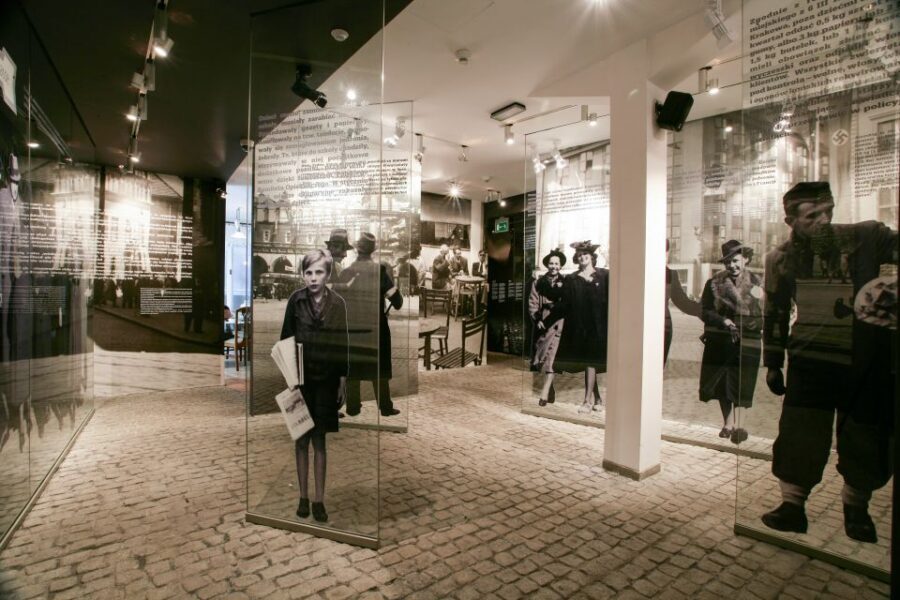
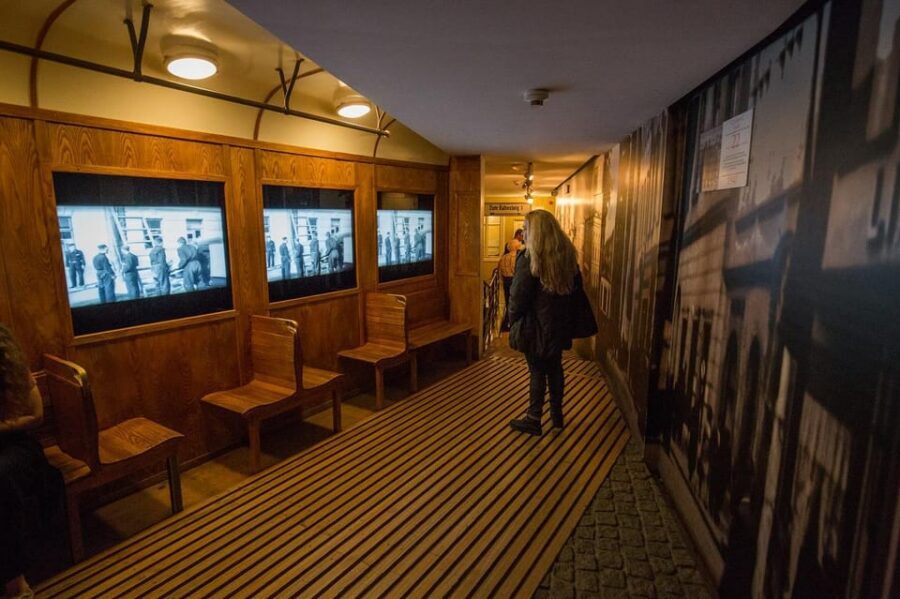
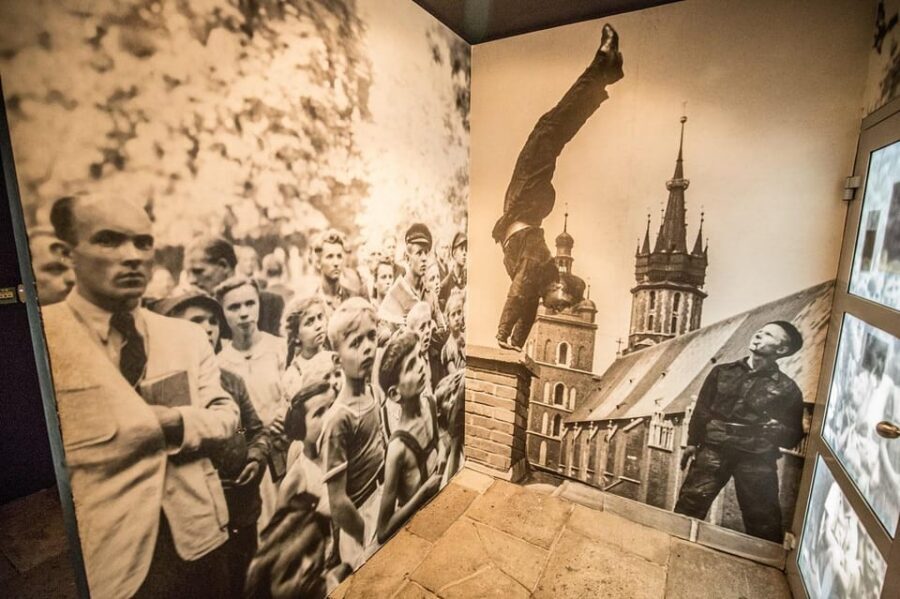
The Schindler’s Factory Museum in Kraków is housed in the former enamel factory associated with Oskar Schindler. Today, you’re not walking among working production lines. The building functions as a museum, and it no longer contains original manufacturing equipment, so don’t expect an industrial walk-through. Instead, expect an exhibit design that uses narrow passageways and an immersive floor plan to put you in the right mood—tight, tense, and purposeful.
I like this part because it’s structured. The exhibition focuses on Kraków under Nazi occupation from 1939 to 1945, and it doesn’t treat Schindler’s story as an isolated miracle. You get the broader picture: how the city worked under pressure, how daily life got more fragile, and how terror became routine. That context matters, because it helps you understand why choices—often small—could determine whether someone lived through the next stage of persecution.
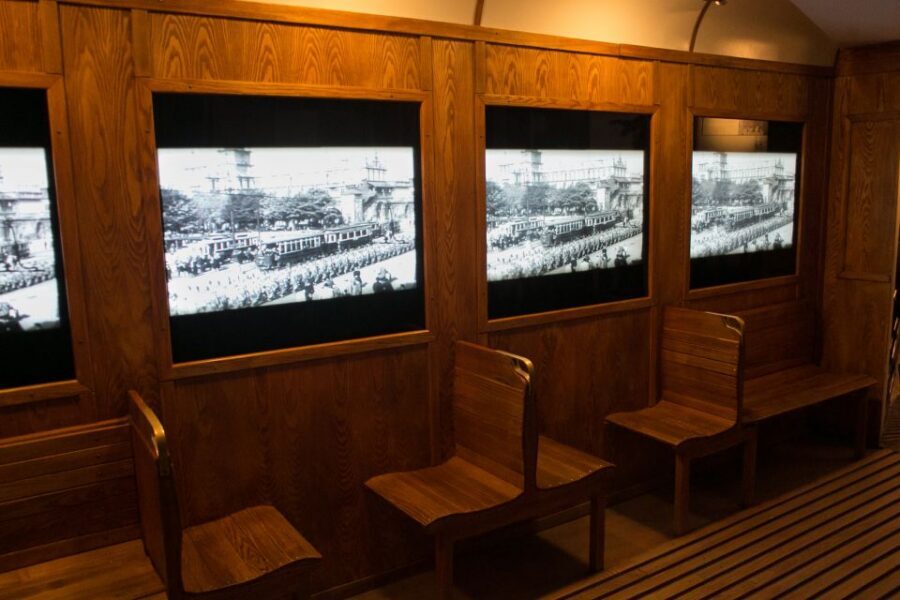
Inside, you’ll see photographs, personal objects, and reconstructed street scenes. That mix is practical: photos tell you what happened; personal items make it human; reconstructions help your brain place the fear and uncertainty into the geography of Kraków. It’s the kind of setting where you start paying attention to what’s missing—normal routines, basic safety, and any sense of control.
One other practical note: the museum is extremely popular. Even with fast-track entry, your comfort level depends on crowd flow, and the route through the galleries can feel like a controlled sprint at times. If you’re sensitive to crush crowds, bring a calm mindset and accept that the museum experience is guided and paced.
Oskar Schindler and the people he saved: what your guide is really teaching
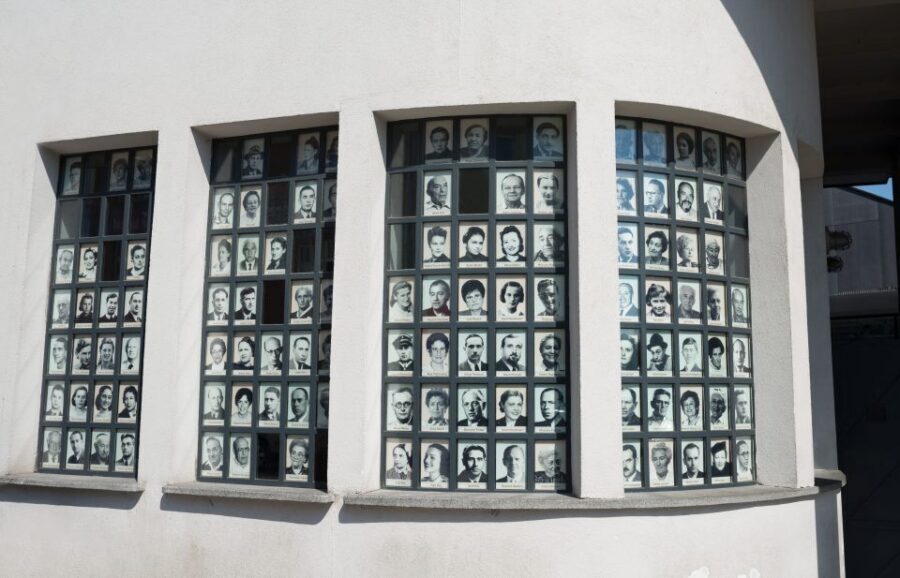
This is not just a museum visit about one historical figure. With a licensed expert guide, you’ll learn Schindler’s actions through the lens of the city around him. Schindler employed Jewish workers, and he used his influence and resources to help protect them from deportation. More than a thousand men and women survived because of those choices.
Here’s the part that hits hardest: the exhibition and commentary are built around how people lived—what they feared, what they hoped for, and how survival depended on shifting decisions. The guide brings to life the testimonies of the people sometimes called Schindlerjuden. Even if you’ve read about Schindler before, a guided explanation helps you slow down and connect facts into real human stories.
I also like that guides tend to go beyond the headline version of events. Based on what you’ll hear from these guides (including Bartholomew and Joanna in English-language groups), the best sessions include extra context—how Nazi occupation reshaped work, how bureaucracy was used as a weapon, and how networks of help functioned inside Kraków. You’ll walk away with a clearer picture of how courage didn’t always look heroic in movies; sometimes it looked like paperwork, access, and one stubborn refusal to stand by.
You can also read our reviews of more guided tours in Krakow
From the factory to the ghetto streets: Józefińska 41 and why lifelines mattered
After the museum, the walking part starts among remnants of the Kraków ghetto. This is where the tour becomes more than information. You’re leaving behind glass cases and stepping into the geometry of confinement. You’ll walk deeper into the district and stop at Józefińska 41, a former site that once held an orphanage, welfare offices, and a hospital.
That stop is powerful because it shows the war’s cruelty didn’t only come from arrests and deportations. It also came from what was taken away: safe housing, reliable healthcare, and protection for children. Places like welfare offices and hospitals mattered as lifelines inside the ghetto walls. When you stand near a location like Józefińska 41, it’s easier to grasp why survival often depended on services and community systems—however limited they were.
You’ll also see preserved fragments of the ghetto walls. Those remnants aren’t just background. They’re the physical border between who could move freely and who could not. In a short tour, it’s one of the fastest ways to convert your understanding from abstract history into something your body recognizes: separation, loss, and the feeling that the world shrank overnight.
Practical tip: wear shoes you can trust. The walk is part of a timed, guided route, and you’ll want to stay comfortable so you can focus on the stops, not your feet.
Ghetto Heroes Square and the Chair Memorial: learning where round-ups began
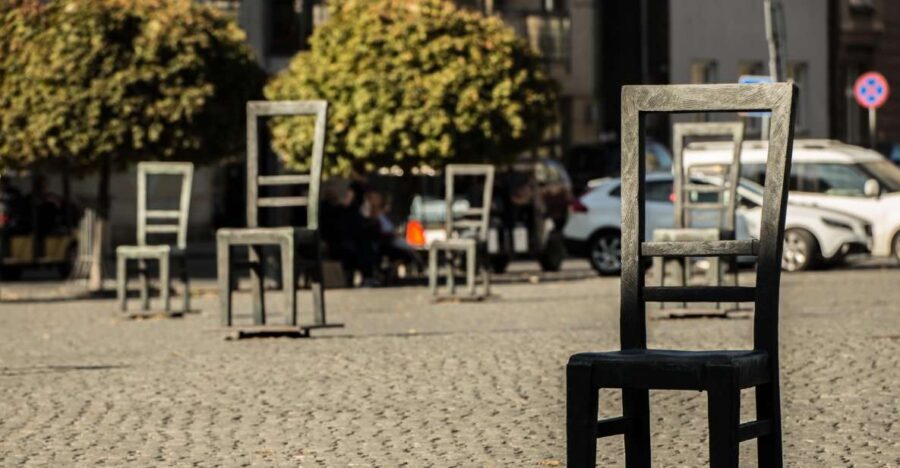
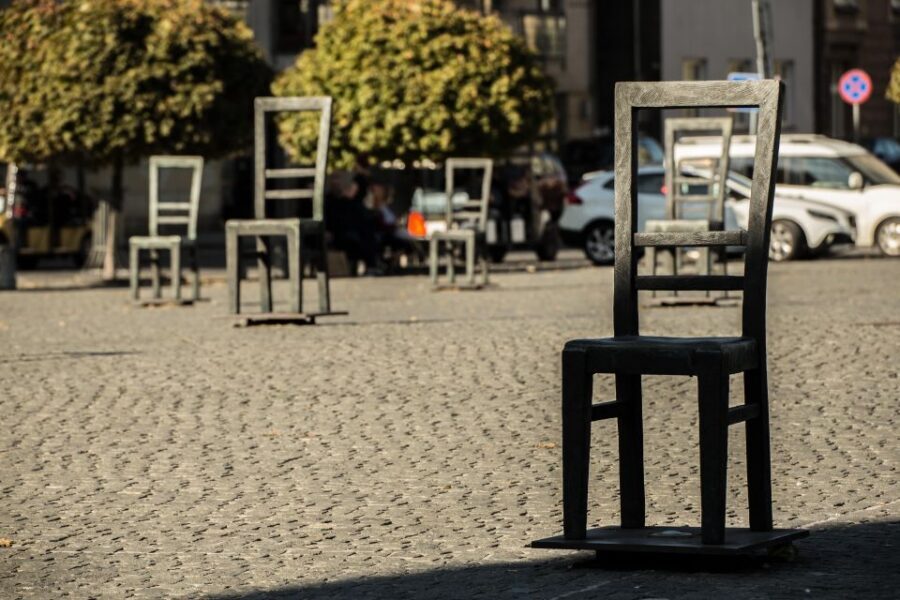
Next comes Ghetto Heroes Square. The area is marked by the Chair Memorial, which helps visitors connect the open space to what happened there during the occupation. In this part of the tour, you learn how round-ups and deportations were carried out—how public spaces became stages for violence and how enclosure led to “processing” people into forced transport.
I like this stop because it balances two things at once. You get a sense of the modern geography—today’s square, open sight lines, and the stillness of the present. Then the guide connects that space to wartime events, so the square stops being just a landmark. It becomes part of a story about control and systematic cruelty.
If you’re the type who likes to understand “how it worked,” pay attention here. The tour is designed to help you see war not only as tragedy, but as procedure: laws, schedules, and decisions that turned ordinary residents into targets.
Under the Eagle Pharmacy: help in medicine, shelter, and daily risk
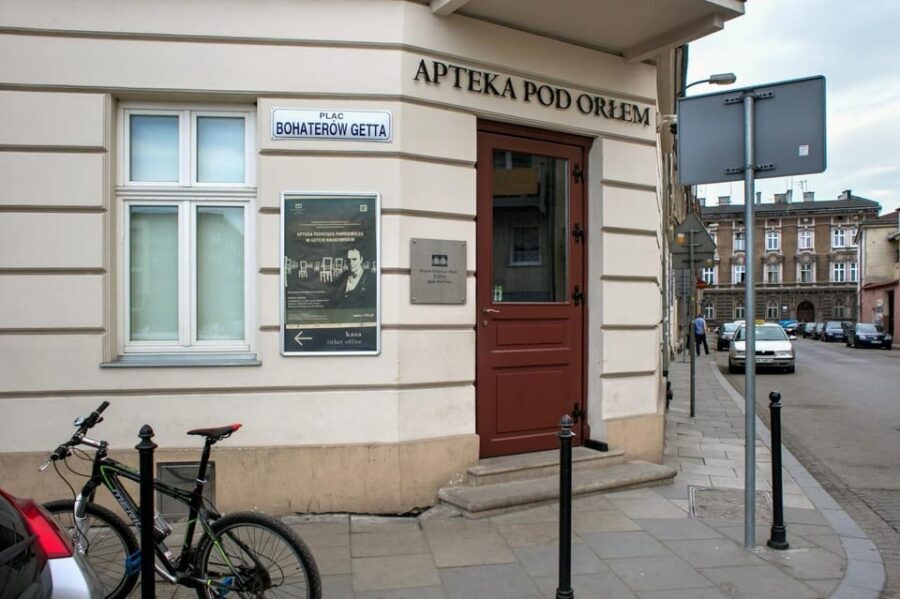
The final major stop is Under the Eagle Pharmacy. The guide shares the story of Tadeusz Pankiewicz and his staff, who risked everything to aid Jewish residents. Their help included medicine, shelter, and hope—practical support rather than grand gestures.
Important: you won’t go inside. The tour includes the story, but the entry is not part of the experience. That can actually make the stop feel focused. You see the place from the outside and listen to how this kind of aid operated in real time. It also keeps the emphasis on the moral choices behind the survival narrative.
If you want to make the most of this stop, bring your attention to the details you hear about what “help” meant during occupation. Not everyone could hide in dramatic ways. Medicine and shelter were forms of protection that required contact, planning, and trust—often under threat.
One small drawback to note: with only 3 hours total, you may find this final stop feels like it could use more time if you’re drawn to every story thread. If you’re hungry for deeper family-level detail, you might want to supplement later with independent reading or a second visit.
3 hours, group size up to 25, and how to handle the pace
This tour runs about 3 hours, and it’s built as a guided sequence: museum first, then walking stops through the ghetto district. The order is part of the value. Seeing the museum before you stand outside helps you understand what the guide means when they connect objects and stories to physical locations.
Group size is limited to 25 participants, which helps keep the experience manageable compared to giant crowds. Still, the museum can be busy, and if the group flows quickly, you might feel a bit rushed through the exhibit galleries. That’s not a flaw in the story—it’s a reality of demand and timed museum routes.
Here’s what helps: arrive at least 10 minutes early. Late arrivals can’t be accommodated once the group has entered, and tickets aren’t refundable. Also, the exhibition layout uses narrow passageways. It’s not dangerous, but it does mean the tour works best when you move with the group and don’t get stuck at doorways or tight corners.
Language is another practical factor. All group tours run in a single language. The tour is offered in French, English, Spanish, German, and Italian. If you care about smooth pacing and full comprehension, choose your language carefully.


Value at about $57: what you get for your money in Kraków
At around $57 per person, this tour is easy to justify if you want both context and direction. You’re getting professional, licensed guiding plus fast-track admission to Schindler’s Factory Museum, and you’re also getting the walking tour through the wartime district.
If you tried to do this solo, you’d likely need two separate pieces: the museum ticket and a way to understand what you’re seeing. The guide is what makes the connections between the exhibition and the outdoor stops click. That’s the real value here: interpretation tied to geography.
One trade-off: food and drinks are not included. Since the tour is 3 hours, you can usually handle it with a quick snack before you start, then eat after. I’d plan a proper meal afterward rather than expecting refreshments mid-tour.
Who this tour suits best (and who may want a different option)
This is a strong fit if you:
- want a guided, structured understanding of Kraków under Nazi occupation
- like history tied to places you can see in real life
- appreciate clear narration and a focused route rather than a self-guided wander
It may be less ideal if you:
- hate group pacing and want to study every panel at your own speed
- need a lot of time at each stop (the museum popularity can make it hard to linger)
- expect the pharmacy stop to be longer, since the format keeps entry off the table
That said, even when pacing is tight, the combination of museum artifacts and ghetto-site stops is hard to replicate by piecing things together on your own.
Should you book Schindler’s Factory and the Jewish Ghetto tour?
I’d book it if you’re in Kraków for a short time and want one route that connects Schindler’s actions to the broader reality of Nazi-occupied life. The fast entry helps, the licensed guide makes a big difference, and the walking stops—Józefińska 41, the ghetto wall remnants, Ghetto Heroes Square, and the Under the Eagle Pharmacy—give your understanding physical anchor points.
If you know you’ll want extra time in the museum galleries or deeper details at the family level, consider doing this as your first pass, then plan a slower follow-up visit later. As a 3-hour guided experience, it’s both practical and deeply moving in a way that stays focused rather than scattered.
FAQ
How long is the Schindler’s Factory and Jewish Ghetto guided tour?
It lasts about 3 hours.
How much does the tour cost?
The price is listed as $57 per person.
Where do I meet my guide?
Meet at the front main entrance of the Schindler’s Factory Museum, on the right-hand side. Your guide will be holding a Schindler’s Factory Guided Tour sign.
Is admission included?
Yes. Fast-track admission to Schindler’s Factory Museum is included.
What’s included besides the museum entry?
You also get a professional, licensed guide and a walking tour of Kraków’s Jewish wartime district.
Do I get food or drinks on this tour?
No. Food and drinks are not included.
Are the Under the Eagle Pharmacy stops entry included?
No. The tour includes the stop and stories, but there is no entry.
What languages are available?
The live guide is offered in French, English, Spanish, German, and Italian.
Is there a group size limit?
Yes. Group size is limited to 25 participants.
What do I need to provide when booking?
Because the museum issues personalized tickets, you must provide the full names of all participants at the time of booking.