REVIEW · GDANSK
Private Walking Tour of Old Gdańsk with an architect-guide
Book on Viator →Bookable on Viator
Old Gdańsk rewards people who look closely. This private architect-guide tour strings together city hall, mills, churches, and the medieval walls with smart architectural explanations and old photos, so the streets make more sense fast. I especially like the mix of major landmarks plus the quieter details (canals, gates, and street scale), and I also like how the guide makes the story feel human instead of textbook. One drawback: a few potentially amazing places (like the turret-clock museum) are mentioned as add-ons, so you may need to plan for extra walking and timing.
You get a true private group experience, up to 7 people, in English, with a pickup option and a mobile ticket. The pacing is built for walking, and the total time can run from about 1 hour 30 minutes to 4 hours depending on how your group wants to move and what you choose to add. If you love architecture and urban history, this is a strong way to get oriented in Gdańsk without wasting time.
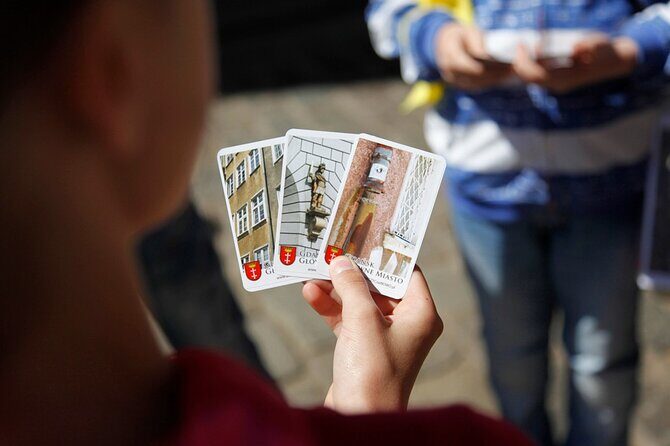
And yes, there’s humor in the guide style. Past groups have praised Agnieszka for energy, passion, and a clear way of explaining things, with photos used to show what the area looked like before the second World War.
In This Review
- Quick hits before you walk
- Why this Old Gdańsk tour feels different from a standard walk
- Starting at Ratusz Starego Miasta and the Teutonic thread
- The Great Mill: history you can see, plus an Amber Museum choice
- Tower climbing, clock machines, and when to choose the optional church
- Leaving Old Town for Main Town: the medieval fortification viewpoint
- Great Armoury (Wielka Zbrojownia): Renaissance power in brick and stone
- St. Mary’s Church and the noon chime: the stop to plan around
- Mariacka Street and the gates: how the route builds mood
- Artus Court and Main Town Hall interiors: where merchants met
- Uphagen’s House peek and the decision point
- Ending at the Prison Tower: when architecture turns personal
- Price and value: what $264.35 per group buys you
- Practical tips so the day feels smooth
- Is this the right tour for you?
- FAQ
- How long is the private walking tour of Old Gdańsk?
- How many people are in the group?
- What language is the tour offered in?
- Are admission tickets included?
- Is pickup available?
- Where do we meet and where does the tour end?
- Is the tour suitable for people with limited mobility?
- How do I get the ticket for the tour?
- Can I cancel for a full refund?
Quick hits before you walk
- Architect-guide explanations: you’ll link buildings to the way the city worked, not just recite dates.
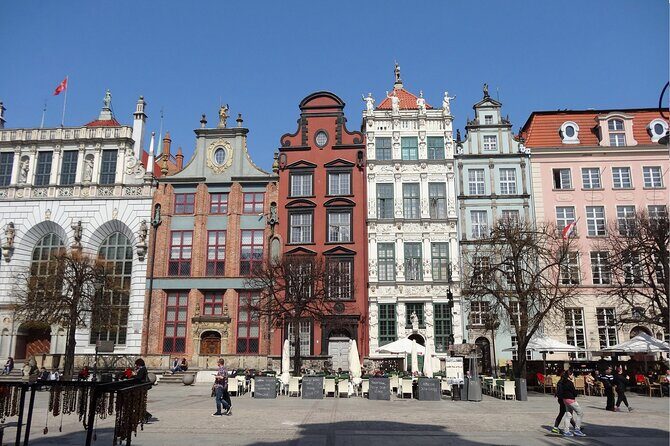
- Old Town to Main Town transition: the route gradually shifts from postcard views to the city’s bigger scale and power.
- Free big sights: several stops have free entry listed, which helps your budget.
- WWII visual context: the Great Mill stop includes old photos to show what changed after the war.
- St. Mary’s clock moment: the astronomical clock chimes every day at noon, so timing can matter.
- Optional add-ons: places tied to clocks and certain houses aren’t fully included, but the guide helps you decide.
Why this Old Gdańsk tour feels different from a standard walk
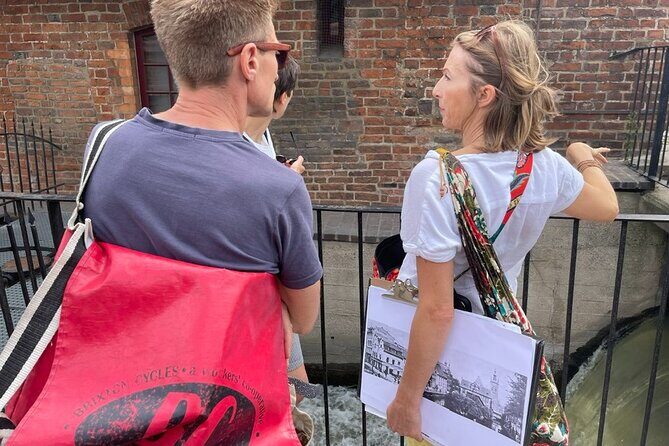
Gdańsk can look like a single neat “old town” area from the map. Up close, it’s two different moods: the tighter story of Old Town and the broader, heavier presence of Main Town, shaped by trade, defense, and wealth. What I like about this tour is that it treats Gdańsk like a designed city, where canals, fortifications, and brick churches all connect.
The private format matters. With up to 7 people, the guide can slow down when someone spots a detail on a facade, and speed up when you want to keep moving. It also helps for questions, which is where architect-guides often shine.
A key value point: the itinerary mixes architecture + city systems. You don’t just pass by “important buildings.” You learn what they did, who funded them, and why they ended up here. In practice, that makes your independent wandering after the tour easier.
You can also read our reviews of more walking tours in Gdansk



Starting at Ratusz Starego Miasta and the Teutonic thread
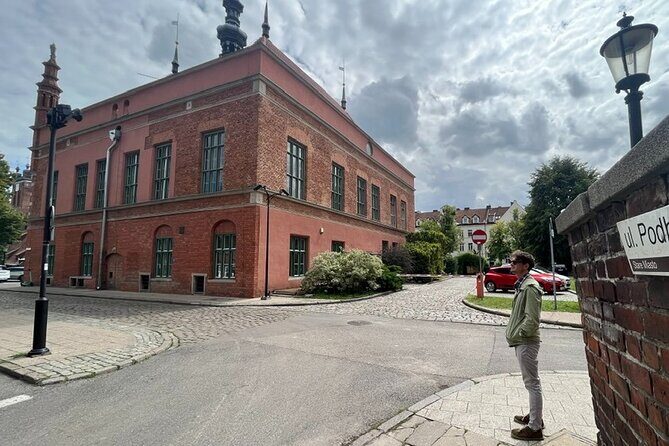
You begin at Ratusz Staromiejski on Korzenna 33/35, right by the Radunia Canal. That canal-side setting is useful because it immediately frames Gdańsk as a trading city. The city hall here isn’t just a pretty landmark; it’s part of how the Old Town governed itself and handled commerce.
This first stop also ties in the Teutonic Order. You’ll get an introduction that helps you understand why certain architectural styles and political influences show up in the area. If you’ve ever felt that Gdańsk history is all names and timelines, this kind of opening thread makes the rest of the route easier to follow.
Expect a quick but focused stop. The listed time is about 12 minutes, and the goal is to get your mental map working before you walk farther.
The Great Mill: history you can see, plus an Amber Museum choice
Next is The Great Mill (Wielka Mlyn). This is one of those places where a building’s purpose explains its size and position. You’ll learn why the mill mattered, and you’ll also see pictures of what the area looked like before the second World War.
That WWII photo angle is a big deal. Gdańsk has a lot of rebuilt and restored architecture, and the before-and-after view helps you understand what you’re looking at today. Without it, you might miss the scale of the change.
One practical tip: the guide strongly suggests the Amber Museum, which is inside the mill building, even though it isn’t part of the tour admission. It’s not included, but the guide can help you decide whether to visit before starting or after your walking route.
Plan for about 10 minutes at the mill during the walk. If you add the amber stop, it will extend your overall timing.
Tower climbing, clock machines, and when to choose the optional church
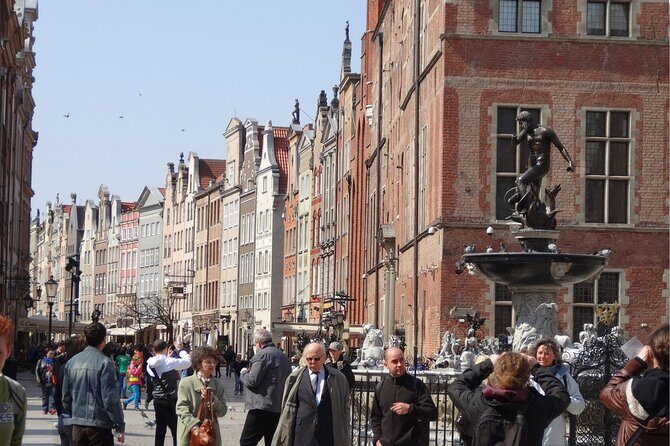
Mid-tour, you’ll move toward a church that’s still active and houses the Museum of Turrets Clocks. The important detail here is location: the museum is in the tower. That means you should expect stairs and a bit of leg work if you want to go.
What the clock museum includes is impressive on paper: centuries-old time-keeping devices, the biggest concert carillon in Poland, and the world’s first pulsar clock. Those are the kinds of details that make this more than a cute side stop. If you’re the type who likes how technology and design show up in everyday life, it’s worth considering.
But it’s also a “discussed, not guaranteed” moment. This stop is specifically noted as not part of the tour, so think of it as an option the guide may bring up while you’re in the area. If your group wants an easier pace, you can likely skip it and still get the architectural story elsewhere.
Leaving Old Town for Main Town: the medieval fortification viewpoint
After the church area, you’ll reach a high point connected to the city’s medieval fortifications—described as the highest of the towers of the medieval fortifications of the Main Town of Gdańsk.
This is a smart pivot in the route. The Old Town is about charm and detail, but fortifications force you to think about defense and control. From a tower viewpoint, the city’s scale becomes obvious, and you start understanding why Main Town felt like the big center of gravity.
Even if you don’t linger, this stop gives you a “walkable geography” shift. You come down from the walls with better orientation, and the next stops make more sense as you move into the market and church core.
You can also read our reviews of more guided tours in Gdansk





Great Armoury (Wielka Zbrojownia): Renaissance power in brick and stone
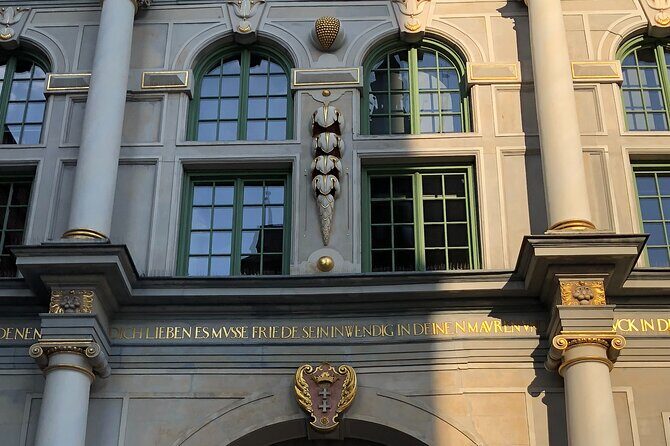
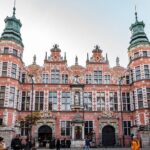
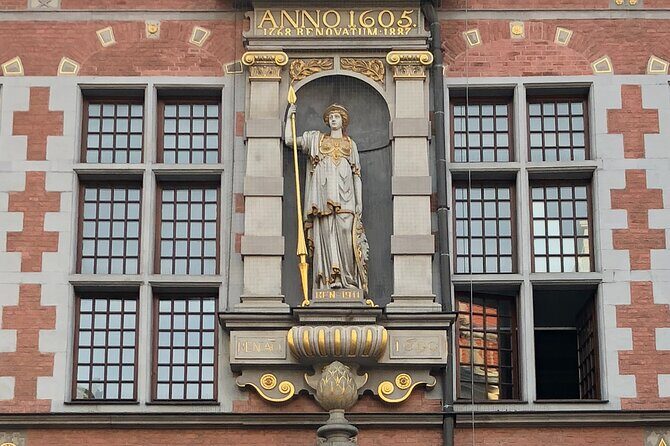
Then you hit Great Armoury (Wielka Zbrojownia)—one of the route’s architecture highlights. The way this building looks is closely tied to what it was built to do. You’ll learn about the object as both a physical presence and a symbol of how wealthy the city was during Renaissance ages.
The current use adds an extra layer: it now houses the Academy of Fine Art. Sometimes it’s opened to the public during student exhibitions. That means your experience can vary slightly depending on what’s on.
The walk time here is short—about 5 minutes—and the entry is listed as free. So you get a big architectural payoff without a long queue expectation.
If you like buildings that still have a life beyond tourism, this stop tends to land well because it’s not just preserved; it’s used.
St. Mary’s Church and the noon chime: the stop to plan around
If you do just one timing-sensitive thing on this tour, it’s St. Mary’s Church. The tour describes it as the biggest brick church in the world, and that alone makes it worth attention.
But the real reason to care is the astronomical clock from the 15th century, which chimes every day at noon. If your schedule lines up with that time, it turns into one of those memorable moments you carry with you for the rest of the trip.
This stop is listed at about 15 minutes and free entry. Practically, that’s enough time to see the church’s scale and focus your attention on the clock without rushing.
Even if you miss the noon sound, you’ll still learn what makes the clock significant and why it belongs in this specific kind of brick monumental space.
Mariacka Street and the gates: how the route builds mood
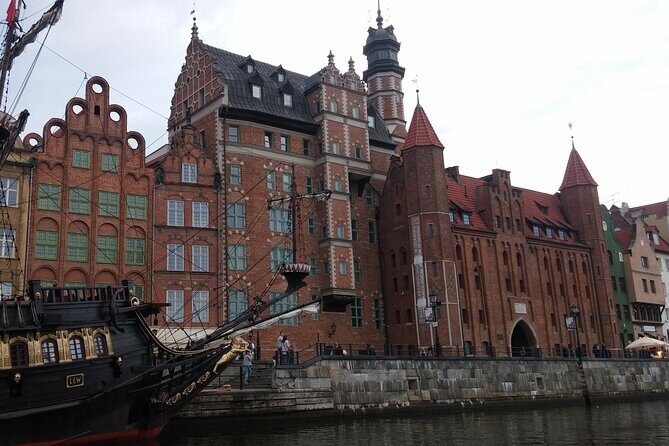
From St. Mary’s, you walk into Mariacka Street (Ulica Mariacka), the kind of place where the ambiance is the point. It’s described as charming, and it’s the in-between segment that helps you feel the old-town atmosphere rather than just clocking monuments.
The guide then brings you toward Brama Mariacka, passing through to talk about maritime trade. This is where Gdańsk stops being only a medieval story and becomes a Baltic story. Gates were made for controlling movement and protecting routes—so they’re perfect for talking trade.
After that you reach Green Gate (Brama Zielona), which serves as an entrance to the Great Market, called the place to be. You’ll get a sense of how power concentrated here, and why market activity mattered as much as defense.
These segments are mostly free and short (for example, Green Gate is listed around 10 minutes; Brama Mariacka around 5). They work because they keep you moving through different layers of the city rather than looping in one area.
Artus Court and Main Town Hall interiors: where merchants met
There’s a stop area that doesn’t always get enough attention on regular walks: the space around the Artus Court and the Main Town Hall interiors.
The Artus Court used to be a meeting place for merchants. Today, it’s presented as a museum of history and art, and it gives you a different angle on wealth. Not just wealth as money, but wealth as gathering rooms and shared influence.
Main Town Hall interiors are also called out as interesting. That matters because city halls and market institutions are part of how ordinary visitors experience authority. It’s not only about grand churches.
This portion is essentially “you’ll slow down a bit here,” so it’s worth having at least a partial hour mindset, even if each landmark stop is short.
Uphagen’s House peek and the decision point
Next is Uphagen’s House (Museum of Gdansk). You’ll get a peek inside as part of the flow, but you’ll also be able to decide if you want to visit more fully. Admission here is listed as not included.
I like this decision structure because it keeps you in control. If you want the human scale of merchant-domestic architecture, you can add it. If you’re more into exterior form, street feel, and big public buildings, you can skip and keep walking.
It’s one of those stops where the guide can match your curiosity level. That’s a real advantage of a private group format.
Ending at the Prison Tower: when architecture turns personal
Your route finishes at Prison Tower (Katownia / tower of imprisonment), where some lives ended. The tour notes admission as not included and ends at the gates leading into the Main Town story of a rich Baltic coast city.
This ending choice changes the mood. A walking tour that only celebrates beauty can feel one-note. Ending with a prison tower makes the architectural story honest again: buildings weren’t only built to impress; they also organized control and punishment.
The listed end point is at Targ Węglowy 26, so you’re not just dumped back on a random street. It’s a meaningful capstone close to the area where the city’s richer trade narrative continues.
Price and value: what $264.35 per group buys you
The price is $264.35 per group up to 7 people, with durations listed from about 1 hour 30 minutes to 4 hours. You also get pickup offered (if you want it), and it’s run as a private tour with only your group.
Value here comes from three places:
- Fewer entry fees stress: several stops are listed as free entry (city hall, Great Mill time on the route, Great Armoury, St. Mary’s, Mariacka Street, gates, and parts around the market area). You’re mostly paying for the guide expertise, not stacking paid museum tickets.
- The guide’s architecture framing: an architect-guide approach is harder to replicate on your own. Even if you read plaques later, the guide helps you connect function, layout, and style.
- Flexible time: 1.5 to 4 hours means you can shape the pacing. If you want more photo context, clock options, or extra interior time, you can ask for that.
At this price, it’s best if you’re traveling with at least a couple of people who will genuinely ask questions or enjoy architectural detail. For a solo traveler, it can still be worth it if you want a personal pace and a guided map of what matters. For families, it can be a great way to make old buildings feel less like homework.
Finally, it’s booked on average about 17 days in advance, which suggests it’s a popular slot—so if you’re traveling in a busy season, plan ahead.
Practical tips so the day feels smooth
- Wear shoes that handle uneven stone. The route includes towers and older streets, and some optional spots involve climbing.
- Time your visit around noon if you can. St. Mary’s clock chimes daily at noon, and that moment is easier to catch if your schedule cooperates.
- Decide early about add-ons. The Amber Museum and turret clock museum aren’t fully included, but they’re discussed. If you want them, you’ll need to build that into your total time.
- Bring your curiosity. This kind of tour works best when you ask why something is built the way it is, not only what it is.
- Use the mobile ticket. It’s offered, which keeps things from getting messy while you’re walking.
Is this the right tour for you?
Book this if you want more than a checklist. This route fits best when you care about how Gdańsk works: trade routes, defense walls, merchant meeting spaces, monumental brick churches, and the tech side of time-keeping.
I’d skip it or adjust expectations if you want long museum time or a laid-back “no thinking” stroll. This is structured walking with a clear story arc. You’ll get a lot out of it, but it’s not designed as slow window-shopping.
Also, because several stops are free while others are optional, you’ll get the most value if you’re willing to choose one or two add-ons rather than trying to do everything at once.
If you’re traveling with a small group and you like architecture explanations delivered with humor and energy—Agnieszka has earned that praise—you’ll likely leave with a map in your head, not just photos on your phone.
FAQ
How long is the private walking tour of Old Gdańsk?
The tour runs approximately 1 hour 30 minutes to 4 hours, depending on the pace and what you choose to include during the walk.
How many people are in the group?
It is a private tour for your group only, up to 7 people.
What language is the tour offered in?
The tour is offered in English.
Are admission tickets included?
Some stops are listed with admission ticket free, while other optional or discussed locations (like the Amber Museum and the Museum of Turrets Clocks, plus Uphagen’s House and Prison Tower) are marked as not included.
Is pickup available?
Pickup is offered.
Where do we meet and where does the tour end?
The meeting point is Ratusz Staromiejski, Korzenna 33/35, 80-001 Gdańsk. The tour ends at Katownia, Targ Węglowy 26, 80-836 Gdańsk.
Is the tour suitable for people with limited mobility?
Most travelers can participate. That said, the Museum of Turrets Clocks is in a tower and is specifically noted as requiring strong legs, so you should consider that if mobility is a concern.
How do I get the ticket for the tour?
You’ll receive a mobile ticket.
Can I cancel for a full refund?
Yes. You can cancel up to 24 hours in advance for a full refund, based on local time.