REVIEW · WARSAW
Private Tour: Warsaw best of 3-Hour Sightseeing Tour
Book on Viator →Operated by Artur Warsaw Guide · Bookable on Viator
Warsaw can feel huge. This tour makes it make sense fast. You get a tight, 3-hour loop of the city’s top sights, with a guide in control and a Mercedes doing the heavy lifting.
I especially like the private setup for up to 3 people, since you can ask questions as you go and you are not stuck listening to a loud group plan. I also like the blend of places that are scenic and serious: Łazienki Park and the Old Town on one side, and Jewish Warsaw and Warsaw Uprising sites on the other.
One possible drawback: the schedule is packed. Most stops are short, so you will see plenty, but you will not get deep time in any single museum.
In This Review
- Key highlights you actually feel in the moment
- A Mercedes ride that keeps your day light
- Łazienki Park, from 17th-century baths to peacock sightings
- Polin Museum area and the Warsaw Ghetto walk outside memorials
- Old Town: Rynek Starego Miasta and St. John’s Cathedral
- Palace of Culture and Science, the 237-meter skyline story
- Vistula Boulevards: a 5-kilometer reset and the Mermaid photo stop
- PGE National Stadium: modern architecture near the center
- Warsaw Uprising Museum and the people behind the artifacts
- Maria Sklodowska-Curie: a quick birthplace-and-museum look
- Uprising monuments: how the story was shaped over time
- Umschlagplatz and Mila 18: the Holocaust through specific locations
- Price and what you actually get for $336.44 per group
- Who this tour suits best (and who might want more time)
- Should you book this Warsaw best-of tour?
- FAQ
- How long is the Private Tour: Warsaw best of 3-Hour Sightseeing Tour?
- How much does the tour cost and what is included for that price?
- Is pickup available, and where does the tour start?
- Is this tour private or shared with other groups?
- What language is the tour offered in?
- Is a mobile ticket provided?
- Are admissions required for the stops?
- Can I bring a service animal?
- What is the average booking lead time?
- FAQ
- Do I need to cancel far in advance for a full refund?
Key highlights you actually feel in the moment
- Mercedes-style city hopping: less walking, more looking, and fewer transit headaches
- A structured itinerary: you do not need to map a plan or guess timing
- Łazienki Park with peacocks and squirrels: green space in the middle of the city
- Jewish Warsaw focus through memorials and key places: Polin-area sights outside, plus Umschlagplatz and Mila 18
- Warsaw Uprising storytelling stops: museums and monuments tied to specific locations
- Top skyline stops: Palace of Culture and Science and the Vistula riverside pause
A Mercedes ride that keeps your day light
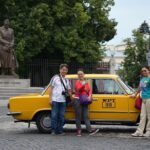
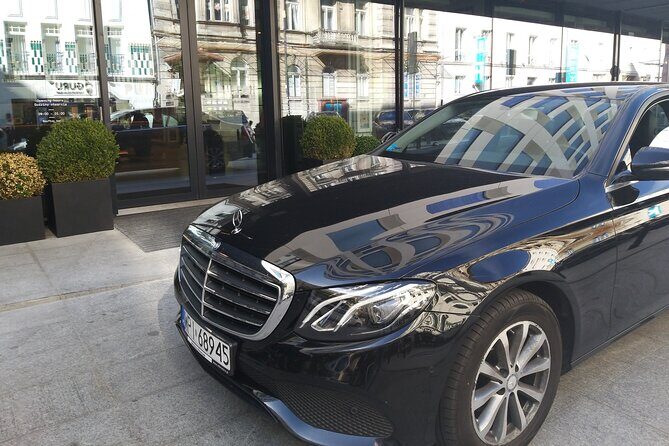
This is a private tour for up to 3 people, run by Artur Warsaw Guide and driven in a Mercedes. That matters more than it sounds. In 3 hours, Warsaw can go from sight-perfect to logistics-annoying if you are self-planning. Here, you simply hop in, look out, and absorb.
You also get pickup and drop-off anywhere in Warsaw. That is ideal if you are staying in a hotel that is not right on the main tourist routes, or if you want to avoid the pre-tour scramble. The tour uses a mobile ticket, and it is offered in English.
The pacing is the trade-off. The stops add up to many different themes. You get short walks and close-by photo moments, plus enough context to understand why each place matters.
You can also read our reviews of more private tours in Warsaw
Łazienki Park, from 17th-century baths to peacock sightings
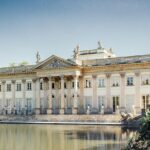
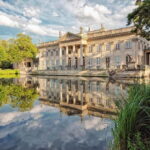
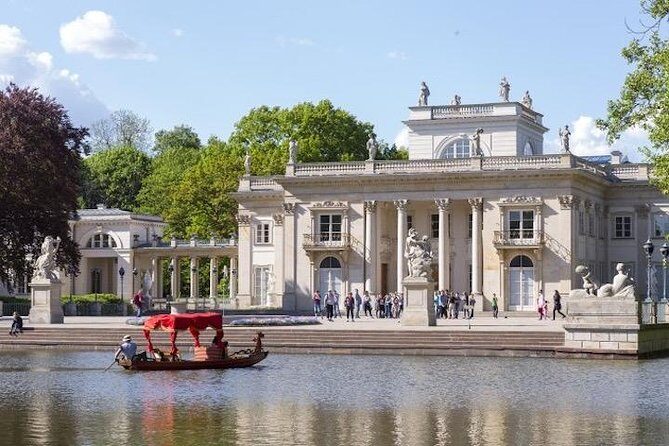
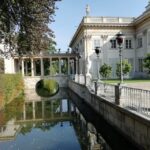
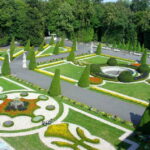
The tour begins at Łazienki Krolewskie w Warszawie, also known as Łazienki Park / Royal Baths Park. This is Warsaw’s largest park in the city center, spread across about 76 hectares. It is not just a green break. It is a palace-and-follies complex tied to the Royal Route, linking the Royal Castle with Wilanów Palace.
What I like about this start is how it sets the tone. You go from city movement to a calm setting right away. The story behind it is also vivid: the park was originally designed in the 17th century as a baths park for Stanisław Herakliusz Lubomirski. Then, in the 18th century, Stanisław II Augustus transformed it into a showpiece of palaces, villas, classicist structures, and monuments. By 1918, it became an official public park.
You get about 45 minutes. That is enough to stroll, orient yourself, and enjoy the fact that Łazienki is a real, lived-in park, not just a backdrop. And yes, the park is home to peacocks and plenty of squirrels, which turns a sightseeing walk into something slightly more playful than the usual “look but don’t touch” museum routine.
Possible drawback: if you want long, slow garden time, you will feel the clock here. This first stop is your scenic warm-up, not a full park day.
Polin Museum area and the Warsaw Ghetto walk outside memorials
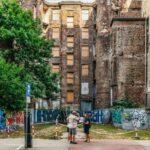
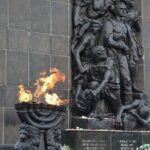
Next comes POLIN Muzeum Historii Zydow Polskich. This stop is described as a chance to sightsee the Jewish Ghetto Warsaw territory, with an emphasis on key named places and a walk around the Polin Museum area outside.
Even though the actual museum visit is not described as an entry event, you still get pointed Holocaust-era landmarks, including Umschlagplatz later in the tour, plus specific references along the way like Mila 18. For this stop, you are guided through the broader context and you visit commemorations and sculptures around the area.
The stop also highlights public monuments and figures tied to resistance and remembrance, including Natan Rapaport, Jan Karski, and Leon Suzin. Karski is especially relevant for understanding how information about persecution reached the wider world. Rapaport and Suzin help anchor the memorial landscape to real people connected to Jewish Warsaw history.
You get about 35 minutes. That is short, but it is a strong primer. You leave this section with the geography in your head, so the later stops at Umschlagplatz and Mila 18 make more sense.
If you prefer a lighter start after a park, you might find the subject matter intense. On the other hand, it is handled through location-based storytelling, which tends to feel clearer than reading a wall of text.
Old Town: Rynek Starego Miasta and St. John’s Cathedral
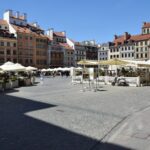
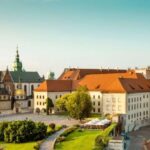
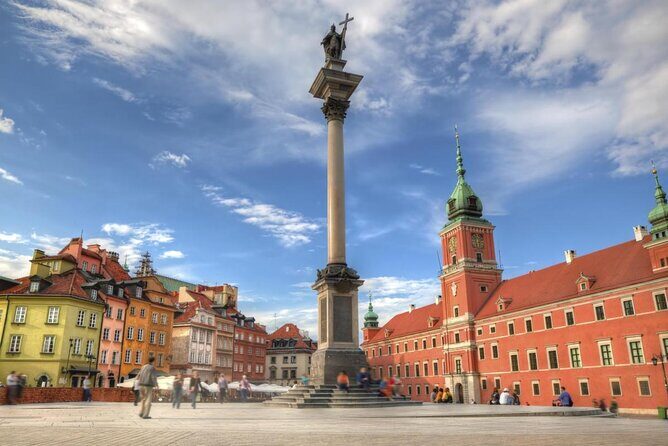
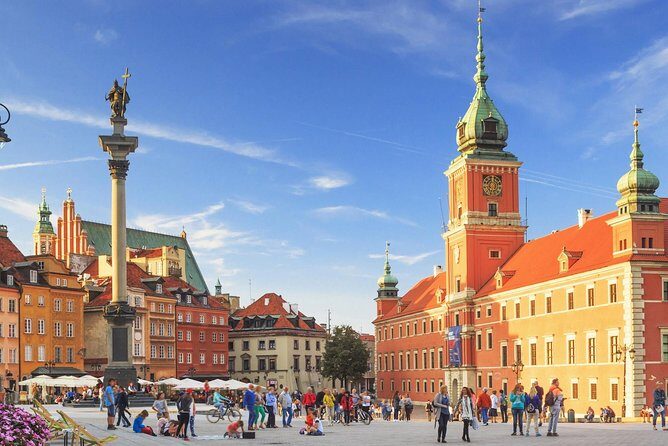
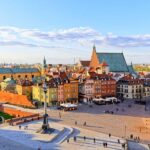
Then you step into Warsaw Old Town, focused around Rynek Starego Miasta, the main square. This is one of Warsaw’s best “first impressions” zones: cobblestone lanes, reconstructed medieval buildings after WWII, and a busy square lined with Polish eateries.
You also get time near St. John’s Archcathedral, which dates back to the 14th century. The tour notes summer concerts, but even outside concert time, the cathedral area gives Old Town its anchor.
Another element is the Royal Castle connection. The Old Town area includes restored apartments and manicured gardens associated with the castle. Even if you are only catching the edges from a short walk, you are seeing the way Warsaw rebuilt its center to feel historically recognizable.
You have about 40 minutes here. That is enough time to walk a loop, take photos, and grab a snack if you need one. But keep expectations realistic: this is not a full-day Old Town wandering session. It is a guided hit that helps you decide what to revisit later.
Palace of Culture and Science, the 237-meter skyline story
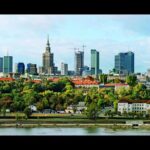
At around 20 minutes, the tour includes the Palace of Culture and Science (PKiN). This is Warsaw’s famous high-rise, originally known as Joseph Stalin’s Palace of Culture and Science. After destalinization, Stalin’s name was removed from parts of the building, including the colonnade, the interior lobby, and one of the sculptures.
Construction started in 1952 and finished in 1955, described as a gift from the Soviet Union. The building was made with Soviet and Polish labor, with the notes referencing 3,500 to 5,000 Soviet workers and 4,000 Polish workers.
Today, it is 237 meters tall, and it is the tallest building in Poland. The tour also includes the design angle: it was motivated by Polish historical architecture and American art deco high-rise styles, and it was designed in the Seven Sisters style, which gives it the nickname the Eighth Sister.
You also get a fun, slightly trivia-like detail: it was the tallest clock tower in the world until Tokyo installed a clock mechanism on the NTT Docomo Yoyogi Building.
Because this stop is short, you are mostly getting the external story and orientation. Still, it is one of the most useful places to visit early, because PKiN acts like a landmark for understanding Warsaw’s central layout.
A few more Warsaw tours and experiences worth a look
Vistula Boulevards: a 5-kilometer reset and the Mermaid photo stop
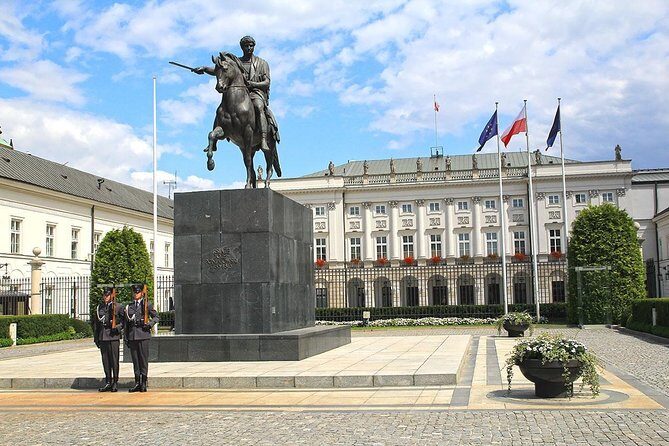
After the big building, you get a more human scale at the Vistula Boulevards. The tour describes a 5-kilometer-long riverside promenade. It is good for walking, biking, and seasonal nightlife, but for this tour the value is simpler: you get a break from dense streets and a classic riverside view.
The boulevard is described with details like gazebos, sun loungers, stone benches, and seats made from tree branches. There is also a lookout point and a mini beach with wicker baskets.
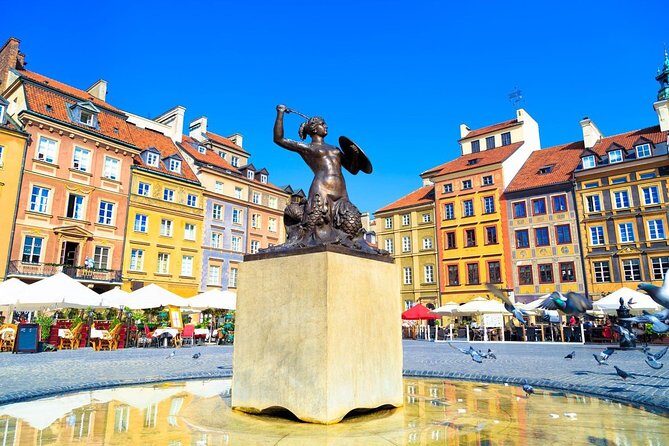
And then you hit the signature symbol: the Mermaid monument. This is one of those places where you can get an easy photo and feel like you actually stepped into Warsaw rather than just driving past it.
You get about 15 minutes. Think of it as a reset button, not a full stroll along the entire promenade.
PGE National Stadium: modern architecture near the center
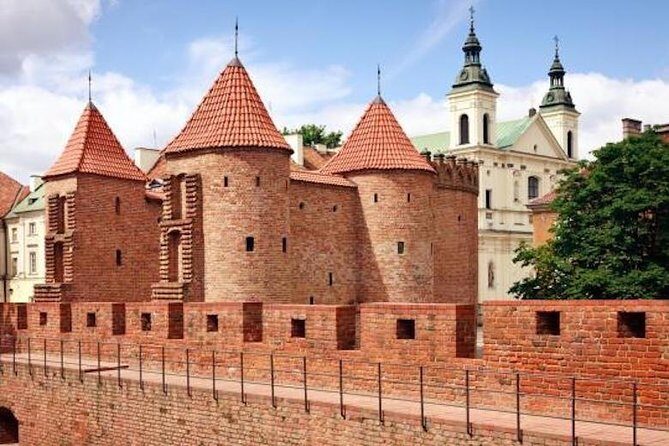
The tour adds the PGE National Stadium (official name since 2015). It is a retractable roof football stadium, with a seating capacity of 58,580. Construction began in 2008 and ended in November 2011, built on the site of the former 10th-Anniversary Stadium.
The retractable PVC roof unfolds from a nest on a spire suspended above the pitch. The description compares the inspiration to systems used in Frankfurt and notes a similarity to a renovated roof in Vancouver. It is the kind of detail that makes you look up and notice the engineering rather than just the fact that it is a big stadium.
This stop is about 15 minutes. It is not a stadium tour. It is a sighting and context stop, and it works well because it shows how Warsaw builds forward, not only how it remembers the past.
Warsaw Uprising Museum and the people behind the artifacts
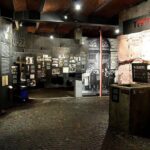
Next, you move to Warsaw Uprising Museum in the Wola district. This is one of the most emotionally charged stops on the itinerary, and the way it is framed is practical: it focuses on the uprising through collections and research.
The museum’s institution began in 1983, but the building work took years. It opened on July 31, 2004, marking the 60th anniversary. The tour description emphasizes that the museum sponsors research into the uprising’s history and into the Polish Underground State.
You also get a concrete feel for what is inside, even if you are not spending long: artifacts ranging from weapons used by insurgents to love letters. That mix matters. It gives the human scale, not just the military scale.
The notes also include named leadership: the museum director is Jan Ołdakowski, and historian Dariusz Gawin is listed as his deputy. Having those names in mind helps the museum feel like a real institution with real scholarship behind it.
This stop is about 15 minutes, so you are likely doing an exterior orientation or a quick guided touchpoint. Still, it is timed well because it sets you up for the nearby monuments.
Maria Sklodowska-Curie: a quick birthplace-and-museum look
Then you get a short stop at Monument to Maria Sklodowska-Curie. The tour mentions her birthplace and a museum stop connected to her legacy, noting she was the first female Nobel Prize winner.
This is only about 5 minutes, so treat it as a brief acknowledgment, not a full scientific biography. But in a 3-hour tour, quick stops like this help round out the theme beyond politics and war.
If you care about science history, you might want to come back on your own for more time later.
Uprising monuments: how the story was shaped over time
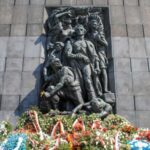
After the museum, the tour moves to the Warsaw Uprising Monument. This one is worth paying attention to because it is not just about what is shown. It is also about what was allowed to be said.
The notes explain that monuments were first established in Warsaw in the 1970s. Before that, there were only monuments to Red Army soldiers and to the Polish National Army. The tour also adds that the role of the Polish National Army in the 1944 city fights was exaggerated and overrated.
There is a blunt historical detail here: many victims of the uprising were buried in graves around the city, then later exhumed and buried in mass graves far away from the city center. Before 1989, the tour says there was no mention of the uprising allowed, and the earlier memorials included a small concrete monument to victims of the war with Nazism.
You get about 20 minutes across this area. It is enough time to understand the message and then take a moment to notice how the monument fits into the surrounding streets.
Umschlagplatz and Mila 18: the Holocaust through specific locations
The last part shifts from uprising memory to Holocaust geography. Two stops carry major weight:
Umschlagplatz
This term was used during the Holocaust for holding areas adjacent to railway stations in occupied Poland, where Jews from ghettos were assembled for deportation to Nazi death camps. The tour notes that Warsaw had the largest collection point next to the Warsaw Ghetto. You get about 10 minutes.
Memorial at Mila 18
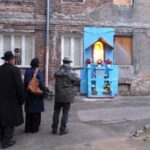
Ulica Miła 18 is described as the headquarters bunker of the Jewish Combat Organization, a resistance group in the Warsaw Ghetto during WWII. The stop is about 5 minutes.
What makes these stops valuable in a short tour is that they connect the dots between one place and another. Even if you only have minutes, you come away with a clearer map in your head: ghetto life, mass deportation assembly, and resistance locations.
These are not light photo stops. I suggest you keep your phone ready for a quick shot, but also take a real minute to just look. The locations are specific, and that specificity is the point.
Price and what you actually get for $336.44 per group
The price is $336.44 per group for up to 3 people, with about 3 hours of sightseeing. That works out very differently depending on how you split it:
- For 1 person, it is basically a private guide rate.
- For 3 people, it becomes roughly one-third of that cost per person.
This is where the value shows. You are buying time, transportation convenience, and interpretation. In a short 3-hour window, you cannot easily replicate this type of curated route without paying for rides, dealing with transit transfers, and spending your own time researching.
Also, many stops are listed with admission ticket free. That reduces the usual “tour math” problem where costs sneak up after you book. The trade-off is, again, time: you get a guided overview, not long museum deep dives.
If you want a first-day orientation that also respects Warsaw’s heavier chapters, the price starts to feel fair.
Who this tour suits best (and who might want more time)
This tour is a strong match for you if:
- you want a first sweep of Warsaw in a short window
- you like clear driving + quick walks so you do not lose hours navigating
- you want a mix of parks, the Old Town, and major memorial geography
- you appreciate a guide who gives context while you move
It might be less ideal if:
- you want long museum stays and deep galleries
- you dislike emotionally heavy sites, even when presented through location-based stops
- you prefer long free time with no structure
Should you book this Warsaw best-of tour?
Yes, if you want a high-value, well-paced overview that includes both the postcard parts of Warsaw and the places you need to understand to get the full story. The private Mercedes format is a real advantage in a compressed schedule, and the guided emphasis on named people and specific locations makes the history easier to grasp.
Before you book, be honest with yourself about the pace. This is a fast loop. If you know you will want extra time in places like memorial museums or the Old Town, plan to do a follow-up walk on your own after this tour. Treat it like the best kind of preface.
FAQ
How long is the Private Tour: Warsaw best of 3-Hour Sightseeing Tour?
It is about 3 hours.
How much does the tour cost and what is included for that price?
The price is $336.44 per group, up to 3 people. The tour includes a private Mercedes sightseeing experience with pickup and drop-off in Warsaw.
Is pickup available, and where does the tour start?
Yes. Pickup and drop-off are offered anywhere in Warsaw.
Is this tour private or shared with other groups?
This is a private tour/activity. Only your group participates.
What language is the tour offered in?
It is offered in English.
Is a mobile ticket provided?
Yes, the tour uses a mobile ticket.
Are admissions required for the stops?
For the listed stops, admission tickets are shown as free.
Can I bring a service animal?
Yes. Service animals are allowed.
What is the average booking lead time?
On average, it is booked about 24 days in advance.
FAQ
Do I need to cancel far in advance for a full refund?
You can cancel for free up to 24 hours in advance for a full refund. After that point, the amount paid is not refunded.