Nikiszowiec has a way of surprising you fast. This private tour in Krakow’s region in the Katowice area (yes, it’s a very different side of Poland) connects street-level architecture to the lived stories of Silesia, from interwar autonomy to communist-era changes. I especially like how the route blends industrial history with everyday details, and how the art stops make the place feel human, not museum-still.
My second favorite part is the value: most stops are free to enter (with the museum visit included), so your money goes to the guiding and the narrative thread. The one thing to consider is that the experience requires good weather, so if skies are rough you may need to plan around a rescheduled date.
Key things that make this tour worth your time
- Silesian storytelling with a strong local lens tied to Nikiszowiec’s layout, purpose-built quarters, and daily routines
- Pułaski Shaft Complex and the former mine setting, including the historic railway for moving people and materials
- Interwar Silesia, then WWII and communism, explained through specific local places like Łukasz Kohut – Ślōnsko Ambasada
- Art that matches the neighborhood: watercolors by Grzegorz Chudy and Janów Group mural reproductions in the Skwer Artystów
- A real-life apartment interior in the Museum of Katowice History (City Ethnology Department), not just outside views
- A private group format in English, with a guide who can pace the stops to your group (and gets praised for it)
In This Review
- Nikiszowiec in 2 hours 45 minutes: what $93.45 buys you
- Starting at Kościół pw. św. Anny and getting your bearings fast
- Zillmann Square and the urban plan behind Nikiszowiec’s streets
- Liberation Square portals to the Historic Mining District: the daily-life storyline
- Łukasz Kohut’s Silesian Embassy: interwar autonomy to communism
- Pułaski Shaft Complex: coal-mining work and the historic railway detail
- Art across the neighborhood: watercolors, murals, and a museum flat
- What the guide experience feels like (and why Malwina gets named)
- Who should book this private Nikiszowiec tour?
- Should you book? My practical take
- FAQ
- Where does the tour start?
- How long is the Nikiszowiec Industrial District private tour?
- How much does it cost?
- Is it offered in English?
- Is this a private tour or a group tour?
- Are tickets included for the stops?
- When will I receive confirmation after booking?
- Is the tour affected by weather?
- Can I cancel for a full refund?
Nikiszowiec in 2 hours 45 minutes: what $93.45 buys you
This is a private tour priced at $93.45 per person, lasting about 2 hours 45 minutes. You’re not doing a long “see everything” checklist. Instead, you get a focused walk through Nikiszowiec and the surrounding points that explain why this district looks the way it does.
For me, the value angle is simple: the route is packed with meaningful stops, but most entries are free, and only the museum portion is explicitly included. So you’re paying primarily for the guiding—how the tour connects architecture, history, and art—rather than for ticket after ticket.
The format is also practical. It’s offered in English, and it runs as your own group only. That matters because Nikiszowiec can be visually distinctive (especially the planned housing and industrial feel), and it’s easier when a guide helps you interpret it instead of you trying to piece it together alone.
If you’re the type who likes to understand a place by its “how it works” details—who lived where, what the work system was, why certain areas were built—this fits your style. If you’re hoping for a theme park version with nonstop photo stops, you might want to temper expectations. This is more about meaning than spectacle.
Starting at Kościół pw. św. Anny and getting your bearings fast
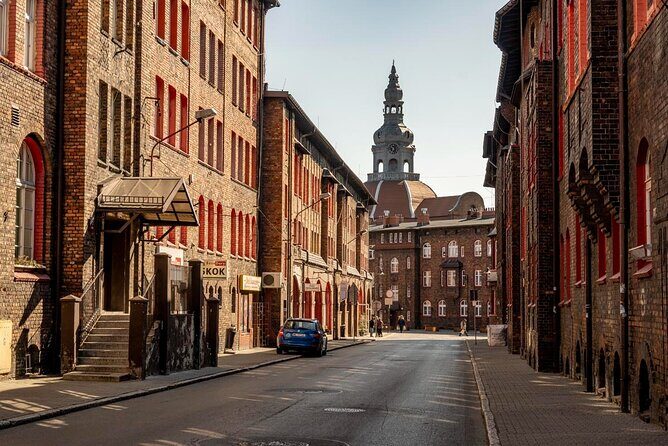
The meeting point is Kościół pw. św. Anny in Katowice, at plac Wyzwolenia 21, 40-423 Katowice, Poland. The tour begins right away with a “set the frame” stop—so you’re not walking around guessing what you’re looking at.
At Stop 1, you spend just a few minutes at the Kościół pw. św. Anny w Katowicach. The point isn’t the church as a standalone attraction. It’s the opening note: Nikiszowiec is introduced as a historical relic tied to local ethnicity and community identity. That’s helpful, because Nikiszowiec’s architecture can otherwise look like only bricks, blocks, and streets. The guide gives you a reason to pay attention beyond the visuals.
Then you move on to the district’s planning logic through the landscape. In a short tour, those early cues matter. They help you interpret later moments like common portals, quarter divisions, and the residential/industrial connection.
This start is also a good sign if you care about clarity. The tour isn’t built as a series of random stops. It’s structured so each place answers the next question.
You can also read our reviews of more private tours in Krakow


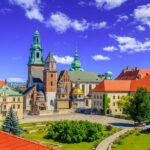
Zillmann Square and the urban plan behind Nikiszowiec’s streets
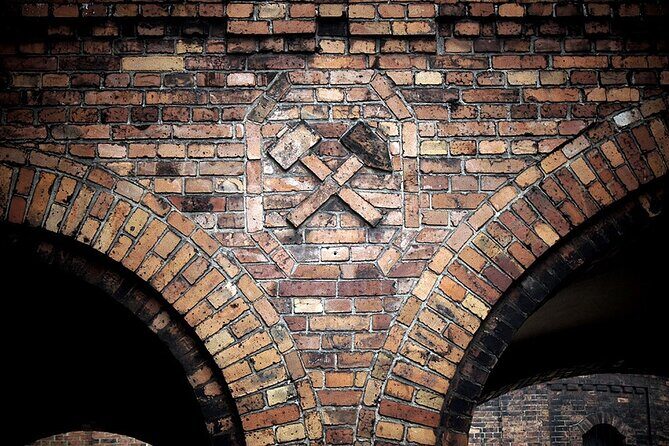
Stop 2 is at skwer Emila i Georga Zillmannów (Square of Zillmanns). This is where the tour turns architectural. You learn who the architects were and what their plan tried to solve: how the district’s layout would support daily life, not just housing.
Then the walking continues into Nikiszowiec itself, including a pass by areas tied to Liberation Square and the “common portals.” That’s a key detail. Nikiszowiec isn’t only about big views. It’s about how people move through shared spaces and how the district groups everyday life into functional parts.
At Stop 3, you’re introduced to the urban planning concept—how the area is divided into quarters, what purpose each quarter served, and how that structure shaped routines for residents. If you like connecting the dots, you’ll probably enjoy this part because it makes later stops feel logical rather than separate.
A small practical thought: because the tour involves multiple “passing to” moments and a few longer explanations, you’ll get the best experience if you wear comfortable shoes and keep your energy steady. You’re walking through the district as you learn its rules.
Liberation Square portals to the Historic Mining District: the daily-life storyline
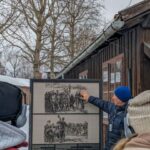
This is where Nikiszowiec becomes more than scenery. The route continues into the Nikiszowiec Historic Mining District, where Stop 4 gives a longer stretch (about 30 minutes) focused on what daily life was like—then and now.
You’ll get explanations tied to:
- how residents’ routines worked in earlier periods
- how the district functions in the present
- how the residential pattern links with surrounding quarters and their interior gardens
- what life meant during World War 1 and the Silesian Uprisings
That time period layering is the real value. Many cities teach WWI like a distant timeline. Here, the tour frames it through place—what changed, how people were affected, and why the district’s story isn’t over just because the mine-era looks faded.
One reason this section is so satisfying: it slows down enough for context. The route doesn’t only point at buildings. It tries to explain the logic behind them, including the social pressure and identity shifts that came with major conflicts.
If you’re traveling with kids, this part tends to be a winner because it turns “history” into living details—school, streets, work life, shared spaces—rather than only dates.
Łukasz Kohut’s Silesian Embassy: interwar autonomy to communism
Stop 5 is Łukasz Kohut – Ślōnsko Ambasada, a place used to explain a specific idea: the meaning of the interwar period and the Autonomous Region of Silesia.
This is a smart stop for anyone who’s puzzled by why Silesia has such a distinct identity. The tour keeps connecting political history to the visible district. Then it continues the storyline through World War 2 and the changes brought by communism to Nikiszowiec.
This section matters because it helps you read the district without oversimplifying it. Nikiszowiec isn’t “old industry town” only. It’s a community that went through regime shifts, and those shifts influenced what life looked like.
If you usually struggle with history tours because they feel like lectures, this is one of the better formats: the tour uses actual local reference points. You’re not asked to memorize a timeline in a vacuum—you’re seeing how a place gets shaped by politics and work systems.
Pułaski Shaft Complex: coal-mining work and the historic railway detail
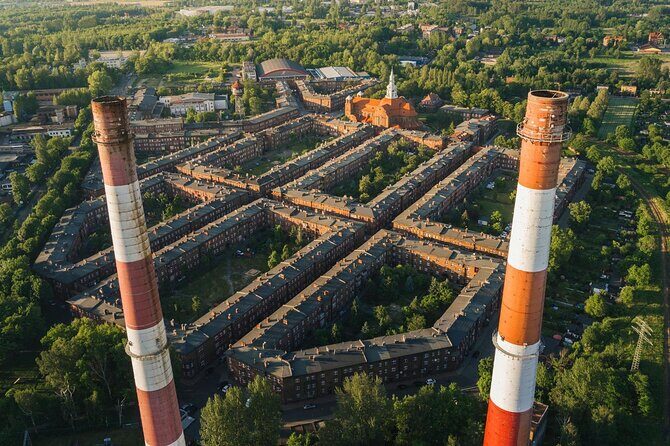
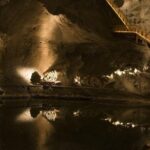
Stop 6 is Pułaski Shaft Complex, where you pass by the former coal mine—the place of work for Nikiszowiec’s inhabitants. This is the industrial “anchor” stop that gives the earlier planning and housing story weight.
You also see the historic railway that used to transport industrial materials and people between industrial estates of Silesia. That one detail is small, but it’s powerful. It turns the district from a background setting into part of an active network. You start to understand how work, transport, and community life were connected.
This stop is also a good moment for photos, but not in a random way. If you take pictures with intention, capture angles that show how the residential feel meets the industrial machinery context. The guide’s explanations make that connection easier to see.
As you move through a mine site or related structures, it’s also a good reminder that the district’s beauty isn’t only visual. Some of it is the design of a system: housing meant for workers, built in step with work demands.

Art across the neighborhood: watercolors, murals, and a museum flat
Stops 7 to 9 shift the emotional tone. Instead of focusing only on work and politics, you get art that interprets Nikiszowiec and its surrounding world.
Stop 7 is Grzegorz Chudy – Atelier z akwarelami, where you look at contemporary paintings of Nikiszowiec, Katowice, and the Silesia region. The guide connects the artworks to Silesian legends, including mythical creatures and how local folklore shows up in art.
Stop 8 is next to the historical Nikiszowiec school: Szkoła Podstawowa im. S. Żeromskiego 53. It’s brief, but it reinforces the idea that this district wasn’t only workers and mines. It included education, community routine, and family life.
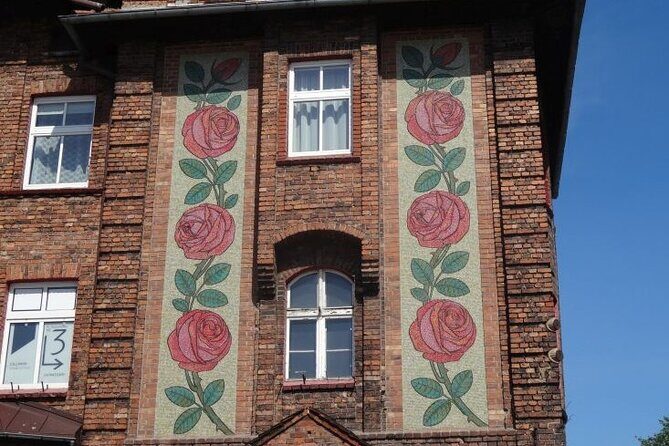
Stop 9 brings you to Skwer Artystów Grupy Janowskiej, where you see colorful murals—reproductions of artworks by top artists from Nikiszowiec. This is where your “place reading” starts to broaden. You’re not only looking at what happened. You’re also seeing how artists turned that life into symbols and color.
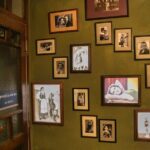
Then you get the included payoff at Stop 10: the Museum of Katowice History. City Ethnology Department. Here, you look inside a typical flat in Nikiszowiec and see original artworks by Janów Group artists depicting daily and festive life. You’ll also encounter surrealistic art linked to a Silesian twist on the Salvador Dalí comparison—the tour uses that playful framing to point out how local imagination could be both grounded and odd in the best way.
This museum stop is why I like the tour even for people who think they don’t “do museums.” You’re not stuck staring at glass cases. You’re seeing interiors and art themes that match the neighborhood you’ve been walking through.
What the guide experience feels like (and why Malwina gets named)
In the reviews, the guide quality is the clear standout. People praise the guide’s knowledge and presentation style—and at least one guide name comes up: Ms. Malwina.
That matters because Nikiszowiec can read like a designed environment, and you’ll only fully enjoy it if someone explains what you’re seeing: the district’s purpose-built logic, the meaning behind the quarter divisions, and how political shifts translate into lived changes.
If you like tours where the guide talks clearly, connects the stops, and keeps the pace realistic, this one fits. One review calls out synergy between guide explanation and the places themselves, and another highlights cheerful, informative delivery.
Even better: this is set up as a private tour, so the guide can keep the focus on your group’s interests rather than racing through for strangers.
Who should book this private Nikiszowiec tour?
This is a strong pick if you want:
- an English tour in the Katowice/Nikiszowiec area with clear context
- industrial history connected to everyday life, not just big events
- art stops that feel tied to the neighborhood, not dropped in as random extras
- a format that’s good for families, especially if your kids can handle a story-based walk
It may be less ideal if you only want pure “top postcard views” with minimal explanation. This tour asks you to pay attention to how places function—quarters, gardens, portals, work transport—and the payoff is understanding, not just photos.
Also, since the tour requires good weather, consider planning it for a stretch of days when conditions look stable. The route involves time outdoors passing through parts of the district.
Should you book? My practical take
If Nikiszowiec and Silesia are on your “I want something different” list, I’d book this. For the money, you’re getting a private, English-guided narrative across architecture, mining history, political change, and local art—plus an included museum interior that ties everything together.
The main reason to hesitate is the weather factor. If your trip dates are uncertain or you’re traveling during a period known for rain, you might want a flexible plan.
But if you can go on a day with decent skies, this tour is one of the better ways to understand Nikiszowiec without turning it into a self-guided research project.
FAQ
Where does the tour start?
The tour meets at Kościół pw. św. Anny w Katowicach, plac Wyzwolenia 21, 40-423 Katowice, Poland.
How long is the Nikiszowiec Industrial District private tour?
It runs for about 2 hours 45 minutes (approx.).
How much does it cost?
The price is $93.45 per person.
Is it offered in English?
Yes, the tour is offered in English.
Is this a private tour or a group tour?
This is a private tour/activity. Only your group participates.
Are tickets included for the stops?
Most stops list admission as free, and the Museum of Katowice History (City Ethnology Department) has admission included.
When will I receive confirmation after booking?
You’ll receive confirmation within 48 hours of booking, subject to availability.
Is the tour affected by weather?
Yes. This experience requires good weather; if it’s canceled due to poor weather, you’ll be offered a different date or a full refund.
Can I cancel for a full refund?
Free cancellation is available. You must cancel at least 24 hours in advance for a full refund.