REVIEW · WARSAW
Must-do sites in Warsaw: retro car private tour with hotel pickup
Book on Viator →Operated by Warsaw Behind the Scenes · Bookable on Viator
A vintage car tour makes Warsaw click. This private 3-hour route ties together the big landmarks of Warsaw’s center, from Castle Square to remembrance at Piłsudski Square, using a retro minibus style ride when roads allow it.
What I like most is how it mixes comfort and story: hotel pickup and drop-off take the stress out of getting started, and an English-speaking guide helps you understand why each stop matters. One thing to weigh: the vehicles are vintage, so no air-conditioning is common, and some seats may not have belts.
In This Review
- Key highlights at a glance
- Why a retro vehicle helps you get Warsaw’s “shape” fast
- Hotel pickup and drop-off: it’s convenient, but plan your timing
- Castle Square and King Sigismund’s Column: the political backbone of Old Town
- What makes this stop work
- Exterior of the Royal Castle: WWII destruction and the will to rebuild
- St. John’s Archcathedral: Gothic, oldest church, and national ceremonies
- If you care about details, ask questions
- Gnojna Góra viewpoint: the practical side of “old Warsaw”
- Rynek Starego Miasta (Old Town Market Square): the mermaid and the rebuilt city
- A note on how it feels
- Barbican and the medieval walls: protection that mattered
- Good footwear pays off here
- Krasiński Square and the Warsaw Uprising Monument: remembering 1944
- Piłsudski Square and the Tomb of the Unknown Soldier: a final national moment
- What to wear and expect for the 3-hour pace
- Price and value: is $168.58 per person fair for this format?
- Who should book this retro Warsaw classic-sites tour?
- Should you book it? My take
- FAQ
- How long is the retro car private tour?
- Is hotel pickup and drop-off included?
- What sights are included in the route?
- Do I need to buy tickets for the stops?
- What language is the tour offered in?
- Is the tour private?
- What kind of vehicle will I ride in, and is it comfortable?
- Is it mostly walking?
- Can children join, and is there a height requirement?
- What if I need a service animal?
Key highlights at a glance
Retro vehicle ride plus walking where cars can’t go
Hotel pickup and drop-off included (transfers count in the 3 hours)
Top Old Town classics: Castle Square, St. John’s, Rynek Starego Miasta, Barbican
WWII and 1944 Uprising sites included: Krasiński Square and Piłsudski Square
English guide for a personal, private-group pace
Why a retro vehicle helps you get Warsaw’s “shape” fast
Warsaw can feel a little like a puzzle at first. You’ve got grand squares, carefully rebuilt streets, and layers of history stacked on top of each other. This tour is designed to solve that puzzle in a practical way.
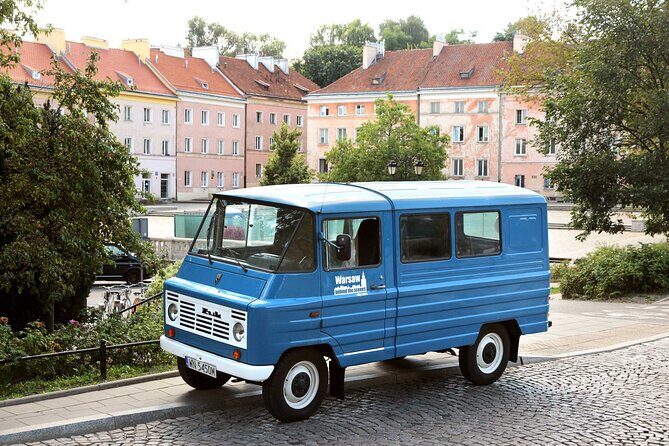
You start with the pieces that set the map. Castle Square (Plac Zamkowy) is the symbolic heart and the gateway into the Old Town, so it’s a smart first stop. From there, you move through the medieval-style core on foot, where classic cars simply don’t belong. The retro vehicle is used mainly for transfers between areas, then you walk the rest.
That mix matters. If you try to do everything on foot from the start, you’ll burn time before you even reach the core sights. If you only rely on taxis, you’ll lose the context that comes from standing in front of the buildings and monuments while your guide connects the story. This format hits the middle: transport to position you, then walking segments that actually let you see and register what you’re looking at.
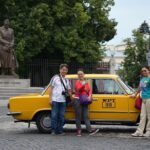
Also, the ride itself is a big part of the fun. In past groups, the experience included a ride in a Żuk (the classic compact van), and the kids loved it. If you’re traveling with family, that “weird-cool vehicle” factor isn’t a gimmick; it’s a built-in attention grabber.
You can also read our reviews of more private tours in Warsaw

Hotel pickup and drop-off: it’s convenient, but plan your timing
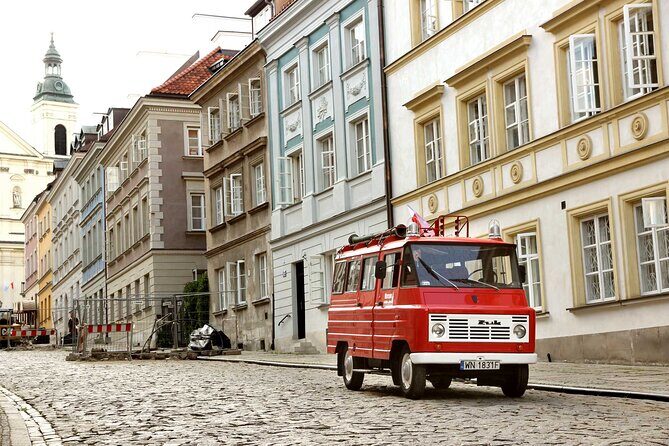
The big logistics win is simple: you’re picked up from your hotel or apartment and dropped off at the end. That means no hunting for a meeting spot, no figuring out the best tram stop, and no “we’ll just meet in the lobby and hope for the best” chaos.
Here’s the practical consideration: pickup time counts in the tour’s total duration. If your hotel is far out, you may spend some of your paid hours in transit before the first stop. The operator even notes that it can be better to meet in the city center if your lodging is located far away.
So how should you handle it? If you want the maximum time on the sights, I’d ask yourself one question before booking: is your hotel close to the center? If not, consider whether meeting closer to Old Town or the main sights would save you time without sacrificing the convenience.
Castle Square and King Sigismund’s Column: the political backbone of Old Town
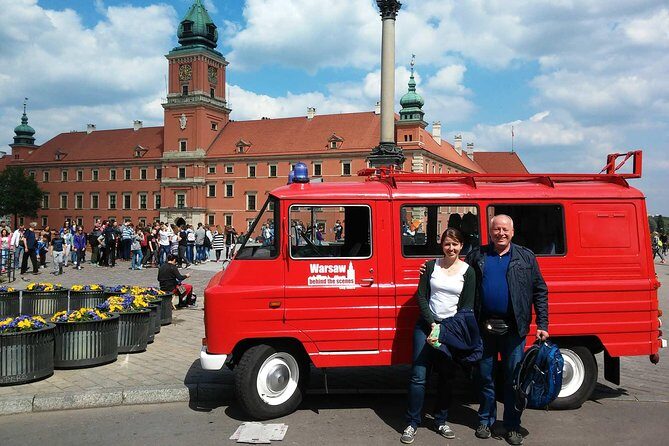
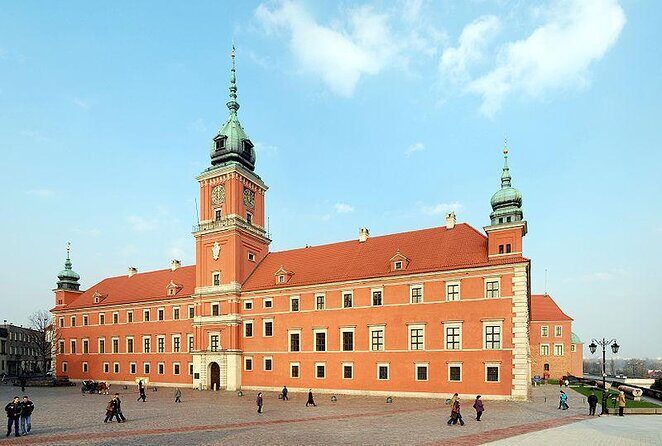
Your tour begins at Castle Square (Plac Zamkowy). This is one of those places where Warsaw makes sense fast. The square is the gateway into the Old Town and the symbolic heart of the city. Your guide explains how it relates to the city’s origins—over 700 years of history is tied to this spot—and how the square became a stage for royal power and national identity.
From there, King Sigismund’s Column (Kolumna Zygmunta) is a quick stop in the middle of the square. It commemorates King Sigismund, the monarch who moved Poland’s capital from Kraków to Warsaw. The guide also explains why this ruler—Swedish-born—ended up becoming such a central figure in Polish history. Even if you only catch the high points, that’s enough to frame what you’ll see later.
What makes this stop work
This early sequence gives you the “why” behind the sights. Without it, you’d just see impressive buildings and monuments. With it, you start to understand which figures and decisions shaped the city’s role in Europe—and why Warsaw keeps rebuilding and reasserting itself.
Exterior of the Royal Castle: WWII destruction and the will to rebuild
Next you visit the exterior of the Royal Castle, once the official residence of Polish kings. Even though you’re not going inside, this stop is still powerful because you’re standing outside a national symbol and hearing what happened to it.
During World War II, the castle was looted and destroyed. After the war, it was later meticulously rebuilt. That rebuilding story isn’t just architecture trivia. It’s a message about historical continuity and national determination—one you’ll feel again later when the tour moves into WWII remembrance.
If you’re the kind of traveler who likes your history straight and chronological, this stop sets the pattern of the whole day: breakage, survival, restoration, and memorialization.




St. John’s Archcathedral: Gothic, oldest church, and national ceremonies
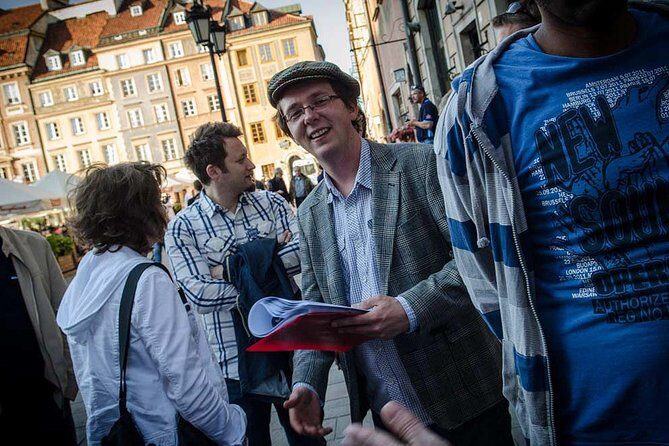
St. John’s Archcathedral Basilica of St. John the Baptist is a major shift from squares and royal power into the religious and ceremonial side of Warsaw. This church is described as the oldest in Warsaw and tied to Poland’s national pantheons.
The Gothic architecture gives you that “this is old, this is serious” feeling the moment you approach it. Your guide connects it to Polish monarchy, state ceremonies, and the history of the Polish–Lithuanian Commonwealth. In other words, the church isn’t treated as a standalone building. It’s presented as part of how the state expressed itself.
If you care about details, ask questions
Because your guide is speaking English and moving at a private-group pace, this is a good moment to ask something like: What’s the link between the church and state ceremonies? If you get the answer, you’ll start seeing symbolism everywhere you look.
Gnojna Góra viewpoint: the practical side of “old Warsaw”
After the main landmarks, the tour makes a small, deliberate detour to Gnojna Góra, a viewpoint that’s not as famous as the big squares. The payoff is context.
This stop helps you understand everyday life in historic Warsaw and gives clues about the city’s former defensive systems and river trade routes. That’s useful because it prevents Warsaw from becoming only a museum of monuments. It reminds you the city was also about survival, movement, and commerce.
It’s a short stop, so you don’t need a long attention span—just enough time to look around, take in the viewpoint, and let your guide translate what you’re seeing into the city’s logic.
Rynek Starego Miasta (Old Town Market Square): the mermaid and the rebuilt city
Rynek Starego Miasta is where the Old Town’s “center of civic life” vibe really lands. This is the market square surrounded by colorful townhouses rebuilt after World War II, and your guide ties that reconstruction to stories and legends.
One of the biggest is the Warsaw Mermaid legend, which is linked to the city’s symbol. Even if you already heard the mermaid story elsewhere, hearing it in this physical space makes it feel more grounded. Your guide explains how the square functioned as a hub for civic life for centuries, not just as a pretty backdrop.
A note on how it feels
Old Town squares in many European cities can feel polished and touristy. Here, the key difference is the emphasis on rebuilding after destruction. That changes the emotional tone of the place. It’s still beautiful, but it also carries weight.
Barbican and the medieval walls: protection that mattered
Next is Warsaw Barbican (Barbakan Warszawski). You walk along medieval defensive walls to reach this fortified gateway. This stop is a reminder that Warsaw was built to defend itself, not just to impress visitors.
Your guide explains what the fortifications were meant to do and also how this area was reconstructed after the war to return it to its historic appearance. That’s a recurring theme in the day, and it’s one reason this tour works as a single arc rather than a random list of stops.
Good footwear pays off here
Because these are walking segments, comfortable shoes matter. You don’t need hiking gear, but you do want soles that handle uneven Old Town surfaces without slowing you down.
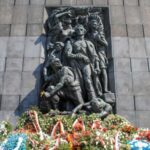
Krasiński Square and the Warsaw Uprising Monument: remembering 1944
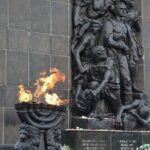
After the Old Town focus, you head outside the center area to Krasiński Square to see the Warsaw Uprising Monument. This is where the tone becomes more solemn.
Your guide explains the 1944 uprising against Nazi occupation and the immense sacrifices made by Warsaw’s residents. It’s not treated as a distant fact from a textbook. It’s presented as a human story tied directly to the city’s identity—and to why Warsaw’s wartime scars are still visible in how the city memorializes itself.
If history is only half your interest, this stop might still land. Monuments like this make you stop talking and start looking.
Piłsudski Square and the Tomb of the Unknown Soldier: a final national moment
The tour finishes at Piłsudski Square with the Tomb of the Unknown Soldier, one of Poland’s most important national memorials. It’s a quiet ending built for reflection.
Even if you’re tired after walking, this is the kind of place where a short pause is worth it. The guide helps frame what the memorial represents, and you get one last big “Warsaw story point” before you’re sent back to your hotel.
What to wear and expect for the 3-hour pace
This is a 3-hour tour approx., and the exact time can shift because pickup and drop-off count. Expect a schedule with short stops and walking segments between them. The plan includes time limits like 10–20 minutes per location, so it’s not rushed in a chaotic way, but it does keep moving.
Practical advice:
- Wear comfortable clothing and suitable footwear.
- Plan for walking in the Old Town area, since cars aren’t permitted there.
- If you’re traveling in winter, know the vehicles have heating, but some do not have air-conditioning (and classic vintage minibuses may not have seat belts).
Seat belts: some historic vehicles may not have them, though that’s permitted for historic vehicles. If you’re sensitive to that, check with the operator when booking and choose your seating preferences if possible.
Price and value: is $168.58 per person fair for this format?
At $168.58 per person for about 3 hours, this isn’t a budget transfer-only activity. You’re paying for three things you can’t easily replicate on your own:
- A private, English-speaking guide who connects the dots between the sites (rather than you reading plaques on your own).
- Hotel pickup and drop-off, which can save you real time, especially if you’re not staying near the sights.
- A retro vehicle experience, used for transfers so you get the fun without sacrificing practicality.
Also, the tour plan notes free admission for the listed stops (at least for the specific sights highlighted like Castle Square, King Sigismund’s Column, St. John’s Archcathedral, Rynek Starego Miasta, and Barbican). That helps keep your “out-of-pocket” costs predictable.
Where you get extra value is group size. Even though the minibus capacity is up to 8 passengers and the operator has a fleet of 5 minibuses, this is still a private tour for your group. If you’re traveling with family or friends, you can end up with a very good cost-to-convenience ratio because you’re not splitting time with strangers.
For families: children over 150 cm can join like adults. If you have a shorter child, Polish law requires mandatory seat boosters, so you’ll want to ask the operator in advance about availability.
Who should book this retro Warsaw classic-sites tour?
Book it if you want:
- A first-time overview that covers the essentials of Warsaw’s center.
- A history refresher that’s guided and chronological, from the origins and royal period through WWII and the Uprising.
- Easy logistics, because pickup and drop-off remove the navigation burden.
- A vehicle that feels like part of the story (the Żuk factor is real, and it helps keep kids engaged).
I’d think twice if you:
- Hate walking, even short segments.
- Are extremely temperature-sensitive in hot weather, given the vintage vehicles may lack air-conditioning.
Should you book it? My take
If your goal is to understand Warsaw quickly without turning your day into a transportation puzzle, this is one of the better choices. The big win is the structure: you start with Castle Square, build through Old Town classics, then close with wartime remembrance at Krasiński and Piłsudski.
And the private part matters more than people expect. In a small group, the guide can pace you, answer questions, and tailor attention to what you find most interesting. In past groups, guides such as Art, Adam, and Mariusz were singled out for making the tour engaging and approachable, including for tweens.
If you’re spending limited time in Warsaw, I’d say yes—especially if you want both iconic sights and the national story behind them, delivered in a way that feels manageable in real time.
FAQ
How long is the retro car private tour?
The tour runs for about 3 hours.
Is hotel pickup and drop-off included?
Yes. Hotel or apartment pickup and drop-off are included, and the transfer time counts toward the tour’s total time.
What sights are included in the route?
The tour includes Castle Square, King Sigismund’s Column, the exterior of the Royal Castle, St. John’s Archcathedral Basilica, Gnojna Góra, Rynek Starego Miasta, Warsaw Barbican, the Warsaw Uprising Monument at Krasiński Square, and the Tomb of the Unknown Soldier at Piłsudski Square.
Do I need to buy tickets for the stops?
For the listed stops, admission tickets are shown as free in the plan.
What language is the tour offered in?
The tour is offered in English.
Is the tour private?
Yes. It’s a private tour/activity, so only your group participates.
What kind of vehicle will I ride in, and is it comfortable?
You’ll travel in retro vintage minibuses/classic vehicles used mainly for transfers. They have heating for winter, but classic vintage vehicles may not have air-conditioning, and some do not have seat belts (historic-vehicle rules apply).
Is it mostly walking?
Yes. The vehicles handle transfers between locations, but you’ll do walking segments at each stop. The Old Town area doesn’t allow cars, so walking is part of the design.
Can children join, and is there a height requirement?
Adults and children over 150 cm (4 ft 9 in) can join. For children under 150 cm, you need seat boosters, which are mandatory in Poland, so you must contact the operator in advance to check availability.
What if I need a service animal?
Service animals are allowed.