REVIEW · GDANSK
Main City in Gdańsk – tour in Polish
Book on GetYourGuide →Operated by Walkative Tours · Bookable on GetYourGuide
Gdańsk hits you fast, if you know where to look. This 150-minute Polish guided walk focuses on the places where trade, punishment, and city rule all left fingerprints on the streets. I like that it’s built around real locations you can stand in front of, not just a background lecture.
Two things I really love are the variety of stops and the way the guide keeps the story moving. You’ll see the Prison Tower and Torture Chamber and then switch gears to the Great Armory, Artus Court, and the Main Town Hall—so the city feels layered instead of one-note.
The one thing to plan for is weather and walking time. It’s a straight guided stroll, and even with unpleasant conditions (like snow and wind), you’ll want to dress for the outdoors and accept that you’ll be on your feet.
In This Review
- Quick take: what makes this Gdańsk walk worth your time
- Gdańsk, Danzig, Dantzig: why this tour starts with the city’s contradictions
- Getting oriented at Złota Brama with yellow umbrellas
- Prison Tower and Torture Chamber: history with sharp edges
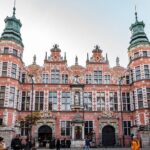
- Great Armory: where defense meets civic pride
- Artus Court: merchants, meetings, and the social engine
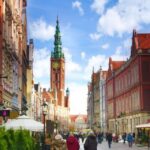
- Main Town Hall: civic authority you can point at
- The guide experience: humor, passion, and real answers
- Price and value: $26 for a 150-minute story, plus a tip model
- Who should book this Gdańsk tour (and who might not)
- Should you book? My practical recommendation
- FAQ
- How long is the Gdańsk tour?
- Where do we meet?
- What sites are included in the tour?
- Is the tour guided?
- What language is the tour in?
- Is the tour wheelchair accessible?
- Is there free cancellation?
- How does the pay model work?
- What is the price?
Quick take: what makes this Gdańsk walk worth your time
- Golden Gate (Złota Brama) meeting point with yellow umbrellas, so it’s easy to find your group
- A 150-minute pace that fits a tight itinerary without feeling rushed
- Stops that connect trade power and political power across centuries
- You’ll see major civic sites like Artus Court and the Main Town Hall
- Prison Tower and Torture Chamber as the tour’s dramatic reality check
- A live Polish guide who answers questions and shifts tone with where you are
Gdańsk, Danzig, Dantzig: why this tour starts with the city’s contradictions
Gdańsk is one of those cities where the name alone tells a story. You’ll hear it called Gdanzc, Dantzk, Dantzig, Danzig—because this place has been pulled into different worlds over time. The tour leans into that feeling. It gives you the map of the city’s identity: wealthy traders, big Baltic shipping, and the kind of money that changes hands—and sometimes ideologies too.
What really helps is how the tour connects everyday streets to major turning points. You get the port-and-trade angle first: Gdańsk grew as the largest port on the Baltic Sea, with grain, wood, and amber earning attention far beyond the region. Then the story tightens into politics and conflict. The guide’s thread moves from Napoleon’s idea of a Free City to the later reality of Nazi expansion, including the headquarters of the NSDAP and the early armed clashes tied to the Polish Post Office in the Free City of Gdańsk.
For you, that structure matters. Instead of memorizing dates, you start reading the city like a set of clues. When you later face the sites of punishment and civic authority, you understand why they were built and why they mattered.
You can also read our reviews of more city tours in Gdansk


Getting oriented at Złota Brama with yellow umbrellas
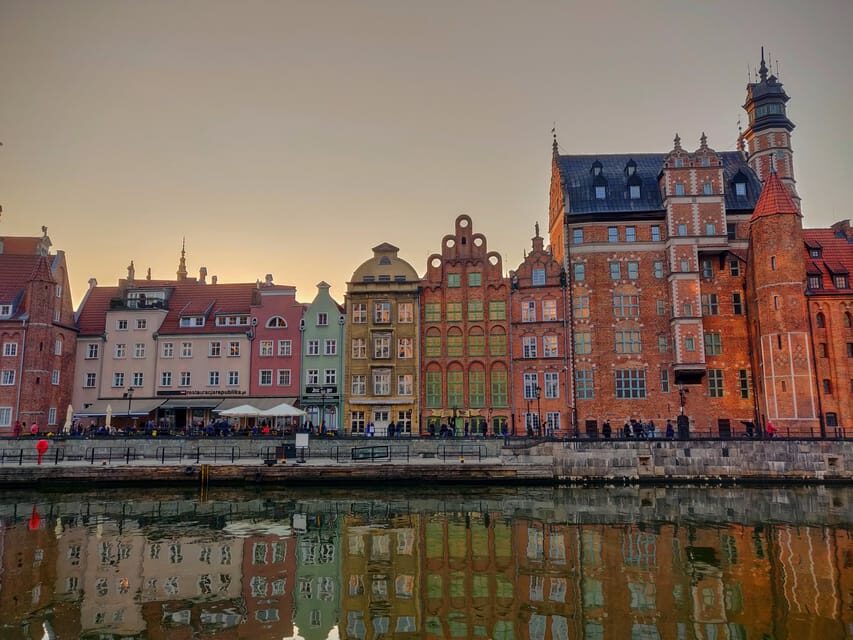
Before you even start learning, you need to start smoothly. This tour’s meeting point is the Golden Gate (Złota Brama), and the instructions are simple: look for the yellow umbrellas.
That matters because Gdańsk’s center can feel like a maze if you’re arriving cold and hungry and still trying to find your bearings. A clear landmark reduces stress, and less stress means you can pay attention sooner. Also, since the tour is 150 minutes long, wasting early time can throw off your whole day—so this setup is practical.
Language is another practical detail: the guide is Polish. If you don’t speak Polish, you’ll still get a lot from the visual storytelling and the site names, but your experience will depend on how much you can follow. If you’re comfortable with basic Polish or prefer to learn from visuals and key terms, you’ll likely be fine.
Prison Tower and Torture Chamber: history with sharp edges
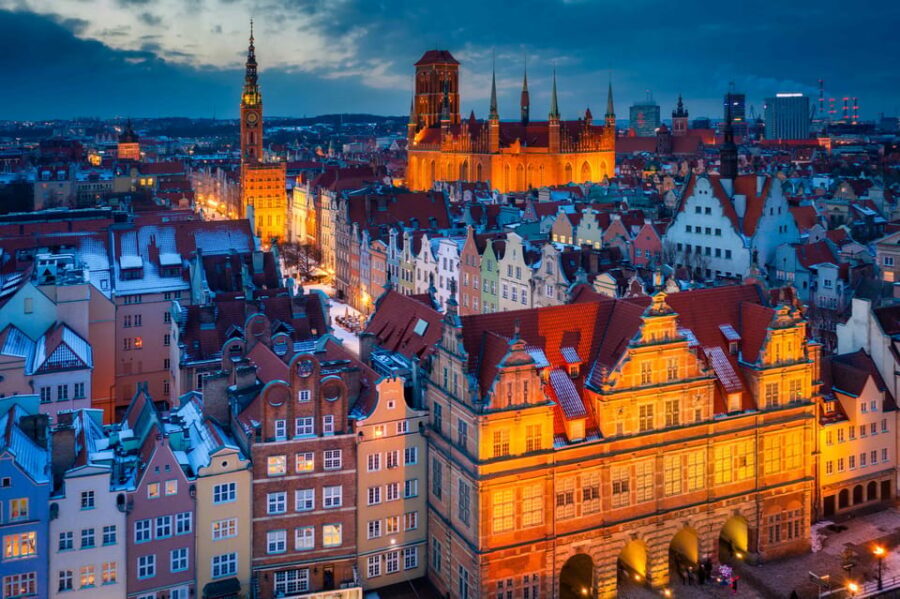
One of the tour highlights is the Prison Tower and Torture Chamber, and that stop is not there for decoration. It’s the tour’s reminder that cities aren’t only made of markets and monuments. They’re also made of enforcement—rules backed by fear.
Here’s what’s valuable for you: the stop creates a contrast. You can look at the trade story—grain, wood, amber, ships—and then look at what happened when order broke down or when power decided the consequences were necessary. That contrast is what makes the rest of the walk click, because you stop seeing “old buildings” and start seeing systems.
The best guides handle this kind of subject with balance: serious when it needs to be serious, but still clear and human. Based on past experiences with this tour’s Polish guides, the tone can include humor in some places and then shift to a more serious register where the subject demands it. That pacing keeps the tour from feeling like a single mood for two and a half hours.
Practical tip: this portion can feel intense. If you’re traveling with kids or anyone who doesn’t handle darker themes well, it’s worth mentally preparing yourself. You’ll get the most out of it if you let it do its job—showing the other side of city life.
Great Armory: where defense meets civic pride
Next up is the Great Armory. Even without getting overly specific, the name tells you what this stop is about: weapons, preparation, and the city’s relationship to protection.
Why it matters on this tour is how it fits between the darker prison stop and the more civic-facing sites like the Artus Court and the Main Town Hall. It gives you a middle layer: not just punishment and not just policy, but the practical machinery behind power.
For you, this stop is useful if you like when a guide explains why certain kinds of buildings exist. An armory is a statement: we expect tension. We keep capacity. We plan for the worst. On a city where the port brought wealth, it also brought attention—sometimes the kind that arrives with conflict.
And because the tour is a guided walk, you’re not just looking at a single façade. You’re learning how the sites fit into the city’s story arc: trade wealth, strategic importance, and then the structures that reflect the need to defend that importance.
Artus Court: merchants, meetings, and the social engine
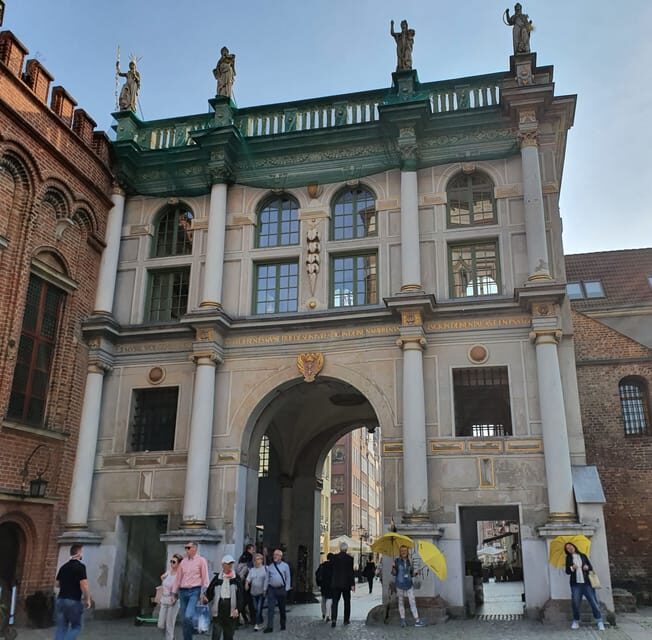
Then the tour moves into Artus Court. This is one of those stops that changes the tone. You shift from “survival and control” into “how people organized themselves around money and cooperation.”
What I like about this part is that it helps you understand Gdańsk as a trading powerhouse, not just a contested territory. The city’s identity as a magnet for wealthy traders is central to the tour’s framing. Artus Court supports that theme because it represents the social and business side of city life—where agreements, gatherings, and civic culture could form.
If you’ve ever wondered why ports create such powerful urban communities, this is where the tour gives you a grounded answer. Wealth travels, but so do habits: the way merchants meet, the way information moves, and the way status becomes architecture.
A good guide will also give you the human rhythm of these places—how they worked and why people cared—so you don’t end the stop thinking it’s just another pretty interior or courtyard.




Main Town Hall: civic authority you can point at
No walking tour of central Gdańsk feels complete without the Main Town Hall. On this itinerary, it’s the capstone: the place tied to governance and the public face of the city.
The value here is in perspective. After stops focused on imprisonment, defense, and merchant life, the Main Town Hall anchors everything back to institutions and decision-making. This is where you can connect the dots between the city’s economic strength and its political weight.
You’ll also understand why the tour emphasizes big historical turns. The city went from being shaped by traders and port growth to becoming part of major European conflicts. That makes civic buildings feel less like background and more like the stage for events that affect real lives.
When I think about tours that are worth booking, I look for this kind of ordering. This one works because it doesn’t treat history as random trivia. It structures your attention so the final stop feels like a conclusion—not a separate checklist item.
The guide experience: humor, passion, and real answers
A walking tour succeeds or fails on the guide. This one is led by a live Polish guide, and the recurring theme is enthusiasm paired with strong story control.
From past experiences shared by people who booked, guides have impressed with a mix of humor and seriousness depending on the site. Names that come up in Polish-led bookings include Kasia, nicknamed Dynamit; Klaudia; and Marcin. Even better, the guides keep the group engaged. People tend to ask questions, and the answers come back thoughtfully, not with a rushed shrug.
If you like tours where you’re not just listening but actively participating, this setup is a good fit. You don’t have to be Polish-fluent to feel the difference, because a guide who reads a group’s energy can pace the story to match your interest level.
Also, weather doesn’t stop this tour style. One booking mentioned snow and wind, and the experience still worked. That’s a quiet reassurance for you: bring warm layers, but don’t assume your day is ruined if the sky turns gray.
Price and value: $26 for a 150-minute story, plus a tip model
The listed price is $26 per person for a 150-minute guided walk. On paper, that’s simple. In practice, it’s about what you’re buying: guided access to multiple major sites, plus someone to stitch those sites into a coherent narrative.
There’s also a “pay what you see fit” model. When you reserve through GetYourGuide, you pay a tip for the guide. In other words, the base cost is only part of your contribution; the ending amount is meant to reflect your experience. For you, that means two things:
- Choose this tour if you want to see the major landmarks with an actual storyteller, not just a self-guided wander.
- Plan to factor in your tip decision based on how much you enjoyed the guide and the pacing.
At the end of the day, good value isn’t about squeezing every minute. It’s about leaving the city with clearer context. If the tour helps you connect Gdańsk’s amber-and-port growth to the political shocks that hit it later, then the price feels fair.
Who should book this Gdańsk tour (and who might not)
This experience is a strong match if:
- You want a structured walk through central Gdańsk’s most important civic and historical stops.
- You like history that connects economics (port trade and amber) to politics (Free City themes and later conflict).
- You prefer a live guide who stays responsive and answers questions.
It may be less ideal if:
- You need a self-paced tour, because this is guided and timed at 150 minutes.
- You can’t do outdoor walking in varying weather without discomfort.
- You don’t speak Polish and want lots of detailed narration you can’t follow—though you’ll still pick up plenty from the sites themselves and the guide’s visual explanations.
If you’re pairing this with other Gdańsk activities, it also works well as a “core orientation” stop. By the time you’ve seen the Prison Tower/Torture Chamber, Artus Court, and the Main Town Hall, your later sightseeing has more meaning.
Should you book? My practical recommendation
Book it if you want to understand Gdańsk as a port city that became a political prize. This tour’s stop selection is smart: it starts with the reality of control (Prison Tower and Torture Chamber), keeps moving through power and preparedness (Great Armory), then balances with merchant/civic culture (Artus Court) and ends where authority becomes visible (Main Town Hall). That storyline helps your brain organize the city fast.
Skip it only if you already plan to cover these exact sites independently and you don’t care about a Polish guide stitching them together. Otherwise, the 150-minute format, the clear meeting point at Złota Brama with yellow umbrellas, and the guide’s track record for keeping groups engaged make it a solid buy for your first or second visit to Gdańsk.
FAQ
How long is the Gdańsk tour?
The tour lasts 150 minutes.
Where do we meet?
You meet at the Golden Gate (Złota Brama). Look for yellow umbrellas.
What sites are included in the tour?
You’ll see the Prison Tower and Torture Chamber, the Great Armory, Artus Court, and the Main Town Hall in Gdańsk.
Is the tour guided?
Yes. It’s a guided walk with a live tour guide.
What language is the tour in?
The tour is guided in Polish.
Is the tour wheelchair accessible?
Yes, the tour is wheelchair accessible.
Is there free cancellation?
Yes. You can cancel up to 24 hours in advance for a full refund.
How does the pay model work?
The tour operates on a pay what you see fit model. When you reserve via GetYourGuide, you pay a tip for the guide.
What is the price?
The price is $26 per person.