REVIEW · KRAKOW
Krakow: Regular Extended City Sightseeing Tour By Golf Cart
Book on GetYourGuide →Operated by AiWTravel Aneta Czopek · Bookable on GetYourGuide
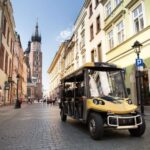
Krakow on a golf cart feels like a cheat code. I really like the low-foot-energy way this tour moves you between major sights, and I also love how the multilanguage audio system helps you keep up in the language you want. One possible drawback: depending on your cart, a solid roof can make it harder to frame tall buildings for photos.
You’ll cover three neighborhoods that usually take way more walking to understand: the Old Town core, the Jewish district of Kazimierz, and Podgorze, tied to the wartime ghetto story. You meet up as a small group, then the experienced driver plus audioguide brings the city to life as you roll along.
This is best if you want history and big-name landmarks without the grind. Just plan for comfortable shoes anyway, because you’ll still want moments for looking closely and taking pictures—especially around squares and church fronts.
In This Review
- Key things that make this tour worth your time
- How 135 minutes by golf cart changes the way you see Krakow
- The “three districts” format: Old Town, Kazimierz, and Podgorze in one ride
- Old Town highlights: Planty, Barbican, Main Square, and the road to Wawel
- Kazimierz Jewish Quarter: Skałka, Wolnica, synagogues, and community streets
- Podgorze and the former ghetto: Ghetto Heroes Square to Schindler’s history
- Live guide plus audioguide: language choice and the extra detail you’ll notice
- Price and value: what $55 covers (and what it does not)
- Logistics that can make or break your experience
- Who should book this Krakow golf-cart tour
- Should you book this tour or DIY it?
- FAQ
- FAQ
- How long is the Krakow golf cart extended city sightseeing tour?
- Where does the tour take you in Krakow?
- Is pickup included?
- Is there a live guide on the tour?
- What languages are available for the audioguide?
- Is the tour wheelchair accessible?
- Are food and drinks included?
- Can I cancel and get a full refund?
Key things that make this tour worth your time
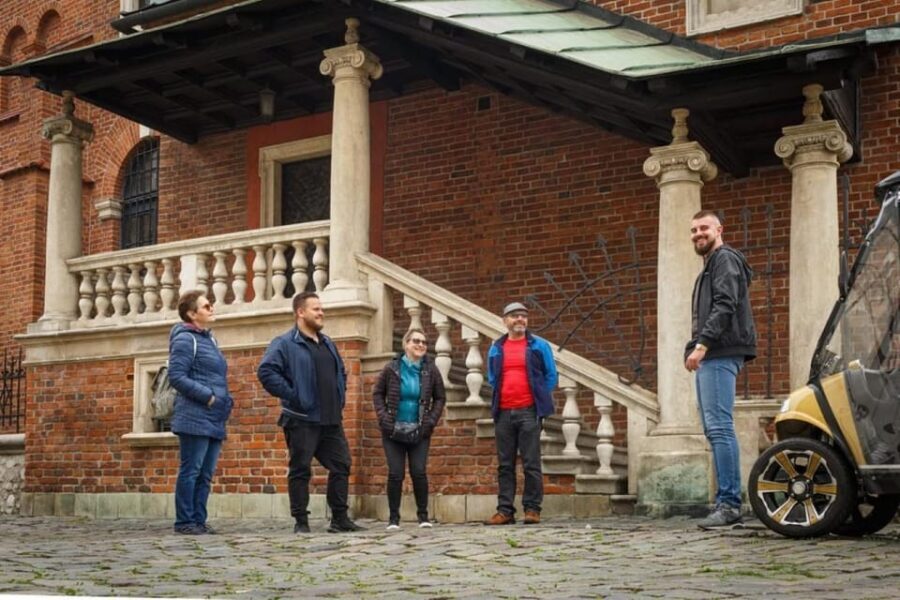
- Golf-cart pacing for up to 135 minutes, so you can see more than you’d manage on foot
- Three districts, one connected narrative: Old Town → Kazimierz → the former ghetto area
- Multilanguage audio with a huge language list, plus a Polish/English live guide
- Driver-led care and commentary (one standout example: Jakub in Poland added extra detail beyond the audio)
- Photo planning matters if your cart blocks angles from inside
How 135 minutes by golf cart changes the way you see Krakow
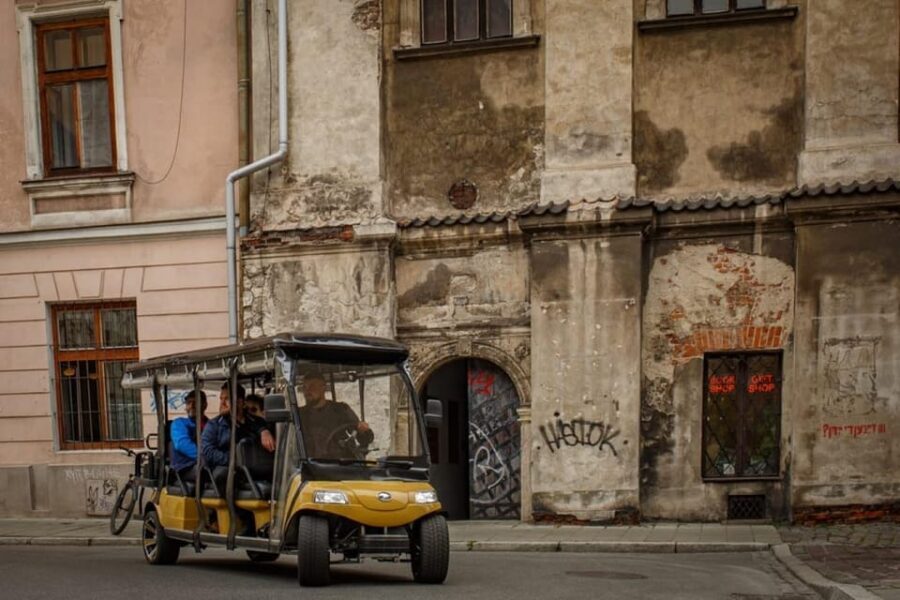
Krakow has a lot going on in a small area. The smart move here is using wheels. This tour runs for about 135 minutes, and that time is spent traveling between districts, not just standing in one place. For many people, that’s the difference between enjoying the day and feeling worn out before you even reach the evening sights.
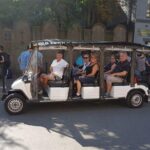
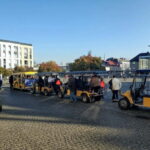
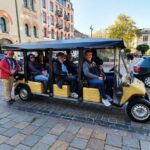
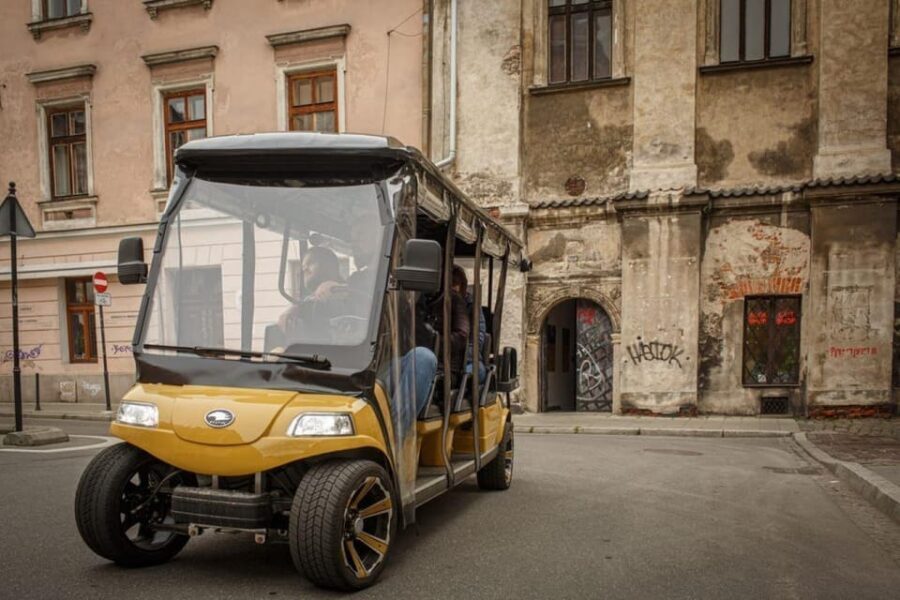
The group setup also matters. The vehicles are built for up to 13 passengers, and the driver assigns seating, so you might not sit right next to the person you came with. That said, the audio system and the shared route mean you’re not losing the experience if you get separated—everyone is getting the same story in sync.
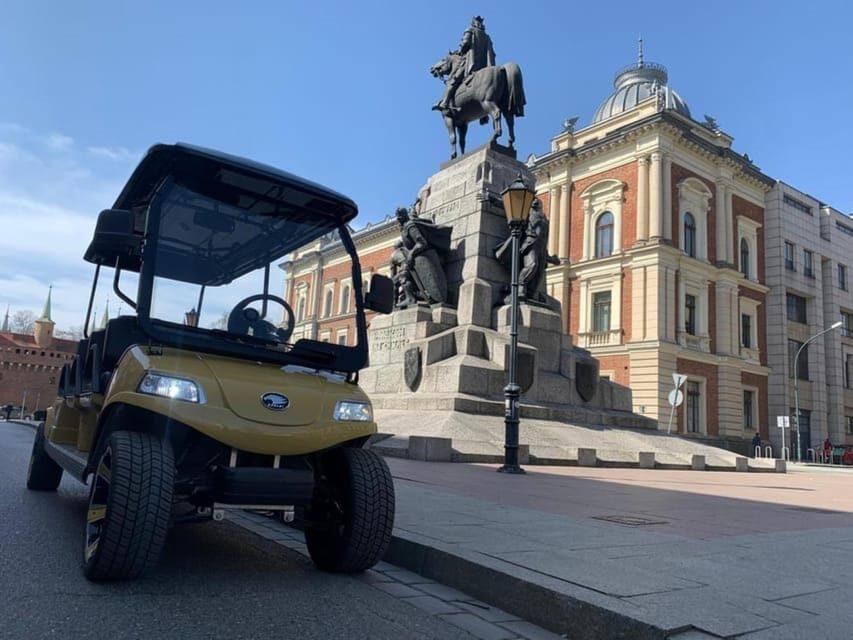
One practical consideration: the carts can limit certain views because of the roof. A reviewer noted that if you’re trying to photograph taller church fronts or upper facades, you may need to take some pictures from outside the cart. You don’t need to panic—just go in expecting that framing can take a little experimenting, and you’ll get better results if you’re ready to stand and shoot when the route slows near major buildings.
You can also read our reviews of more city tours in Krakow
The “three districts” format: Old Town, Kazimierz, and Podgorze in one ride
What makes this tour genuinely useful is the sequence. You start with the classic Krakow center and the city’s older defenses, then you shift into Kazimierz, the Jewish district where religious life, community spaces, and street history show up street-by-street. After that, you go into Podgorze, the area linked to the former ghetto, where the narrative becomes darker and more direct.
That structure helps you avoid the common Krakow trap: seeing beautiful places without the context that explains why they matter. Here, the audioguide is written to connect landmarks to the bigger story of how Krakow functioned, who lived where, and what changed during the war.
Also, the tour is designed so you don’t have to choose between “Old Town highlights” and “Jewish history.” You get both, and you get them with a consistent mode of transport. That consistency keeps your attention. You’re not bouncing between buses and tram stops trying to catch up.
Old Town highlights: Planty, Barbican, Main Square, and the road to Wawel
The Old Town segment is where you build your mental map of Krakow. The narration begins with an overview of Krakow’s history, then it moves you along the Krakow Planty area—an important ring around the center that helps explain the city’s old layout.
From there, you’ll pass through landmarks that show Krakow as a fortified city. Look out for the Church of St. Cross and the Słowacki Theater, then settle in for the defensive timeline: former city walls and the Barbican. The Barbican is especially worth your attention because it’s one of the clearest surviving reminders of how cities defended themselves when travel wasn’t quick and safe.
As you continue, the route brings you into the rhythm of famous squares and streets. You’ll get stops or views related to Jan Matejko Square, St. Florian’s Church, and Sławkowska Street. These aren’t just pretty addresses; they show how Krakow mixes civic life, religious life, and commerce in the same web of streets.
Expect the tour to spotlight museum and street-level culture too. The Czartoryski Museum is on the route, and you’ll also hear about the significance of streets like Sławkowska Street and St. John’s Street, paired with St. John’s Church. If you’re the kind of traveler who likes to understand why locals care about a place, this is a good moment: the audio helps you see these sites as part of a living city, not just background scenery.
Then comes the center of it all: Main Square (Rynek Główny). It’s one of the world-famous squares for a reason, but what the audio does well is give you the background before you drift into souvenir shops and photo stops. You’ll also pass or view Plac Szczepański, the Palace of Art, and then religious landmarks like St. Anne’s Church and Franciscan Church.
The Old Town story is capped with the climb toward power and symbolism—Wawel Castle. Even from a moving cart, Wawel tends to dominate your view. The guide’s context makes the difference: you’re not just admiring a landmark, you’re learning why it became the center point for Krakow’s identity.
Kazimierz Jewish Quarter: Skałka, Wolnica, synagogues, and community streets
Kazimierz is where Krakow stops being just scenic and becomes deeply human. The audioguide shifts tone and explains the Jewish Quarter as a district with its own rhythms, traditions, and institutions. You’ll start with Skałka Church and then move through the area’s spiritual landmarks, including the Church of St. Catherine and Wolnica Square.
Wolnica Square matters because it anchors the district’s public life—community spaces aren’t only inside buildings. From there, you’ll see the route pass through sites tied to religious and historical identity, including the Church of Corpus Christi, then a cluster of synagogues and Jewish institutions that tell a layered story.
As you roll through the older streets, watch for names that keep showing up in Jewish Krakow history: Tempel Synagogue, Kupa Synagogue, and Isaac Synagogue. Then the narrative moves along Ciemna Street and onward to the Old Synagogue, Popper Synagogue, and the Family House of Helena Rubinstein. These names are powerful because they connect the past to identifiable people and institutions, not just vague “history.”
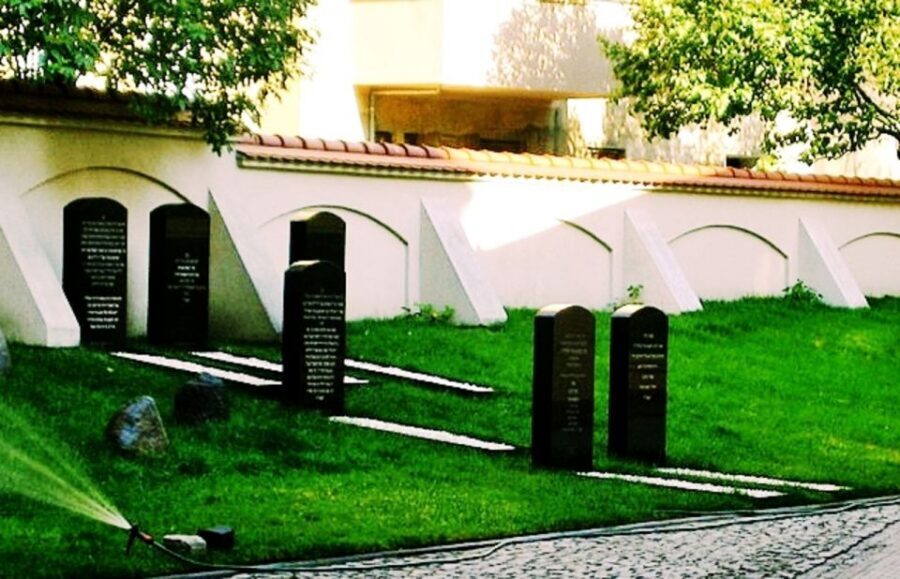
The tour doesn’t stop at synagogues. It also includes details about the cemetery and memory. You’ll be pointed toward Remuh Synagogue and the old cemetery, along with the Memorial Stone of the Nissembaum Family Foundation. That’s an important shift: it reminds you that community life includes places for grief and remembrance, not only worship.
One more street-level note: the audioguide includes Old Jewish Shops in the route. That’s the kind of detail that makes a district feel real. You’re not just hearing about buildings. You’re being guided to imagine daily exchange—where people walked, traded, and met.
Podgorze and the former ghetto: Ghetto Heroes Square to Schindler’s history
After Kazimierz, the tour moves into Podgorze, and the story becomes much more direct. The route includes a Former Ghetto description, which is exactly what you want before you start seeing locations tied to specific wartime experiences.
A key stop in the narrative is Ghetto Heroes Square. Even if you don’t know anything yet, the framing matters. It tells you to read the space as a memorial area, not just a convenient square.
Then the tour highlights survival and moral choices through named places. You’ll hear about the Pharmacy under the Eagle, connected to Tadeusz Pankiewicz. After that, the route brings you to Oskar Schindler’s story and related points about how the ghetto system worked in daily life—what the tour refers to as Life in Ghetto and the presence of the Ghetto Wall.
The Schindler-related part is often why people book this segment, but the value of the tour isn’t only the famous name. It’s that the narration points you back to the mechanics and human scale: restrictions, routines, and the geography of confinement. That’s what helps the landmarks land emotionally instead of staying as isolated facts.
The segment concludes with another religious landmark: Church of St. Joseph. It provides a contrast in tone and architecture—helpful, because it brings you out of the heaviest sections and helps you keep moving without feeling totally overwhelmed.
Live guide plus audioguide: language choice and the extra detail you’ll notice
This tour includes a live tour guide who speaks Polish and English, while the audioguide system supports a long list of languages (English plus many others, including Chinese, Spanish, French, German, Italian, Japanese, Korean, Russian, Swedish, Turkish, and more).
Practically, this is great for mixed-language groups. You can choose an audio language that feels comfortable, while the live guide adds context in Polish or English. If your group includes people who prefer different languages, this format prevents the classic problem of everyone listening to one explanation they half understand.
One reason the reviews stand out is the way the driver added extra information beyond the audio track. In particular, a Polish review praised Pan Jakub as both driver and guide, noting that he shared additional facts and interesting tidbits in two languages. That’s the difference between a “passive” audio tour and something that feels guided. Even if you understand the basic story from the audio, the added human commentary makes you pay attention to details you might otherwise miss.
Price and value: what $55 covers (and what it does not)
At $55 per person for about 135 minutes, this tour is priced like a serious sightseeing package rather than a quick intro loop. You’re paying for transportation between districts, a structured narration, and pickup from the meeting point. You’re also getting the audio system and multilingual support, which can be hard to replicate with a self-guided plan.
Here’s where the value becomes clear: Kazimierz and Podgorze are not “one-hour” areas. If you try to connect them on foot in a single day, you’ll either rush or regret it. This tour uses time better by keeping you moving efficiently between the places that matter most.
One limitation: food and drinks aren’t included. That means you should plan a water bottle or a snack strategy around the tour so you don’t feel rushed to find a place right afterward. The good news is the pacing is designed for sightseeing rather than constant walking, so light refreshments won’t be a bad idea at all.
There’s also a note that the tour includes skip-the-ticket-line. The itinerary here reads like a guided drive with audioguide landmarks, so you shouldn’t assume you’ll be entering every building. But when a stop does include a ticketed moment, skipping friction is a real benefit.
Logistics that can make or break your experience
A few practical things will help you enjoy this tour more smoothly:
First, seating is assigned. The vehicle can hold up to 13 people, and the driver decides who sits where. If you care about photography angles, don’t assume you’ll get the best spot automatically. Pay attention when the driver places you, and be ready to shift if there’s a moment when views open up.
Second, photo angles depend on the cart. One reviewer flagged the roof issue for tall buildings. So if photos matter, go in with a strategy: look for moments when the cart pauses or when you can step out for a quick angle, then capture. Try not to fight the roof from every direction.
Third, the tour is designed for comfort, so wear comfortable shoes anyway. Even with golf-cart transport, you’ll likely want to step around at key sight moments to read details and frame pictures.
Finally, follow the vehicle rules. Pets aren’t allowed, and there are restrictions on smoking and large bags. If you’re traveling with a lot of luggage, plan to travel light so you don’t end up stressed at the meeting point.
Who should book this Krakow golf-cart tour
I’d point you to this tour if you want:
- A single-day plan that covers Old Town plus Kazimierz plus the former ghetto area
- Less walking and less decision-making, since the route and narration do the work
- Comfort with language support via a multilanguage audio system
- A structured way to understand the city, not just take pictures
You might skip it if:
- You prefer a slow, on-foot wandering style where you control every stop and spend lots of time inside venues
- You’re extremely detail-oriented about viewing upper facades from precise angles and photo positions (the roof can limit that)
Should you book this tour or DIY it?
If your goal is to get your bearings fast and cover the big emotional and historical arcs without exhausting yourself, I think this is a smart buy. The golf-cart format saves time and energy, and the way the audio ties Old Town landmarks to Kazimierz and Podgorze makes the whole city feel more connected.
If you love unstructured wandering and want long stops at a few places, then DIY might fit you better. But for most visitors, especially first-time Krakow travelers, this tour’s value is clear: it compresses three major districts into a single guided experience with language support and practical transportation.
FAQ
FAQ
How long is the Krakow golf cart extended city sightseeing tour?
It lasts about 135 minutes.
Where does the tour take you in Krakow?
You’ll explore three main areas: the Old Town, Kazimierz (the Jewish district), and Podgorze, including the former ghetto area.
Is pickup included?
Yes. Pickup from the meeting point is included.
Is there a live guide on the tour?
Yes. There is a live tour guide who speaks Polish and English, plus an included audioguide system.
What languages are available for the audioguide?
The audioguide includes many languages, such as English, Chinese, Croatian, Czech, Danish, Finnish, French, Greek, Spanish, Dutch, Japanese, Korean, Lithuanian, German, Norwegian, Polish, Portuguese, Russian, Romanian, Serbian, Slovak, Swedish, Turkish, Ukrainian, Hungarian, and Italian.
Is the tour wheelchair accessible?
Yes, it is listed as wheelchair accessible.
Are food and drinks included?
No. Food and drinks are not included.
Can I cancel and get a full refund?
Yes. You can cancel up to 24 hours in advance for a full refund.