REVIEW · KRAKOW
Kraków Oskar Schindler’s Enamel Factory Museum skip the line tour
Book on Viator →Operated by Cracow Holidays · Bookable on Viator
This museum turns WWII history into something you can see, touch, and follow step by step. You’ll get a licensed guide to connect the big events to real daily life in Kraków, and the story runs through the working world of Deutsche Emailwarenfabrik (DEF) and Oskar Schindler’s role in saving over a thousand people.
I love that the tour includes your museum ticket, so you’re not juggling admissions while you’re trying to keep your head clear for a heavy story. I also like the tight group size—this caps at 10 travelers—which helps the guide pace the visit and answer questions without rushing you.
A possible drawback: the subject matter is deeply emotional, and 1 hour 30 minutes can feel fast if you want extra time to linger on every exhibit detail.
In This Review
- Key things that make this tour worth your time
- Schindler’s Enamel Factory Museum in Kraków: why this place matters
- Skip-the-line, small group, mobile ticket: how the tour runs
- The main stop: walking into the Fabryka Emalia Oskara Schindlera story
- Schindler’s office and the Ark of Survivors: the most memorable symbolism
- What you’ll actually get from a guided museum visit
- The emotional reality: how to pace yourself inside the museum
- Price and value: is $46.34 worth it?
- Who this tour suits best (and who might want a different plan)
- Should you book the Schindler’s Factory skip-the-line tour?
- FAQ
- How long is the Kraków Oskar Schindler’s Enamel Factory Museum skip-the-line tour?
- What’s the price per person?
- Is museum admission included?
- Where does the tour start?
- Is it really skip-the-line?
- How big are the groups?
- Is a mobile ticket provided?
- What should I bring if I want coffee or tea?
- Is it suitable for most people?
- Can I cancel for a full refund?
Key things that make this tour worth your time
- Skip-the-line access so you waste less time waiting and more time seeing
- Licensed, professional guide who explains the exhibits instead of just pointing and reading text
- Small group of up to 10 for a calmer experience in a serious museum
- Included admission to the Fabryka Emalia Oskara Schindlera museum
- A preserved office and the symbolic Ark of Survivors made of thousands of enamel-like pots
- Mobile ticket for a simpler, lower-stress start
Schindler’s Enamel Factory Museum in Kraków: why this place matters
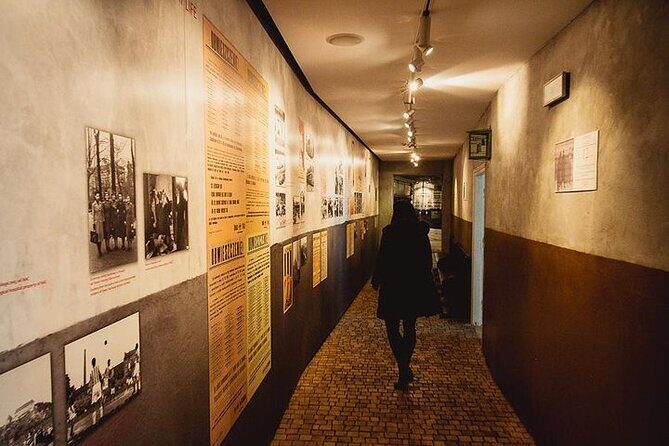
Kraków isn’t just a backdrop here. The museum is inside the wartime story itself—tied to a real factory site and a real owner whose actions changed lives during the Nazi occupation.
You’ll hear how the great sweep of WWII intersects with everyday life: work schedules, private life, fear, hope, and the brutal consequences faced by Polish and Jewish residents in Kraków. It’s the kind of history that’s easier to understand once you’re standing in the place where decisions were made and where survival had to be engineered.
And yes, the name Oskar Schindler is closely associated with Schindler’s List. But this experience isn’t about movie trivia. The museum uses that famous figure to point you toward what happened on the ground in Kraków—how the factory functioned during the war and why it became a lifeline for many.
You can also read our reviews of more museum experiences in Krakow

Skip-the-line, small group, mobile ticket: how the tour runs
This is a 1 hour 30 minute museum visit with a licensed guide, with the museum admission included. That combo matters because it’s simple: you show up, you go in, and you spend your time inside the exhibits rather than on logistics.
The group max is 10 travelers, which usually means:
- fewer pauses for crowd control
- more room to hear explanations
- a guide who can adjust pace if the group needs a moment
Your start point is Lipowa 4, 32-051 Kraków, Poland, and the tour ends back at the meeting point. It’s near public transportation too, so you’re not forced into a long trek if you’re arriving by tram or bus.
You’ll also use a mobile ticket, which is handy in Kraków when you’re hopping between stops. It’s one less thing to manage.
One more practical note: in this kind of museum visit, your guide’s approach can make or break the experience. This tour is designed to provide context and narration, not just a basic walkthrough of labels.
The main stop: walking into the Fabryka Emalia Oskara Schindlera story
At the museum, you’ll follow the story from Kraków’s wartime life toward Schindler and the factory’s role during the occupation.
The guide’s job is to connect three threads:
- the city’s complicated WWII reality for Polish and Jewish inhabitants
- the factory’s wartime history under Deutsche Emailwarenfabrik (DEF)
- the personal and moral choices embodied by Oskar Schindler
This matters because the exhibits cover tragedy, but a good guide also helps you understand structure. You’ll be guided through how industrial life and persecution overlapped, and how survival was shaped by decisions tied to work and bureaucracy.
If you’re the kind of visitor who likes to know what you’re looking at before you look at it, this format is a win. One highlight from the experience is the way the guide provides more context than the exhibit text alone—so the museum becomes a story you can follow, not just a room of information.
Schindler’s office and the Ark of Survivors: the most memorable symbolism
The museum doesn’t stop at general history. It takes you into preserved spaces and symbolic displays that make the story feel specific.
A major moment is the office of Oskar Schindler, preserved in the factory’s administrative building. Standing there, you get a sense of the setting where something extraordinary was set in motion—still rooted in paperwork and power, but tied to human outcomes.
Then comes the symbolic installation often described as the Ark of Survivors. It’s made of thousands of pots that resemble those produced by factory employees during the war. The point isn’t decorative. It’s a way to show that survival wasn’t abstract—it was built in the industrial world, through ordinary materials, labor, and the hope that kept people alive.
This kind of symbolic “object lesson” helps a lot if you’re leaving the museum with heavy thoughts. Instead of only processing numbers and dates, you have a physical image to anchor the meaning.
What you’ll actually get from a guided museum visit
A lot of museum tours fail because they turn into a speed-reading session of labels. Here, the value is in explanation and sequencing.
You can expect your guide to:
- give context for what you’re seeing
- link everyday wartime life with larger WWII events
- describe what made Kraków Jews and Polish residents’ experiences different, and how the war system crushed both
- point out how Schindler’s actions are presented as part of Kraków’s wartime narrative
One of the strongest reasons to book this style of tour is time. A museum like this is emotionally demanding. If you go in without structure, you might read a few panels, feel overwhelmed, and then lose your thread.
With a licensed guide, you’re more likely to keep that thread—so your visit ends with understanding, not just sadness.
And if you get a guide like Paul (he’s specifically noted for this kind of passionate, knowledgeable storytelling), you’ll see the difference. He’s described as arriving early to meet the group, then explaining rather than reciting, with plenty of room for photographs during the visit. Even for visitors who prefer to keep their photos minimal, that pacing helps you breathe and absorb what you’re seeing.
A few more Krakow tours and experiences worth a look




The emotional reality: how to pace yourself inside the museum
I’ll be blunt: this museum covers genocide and survival, not “light” history. Even if you’re prepared, you’ll likely feel it.
That’s where the tour length matters. At about 1 hour 30 minutes, you get a complete arc without it dragging into a day-long ordeal. But if you’re the type who needs time to sit with each room, you may feel the pace is brisk—so plan your day so you don’t have another obligation right after.
If you’re visiting with someone who gets overwhelmed easily, this guided format is also helpful. A guide can signal where to focus and how to interpret what you’re seeing, which can prevent the “stare at the wall” feeling.
Also, consider bringing a small mental checklist:
- Where does the factory fit in the story?
- Who are the people the museum emphasizes?
- What’s the museum trying to make you remember through objects like the enamel-like pots?
Asking yourself those questions quietly during the visit turns the experience into something you can process afterward.
Price and value: is $46.34 worth it?
At $46.34 per person, this isn’t a budget museum ticket. But it’s not just admission either—you’re paying for guided interpretation plus skip-the-line entry plus a licensed professional.
Here’s what you’re getting for your money:
- Ticket included, so you’re not paying separately at the door
- Skip-the-line, which is real value in a popular museum
- A guide to connect the dots between exhibits and Kraków’s WWII story
- A small group (max 10) for a better pace and better listening
If you’re traveling with limited time in Kraków, the included guide time is where the value shows. If you were to do it alone, you’d still be paying for admission—and you might lose the interpretive guidance that helps the museum click.
If you already know the history deeply and prefer totally independent wandering, you might wonder if a guide is worth it. But for most visitors, the emotional and historical complexity is exactly where a good explanation pays off.
Who this tour suits best (and who might want a different plan)
This tour is a strong fit if you:
- want a structured visit in a museum that covers complex WWII topics
- prefer a guide who provides context rather than a label-only approach
- appreciate small-group pacing in high-emotion settings
- are short on time and want skip-the-line access
You might not love it as much if you:
- need long, unscripted time in galleries (the visit is about 1.5 hours)
- dislike guided tours in general and would rather read everything at your own pace
Still, even if you’re an independent traveler, this is one of those places where guided narration can make your experience more meaningful, not less personal.
Should you book the Schindler’s Factory skip-the-line tour?
Yes—if you want the museum story told clearly and in the right order, this is one of the better ways to visit. The included ticket, skip-the-line design, and small group size make it efficient without feeling rushed. And the guide-led focus on how the factory and Schindler’s actions connect to the fate of Kraków’s Polish and Jewish inhabitants gives the visit real shape.
Book it if you value interpretation and want to leave with understanding. Skip it only if you’re certain you want full independence and you’re prepared to do your own connecting of the exhibits without help.
If your goal is to visit the place where Schindler saved over a thousand people and make the history stick, this tour is built for that.
FAQ
How long is the Kraków Oskar Schindler’s Enamel Factory Museum skip-the-line tour?
It runs for about 1 hour 30 minutes.
What’s the price per person?
The price is $46.34 per person.
Is museum admission included?
Yes, the museum ticket is included in the tour price.
Where does the tour start?
The tour starts at Lipowa 4, 32-051 Kraków, Poland.
Is it really skip-the-line?
This tour is described as a skip-the-line experience, designed to help you avoid waiting time.
How big are the groups?
The maximum group size is 10 travelers.
Is a mobile ticket provided?
Yes, you’ll have a mobile ticket.
What should I bring if I want coffee or tea?
Coffee and/or tea are not included.
Is it suitable for most people?
Most travelers can participate.
Can I cancel for a full refund?
Yes. You can cancel up to 24 hours in advance for a full refund.