REVIEW · KRAKOW
Krakow: Jewish Quarter and Ghetto Sightseeing Golf Cart Tour
Book on GetYourGuide →Operated by INTERCRAC Ltd. · Bookable on GetYourGuide
Krakow’s Jewish story moves fast. This 90-minute golf cart tour is a practical way to connect Kazimierz’s everyday Jewish culture with Podgórze’s wartime memory, all while you ride in a heated vehicle with an audio guide. I especially liked how the route keeps you oriented through changing neighborhoods, and how the commentary helps you understand what you’re seeing, not just pass it by.
The one thing to keep in mind: the timing is tight. If you want long, stop-everywhere photo moments or deep time inside every moment, this format may feel more like an efficient overview than a slow, site-by-site experience.
In This Review
- Key highlights at a glance
- A 90-Minute Electric Cart Route Through Kazimierz and Podgórze
- Starting Point and What to Bring (No Big Bags)
- How the Heated Cart Changes the Experience
- Kazimierz First: The Jewish Quarter as a Separate World
- What You’ll Notice on the Streets: Synagogues and Neighborhood Life
- The Christian Side of Kazimierz: Cafés, Galleries, and Coexistence
- Crossing the Vistula Into Podgórze
- Ghetto Wall Fragment and Ghetto Heroes Square (With the Chair Memorial)
- Under the Eagle Pharmacy: A Stop With Real Weight
- Audio Guide in Many Languages: Your Best Tool on a Short Route
- Price and Value: $34 for 90 Minutes of Story, Not Random Stops
- Pacing: Who Will Love It, and Who Might Feel Rushed
- Small Details That Make a Big Difference
- Should You Book This Krakow Jewish Quarter and Ghetto Cart Tour?
- FAQ
- How long is the Krakow Jewish Quarter and Ghetto sightseeing tour?
- Where does the tour take place?
- What’s included in the price?
- Are entrance tickets included?
- Where is the meeting point?
- Is the cart heated and is it wheelchair accessible?
- What languages are available for the audio guide?
- Are large bags allowed?
Key highlights at a glance
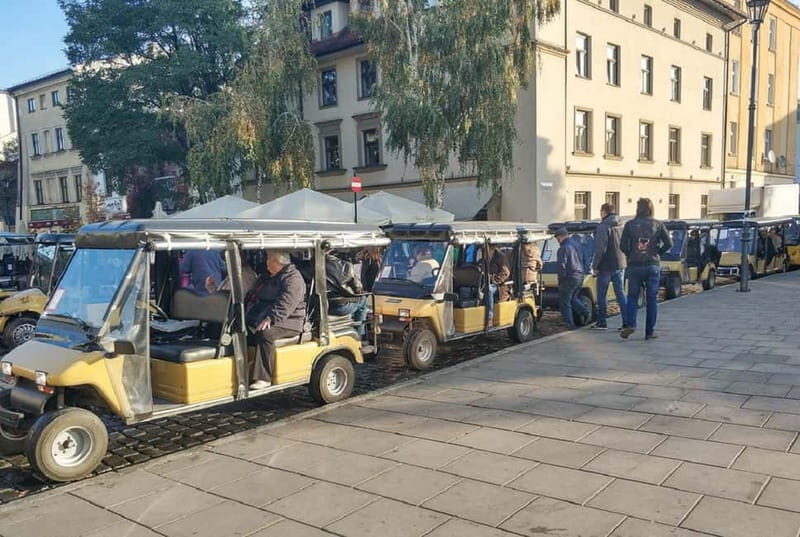
- Heated electric carts that make the ride comfortable (even when the weather is chilly)
- Kazimierz first, so you start with culture and community, not only tragedy
- Podgórze second, including the ghetto wall fragment and major memorial points
- Audio guide in many languages, with an English-speaking driver to help in real time
- Comfortable pacing for seeing a lot without wearing out your feet
A 90-Minute Electric Cart Route Through Kazimierz and Podgórze
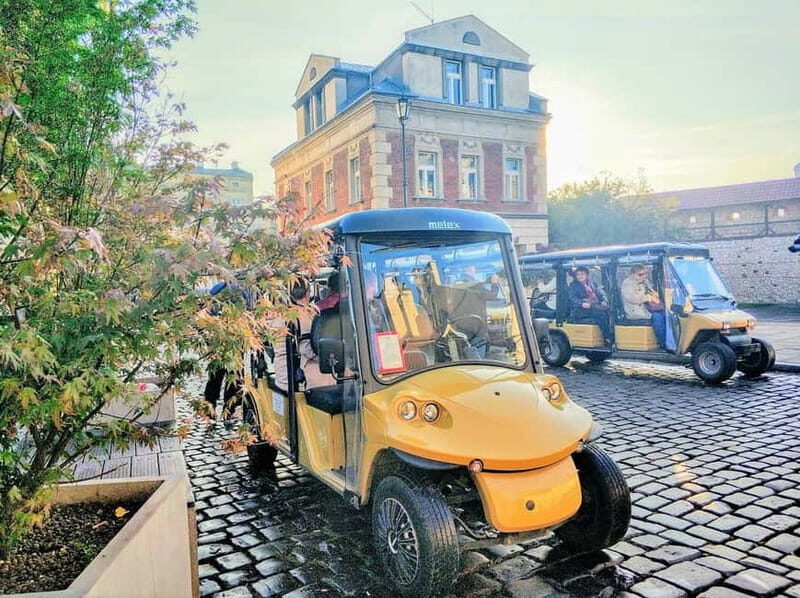
This tour is designed for people who want a clear story arc in a limited amount of time. In just 90 minutes, you cover two historic districts that feel very different: Kazimierz, long tied to Jewish life in Krakow, and Podgórze, where the wartime ghetto left lasting marks.
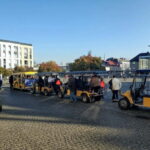
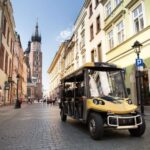
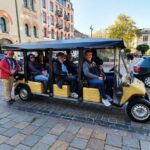
You’ll ride a comfortable, heated golf cart with audio commentary, so you spend less effort navigating and more energy actually reading the city. It’s also an eco-friendly electric format, which I appreciate because it fits the spirit of keeping things respectful and low-impact in a neighborhood full of history.
You can also read our reviews of more tours and experiences in Krakow.
Starting Point and What to Bring (No Big Bags)
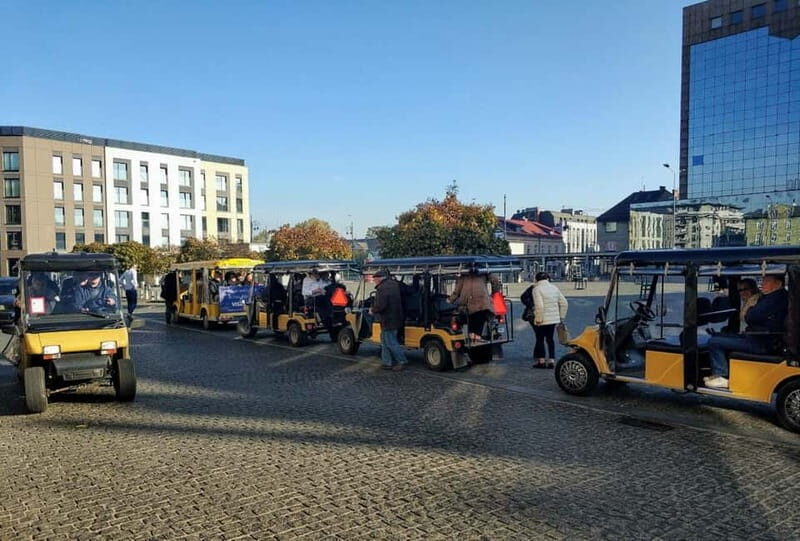
Your tour begins at the parking Kiss&Ride in front of the Zabka store. Look for a golf cart labeled excursions.city.
Plan to arrive 10 minutes early. Once the group has departed, latecomers can’t join, and tickets can’t be refunded—so treat this like a real reservation, not a casual stroll.
You also need to travel light. No luggage or large bags are allowed, so think daypack only.
How the Heated Cart Changes the Experience
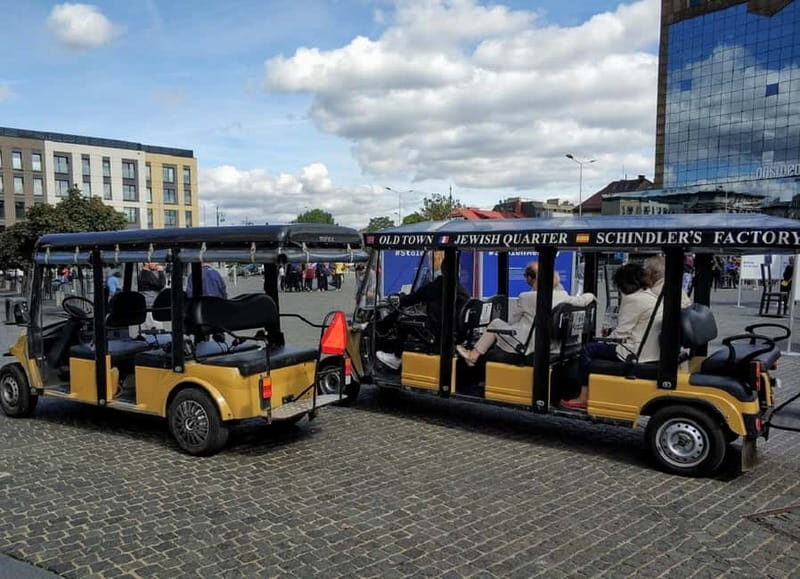
On a walking-only route, Krakow’s streets can slow you down—stairs, corners, and long stretches can make “history” turn into “hurry.” Here, the heated cart helps you stay comfortable while the audio guide does the heavy lifting.
Because the stops are time-based, the cart format is best when you’re okay with quick looks and guided context. If you like to pause and linger, you can still do it, but you’ll want to manage expectations and move with the group.
Kazimierz First: The Jewish Quarter as a Separate World
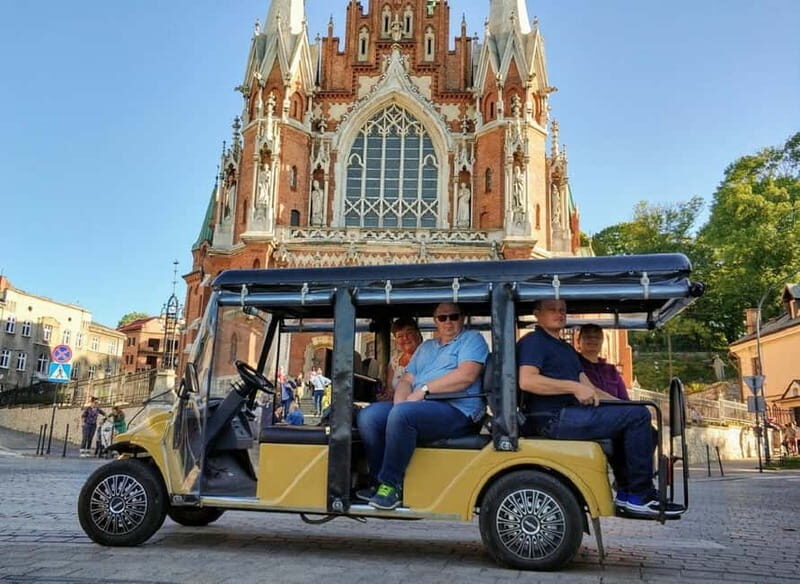
The route starts in Kazimierz, Krakow’s historic Jewish Quarter. One of the strongest benefits is that you don’t begin with the ghetto trauma—you begin with the everyday world that existed before it.
Kazimierz is described in the narration as a place that functioned as its own town for centuries, and a major center of Jewish culture. That framing matters. It nudges you to see the area as lived-in history, not just “museum stops.”
You’ll pass through narrow streets and see places tied to historic Jewish life. The audio commentary is built to help you connect the dots: what you’re seeing, why it mattered, and how the neighborhood’s character formed over time.
What You’ll Notice on the Streets: Synagogues and Neighborhood Life
As you roll through Kazimierz, you’ll get a mix of sightseeing and context. The tour includes stops or passes by historic synagogues and traditional streets, plus points reflecting everyday life and traditions that still show in the district today.
I like this approach because it avoids the common problem of “interesting facts” with no sense of place. When you hear explanations while you’re looking at the street layout and building style, the city starts to feel understandable instead of random.
You’ll also hear how Kazimierz connects to centuries of community life and coexistence. That context helps when you later step into Podgórze, where the tone changes sharply.
The Christian Side of Kazimierz: Cafés, Galleries, and Coexistence
After covering the more traditionally Jewish portions, the route continues through the Christian part of Kazimierz. This section is included for a reason: it shows how the district evolved and how different communities have shared the area over time.
You’ll notice the modern energy—cafés, galleries, and everyday activity. That doesn’t cancel the history; it underlines something important: these neighborhoods keep living. The narration helps you hold both ideas at once—memory and present-day life—without turning the tour into either a pure nostalgia trip or a pure tragedy route.
Crossing the Vistula Into Podgórze
A major shift happens when the tour crosses the Vistula River and enters Podgórze. This is where the story becomes wartime and painful, and the narration is set up to guide you into that change.
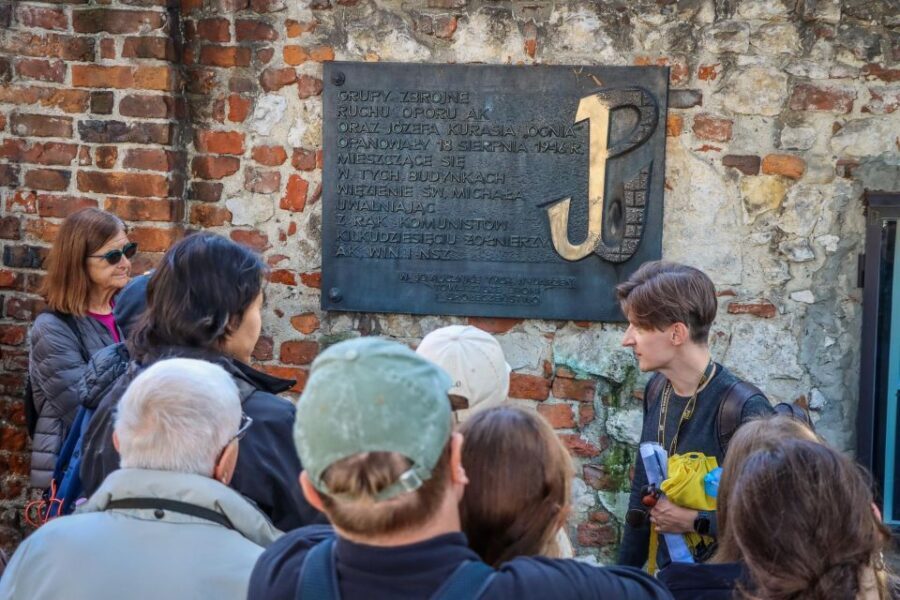
In Podgórze, the focus moves to the former Jewish ghetto during World War II. You’ll see key memorial and remembrance sites, and the commentary helps you connect what you’re looking at to the reality of how the ghetto functioned as part of Krakow’s history.
That transition is one of the best reasons to do the cart route rather than only piecing things together on your own. The tour structure gives you emotional pacing: context first, then memory.
Ghetto Wall Fragment and Ghetto Heroes Square (With the Chair Memorial)
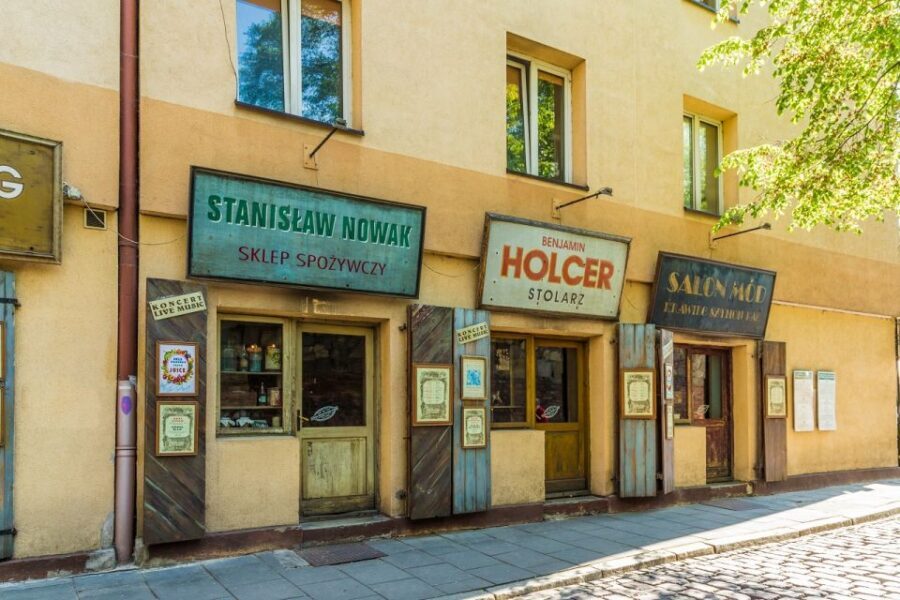
In Podgórze, you’ll see an authentic fragment of the former ghetto wall. A wall piece like this hits differently than a plaque, because it’s physical and specific—something you can point to as a real remnant of what happened.
Then you’ll reach Ghetto Heroes Square, which includes a distinctive chair memorial. The audio guide is the key here: it tells you what the memorial is meant to represent and why it’s placed where it is.
This is also a good moment to take your phone photos if you’re the type who needs a visual reminder later. Just remember the tone of the square—keep your voice down and keep it respectful.
Under the Eagle Pharmacy: A Stop With Real Weight
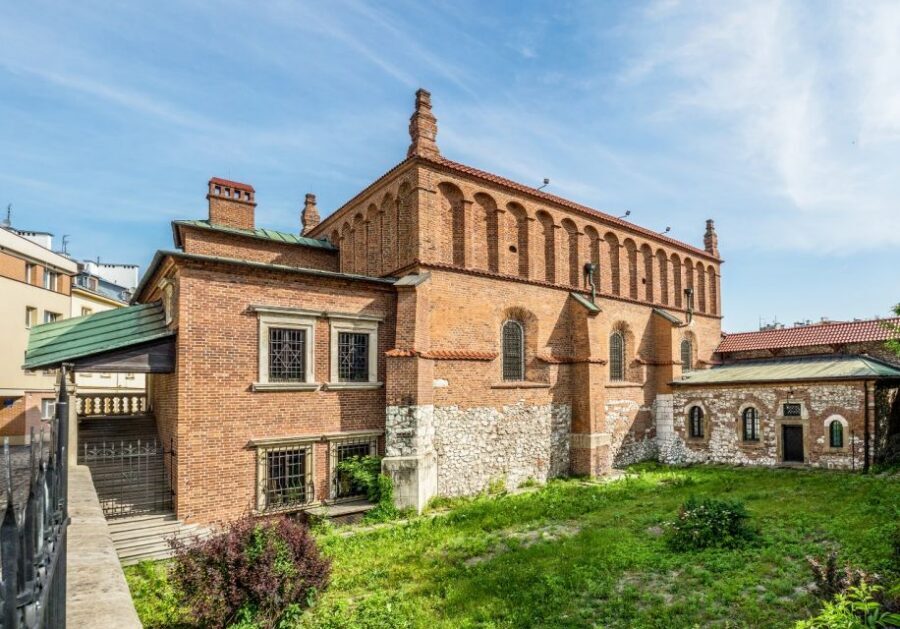
Another highlight is the Under the Eagle Pharmacy, listed as a historic reminder of Krakow’s wartime past. This stop matters because it ties history to a recognizable everyday setting, the kind of place people might have used before their world was destroyed.
The tour uses audio commentary to give you enough context to understand why the location is remembered, without turning everything into slogans. I find that balance useful, especially on a tour that’s already running on a strict 90-minute schedule.
Audio Guide in Many Languages: Your Best Tool on a Short Route
This is an audio-guided experience with an English-speaking driver, and the cart is equipped with audio that’s available in many languages. If you don’t speak Polish, that’s a big deal. You aren’t relying on someone to summarize everything on the spot—you’re following commentary that keeps you moving through the story.
The audio list is extensive, including English, German, French, Spanish, Italian, Hebrew, and many others. The tour is also described as wheelchair accessible, and the carts are heated, which helps if you’re listening while waiting for the next segment.
One practical note: because it’s an audio system, timing depends on the language track. If you switch devices or languages mid-way, or if your ear-bud setup is glitchy, you may lose a few beats. On the flip side, if you stay with one track the whole time, it’s one of the easiest ways to get value in limited time.
Price and Value: $34 for 90 Minutes of Story, Not Random Stops
At $34 per person for about 90 minutes, this isn’t a “cheap and cheerful” ride—it’s a paid way to compress a lot of context into a short window. And that’s the point: Kazimierz plus Podgórze is a lot of ground for most visitors, and history here is complicated. The audio commentary helps reduce the mental load.
You’re getting:
- a comfortable heated cart ride
- an audio guide (in many languages)
- an English-speaking driver
- a route that spans both the living cultural world of Kazimierz and the ghetto memory in Podgórze
Not included are entrance tickets, food, and hotel pickup. That means you should treat it as a focused orientation tour, not a full-day museum ticket package. If you already plan to explore on foot after, the value becomes stronger—this cart gets you oriented so your wandering later makes more sense.
Pacing: Who Will Love It, and Who Might Feel Rushed
Most people will enjoy this tour because it balances comfort with structure. You see the key districts, key remembrance points, and the ghetto wall fragment without needing to plan a route, study maps, or guess what each stop means.
That said, the format can feel quick if you’re the type who wants to linger at every location. One of the concerns that comes up with short guided routes is that stops may not feel long enough for extended photos or long readings. If you know you’re slow at absorbing historical sites, consider pairing the cart tour with extra time afterward in whichever area hits you hardest.
Small Details That Make a Big Difference
A few practical things make the experience smoother:
- Heated carts keep the experience comfortable, especially in cooler months.
- You need to arrive early because the tour won’t wait for late joiners.
- You can’t bring large bags, so travel light.
- The route includes both a community/history tone in Kazimierz and a memorial tone in Podgórze, so you should expect emotions to shift as you cross the river.
Also, you’ll likely appreciate that it’s a group tour without a lot of physical strain. Instead of spending your energy on walking and turning corners, you spend it on listening and looking.
Should You Book This Krakow Jewish Quarter and Ghetto Cart Tour?
I’d book it if you want an efficient way to understand the contrast between Kazimierz and Podgórze in one session. The heated cart, the audio guide in many languages, and the choice to start with Kazimierz before moving into the ghetto area makes the experience clearer and less overwhelming.
Skip or rethink it if you need extra time at each individual stop, or if you prefer slow, independent exploration with more reading and lingering. Also, if you’re arriving without enough time buffers, you’ll feel the 90-minute structure—this tour rewards punctuality.
If your goal is to get your bearings fast and leave Krakow with a stronger sense of what you saw, this is a solid value buy at $34.
FAQ
How long is the Krakow Jewish Quarter and Ghetto sightseeing tour?
The tour lasts 90 minutes.
Where does the tour take place?
It covers the Kazimierz District (Jewish Quarter) and Podgórze (former Jewish ghetto area), including sites like Ghetto Heroes Square and the Under the Eagle Pharmacy.
What’s included in the price?
You get the golf cart ride, an audio guide, and an English-speaking driver.
Are entrance tickets included?
No entrance tickets are included.
Where is the meeting point?
Meet at the parking Kiss&Ride in front of the Zabka store, and look for a golf cart labeled excursions.city.
Is the cart heated and is it wheelchair accessible?
Yes, the vehicles are heated, and the tour is wheelchair accessible.
What languages are available for the audio guide?
The audio guide is available in many languages including English, Spanish, French, German, Italian, Hebrew, Polish, and several others.
Are large bags allowed?
No luggage or large bags are allowed.