REVIEW · KRAKOW
Krakow Guided Tour by Electric Golf Cart
Book on Viator →Operated by Auschwitz-Krakow Tours · Bookable on Viator
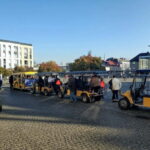
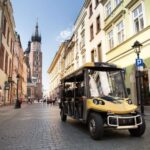
Long streets, zero fuss, in an electric cart. I love how this ride strings together Kazimierz Jewish landmarks and Krakow’s big-picture highlights without turning your day into a hike, and you get clear English commentary to help you follow what you’re seeing. The pace is built for photos and quick looks, but it’s also a time-crunched 1.5–2 hours, so you’ll want to be ready for quick stops and a few places you can only view from the cart.
The one real watch-out: pickup locations can be confusing. One group reported standing in the wrong place for 45 minutes after a change, so I recommend double-checking your meeting spot the day before so you don’t lose prime tour time.
In This Review
- Key things I’d bet you’ll remember
- Why an electric golf cart tour fits Krakow so well
- Price, timing, and what $37.99 buys you
- The pace: group size, photo breaks, and how to avoid stress
- Schindler’s area drive-through and the emotional weight of Ghetto Heroes Square
- Market Square and zapiekanki: your quick food win
- Kazimierz synagogues: what you’ll see from the cart (and what you won’t enter)
- The ghetto wall stretch and the pharmacy story you can’t fully get anywhere else
- Churches without ticket hassle: St. Joseph, Skałka, and Corpus Christi
- Wawel Hill and the castle view: a big sight, no entry needed
- Plac Wolnica, Kazimierz squares, and why the names matter
- Krakus Mound climb: the one place where you can really look around
- Barbican and Jan Matejko Square: quick hits, not lingering stops
- What to do with your time: photos, blankets, and snack planning
- Who this tour is best for (and who may want more time on foot)
- Should you book this Krakow electric golf cart tour?
- FAQ
- FAQ
- How long is the Krakow guided tour by electric golf cart?
- Is the tour available in English?
- What is included in the price?
- Are admission tickets included for all stops?
- Can you enter the synagogues and Wawel Castle during the tour?
- Is there time to eat during the tour?
- Does the tour provide bottled water or snacks?
- Can I cancel if my plans change?
Key things I’d bet you’ll remember
- Electric cart touring across big distances without draining your legs
- English driving commentary + English audio guide so nothing feels random
- Pass-by views of synagogues and Wawel when you don’t want ticket lines
- Ghetto memory stops with on-the-ground context, not just scenery
- Easy photo breaks (including the option to ask for a few minutes more)
- Krakus Mound climb for a panorama when the rest of the day is mostly drive-by
Why an electric golf cart tour fits Krakow so well
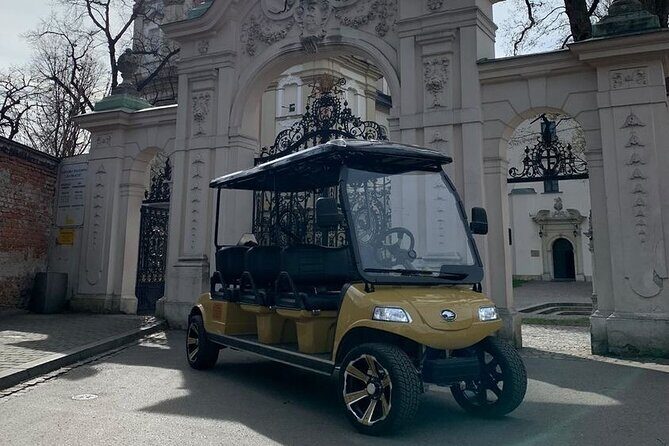
Krakow can feel like it’s made of layers: medieval streets in one direction, Jewish Kazimierz neighborhoods in another, and then big monuments like Wawel towering over it all. This electric golf cart tour is a smart way to connect those layers without spending most of your time on pavement.
I also like that the experience is designed for seeing, not racing. You don’t just glide past; you get guided context as you roll through key areas. That matters in Krakow because the “why” behind each place is often the main story.
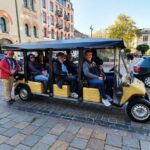
And yes, the cart experience can be genuinely comfortable. One review mentioned blankets, and that’s the kind of detail that turns a cool day into a calm ride. If you’re planning multiple sights in one day, this format can help you keep your energy for the places you’ll want to linger.
You can also read our reviews of more guided tours in Krakow
Price, timing, and what $37.99 buys you
At $37.99 per person for about 1 hour 30 minutes to 2 hours, the value is less about ticket savings and more about efficiency. You’re paying for transportation plus an organized route plus narration that explains what’s around you.
A few things affect perceived value here:
- Many highlights are drive-by only, so you’re not paying for entry tickets across the whole route.
- You do get short photo windows at major stops.
- Some sites are free (churches and certain memorial-style stops), so your money goes toward moving between areas and understanding the story.
If you’re trying to cover old town and Kazimierz in one shot—without cobblestones slowing you down—this can be a strong deal. If you’re the type who wants long museum time inside multiple buildings, you’ll still want to pair it with other, independently ticketed stops later.
The pace: group size, photo breaks, and how to avoid stress
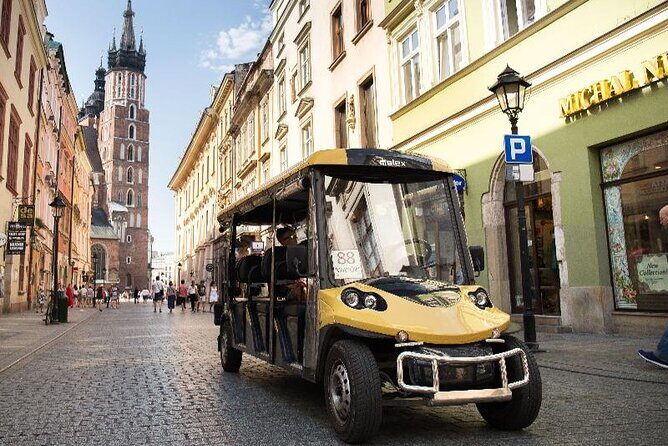
The max group size is 47, which usually keeps things from feeling totally chaotic. Still, this isn’t a private tour with unlimited time at every corner. Expect a steady rhythm: drive, brief context, a look, photos, then off again.
One of the best practical tips from real-world feedback is simple: if you want a slightly longer photo moment, ask. Some guides are happy to work with you for just a few extra minutes. That can make a big difference when you’re trying to frame churches, synagogues, and Wawel views without rushing.
Also, plan to be flexible with timing. The tour includes snack time at Market Square for zapiekanki (more on that soon), and that’s one of the few moments where you’ll want to get your personal priorities right.
Schindler’s area drive-through and the emotional weight of Ghetto Heroes Square
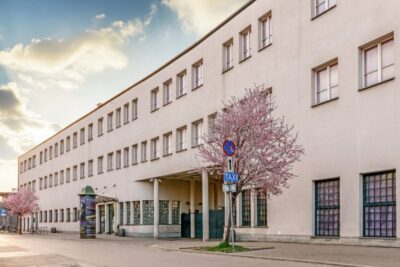
The tour starts with a drive-through connected to Oskar Schindler’s Factory. Importantly, the ride happens without an admission ticket. That means you get to see the setting and learn about its significance, but you’re not going to walk the exhibits in this particular experience.
Then comes one of the most important memory points: the Ghetto Heroes Square (Plac Bohaterów Getta). This is not a decorative stop. It marks the area of executions and displacement connected to the 1943 liquidation of the Kraków Ghetto.
What I like about including this as a drive-by with narration is that it helps you understand the “why” as you move through the area. You’re not left staring at a square wondering what happened. You get context fast, and the cart keeps the day moving so you can carry that meaning forward into the rest of the neighborhoods you’ll see.
Market Square and zapiekanki: your quick food win
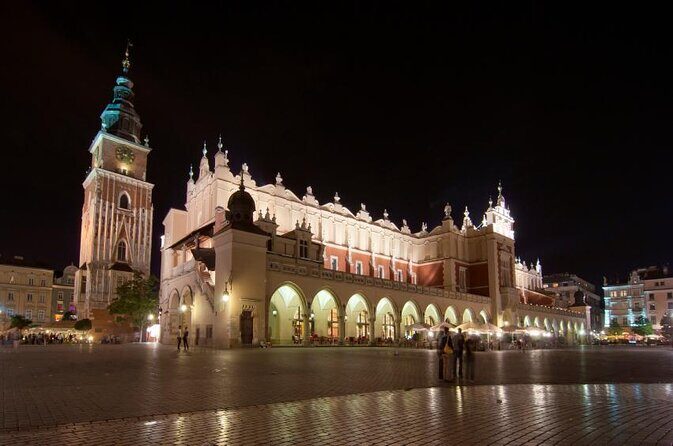
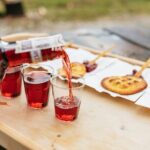
When the route reaches Market Square, you can cross the area and—if you ask—the driver can stop so you can grab the classic Kraków snack, zapiekanki.
This is a brief chance (about 5–10 minutes) to stand, buy, eat, and get back on the cart. It’s not a sit-down meal, so treat it like a practical break rather than a food tour.
My advice: if you want to try zapiekanki, go with a simple plan—pick what you’ll buy fast and focus on eating while you can. This kind of snack stop works best when you’re not trying to turn it into a long detour.
Kazimierz synagogues: what you’ll see from the cart (and what you won’t enter)
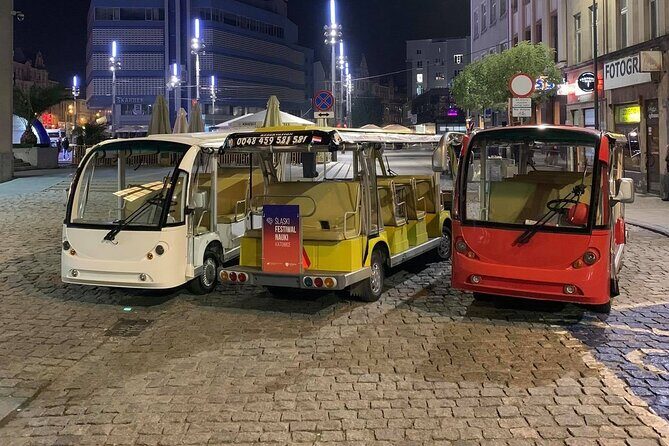
A big part of this tour’s appeal is Kazimierz. But here’s the key expectation: many synagogues are included as exterior viewing stops, not interior visits.
You’ll pass landmarks like:
- The Old Synagogue (Synagoga Stara), described as the oldest synagogue building still standing in Poland, and one of the most precious Jewish architectural landmarks in Europe. You can’t enter during this tour.
- Kupa Synagogue (Synagoga Kupa). It was established in 1643, but again, the tour doesn’t allow entry.
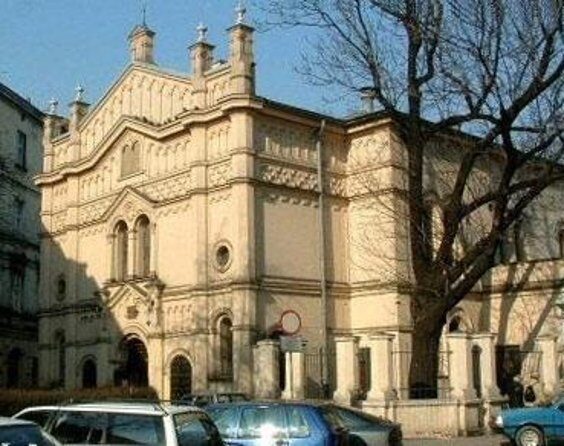
- Tempel Synagogue, Izaak Jakubowicz Synagogue, High Synagogue (the Tall Synagogue), and Wolf Popper Synagogue—these are all part of the visual route through Kazimierz, with no interior access included on this ride.
- Remuh Synagogue (Synagoga Remuh), noted as the smallest of the historic synagogues in the Kazimierz district and one of the two active synagogues in Kraków. Entry is not included on this tour.
So why include so many synagogues if you can’t go inside? Because the exteriors, names, and placement teach you the map of Kazimierz—how the community’s religious life sat right in the street grid.
Also, this approach is realistic. You’re getting breadth in a short timeframe. If you later decide you want interiors, you’ll know which ones matter most to you.
The ghetto wall stretch and the pharmacy story you can’t fully get anywhere else
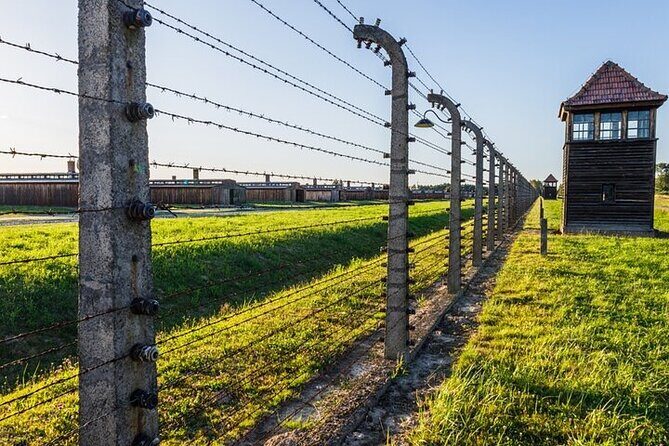
One of the most striking stops is the visible 12-metre stretch of the original ghetto wall. There’s a commemorative plaque there in Hebrew and Polish, describing that from this point people began their final journey to the death camps.
Right after that, the route brings you by the Eagle Pharmacy Museum (Eagle Pharmacy), associated with Jozef Pankiewicz and later his son Tadeusz. The story matters: during World War II, the pharmacy was within the boundaries of the Podgórze ghetto, and the proprietor had a rare ability to remain there.
This part of the tour isn’t about checking off another building. It’s about linking the daily reality of place—food, medicine, survival constraints—to the larger history happening around it.
If you prefer your Holocaust and ghetto history to have grounding in specific, physical sites, you’ll likely find these stops especially meaningful.
Churches without ticket hassle: St. Joseph, Skałka, and Corpus Christi
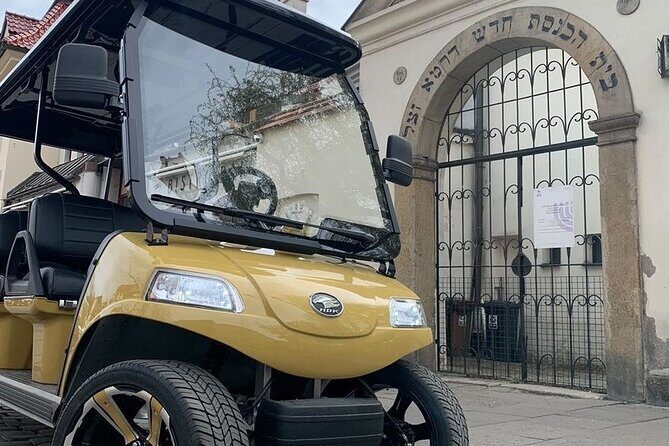
Not every major stop here is heavy. The route also includes prominent Catholic churches, and several are marked as free within the tour context.
You’ll see:
- St. Joseph’s Church (Kościół św. Józefa), a historic church in Podgórze, with a free admission note on the tour.
- Church on the Rock (Kościół na Skalce, Skałka). The description connects it to the slaying of Bishop Stanislaus in 1079 and the resulting chain of events around exile and canonization.
- Corpus Christi Church (Kościół Bożego Ciała), a basilica built in stages from about 1340 to the mid-1400s. It ties to monastic life and includes a monastic cemetery next door.
These are excellent breaks in tone. After walking through (or mentally carrying) ghetto history, it’s helpful to have places that represent earlier religious and architectural layers of Kraków.
Also, free admission matters because it means you can keep your day simple: fewer extra tickets, fewer decisions.
Wawel Hill and the castle view: a big sight, no entry needed
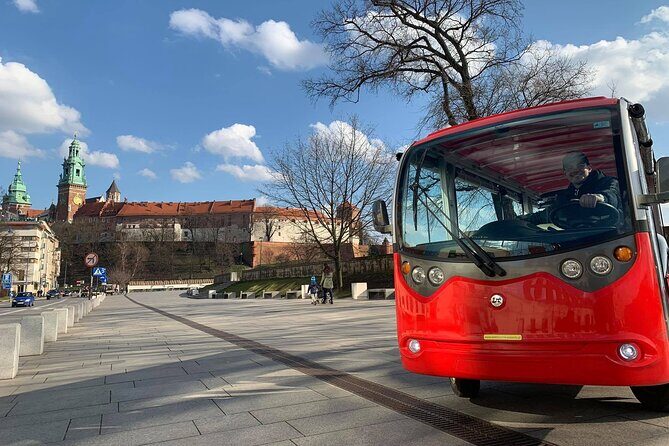
Wawel Royal Castle is one of those places you can’t really miss once you’re in Kraków. Here, the tour approach is practical: you see the castle and Wawel Hill from the golf cart, and entry into the castle is not included.
That works for many visitors because the exterior presence of Wawel—the scale, the setting above the Vistula River, the sense of long European architectural influence—is what most people are looking for in a short orientation tour.
If Wawel is a must-see for you and you want rooms, courtyards, and interior exhibits, plan to add it separately. But as part of a 1.5–2 hour overview, viewing it from the cart helps you understand where it sits in the city’s geography.
Plac Wolnica, Kazimierz squares, and why the names matter
As you move deeper into Kazimierz, you’ll pass Plac Wolnica—once a market square that matched the grandeur of Kraków’s Main Market Square (Rynek Główny), only slightly smaller. It’s described as the second largest market square in Poland (if not Europe) and tied to administration, justice, and trade.
That’s one of those “names” stops that sounds academic until you remember what cities really are: trade routes, legal centers, and everyday routines. The cart route helps you keep those connections in your head.
In other words: you’re not just seeing buildings; you’re learning how people organized life around them.
Krakus Mound climb: the one place where you can really look around
Krakus Mound (Kopiec Krakusa) is included with time to go up the hill. You get around 20 minutes here, and it’s marked as free in the tour info.
This is a rare chance in the tour to do something physical. You’re moving away from the tight focus of street corners and memorial plaques and getting the kind of view that helps you understand the city’s shape.
It’s also a good mental reset. Even if your day starts with heavier sites, finishing (or breaking mid-tour) with a panorama can help your brain settle and connect the dots between neighborhoods.
Barbican and Jan Matejko Square: quick hits, not lingering stops
The route also includes short viewing moments at:
- The Barbican, a medieval defensive structure tied to city fortifications.
- Matejko Square, where you can see the Grunwald Monument (an equestrian statue of King Władysław II Jagiełło) and the Tomb of the Unknown Soldier in front of it.
These are quick, and that’s exactly what makes them efficient. If you love monuments, you might wish you had longer—but in a 1.5–2 hour tour, quick hits are often the difference between seeing a lot and seeing nothing.
What to do with your time: photos, blankets, and snack planning
Here are my practical suggestions so you get the most out of this ride:
- Bring your phone or camera and treat photo stops like appointments. When you’re moving on, you’re moving on.
- If you’re sensitive to cool weather, you’ll be happy to hear the cart can come with blankets (per review feedback).
- For zapiekanki, decide in your head that you’re doing this fast. It’s a short window, and the tour keeps moving.
And if you want extra minutes for a specific photo, ask your guide. One of the comments I’d take seriously is that guides can be accommodating if you request a quick wander.
Who this tour is best for (and who may want more time on foot)
This is a strong fit if you want:
- a fast orientation to old town plus Kazimierz
- narration in English without relying only on your own reading
- a low-effort way to cover many sights in one morning or afternoon
- a mix of heavy remembrance stops and lighter church/monument viewing
It’s not the best fit if you want lots of interior time. Because Wawel and most synagogues on the route aren’t entered here, you’ll likely feel like you saw the buildings but not the full experience inside them.
If you’re the type who loves slow wandering and long museum visits, you’ll probably pair this cart tour with separate ticketed stops later.
Should you book this Krakow electric golf cart tour?
I think it’s worth booking if your priority is coverage with context. For $37.99, you’re buying transportation, English narration (driver + English audio guide), and efficient pacing across major areas you’d otherwise spend a full day piecing together by foot.
Book it if you like being guided through Kraków’s stories—especially the move from Schindler-related sites to ghetto remembrance and into the Kazimierz synagogue district.
Skip or supplement it if you want to spend long hours inside key buildings like Wawel Castle and specific synagogues. This is the “see and understand” version, not the “live inside every exhibit” version.
FAQ
FAQ
How long is the Krakow guided tour by electric golf cart?
The tour is about 1 hour 30 minutes to 2 hours.
Is the tour available in English?
Yes. The tour is offered in English, with an English-speaking driver and an English audio guide.
What is included in the price?
Included items are an English-speaking driver, time for photos, and an English audio guide.
Are admission tickets included for all stops?
No. Some stops are listed as free (for example, certain churches and Krakus Mound), while others are specifically marked as admission ticket not included. Wawel Castle is also not entered during the tour.
Can you enter the synagogues and Wawel Castle during the tour?
No. The synagogues and Wawel Castle are included as viewing stops from the cart, and the tour notes that it’s not possible to enter them.
Is there time to eat during the tour?
Yes. At Market Square, the driver can stop for zapiekanki. It’s a short stop (about 5–10 minutes).
Does the tour provide bottled water or snacks?
No. Bottled water and snacks are not included.
Can I cancel if my plans change?
Yes, you can cancel for a full refund up to 24 hours before the experience’s start time.
If you tell me your travel month and whether you want more church time or more Jewish history time, I can suggest the best way to pair this cart tour with a couple of additional Kraków stops.