REVIEW · KRAKOW
Krakow: Collegium Maius, St. Mary’s Basilica & Cloth Hall
Book on GetYourGuide →Operated by excursions.city · Bookable on GetYourGuide
Old Town can feel like a blur. This one moves with purpose. You’ll get an expert-led walk through Krakow’s central sights, then step inside St. Mary’s Basilica to see the Veit Stoss altarpiece up close. I love how the guide connects buildings to stories, not just facts, so the city clicks into place fast.
Two stops I really like are Collegium Maius and St. Mary’s Basilica. Collegium Maius shows you why Krakow mattered to learning in Central Europe, and the basilica shows you why art and faith were inseparable here. One thing to consider: the tour includes church entry with a dress code, so plan your outfit (shoulders and knees covered) before you go.
In This Review
- Key things to know before you go
- Starting at Plac Marii Magdaleny: the fastest way to get your bearings
- Collegium Maius courtyard: why Krakow mattered to science
- Main Market Square: legends in Europe’s largest medieval square
- Cloth Hall (Sukiennice) outside views: what Krakow traded and why it mattered
- St. Mary’s Basilica: where Gothic art becomes the main event
- How much time you really get (and why 90 minutes can work)
- Price and value: what you get for around $29
- Practical tips for a smooth Old Town walk
- Who this tour is best for
- Should you book this Krakow Old Town tour?
- FAQ
- How long is the Krakow Old Town tour?
- Where do I meet the guide?
- What’s included in the tour price?
- Does the tour include entry to St. Mary’s Basilica?
- Are there dress code rules?
- What languages are available?
Key things to know before you go
- Skip the ticket line for St. Mary’s Basilica, saving time in the most popular stop
- Collegium Maius founded in 1364, with stories tied to Nicolaus Copernicus
- Main Market Square is Europe’s largest medieval square, and you’ll hear Krakow legends there
- Cloth Hall (Sukiennice) trading past, from salt and textiles to amber links
- Two asymmetrical towers frame the skyline, then inside you get the 15th-century Veit Stoss altar
Starting at Plac Marii Magdaleny: the fastest way to get your bearings
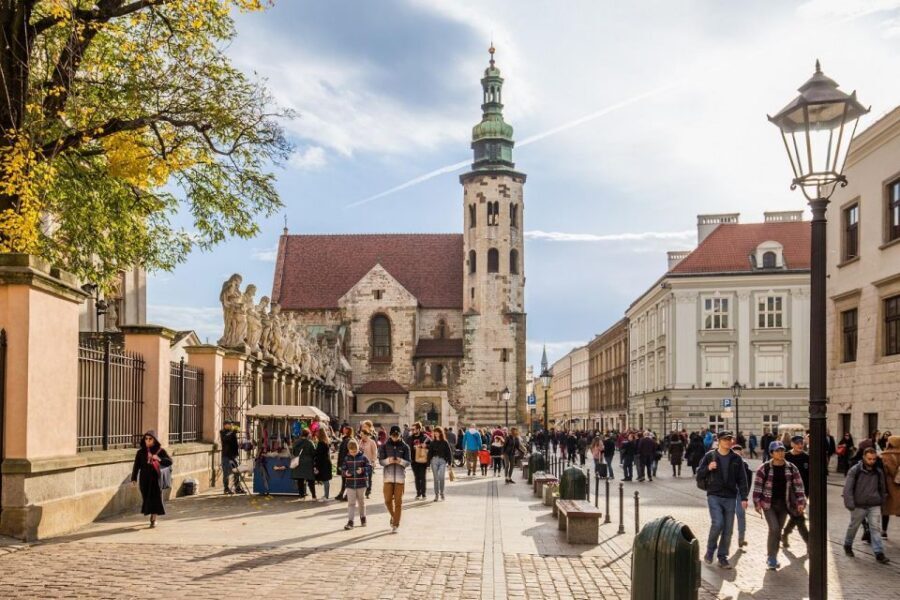
Most Krakow walking tours start broad and wander. This one starts where the Old Town story already feels layered. You meet on St. Mary Magdalene Square at the Piotr Skarga Monument, and your guide keeps the group moving with clear, timed stops. Arrive about 10 minutes early so you’re not stuck outside when the group departs. Once they leave, latecomers can’t join and tickets can’t be refunded, so punctual matters here.
If it’s your first time in Krakow, this start is smart. You’re not hunting for the main sights on your own; the guide sets the pattern: Old Town streets, then university history, then the big civic square, and finally the church you came for.
Also, the tour runs in one language per group (English, German, Spanish, Italian, French, or Polish). That helps the flow. You’ll hear the same narrative from start to finish instead of patchwork explanations.
You can also read our reviews of more tours and experiences in Krakow.

Collegium Maius courtyard: why Krakow mattered to science
The highlight before you even hit the big square is Collegium Maius, Krakow’s oldest building of the Jagiellonian University. It was founded in 1364, and your guide explains why that date isn’t just trivia. In medieval and early Renaissance Europe, universities were power centers. They didn’t only teach; they shaped who got access to ideas, prestige, and careers.
In the quiet courtyard, you’ll get the thread that ties Krakow to Nicolaus Copernicus—the astronomer connected with the university’s legacy. Even if you don’t know much astronomy, the story lands because it’s human: students, scholars, and city identity built together over centuries. It’s a nice mental break from the loud spectacle of the main square that comes next.
One small watch-out: this stop is more about the exterior and courtyard atmosphere than a long museum-style visit. If you want a deep dive into university collections, this tour is the appetizer, not the whole meal.
Main Market Square: legends in Europe’s largest medieval square
Then you step into Main Market Square, described as Europe’s largest medieval square—and it’s easy to see why. The scale is the point. You can stand in the middle of it and feel how civic life used to revolve around this open space: commerce, announcements, crowds, and the kind of daily rhythm that leaves a place stamped on your memory.
Your guide connects the square to Krakow’s legends, and that storytelling is a big reason this tour works even if you’re not a hardcore history person. One review noted the guide shared colorful character stories, including references to artists and scientists, and even the tradition of the trumpet linked to a watchtower on the square. That’s exactly the sort of detail that makes a big place feel personal.
You’ll also see how the square functions today—horse-drawn carriages and street performers still create that old-meets-new feel. I like that the tour doesn’t act like Krakow is a dead set. It treats the square as a living stage, and that makes the architecture easier to appreciate.
Cloth Hall (Sukiennice) outside views: what Krakow traded and why it mattered
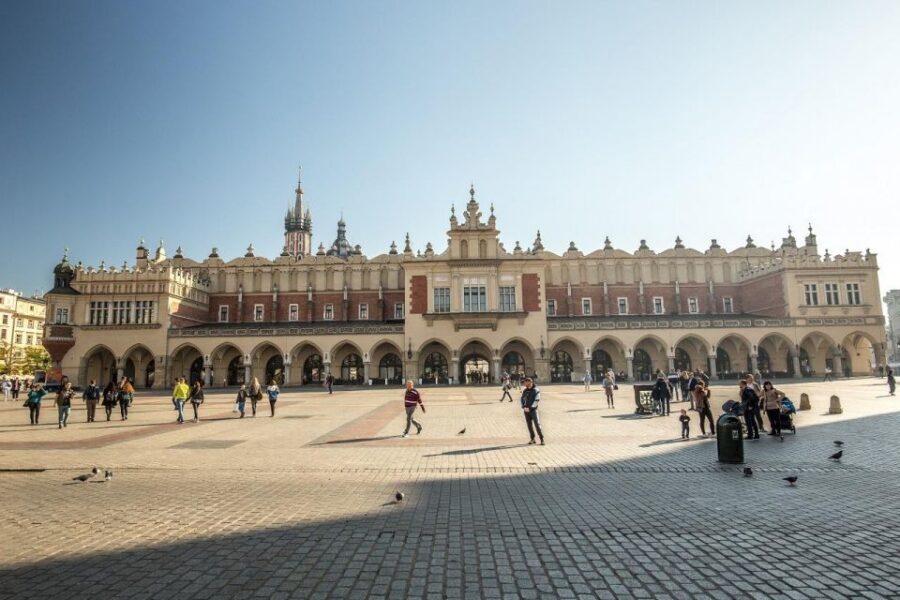
From there, you get the outside views of the Cloth Hall (Sukiennice) and the surrounding historic fabric. You won’t spend an hour inside a market museum. Instead, your guide explains the Cloth Hall’s original job and why that building helped shape Krakow’s wealth.
Historically, this was a major trading hub that linked Krakow to faraway markets. The tour narrative includes specific goods—salt, textiles, furs, and amber—and that helps your brain picture the city as an economy, not just a backdrop. When you hear what moved through these streets, the architecture makes more sense. The Cloth Hall wasn’t built for decoration; it was built for deals, storage, and the flow of people.
You’ll also learn what to look for: the Renaissance arcade and the way the market character survived across changing eras. In practice, this is where you start noticing details on your own—arches, proportions, and the layered feel of a place that kept getting rebuilt without losing its core identity.
St. Mary’s Basilica: where Gothic art becomes the main event
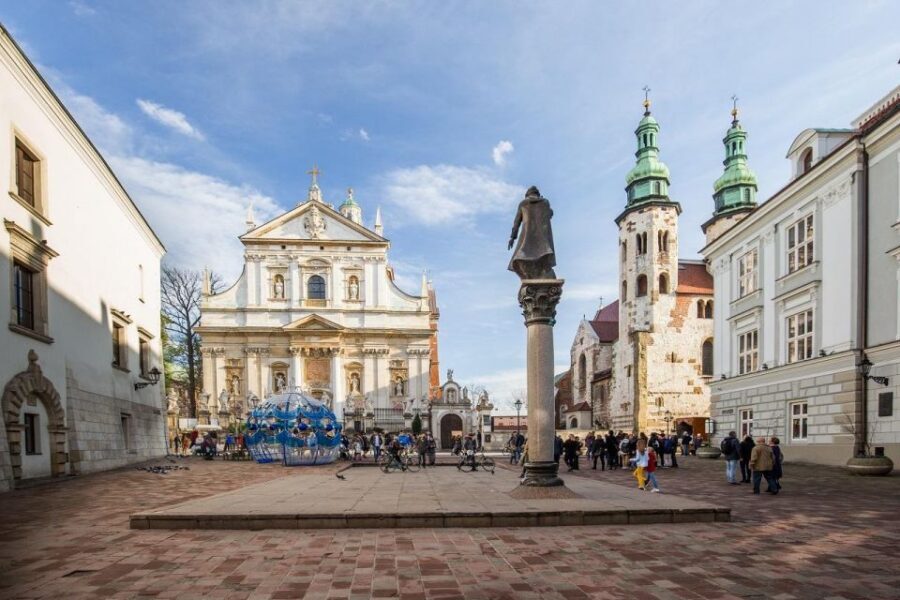
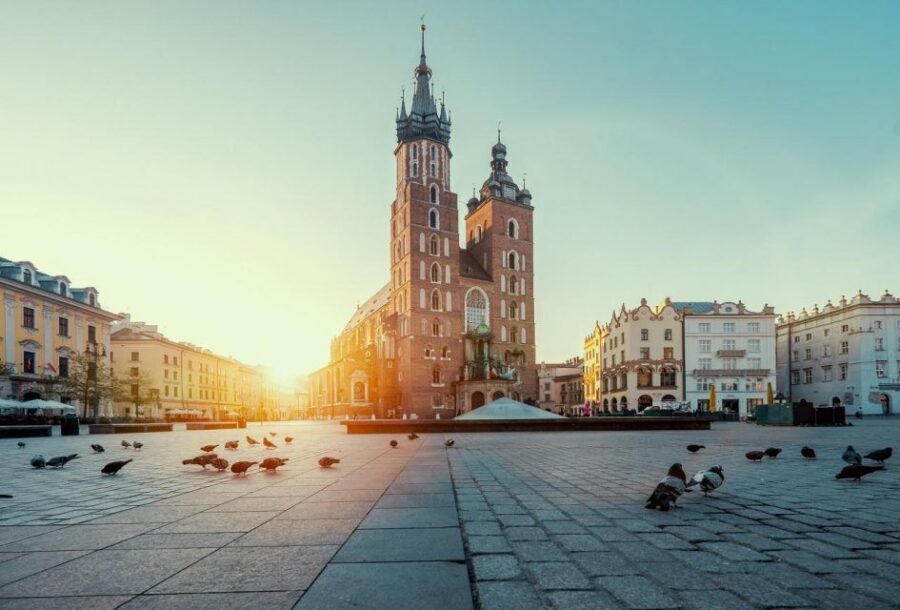
Now for the big moment. The tour’s centerpiece is entry to St. Mary’s Basilica, famous for its skyline dominance: two asymmetrical towers. They look dramatic from outside, but the real wow factor happens inside.
Your ticket is included and line-skipping is part of the plan, so you’re not stuck at the back of a popular queue while your group moves on. That saves time and reduces the usual stress of trying to see everything.
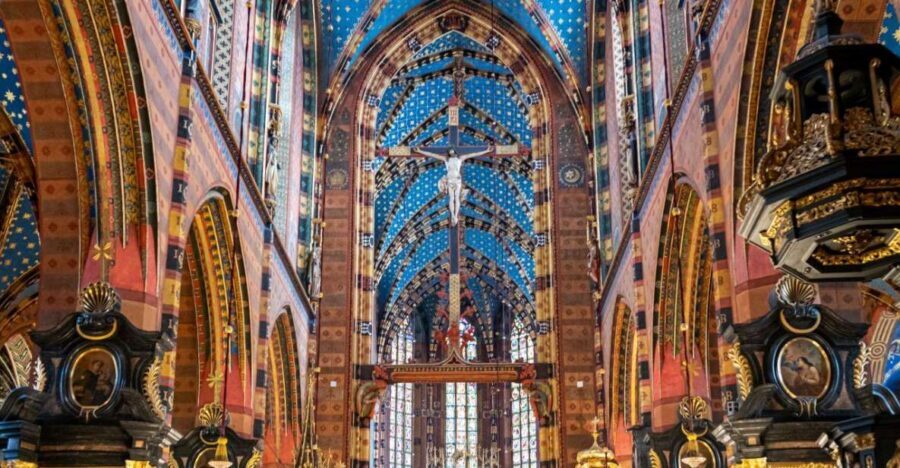
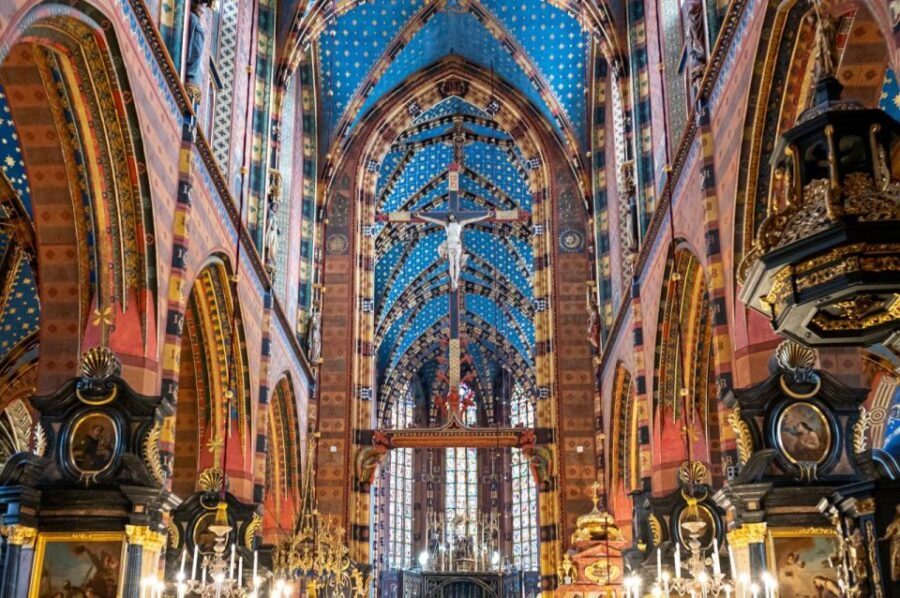
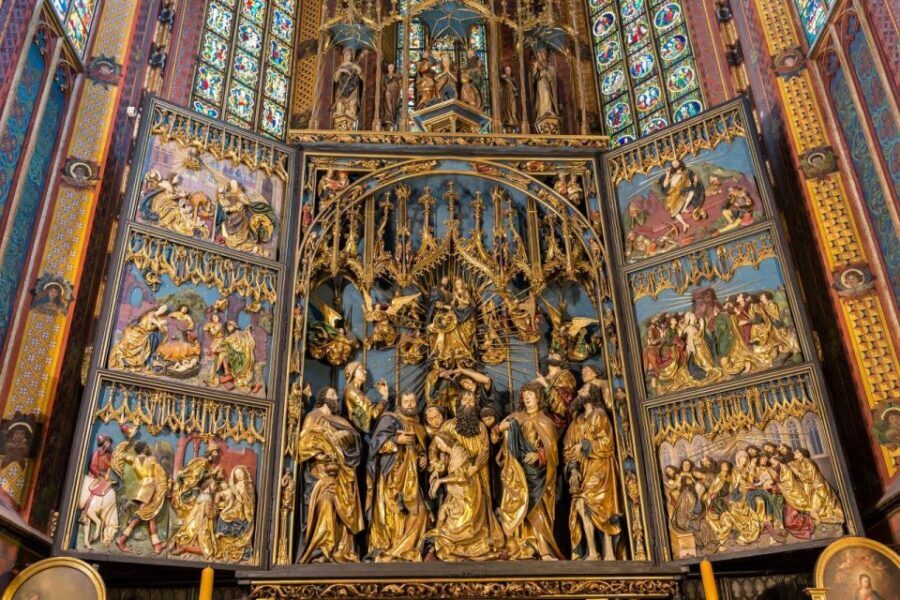
Inside, you’ll see one of Gothic Europe’s major treasures: the 15th-century Veit Stoss altarpiece. The guide points out what makes it special—monumental carved figures and dramatic biblical scenes rendered with enough detail that you keep finding new elements as you look. The altarpiece isn’t just art behind glass; it’s theater carved into wood, designed to make religious stories feel immediate.
Another point your guide covers is survival. The altarpiece endured major turmoil, including fires and war, and it remains a strong symbol of Krakow’s devotion and artistic endurance. That context matters. When you understand it survived, you don’t just admire the craftsmanship—you respect the persistence behind it.
You’ll also get the broader visual setting: painted vaults, stained glass windows, and chapels that help the basilica feel like a complete world rather than a single object. This is the stop that turns a walking tour into a memory.
If you’re hoping for a tower climb, don’t count on it. The tour includes the basilica visit, but it doesn’t include other entrances—for example, the church bugle tower.



How much time you really get (and why 90 minutes can work)
The total duration is about 90 minutes, and it feels like the right length for Old Town. Long enough to cover the big landmarks, short enough that you still have energy left afterward for a café, a wandering loop, or a second pass at your favorite streets.
This timing also supports a realistic sightseeing plan. You’re not racing from one corner to another for “photo proof.” Instead, you get a guided flow: start square, university courtyard, civic square and legends, Cloth Hall exterior context, then the basilica’s main interior hit.
Group size can vary, and in at least one small-group experience the guide had time to explain in extra detail and answer questions. Even when the group isn’t tiny, the pace stays human.
Price and value: what you get for around $29
At about $29 per person, you’re paying for three things that add up quickly in Krakow:
1) An expert guide who ties the sights together into a story
2) Entrance to St. Mary’s Basilica
3) Skip-the-line access, which is often the difference between a calm visit and a rushed one
If you tried to do this alone, you’d spend time figuring out what to see, where to start, and how to interpret the bigger monuments. Plus, the basilica is the kind of place where having context makes the art land harder. The guide also saves you effort by handling the order of stops so you’re not backtracking.
Could you do it cheaper on your own? Sure, you could. But you’d likely lose the “why” and burn extra time. For the mix of architecture + the Veit Stoss centerpiece, I think the price makes sense.
Practical tips for a smooth Old Town walk
A few practical notes make this tour easier:
Dress code: For places of worship, shorts and sleeveless tops aren’t allowed. Both men and women need knees and shoulders covered. If you arrive with a too-casual outfit, you’ll feel it immediately at the door.
Weather: It runs in all weather conditions, so dress for rain or cold and keep your shoes ready for cobblestones. Comfortable walking shoes are a must.
Meeting time: Plan to reach St. Mary Magdalene Square early and look for the guide holding an excursions.city sign. If you’re late, you may not be able to join once the group leaves.
What’s included vs. not included: You’ll get the guided Old Town walk, outside views of Cloth Hall and Collegium Maius, and the basilica entry. You won’t get other entrances like the bugle tower, so don’t build your expectations around that.
Who this tour is best for
This fits well if you:
- Want a first-time Krakow orientation that still includes the “must-see” art
- Prefer guided storytelling over solo wandering
- Like getting context at the same time as you take photos
- Care about religious art and want to see the Veit Stoss altarpiece without rushing
It’s also a good choice if you don’t want a multi-hour marathon. In 90 minutes, you’ll cover a tight set of landmarks that anchor Krakow’s identity.
If you’re looking for deep museum time or detailed university history inside buildings beyond the courtyard, you might want an additional stop afterward.
Should you book this Krakow Old Town tour?
Yes—if you want your time in Krakow to feel organized and meaningful. The combination of Old Town walking, Main Market Square legends, the Collegium Maius courtyard story, and the basilica’s Veit Stoss altarpiece is a strong set of hits for a compact schedule.
I’d skip it only if you already know Krakow very well and you mainly want long free time at one place. Otherwise, this tour is one of the most practical ways to connect the city’s medieval roots to the art and faith that still shape what you see today. Guides can bring different flavors—one guide named Maria was praised for a warm, humorous, very skilled approach—but the core value stays consistent: you leave with a clearer Krakow, not just a stack of photos.
FAQ
How long is the Krakow Old Town tour?
The duration is about 90 minutes.
Where do I meet the guide?
Meet your guide at St. Mary Magdalene Square at the Piotr Skarga Monument. The guide will hold an excursions.city sign.
What’s included in the tour price?
The tour includes an expert guide, entrance ticket to St. Mary’s Basilica, and a guided Old Town walk with outside views of Cloth Hall & Collegium Maius.
Does the tour include entry to St. Mary’s Basilica?
Yes. You get an entrance ticket to St. Mary’s Basilica, and the tour includes skip-the-ticket line.
Are there dress code rules?
Yes. For places of worship, shorts and sleeveless tops are not allowed. Both men and women must cover knees and shoulders.
What languages are available?
The live tour guide is available in German, Spanish, Polish, Italian, French, and English.