REVIEW · KRAKOW
Krakow: Auschwitz Birkenau & Wieliczka Salt Mine
Book on GetYourGuide →Operated by WonderWay · Bookable on GetYourGuide
A day like this doesn’t waste your time. You’ll go from the stark reality of Auschwitz-Birkenau to the strange beauty of a world carved from salt in Wieliczka. It’s two places with very different moods, but both leave you thinking for days.
What I love most is the licensed English-guided Auschwitz visit, which helps the site make sense without drowning you in facts, and the stunning St. Kinga Chapel inside the mine, where the salt work feels almost impossible.
One drawback to plan for: this is a long day (about 11 hours) and the walking adds up, so it won’t suit everyone, especially if you’re coping with tight spaces or mobility limits.
Key highlights to know before you go
- Auschwitz in guided English: you’ll see original prison blocks and the preserved camp layout with a guide who keeps the story clear
- Arbeit Macht Frei gate + preserved areas: you’ll pass the most recognizable entrance and move through key sections of Auschwitz I and II-Birkenau
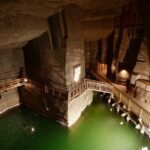
- Wieliczka’s underground highlights: salt sculptures, decorated chapels, and an underground lake route
- St. Kinga Chapel: entirely carved from salt, and a major visual payoff after the driving between sites
- Skip the ticket line + hotel transfer: you save time on entry and keep logistics simple with two-way pickup from your hotel
- Worth calling out: pickup timing isn’t exact, so it helps to message beforehand and stay ready near your pickup spot
In This Review
- Auschwitz-Birkenau: Where the guide matters
- The drive between sites: Time you’ll feel, but it’s structured
- Wieliczka Salt Mine: A switch in mood, with real wonder
- St. Kinga Chapel and the “salt cathedral” effect
- Group flow, guides, and what you’ll actually get
- Price and value: What $183 gets you (and what it doesn’t)
- Timing, walking, and the small-but-real logistics issues
- Who should book this Auschwitz and Wieliczka pairing
- Should you book it? My straight answer
- FAQ
- How long is the tour from Kraków?
- Do I need to bring tickets or wait in line?
- Is there a guided tour at Auschwitz and at the salt mine?
- What’s included for transportation?
- Is food included?
- Is the salt mine tour suitable for claustrophobia or mobility issues?
Auschwitz-Birkenau: Where the guide matters
Auschwitz is not the kind of place you can treat like a quick checklist. It needs context. That’s exactly where this tour earns its keep.
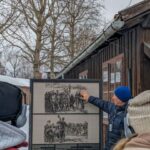
You start with a guided visit to Auschwitz I, with a licensed English-speaking guide. Expect about 2.5 hours here. This part is the foundation: the original prison blocks, the preserved layout, and the sense of how the camp system was built and used. If you’ve ever felt lost in museums that pile up names without a thread, you’ll appreciate a guide who ties the pieces together at a human pace.
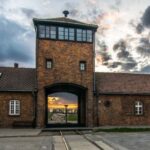
After that, the day moves on to the Auschwitz-Birkenau Memorial and Museum for about 80 minutes. This is where you’ll see more of the camp’s scale and structure at Auschwitz II–Birkenau, including preserved barracks and exhibits that document the Holocaust and honor victims. You’ll also see the “Arbeit Macht Frei” gate, one of the most recognizable images associated with the camp.
Two practical points that helped me feel steadier in a place like this:
- Give yourself permission to slow down. The tour moves as a group, but you can still pause when something hits you.
- Wear layers. Between the van ride and museum buildings, temperatures can jump around.
If you’re someone who wants only the headline facts, Auschwitz might feel heavy. If you want to understand what you’re looking at, the guided format is a strong match.
The drive between sites: Time you’ll feel, but it’s structured
This tour is built for a one-day pairing, so you won’t just jump from site to site with zero downtime. There’s about 1.5 hours of van transfer to start, then a short repositioning between Auschwitz I and the Birkenau area.
Plan on the travel time being part of the experience, not a break from it. It’s a long day: from Kraków pickup to return back to Kraków, you’re looking at around 11 hours. That’s manageable for many people, but it’s not a casual day trip.
It’s also worth knowing pickup is included, but the timing isn’t guaranteed to be exact. The meeting window can change. I’d treat this as a “be ready early” situation rather than a “perfect minute schedule” situation.
You can also read our reviews of more tours and experiences in Krakow.

Wieliczka Salt Mine: A switch in mood, with real wonder
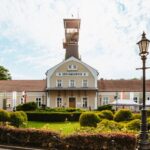
After Auschwitz, Wieliczka is a shock in the best way. It doesn’t erase what you saw. It shifts the tone—toward craft, engineering, and human effort turned toward work underground.
You’ll transfer about 1.5 hours from Auschwitz to Wieliczka, then head into the mine for a guided visit lasting around 2.5 hours. The Wieliczka complex is a UNESCO World Heritage Site, and you’ll walk the Tourist Route, designed for visitors.
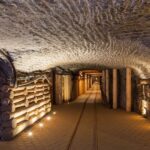
The big wow moment is descending beneath the surface into tunnels and chambers carved from salt over centuries. The mine isn’t just a hallway of displays. You’ll move through a sequence of spaces that feel like a different underground city—salt sculptures, decorated areas, and chapels that are often the emotional peak for people who come for the visuals.
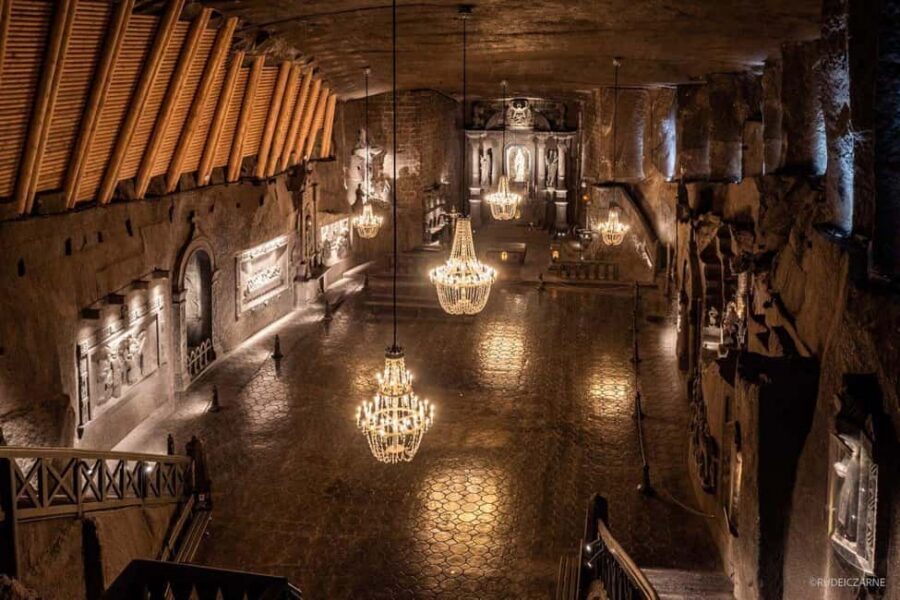
One highlight you’ll definitely hear about once you’re there is St. Kinga Chapel. This chapel is famous because it’s carved entirely from salt. Even if you’ve seen photos, standing close is different. You can feel the scale of the work, and you get why this site became such a legend.
You’ll also see an underground lake and learn about the history of salt mining through exhibits. That’s important because it gives the mine a backbone. You’re not just looking at pretty shapes—you’re seeing how a resource shaped a region’s economy and daily life.
St. Kinga Chapel and the “salt cathedral” effect
If you’re choosing one stop inside Wieliczka that justifies the day, make it St. Kinga Chapel. The mine’s underground spaces have a steady flow of impressive visuals, but the chapel creates a hard moment of awe.
Here’s why it works:
- The salt carvings feel both delicate and monumental.
- The decorations give the mine a sense of ceremony, not just industry.
- After Auschwitz, it may feel strange to shift from tragedy to craftsmanship. That contrast is part of why the pairing hits so hard. You’re looking at human making, while still carrying what you learned above ground.
Also, you’ll have an elevator ride to the surface included. That’s a practical detail that matters. Mines often mean stairs and long walks back up. Here, you get the easier route, which helps with the “long day” factor.
Group flow, guides, and what you’ll actually get
This is a guided tour with English tour guiding in Auschwitz and multi-language support for the mine portion (English, Italian, French, Spanish, and also listed German among available languages). That means you can match the language you want without ending up with a mix of audio problems or unclear signage.
English guide matters at Auschwitz because so much is interpretive. You’re looking at ruins and preserved structures, yes—but what makes sense and what doesn’t depends on context. A good guide helps you read the site without turning it into a trivia hunt.
One review highlights a guide/driver named Matthiew, called out as the best conductor guide. Another note praises an excellent driver for being courteous and prompt. That lines up with what I think you should look for in a long-day tour: not just knowledge, but smooth handling of timing and the little moments that keep you calm when everything is moving.
Price and value: What $183 gets you (and what it doesn’t)
At $183 per person for an 11-hour day that includes both sites, this isn’t a budget “see it fast” tour. But it also isn’t overpriced when you break down what’s included.
What you’re paying for:
- Two-way transfer from your hotel in Kraków
- A guided visit at Auschwitz in English
- A guided visit at Wieliczka on the tourist route
- Skip-the-ticket-line access
- An elevator ride to the surface in Wieliczka
What you’ll still need to budget for:
- Food and drinks (not included)
So the value depends on how you’d otherwise handle logistics. If you’d be piecing together trains or rides and buying separate tickets while timing your entrances, this package saves effort. If you already have your own plan and are comfortable with public transport, you might spend less on paper—but you’d likely spend more time managing it.
My practical take: this price makes sense if you want a guided, managed day that keeps your eyes on the important parts instead of transit stress.
Timing, walking, and the small-but-real logistics issues
Let’s talk about what can make or break a day like this.
You’re in the car several times. You’re also walking in two very different environments: museum pathways and camp structures for Auschwitz, then underground corridors and chambers for Wieliczka. One thing I’d plan for is that the walking can feel longer than you expect once you add transitions, time spent regrouping, and the fact that Auschwitz visitors tend to pause often.
There’s also the pickup and drop-off detail. Pickup is included, but it’s not an exact minute-by-minute process. One experience shared that pickup didn’t happen right on time and required a call, then the driver arrived later (and turned out to be informative). Another note said getting out could be better explained, leading to a longer walk to the pickup/drop-off point than expected, ending away from where a taxi was waiting.
How to reduce the chance of a bad surprise:
- Message ahead with your exact pickup details and stay near the pickup area when you’re told
- If you don’t see anyone when you expect them, contact the provider rather than waiting silently
- When you’re ready to leave the mine, ask where the meeting point is so you don’t wander under a late-day time crunch
This isn’t about pessimism. It’s about controlling one variable in a long day.
Who should book this Auschwitz and Wieliczka pairing
This tour fits best if you:
- Want guided context at Auschwitz rather than self-guided wandering
- Are okay with a long day and steady walking
- Like cultural heritage sites that teach you as you look
It may not be a fit if you:
- Have mobility impairments (the tour is noted as not suitable)
- Have claustrophobia (the mine involves being underground and moving through enclosed spaces)
If you’re sensitive to emotional content, plan your recovery time. You may want a quieter evening back in Kraków after.
Should you book it? My straight answer
Yes, you should book this tour if your priority is a smooth, guided day that pairs Auschwitz-Birkenau with Wieliczka Salt Mine without you having to coordinate the logistics yourself. The Auschwitz guide time and the Wieliczka highlights like St. Kinga Chapel, the underground lake, and the salt-carved interiors are exactly the kinds of specifics that make this more than a “drive-by” trip.
If you’re very budget-focused or you’re already planning independent transport, you might compare costs. But if you want a managed schedule, hotel pickup, and guides working in the background so you can focus on what matters, this package is a solid deal at $183.
Just go in prepared for length, walking, and the emotional weight of Auschwitz. That part is non-negotiable. The rest is controllable.
FAQ
How long is the tour from Kraków?
The total tour duration is about 11 hours, with Auschwitz taking about 3.5 hours and the Wieliczka Salt Mine visit taking about 2.5 hours.
Do I need to bring tickets or wait in line?
This tour includes skip-the-ticket-line access, so you shouldn’t need to wait in line to enter the sites.
Is there a guided tour at Auschwitz and at the salt mine?
Yes. Auschwitz is guided in English, and the Wieliczka Salt Mine tour is guided with options including English, Italian, French, Spanish, and German.
What’s included for transportation?
You get two-way transfer from your hotel in Kraków, plus van rides between the Auschwitz area and Wieliczka and back.
Is food included?
No. Food and drinks are not included, so you’ll need to plan for meals on your own.
Is the salt mine tour suitable for claustrophobia or mobility issues?
The activity is not suitable for people with mobility impairments or people with claustrophobia.