REVIEW · KRAKOW
Krakow: 3-Hour Small Group Tour on E-Bike
Book on GetYourGuide →Operated by krakowbiketour · Bookable on GetYourGuide
Pedal less, see more of Kraków. This 3-hour small-group e-bike ride strings together three of the city’s most important areas—Old Town, the Jewish quarter (Kazimierz), and the WWII ghetto zone—without the usual walking fatigue.
I really like how this tour uses modern Dutch-style pedal-assist e-bikes with real comfort built in, plus a tight group size that makes it easier to hear the guide between photo stops. I also like that you’re led by an English-speaking local guide, and the stories you get are the kind that help the map make sense fast.
The main thing to consider is riding comfort: even with the motor assist, you still pedal in a real city with pedestrians and cars around. If you’re not fully comfortable controlling a bike in shared spaces, this route might feel stressful.
In This Review
- Key highlights on this Kraków e-bike experience
- Getting started at Sławkowska 11 and learning the bike
- Old Town on two wheels: Main Market Square to Florian Gate
- Main Market Square
- Juliusz Słowacki Theatre and Florian Gate
- Bishop’s Palace and the University quarter feel
- Along the Vistula to Wawel: castle views without the workout
- Wawel Royal Castle and the dragon
- Kazimierz streets: plac Nowy, Szeroka Street, and Father Bernatek’s Bridge
- Schindler’s List Passage and a mid-tour break
- plac Nowy and Szeroka Street
- Father Bernatek’s Bridge
- The WWII ghetto segment: Ghetto Heroes Square and Schindler’s Factory area
- Pace, group size, and why the “small” part matters
- What to know about “comfort”: motor assist, shared space, and cold weather
- Entrance fees and what this tour does and doesn’t do
- Price and value: is $62 a good deal?
- Who should book this Kraków e-bike tour
- Should you book this e-bike tour?
- FAQ
- How long is the Kraków 3-hour e-bike tour?
- How much does it cost?
- Where does the tour start?
- What’s included in the price?
- Are entrance fees included?
- What areas of Kraków will you see?
- Is this tour hard or strenuous?
- Are the e-bikes pedal-assist or throttle bikes?
- Is the tour suitable for children or people with mobility impairments?
- How big are the groups?
Key highlights on this Kraków e-bike experience
- Bosch/Sparta pedal-assist e-bikes: no throttle, no lever—your legs still matter, but the effort stays manageable
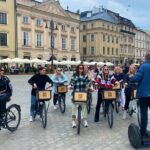
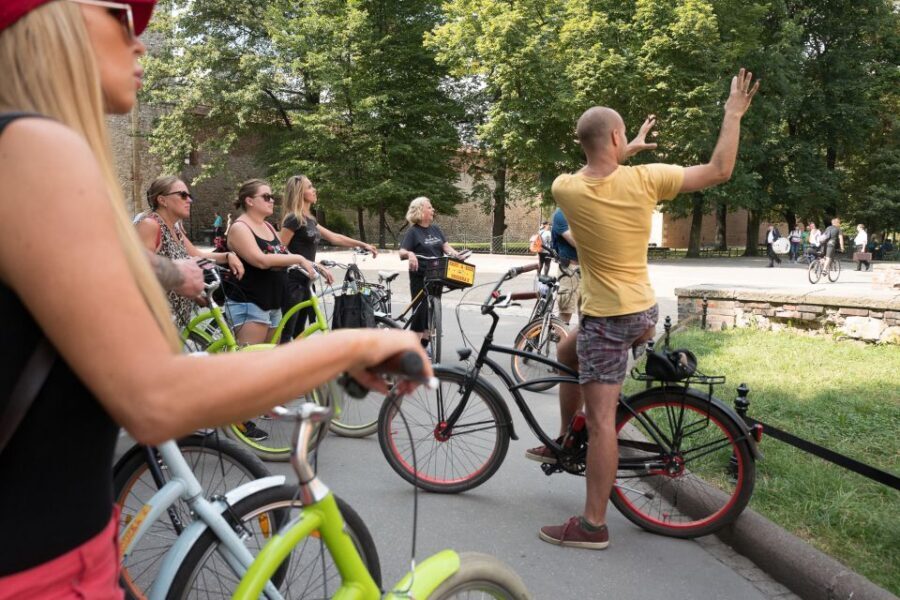
- Up to 15 people: small enough for better listening during stops
- Three districts in one loop: Old Town, Kazimierz, then the WWII ghetto memorial sites
- A mid-tour refreshments break: a real pause, not just another stop-and-go
- Well-paced stops at major landmarks like Main Market Square, Wawel, Kazimierz streets, and Schindler’s Factory area
Getting started at Sławkowska 11 and learning the bike

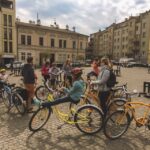
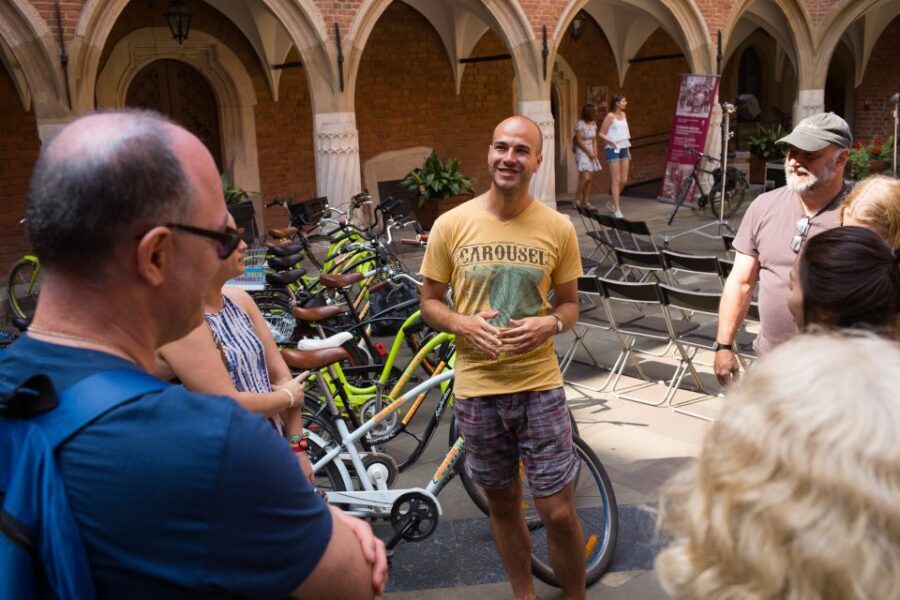
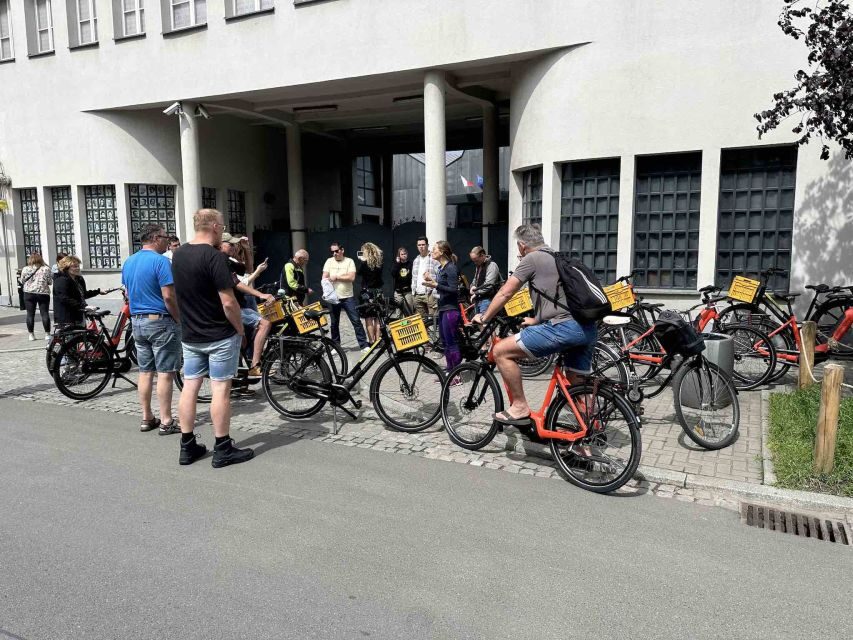
Most people underestimate how much the start affects the whole tour. Here, it begins at Sławkowska 11, in the inner courtyard where you’ll pick up the rental bikes. There’s a quick setup moment, then a short safety briefing (about 10 minutes) before you roll out.
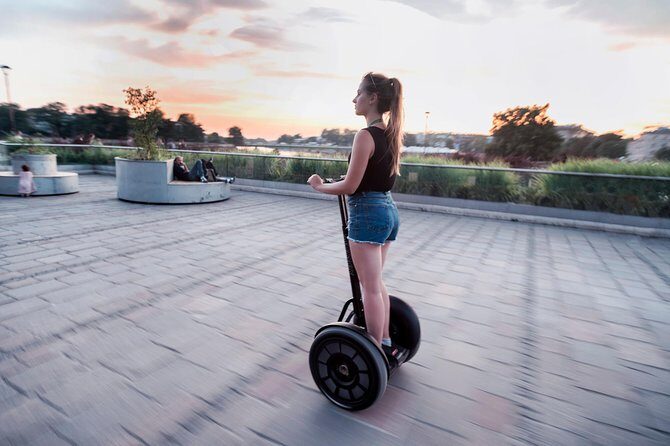
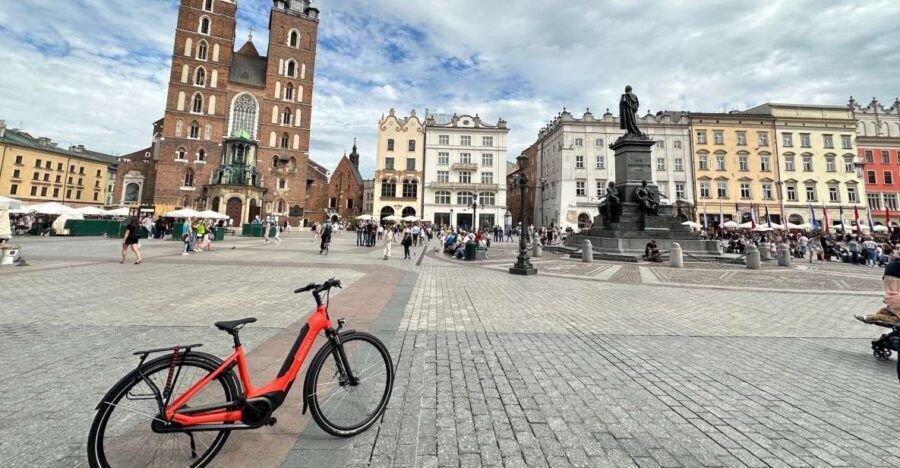
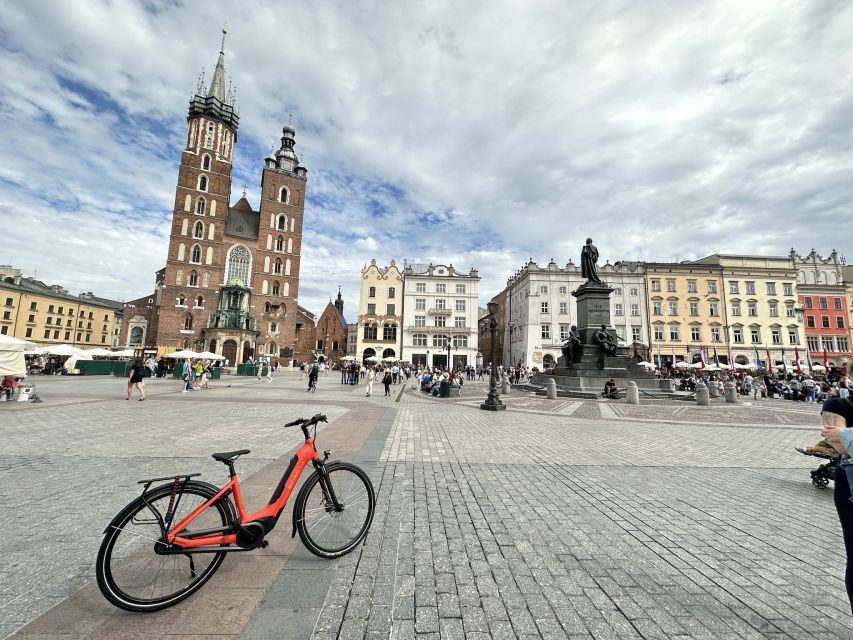
The bikes are Bosch E-bike by Sparta, and they’re modern and built for comfort. One detail that matters: the e-bikes have no throttle or lever. Instead, the motor supports your pedaling effort. Translation for you: you control the speed and feel in your hands and legs, not a twist-and-go mode. That usually makes new e-bike riders calmer, because you’re not fighting a vehicle that suddenly accelerates.
I’d suggest you dress for a bike ride first and sightseeing second: comfortable shoes you’d trust while stopping and starting, plus layers for changing Kraków weather. You’ll be on the move between landmarks, and you’ll want your legs to feel ready for those short photo stops.
You can also read our reviews of more cycling tours in Krakow
Old Town on two wheels: Main Market Square to Florian Gate
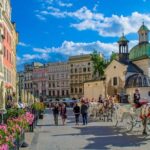
Old Town is where Kraków’s “shape” shows up. Once you’re rolling, the tour hits a classic cluster of sights that give you orientation fast: you see the big civic center, then move through the historic edges and gates that help explain how the city grew.
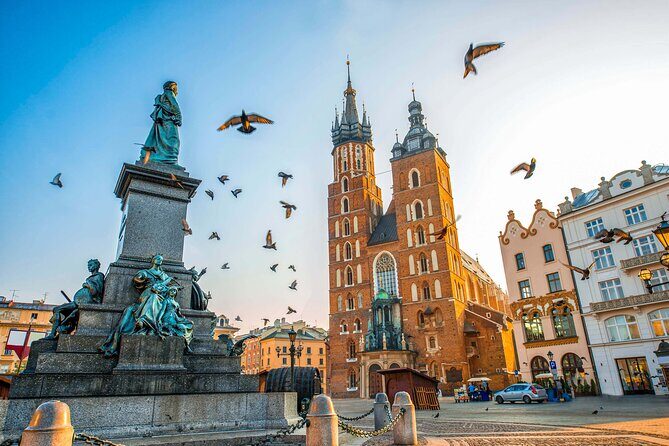
Main Market Square
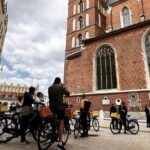
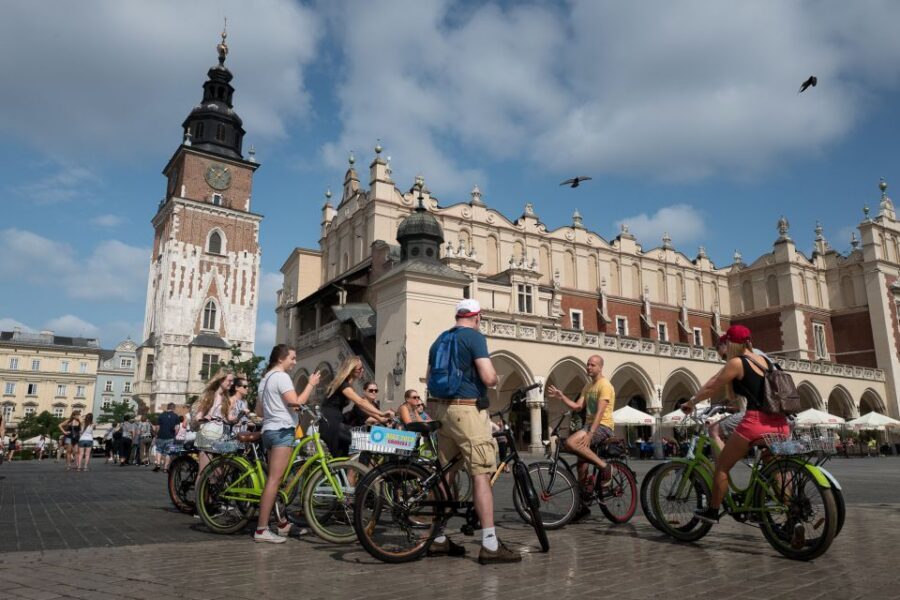
You’ll stop at the Main Market Square for photos and a guided explanation. The value here is timing. Instead of spending an hour trying to puzzle out what you’re looking at, the guide frames what the space represents and what to notice as you move past.
You also get a real benefit from being on a bike in this part of town. You can actually move through busy areas without feeling trapped on foot. And because the group is small, you’re not stuck at the back of a crowd waiting for a bus rhythm.
Juliusz Słowacki Theatre and Florian Gate
Next you’ll glide to the Juliusz Słowacki Theatre area and then the Florian Gate. These stops work well because they’re not just “look at a building.” The guide ties them into Kraków’s story—what they meant locally, how they fit into old routes and movement, and why they still matter when you’re standing there.
One thing I appreciate is that the tour doesn’t treat Old Town like a checklist. It’s more like a guided “navigation lesson.” You learn what’s central, what’s defensive or boundary-like, and what’s more cultural.
Bishop’s Palace and the University quarter feel
After Florian Gate, you’ll head toward the Jagiellonian University quarter and the Bishop’s Palace area. Even if you don’t have a specific academic interest, this is a good sequence. The university surroundings help shift your perspective from markets and civic life into education and long-term influence.
Then Bishop’s Palace adds another contrast: the power and presence of church-linked authority. Standing in these locations by bike lets you keep momentum without rushing the story.
A few more Krakow tours and experiences worth a look
Along the Vistula to Wawel: castle views without the workout
At some point in every Kraków visit, you need that river-breeze moment. This tour gives it to you by heading toward the Vistula River boulevards. You get scenic views on the way and a short stop that helps you reset before the biggest landmark section.
Wawel Royal Castle and the dragon
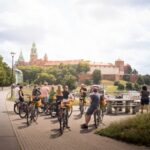
Then comes Wawel Royal Castle and the famous Wawel Dragon Statue. The dragon part is easy to like on instinct—it’s memorable and a little cheeky—but the real value is how the guide connects the legend to place.
Wawel is also one of those areas where your choice of transport changes your experience. By e-bike, you can position yourself, absorb the views, and keep moving. On foot, you can lose time weaving between pedestrians. On a bike, you keep a steady flow and still get guided explanations at the right moments.
Kazimierz streets: plac Nowy, Szeroka Street, and Father Bernatek’s Bridge
After Wawel, you roll into Kazimierz, the Jewish quarter area. This part of the ride is different in feel: more local streets, quieter pockets, and a shift from medieval-feeling grandeur into the lived-in texture of neighborhoods.
Schindler’s List Passage and a mid-tour break
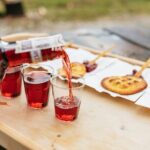
About halfway through, you’ll pause at Schindler’s List Passage for a break (refreshments) and time for photo stops and guided context. This stop is practical and also emotional. It gives you a breather without breaking the flow of the story you’ve been hearing.
It’s also where the tour’s “three districts” idea clicks. You’ve seen the older city identity and major landmarks. Now you’re moving toward a darker chapter, and the break helps you stay mentally steady.
plac Nowy and Szeroka Street
You’ll also stop around plac Nowy and Szeroka Street. These are the kinds of places where a guide’s job is to show you what’s worth noticing beyond storefronts and street views. The tour frames the area as a community space—streets you’d wander on your own after the ride, not just a background set.
If you like returning later, this section helps you pick your own targets. After seeing these streets with context, you’ll know what to seek again when you’re walking without a schedule.
Father Bernatek’s Bridge
The Father Bernatek’s Bridge stop is short, but bridges are good teaching tools. They show relationships between neighborhoods, movement corridors, and how the city connects across water. It’s also a smooth transition from the upbeat motion of streets and squares into the more solemn final segment.
The WWII ghetto segment: Ghetto Heroes Square and Schindler’s Factory area
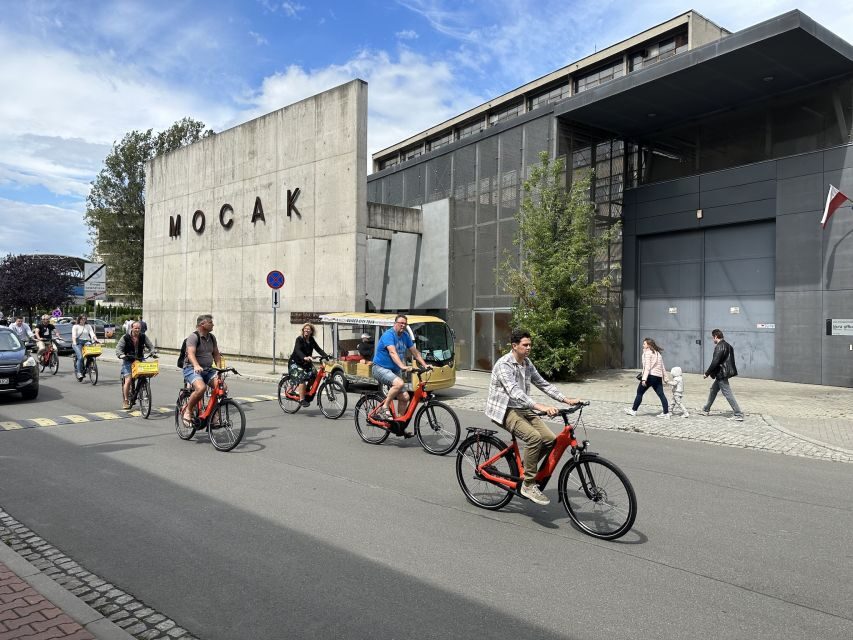
This is the part of the tour that demands your full attention. You’ll be led through the former WWII ghetto area, including Ghetto Heroes Square and then onward to the Oscar Schindler’s Factory zone (often discussed through the Schindler’s List connection).
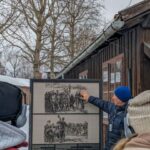
The tour includes guided interpretation here, and the purpose isn’t just to point at buildings. It’s to help you understand what you’re seeing: the geography of the ghetto area, the meaning behind memorial spaces, and why Schindler’s Factory shows up in the story of survival and resistance.
I’ll say this plainly: this segment can be heavy. If you prefer sightseeing that stays light, you might not love the emotional weight of Holocaust-era history. But if you can handle it respectfully, the e-bike format actually helps. It keeps you moving through real urban space while still letting the guide pause you at key places.
And because it’s a small group, you’re not shouting over a crowd. You can hear explanations, you can ask questions, and you can absorb the atmosphere without feeling rushed past it.
Pace, group size, and why the “small” part matters
This tour is built to fit into real vacation time: 3 hours of riding and stopping. It’s designed as an easy, flat route—so it’s not a “train yourself for fitness” scenario. At the same time, you still need cycling confidence. You’re moving through city conditions, which can mean sudden pedestrian crossings, tight moments at squares, and shared roads.
The group limit matters for practical reasons:
- you hear the guide better during stops
- you don’t get stretched out behind a large pack
- it’s easier to keep everyone moving at a consistent rhythm
From the guide-style praise in the feedback, what stands out is engagement and pacing. Different English-speaking local guides are mentioned by name across many bookings—like Chris, Alex, Thomash, Kristoff, Krzysztof, and Zee—and the common theme is that they talk clearly, keep a good tempo, and answer questions without turning it into a monologue.
You’ll also get short segments that look like: photo stop plus guided talk plus riding time. That rhythm is smart. It prevents the “too much talking, then you’re lost” problem and it prevents the opposite too—endless riding with no context.
What to know about “comfort”: motor assist, shared space, and cold weather
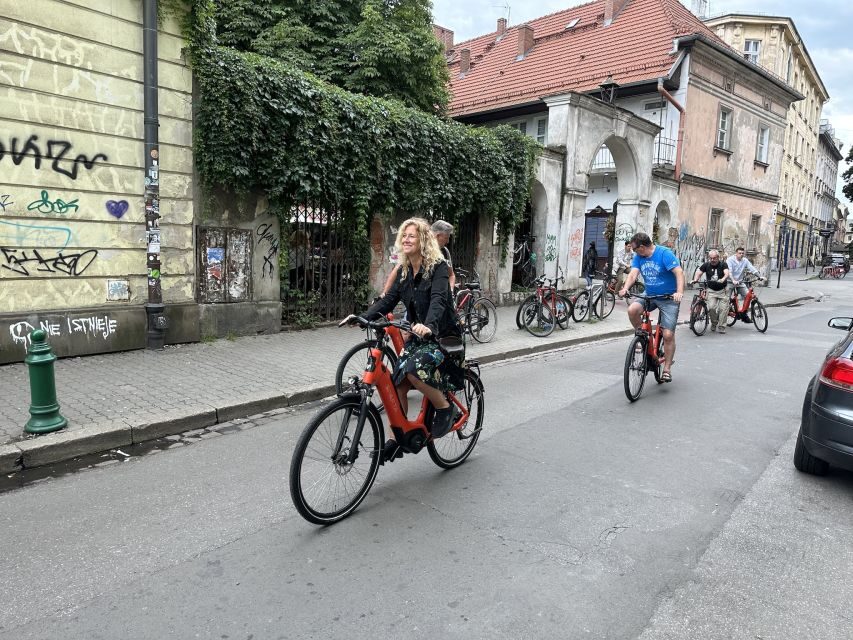
The e-bikes help, but they don’t erase the need for awareness. Several riders note the city can be busy—pedestrians, cars, and even horse carriages can show up around major areas. That’s not a reason to avoid the tour. It’s a reason to go into it calm and focused.
On the bike:
- keep your speed controlled near crowds
- watch for people stepping out suddenly from between pedestrians
- don’t assume every crossing is bike-friendly
Also, consider weather. One piece of feedback suggests the experience can feel less enjoyable when it’s very cold. If you’re choosing your date, I’d lean toward mild days when you’re comfortable staying outside and riding for three hours.
Entrance fees and what this tour does and doesn’t do
Entrance fees are not included. That means if a stop has a paid interior option, you’ll likely need to decide whether to add it yourself. The tour structure you’ll feel most is photo stops and guided walking/looking while you’re on the bike, plus outdoor orientation.
One practical tip: if you care about going inside specific sites, plan that for later. Use this ride as your orientation and context machine, then return on your own time for any interiors you want.
Price and value: is $62 a good deal?
At about $62 per person for a 3-hour small-group ride, the value comes from what you’re bundling together:
- modern e-bike rental (Bosch/Sparta bikes)
- an English-speaking local guide for route context and storytelling
- coverage of three major districts in one efficient loop
A guided half-day elsewhere often costs close to this once you add transport and the time you spend getting from place to place. Here, the bike does double duty: it’s both transportation and part of the experience. You’re not just arriving—you’re traveling through Kraków’s streets at the pace where you can still understand where you are.
If you’re staying a short time and want to see the big areas without spending your first day figuring out bus routes, this price usually makes sense.
Who should book this Kraków e-bike tour
This tour fits best if you:
- can ride a bike confidently
- want an efficient way to see Old Town, Kazimierz, and the WWII ghetto area
- like guided explanations with stops for photos
- prefer small groups (max 15) over big tour crowds
It’s not suitable for:
- children under 15
- people with mobility impairments
- anyone who can’t ride a bike
For first-time e-bike riders, the motor support is typically the confidence booster. You’ll still pedal, but the ride stays comfortable for most people who can balance and control a bicycle.
Should you book this e-bike tour?
If you want a fast, guided way to get oriented in Kraków, I’d book it—especially if you care about history but don’t want to spend your day on foot. The small group size, the pedal-assist Bosch/Sparta e-bikes, and the way the route links Old Town to Kazimierz and then to WWII sites make it a strong first-call activity.
I’d only think twice if you’re easily stressed by crowds and shared roads, or if heavy WWII themes are hard for you to handle on a single afternoon. If you’re comfortable riding attentively and you’re open to a serious historical segment, this is one of the more practical ways to learn Kraków quickly.
FAQ
How long is the Kraków 3-hour e-bike tour?
The tour runs for about 3 hours.
How much does it cost?
The price is $62 per person.
Where does the tour start?
The meeting point is at Sławkowska 11 (inner courtyard), with the entrance next to the exchange point.
What’s included in the price?
You get the Bosch E-bike by Sparta rental and an English-speaking local guide.
Are entrance fees included?
No. Entrance fees are not included.
What areas of Kraków will you see?
You’ll see three districts: Old Town, the Jewish quarter (Kazimierz), and the WWII ghetto area, including stops related to Oscar Schindler’s factory.
Is this tour hard or strenuous?
The route is described as easy and flat, and the bike’s electric motor assists you as you pedal.
Are the e-bikes pedal-assist or throttle bikes?
They have electric motor support while you pedal, and there is no throttle or lever.
Is the tour suitable for children or people with mobility impairments?
No. It’s not suitable for children under 15, people with mobility impairments, or anyone who can’t ride a bike.
How big are the groups?
The experience is limited to a maximum of 15 persons.