REVIEW · GDANSK
Gdansk: Walking Tour with licensed guide in English/Polish
Book on GetYourGuide →Operated by Bemar Kazimierz Bemowski · Bookable on GetYourGuide
Gdańsk changes when you use your senses. This walking tour is built around touch, sound, and small visual clues, so the city sticks in your mind fast.
I especially like how the guide prompts you to listen at the Main Town Hall and notice the carillon and local sounds in the square.
Then you get the hands-on part that most tours skip: you’ll touch historic walls tied to St. Mary’s Church, and you’ll even do a playful cold test on the tenement-house surfaces. One possible drawback: food and drink aren’t included, so you may want a snack plan if you’re touring mid-day.
In This Review
- Key highlights you’ll notice right away
- A 90-minute sensory plan through Gdańsk’s Old Town
- Brama Wyżynna and Katownia: starting with stone-and-power
- Golden Gate and Long Market: the Find the Detail game
- Długa, Uphagen’s House, and the rhythm of merchant streets
- Town Hall and the carillon: hearing the city instead of reading it
- Neptune’s Fountain, Artus Court, Golden House: myths, manners, and money
- Green Gate and St. Mary’s Church: the cold test and wall-touching
- Mariacka Street and amber colors you can actually spot
- Motława River and Żuraw: medieval port tech powered by people
- Price and value: why $27 works for what you get
- Who should book this tour (and who might want a different style)
- A quick word on the guide experience
- Should you book this Gdańsk walking tour?
- FAQ
- How long is the walking tour?
- How much does it cost?
- What languages does the licensed guide speak?
- Where does the tour start and end?
- What parts of Gdańsk are included in the tour experience?
- Is food or drink included?
- Is the tour wheelchair accessible?
- Can I cancel or reserve without paying right away?
Key highlights you’ll notice right away
- Brama Wyżynna and Katownia start you inside the city’s older defensive story
- Find the Detail game at the Golden Gate and Long Market helps you spot Gdańsk symbols and colors
- Town Hall carillon time is timed so you can actually hear it, not just read about it
- Mariacka Street amber colors point you toward what to look for in local galleries
- St. Mary’s Basilica wall-touching gives you that physical sense of age and texture
- Motława River and the crane connect the medieval port to human muscle power—and a fun “sea adventure” feel
A 90-minute sensory plan through Gdańsk’s Old Town
This tour is short enough that you stay sharp, but varied enough that you don’t get numb from the same kind of sightseeing. You’re moving through classic Old Town landmarks, yet the focus isn’t just looking at pretty facades. You’ll be asked to listen, feel, and search for details—so your brain keeps working the whole way.
The structure is also smart for planning: it’s roughly two hours total, with steady stops that shift your attention. That matters because Gdańsk can feel like a museum-city if you only do picture-taking. Here, you’re building a mental map using sight + sound + touch, which is why it’s a good value tour even at $27 per person.
You can also read our reviews of more walking tours in Gdansk


Brama Wyżynna and Katownia: starting with stone-and-power
You kick off at Brama Wyżynna, then head toward Katownia. Even early on, the pacing makes sense: you’re not rushing through impressive exteriors. You’re getting context, and that context sets the tone for what you’ll keep seeing—power, trade, defense, and civic life.
Katownia is a quick stop, but it helps you understand that Old Town wasn’t only about elegance. It was also about control and survival. If you enjoy architecture that has a job—walls, gates, and fortifications—this start is a good match.
Golden Gate and Long Market: the Find the Detail game
The Golden Gate area is where the tour turns playful. You’ll start with a short Find the Detail game, designed around symbols and colors tied to Gdańsk. Instead of being told what you’re looking at, you’re taught how to spot it.
This part is worth your attention because it changes your “mode” from passive sightseeing to active observation. When you start noticing repeated motifs and color choices on nearby buildings, the whole neighborhood becomes easier to read.
You’ll also be at Long Market during this early block, which is smart timing: you’re getting oriented in the most visually dense area, when the game is still fresh and you still have energy to keep an eye out.
Długa, Uphagen’s House, and the rhythm of merchant streets
Next comes Długa—the kind of street where you can easily walk past details because everything looks important. The tour slows you down on purpose, so you catch the “why” behind what you see.
You also stop by Uphagen’s House, which helps connect the street-level experience to real city wealth and identity. Even without technical architectural talk, it’s the kind of location that makes you ask practical questions like: who lived here, and how did the city’s prosperity show up in stonework and design?
If you’re the type who likes a walking route that teaches you how to look, you’ll enjoy this stretch.
Town Hall and the carillon: hearing the city instead of reading it
At the Gdańsk Museum – Main Town Hall, the tour switches from visuals to sound. You listen to the carillon—and you also hear the broader local atmosphere around the square. That’s a big deal because many city tours treat sound as background. Here, sound is part of the “lesson.”
Why I think that’s valuable: hearing the carillon gives you a reference point. Later, when you look at old civic buildings, you remember that they once served daily public life, not just ceremonial snapshots.
If you enjoy atmospheres—like hearing bells at the right moment rather than catching a silent monument—you’ll like this stop.
You can also read our reviews of more guided tours in Gdansk



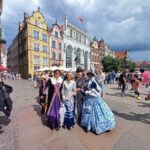

Neptune’s Fountain, Artus Court, Golden House: myths, manners, and money
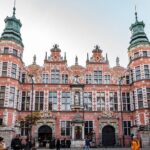
The itinerary continues through big-name landmarks: Neptune’s Fountain, Artus Court, and Golden House. These are the stops where the tour blends quick orientation with explanation of symbols and civic storytelling.
What makes these stops work on a guided walk is that you don’t spend all your time just pointing. You learn what certain images are meant to communicate and how the buildings connect to Gdańsk’s identity as a port and merchant city.
Neptune-themed imagery, for example, doesn’t just look cool. It signals maritime confidence—the idea that the city’s world view was shaped by sea routes and trade. Artus Court and the ornate houses help you see how wealth and public culture lived side-by-side in the same streets.
Green Gate and St. Mary’s Church: the cold test and wall-touching
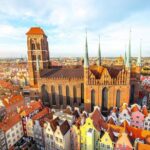
Now you move into one of the tour’s signature moments. You pass Green Gate, then reach St. Mary’s Church (St. Mary’s Basilica), where you get the hands-on element that most visitors never do: you’ll touch historic walls connected to the church.
This is also where the tour includes a cold test on tenement houses—a small, practical experience that turns the buildings from scenery into something you can feel. You’re not just checking off another stop. You’re experiencing texture and temperature contrasts that help you grasp how materials age and how buildings feel differently in different parts of the city.
A note for comfort: since this is a sensory tour, expect to pause and interact with surfaces rather than keeping a strict, sightseeing-fast pace.
And yes—this is the point where the “why” behind the sense-driven format becomes clear. When you feel the wall texture and then move on to the street colors and symbols, the whole walk clicks together.
Mariacka Street and amber colors you can actually spot
Next up is Mariacka Street, with a focus on amber. The tour helps you recognize the colors of amber you’ll see in local galleries.
Even if you’re not shopping, this part pays off because it gives you a visual filter. You’ll start seeing that amber isn’t just one color; it’s a range, and the city’s identity shows up through what local businesses display.
I like this stop because it’s a reminder that Gdańsk isn’t only about medieval bricks and carved gates. It’s also about what people traded and sold—especially materials that carry the look of the sea and the land at the same time.
If you’re the type who wants a tour that teaches you what to look for even after you’re done walking, Mariacka Street does that.
Motława River and Żuraw: medieval port tech powered by people
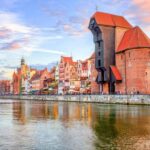
Your final leg brings you to the Motława River area and ends at Żuraw, the Oddział Narodowego Muzeum Morskiego (a maritime museum branch). This is where the tour lands on the city’s port story.
You’ll see the medieval port crane (Żuraw) and learn it was powered by human muscle power. That detail matters. It turns “old machinery” into real labor—people working the system, day after day, to move goods that fueled the city.
The highlight here also includes that sea-adventure feeling as you look at the pirate ship nearby. It’s a fun contrast to all the serious stone and civic symbols you’ve been seeing. It helps the walk feel like a story that ends on the water.
Ending by the crane is practical too: once you’re there, you’re positioned to keep exploring the waterfront on your own, because the area is naturally “go further” terrain.
Price and value: why $27 works for what you get
At $27 per person for about 90 minutes, the value comes from how the tour is built. You’re paying for a licensed, live guide in English/Polish, plus multiple “hands-on” and “listen-for-it” moments—like carillon listening and wall-touching—rather than only a slideshow of exteriors.
It’s also good value because the tour reduces wasted time. You get skip-the-ticket-line support, so you can spend more of your limited time moving through Gdańsk.
One thing to plan: since food and drink aren’t included, I’d treat this as a focused pre-meal or post-meal outing. If you have a low tolerance for standing around without a snack, bring something small.
Who should book this tour (and who might want a different style)
This is an especially good fit if you want Gdańsk to feel personal and physical. You’ll like it if you:
- Prefer sensory learning over lecture-only sightseeing
- Enjoy symbolic details like colors and motifs on historic buildings
- Want a walk that ends with a maritime story at the river crane
- Like guides who keep the energy up and make you participate
It may be less ideal if you want a fast “greatest hits” route with zero interaction. This tour asks you to stop, notice, and touch. That’s the whole point, but it changes the pacing.
A quick word on the guide experience
The tone of the experience seems to run warm and engaged. One verified booking praised Evelina for being enthusiastic and for pointing out and explaining highlights across the Old Town and Main Town area. Another comment highlighted the cameral, small-atmosphere feel and a mix of interesting city facts and curiosities.
That combination—friendly energy plus varied stops—is exactly what makes a sensory tour work. If the guide can keep you curious while you’re switching senses every few minutes, the whole route lands.
Should you book this Gdańsk walking tour?
Book it if you want a guide-led walk where you don’t just look at Gdańsk—you hear it, touch it, and learn what to notice as you go. The carillon moment, the amber focus on Mariacka Street, and the tactile St. Mary’s wall stop are the kind of specifics that make the city feel real later, not just photographed.
Skip it if you’re planning to eat during the tour (since food and drink aren’t included) or if you hate being asked to slow down and interact with surfaces.
If you’re curious, start here. This is a smart, value-priced way to experience Gdańsk’s layers in a compact amount of time.
FAQ
How long is the walking tour?
The tour lasts about 90 minutes (listed as approximately 2 hours total).
How much does it cost?
It costs $27 per person.
What languages does the licensed guide speak?
The tour is available in English and Polish.
Where does the tour start and end?
It starts at Brama Wyżynna and finishes at Żuraw. Oddział Narodowego Muzeum Morskiego.
What parts of Gdańsk are included in the tour experience?
Included highlights are the Golden Gate and Long Market sightseeing, listening to the Town Hall carillon, discovering amber colors on Mariacka Street, and touching historic walls at St. Mary’s Basilica.
Is food or drink included?
No, food and drink aren’t included.
Is the tour wheelchair accessible?
Yes, the tour is listed as wheelchair accessible.
Can I cancel or reserve without paying right away?
You can cancel up to 24 hours in advance for a full refund, and you can reserve now and pay later.