REVIEW · GDANSK
Gdansk: Hansa Electric Golf Cart City Tour with Local Guide
Book on GetYourGuide →Operated by Electricity Tour · Bookable on GetYourGuide
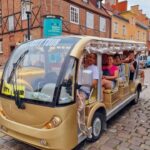
A silent cart, loud stories in Gdańsk. I love the live guide who keeps the facts moving and the riddles and legends that turn quick stops into something you actually remember. In about an hour, you cover a lot of Old Town and Main Town highlights at an easy pace.
The only real catch is time: each major stop is brief, so if you want to linger in churches or take long museum-style reads, this tour may feel a bit “fast and focused.”
In This Review
- Why This Electric Cart Tour Works in One Hour
- Key Highlights You’ll Feel Right Away
- Start at Pańska 1: A Fast, Friendly Way to Get Oriented
- St. Catherine’s Church Stop: Old Town Atmosphere in Minutes
- Wielki Młyn (Great Mill): Industrial Power, Not Just Pretty Views
- Gdańsk Shipyard: Where the Story Turns
- Museum of the Second World War: A Brief Guided Glimpse
- Post Office (Gdańsk 1): Communication as City Power
- Churches and Chapels: Short Stops That Build a Visual Map
- The Market and Merchant Power: Hala Targowa Kupcow Dominikanskich
- Neptune Fountain and the Crane: Challenges That Keep You Alert
- Granary Island and the Port: The Trade Gateway Feeling
- Price and Value: $4.89 for a Guided Hour Is a Real Deal
- Language Options: Live Guide Plus Audio Guide
- Who Should Book This (And Who Might Want Something Else)
- Should You Book It?
- FAQ
- How long is the Hansa Electric Golf Cart City Tour in Gdańsk?
- Where does the tour start?
- What languages are available for the live guide and audio guide?
- Is the tour wheelchair accessible?
- What’s included in the tour price?
- Do I need to buy tickets for the stops myself?
- What’s the cancellation policy?
Why This Electric Cart Tour Works in One Hour
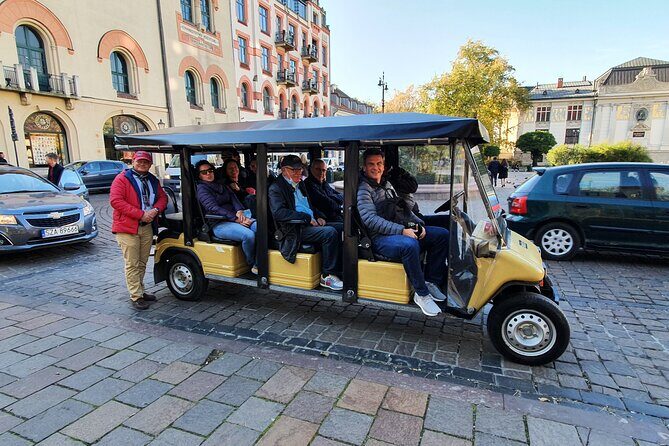
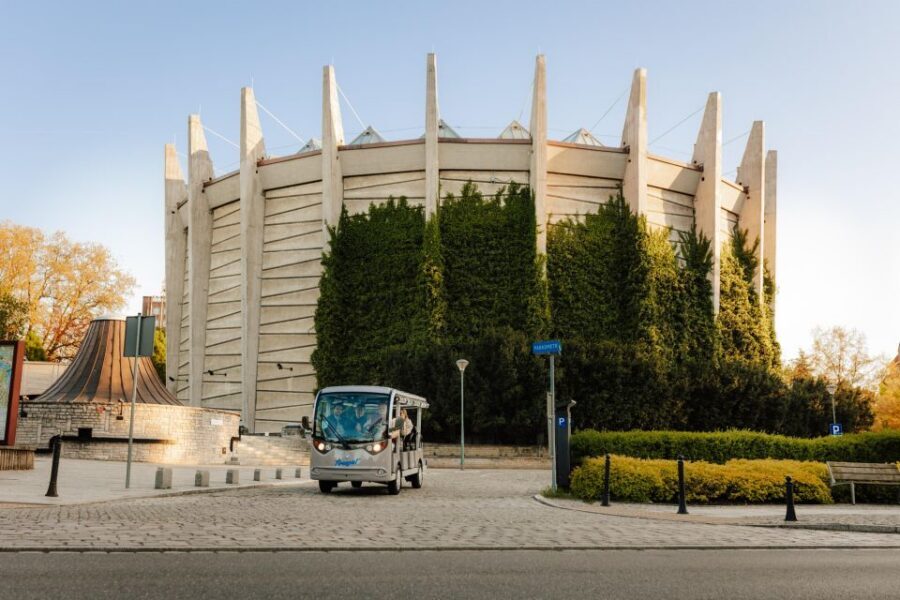
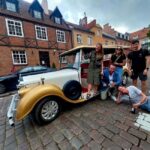
This tour is built for people who want the big picture of Gdańsk without spending the day in transit. You ride in an electric golf cart, so you’re not wrestling with steep sidewalks or long walking stretches. The guide uses short explanations and a game-like approach, including prompts and challenges that add momentum to sightseeing.
It’s also a smart way to understand Gdańsk’s identity. The city wasn’t just pretty buildings and waterfront views. It was a trade powerhouse in the Hanseatic world, and the tour keeps bringing you back to that theme: merchants, port activity, warehouses, markets, and the strong communities that formed around commerce.
Finally, you end with the shipyard story—where Gdańsk’s modern courage connects to the city’s older role as a maritime gateway.
Key Highlights You’ll Feel Right Away
- A live guide in Polish, English, or German that keeps the hour lively and clear
- Riddles and challenges that fit perfectly around the Neptune Fountain and the Crane
- Wielki Młyn (Great Mill) framed as one of medieval Europe’s major industrial engines
- Port stops that stress real trade goods like amber, grain, and herring
- Gdańsk Shipyard + the Solidarity history as the tour’s emotional high point
You can also read our reviews of more guided tours in Gdansk

Start at Pańska 1: A Fast, Friendly Way to Get Oriented
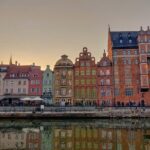
The meeting point is Pańska 1, and that matters more than you’d think. Starting in the middle of the action helps you avoid “tour lag,” the slow start where you’re still figuring out where everything is. Within minutes, you’re in the Old Town atmosphere where street layout, facades, and landmarks start to click.
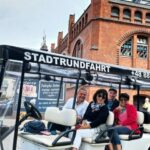
Because the ride is electric and the stops are short (about five minutes each), the tour feels like a guided highlight reel with just enough time to absorb what you’re seeing. If you’re traveling with kids, older relatives, or a group that doesn’t want a full-day march, this style is ideal. It’s also a good first-day activity if you want a mental map before you explore further on your own.
If you’re the type who likes to read every plaque, take your time, and repeat views from different angles, you may want a second trip later. This one is about coverage and context.
St. Catherine’s Church Stop: Old Town Atmosphere in Minutes
You begin with St. Catherine’s Church, Gdańsk, with a brief guided introduction plus sightseeing time. With only a short stop, you’re not expected to turn this into a long, quiet visit. Instead, it’s about setting the tone: Gdańsk’s Old Town character shows up immediately when you’re near major historic religious landmarks.
I like this kind of start because it helps you orient. Even if you’ve never been to the city, the guide’s framing gives you something to look for right away—how the architecture, the neighborhood energy, and the historic layers connect.
Good to know: because the tour is time-managed, don’t plan to get deep into the details at this point. If you want that, treat this as your visual cue and come back later.
Wielki Młyn (Great Mill): Industrial Power, Not Just Pretty Views
Next up is Wielki Młyn, and this is one of the stops where the tour feels like more than a drive-by. You get a guided look and a quick sightseeing window, but the emphasis is on meaning: the Great Mill is presented as one of the biggest industries in medieval Europe.
That’s a powerful idea for visitors who only associate Gdańsk with the waterfront. You see how the city’s wealth wasn’t only ships and merchants in the abstract. It was also production—grain processing, milling, and the systems that supported trade.
If you like history that links buildings to how people lived and worked, you’ll appreciate this stop. It also makes the later port and market sections feel logical, not random.
Gdańsk Shipyard: Where the Story Turns
Then comes one of the emotional anchors of the tour: the Gdańsk Shipyard. You’ll get a guided explanation and a short sightseeing window focused on the history of Solidarity.
Even if you don’t know the full background, the guide’s mission-style approach makes this land section feel important. The shipyard is described as a place of breakthrough and courage, and that framing gives the last part of the hour real weight. It’s the moment where the tour stops being only about trade and starts touching modern civic history.
One practical advantage: because this tour is short, it’s easier to fit the shipyard into a tight itinerary. A longer, separate visit might be ideal for deep reading, but for a one-hour overview, this is a strong final-stage highlight.
You can also read our reviews of more city tours in Gdansk


Museum of the Second World War: A Brief Guided Glimpse
After the shipyard, you’ll pass the Museum of Second World War, again with guided time and sightseeing for a few minutes. This stop is short, so think of it as a context marker rather than a full museum visit.
Why it still works: it reminds you that Gdańsk’s identity includes the hard parts of European history, not only the merchant era. Even a quick guided stop can help you understand why the city’s later stories carry such urgency.
If a museum visit is high on your list, plan a separate longer trip. The tour gives you direction, not depth.
Post Office (Gdańsk 1): Communication as City Power
Next is the Post Office – Gdańsk 1. You’ll get a guided tour and a short sightseeing pause. This is one of those stops that can surprise people who think all the significance is just about ships and markets.
In a trade gateway city, communication matters. Letters, shipping updates, contracts, and logistics all connect the port to the world. A guided stop here helps you understand how the city functioned as a working system, not just a collection of monuments.
Again, time is limited. But if you like seeing how the “infrastructure” of a city shaped daily life, this is a good inclusion.
Churches and Chapels: Short Stops That Build a Visual Map
The tour then moves through a sequence of major religious landmarks, each with guided context and quick viewing time:
- Parafia pw. Świętej Brygidy
- Basilica of Saint Nicholas, Gdańsk
- Royal Chapel, Gdańsk
- St. Mary’s Church, Gdańsk
These are fast visits, so the value is not in long interior time. The value is in seeing how the city’s landmark density works. You start to recognize the rhythm of Gothic-era structures and how they sit within the Old Town and Main Town pattern.
If you plan to return later, these stops help you decide which places are worth a second visit with slower pacing. If you don’t plan to return, these quick guided glimpses still give you a memorable “high points route” around the center.
The Market and Merchant Power: Hala Targowa Kupcow Dominikanskich
You’ll also visit Hala Targowa Kupcow Dominikanskich, again with guided sightseeing for a short time. This is where the tour leans harder into the Hanseatic trade theme you came for.
Market spaces are the engine rooms of trade cities. Even in a brief stop, the guided framing helps you imagine the flow of goods and the social energy around purchasing, selling, and bargaining. It also ties nicely to the later port story, where trade is described as flourishing for centuries with commodities like grain, amber, and herring.
If you enjoy “how it worked” history—markets, storage, the movement of goods—this stop makes the tour feel coherent.
Neptune Fountain and the Crane: Challenges That Keep You Alert
One of the tour’s most fun elements is that it includes challenges at Neptune Fountain and the Crane. Even though the stops are short, these moments turn sightseeing into a bit of play. That matters because it breaks the passive mode where you just listen while moving.
The Crane stop appears in the route as Stary Zuraw Portowy (the historic port crane). This is a perfect place for a challenge because it’s both visually distinctive and tied directly to port operations. The guide’s riddles and prompts help you focus on what you’re looking at instead of scrolling through photos in autopilot.
This part is also a great group moment. If you’re with family and friends, you’ll likely find yourselves reacting to the same clue and comparing answers.
Granary Island and the Port: The Trade Gateway Feeling
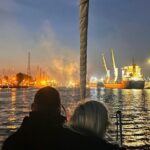
The tour includes Granary Island, and it’s placed to reinforce the port logic. You’re seeing the city’s maritime working side—storage, handling, and the machinery of trade.
What I appreciate here is the way the tour describes the port area as the Baltic trade gateway. You’re not only looking at waterfront views. You’re getting a guided explanation of what trade brought through here and how it shaped the city over time.
That focus on commodities—amber, grain, and herring—helps the port stops feel specific. It also gives you a way to remember the route beyond just “pretty harbor.”
Price and Value: $4.89 for a Guided Hour Is a Real Deal
At $4.89 per person for a one-hour guided tour, the value is striking. You’re paying for:
- a golf cart journey through the Old Town and Main Town
- a live guide (with Polish, English, and German options)
- riddles, secrets, and legends
- short guided visits across major landmarks
- and a capped, high-impact ending at the Shipyard and Solidarity history
Could you tour some of these sights on your own? Sure. But you’d miss the structured story, the quick “what to look for” guidance, and the game elements that make the time fly. You’d also likely spend more time figuring out routes and crossings without the cart’s help.
For budget-minded visitors, this is one of the rare tours where the cost doesn’t feel like a compromise. It’s more like a shortcut to the city’s storyline.
Language Options: Live Guide Plus Audio Guide
You get both a live guide and an audio guide. The listed languages are Polish, English, and German. That combination is great if your group has mixed language comfort levels, or if you want to review a point you missed during a moving stop.
Because the tour is short, audio can act like insurance. If you’re walking into a church or out into the next street quickly, having audio support can keep you from feeling lost.
Who Should Book This (And Who Might Want Something Else)
This works best for:
- families looking for active sightseeing without long walking
- groups who want a guided overview rather than deep dives
- visitors who value story structure—especially the Hanseatic trade-to-shipyard-to-Solidarity arc
- anyone who wants a wheelchair-friendly guided format (it’s listed as wheelchair accessible)
You might look for a different style if:
- you want extended time inside museums or churches
- you prefer self-paced wandering over guided stops
- you plan to photograph every façade from multiple angles and spend time reading everything
For most people, this tour is the kind of activity that makes your later independent exploring better because you’ll know where the important landmarks sit and why they mattered.
Should You Book It?
Yes, if you want a fast, story-driven introduction to Gdańsk’s Old Town, markets, and port, ending with the Gdańsk Shipyard and Solidarity history. The electric golf cart keeps it comfortable, and the riddles and challenges add energy without making it feel childish.
If your schedule is tight and you’re trying to choose between “see a bunch of sights” and “understand the city,” this one handles both. And at $4.89 for a guided hour, it’s hard to argue with the value.
FAQ
How long is the Hansa Electric Golf Cart City Tour in Gdańsk?
The tour lasts 1 hour.
Where does the tour start?
The starting location is Pańska 1.
What languages are available for the live guide and audio guide?
The live tour guide is available in Polish, English, and German. An audio guide is also included in German, English, and Polish.
Is the tour wheelchair accessible?
Yes, the tour is listed as wheelchair accessible.
What’s included in the tour price?
It includes the golf cart journey through Old Town and Main Town, riddles/secrets/legends, challenges at Neptune Fountain and the Crane, and a visit to the Gdańsk Shipyard.
Do I need to buy tickets for the stops myself?
The tour states that it skips the ticket line.
What’s the cancellation policy?
You can cancel up to 24 hours in advance for a full refund.