REVIEW · GDANSK
Gdansk: Jewish Heritage Guided Private Walking Tour
Book on GetYourGuide →Operated by PT Team · Bookable on GetYourGuide
Some cities remember on purpose. In Gdańsk, this private walk traces Jewish life from early centuries through what was destroyed, and what still stands today. I especially love the stop at the Jewish cemetery with its original walls, gate, and graves, and the way the guide brings the Great Synagogue story into focus, including how Jewish veterans helped save it on Kristallnacht. The one drawback to plan for is that entrances are not included, so any paid entry you choose will cost extra.
This tour works because it is not just names on a sign. You walk the Old Town, link centuries of Jewish presence to Gdańsk’s rise as a major seaport, and then connect that story to the Holocaust through the former ghetto area on Granary Island. With hotel pickup, transportation, and a true private pace, you get a guided storyline that also leaves you with a clear list of what to explore next on your own.
In This Review
- Key highlights you’ll feel right away
- Why Gdańsk’s Jewish heritage trail hits harder than a museum day
- Hotel pickup, private pacing, and what that means for your day
- Old Town route: from Jewish merchants to centuries of architecture
- Granary Island ghetto area and the Holocaust context you can keep straight
- The Kindertransports monument: what it means and why it mattered
- Great Synagogue on Kristallnacht: the story of Jewish veterans who acted
- The Jewish cemetery: original walls, gate, and graves
- The New Synagogue in Wrzeszcz (1926): seeing what still survives
- Timing and walking comfort for a 4-hour private tour
- Price and value: is $60 per person a fair deal?
- Should you book this Gdańsk Jewish heritage private tour?
- FAQ
- What is the duration of the Gdansk Jewish Heritage Guided Private Walking Tour?
- How much does the tour cost?
- Is the tour private?
- Does the tour include hotel pickup and drop-off?
- Are entrance fees included?
- What languages are available for the live guide?
- Is the tour wheelchair accessible?
- What is the cancellation policy?
Key highlights you’ll feel right away
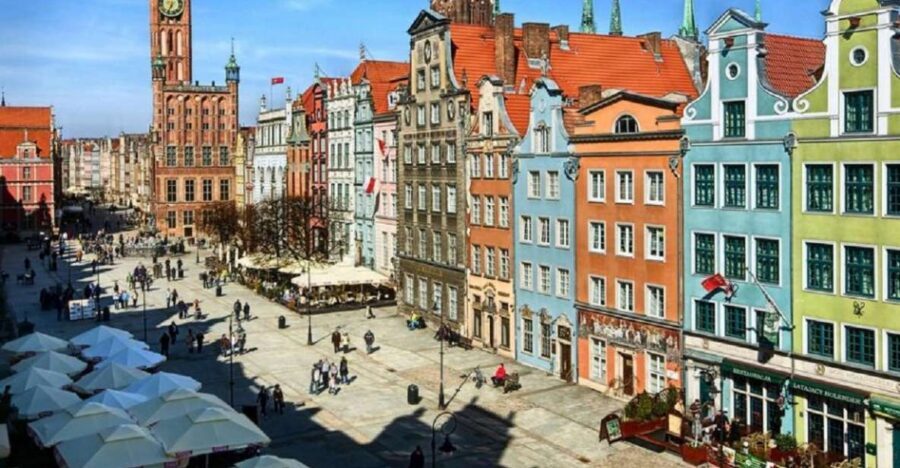
- A focused trail of Jewish monuments that ties the city’s past to places you can still see
- Cemetery visit with original features: walls, entrance gate, and graves
- Granary Island ghetto area plus the history of the Holocaust
- Kindertransports monument and context on what those transports were
- The Great Synagogue story on Kristallnacht, including the veterans who acted
- The New Synagogue in Wrzeszcz built in 1926, the sole remaining synagogue in the city
Why Gdańsk’s Jewish heritage trail hits harder than a museum day
Gdańsk is the kind of city where history sits right inside the streets. That is why a walking tour like this one works so well. You start with the Jewish presence in the city stretching back to the X century, then connect it to Gdańsk’s growth as an important seaport. In the 15th and 16th centuries, the city became both densely populated and prosperous, and that prosperity attracted Jewish merchants who helped shape trade, industry, and crafts.
Then the tour tightens the lens. It moves from prosperity and community building toward destruction, especially around the late 1800s and 1939—when the Germans destroyed the city’s largest synagogue, the Great Synagogue. That contrast is emotional, but it is also practical for your understanding. You leave with a mental map of how Gdańsk’s Jewish story developed, peaked, and was shattered.
A good guide makes this feel clear, not just sad. You get the sense that the city’s Jewish sites are not random stops—they’re pieces of one long story.
You can also read our reviews of more walking tours in Gdansk


Hotel pickup, private pacing, and what that means for your day
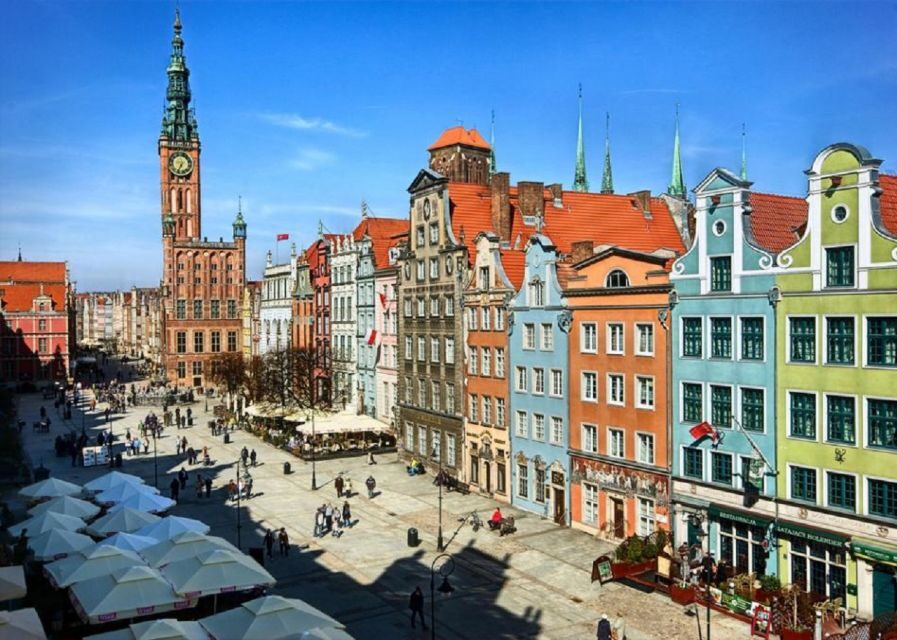
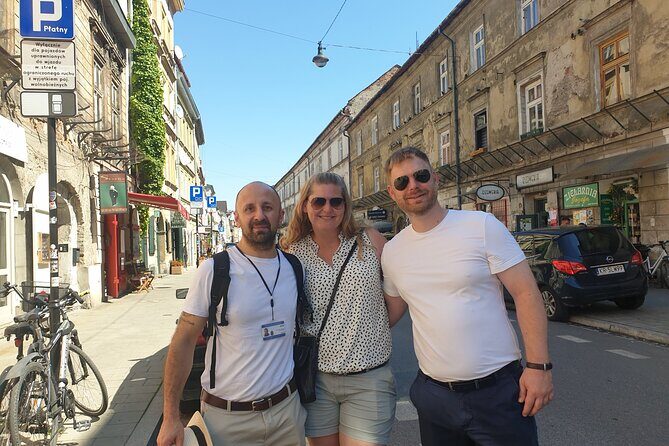
At the start, your guide meets you in the hotel lobby with your name. You are not hunting for a meetup point or trying to guess who your guide is. You also get hotel pickup and drop-off plus transportation, which matters in a city where walking is great but jumping between areas without a plan can slow you down.
This is a private group, so the pacing is yours. If you want to linger at a plaque, ask a question, or spend extra time at the cemetery, you can. If you need a slower rhythm after the more difficult parts of the story, you can keep the tour moving without feeling rushed.
Language options are broad: French, Italian, Portuguese, English, Polish, Spanish, German, and Russian. In past guided outings with this team, people have specifically praised guides such as Luis, Beata, and Eva for clarity and engaging explanations. That matters because Jewish heritage history needs careful wording. You want someone who can make it understandable without turning it into a lecture.
Old Town route: from Jewish merchants to centuries of architecture
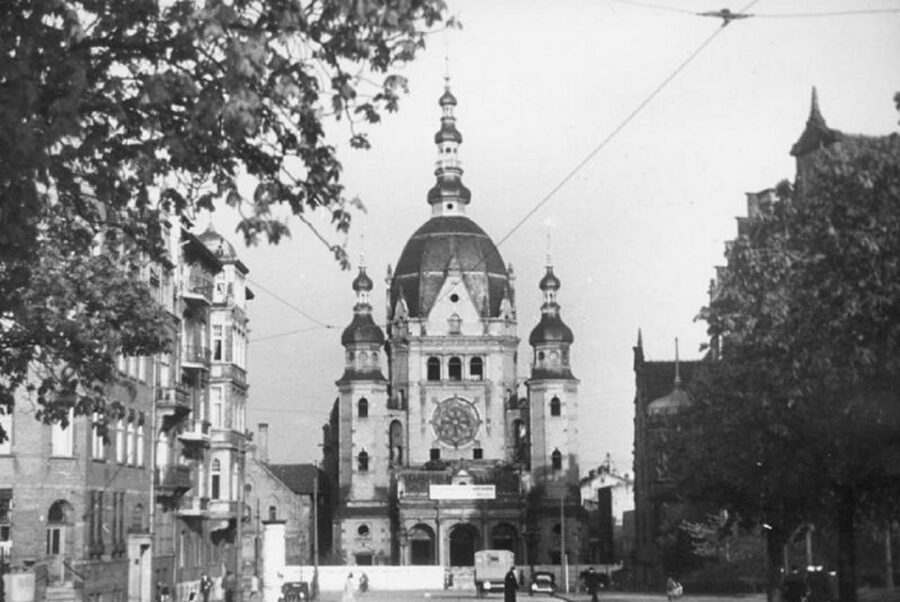
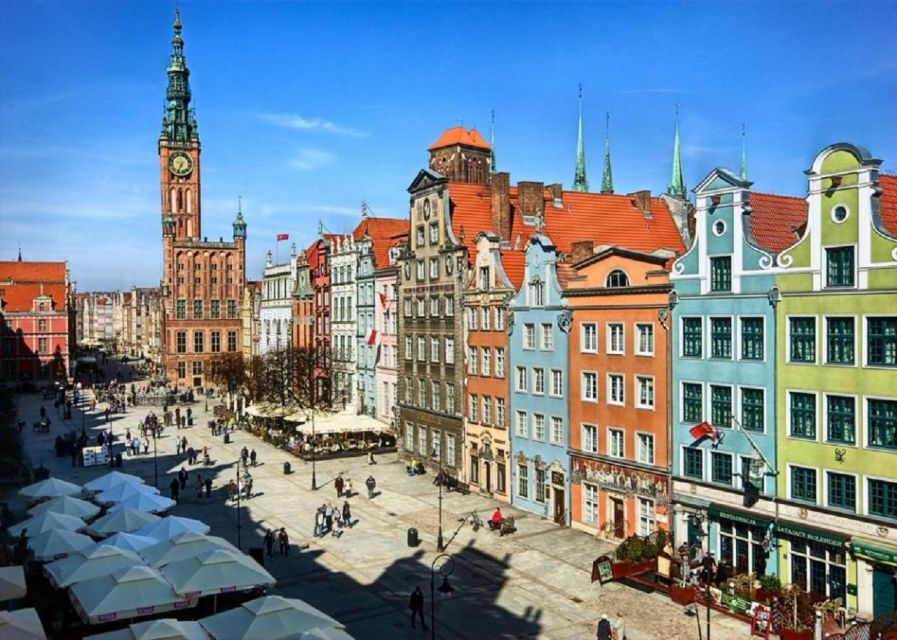
The Old Town portion is where the tour gives you context you can actually use later. You walk through the area where you can still sense how Gdańsk became important and attractive to Jewish residents. The guide links prosperity to community life: in the 15th and 16th centuries, the city’s wealth pulled in merchants, and those merchant communities contributed to trade and crafts.
You will also stop at the place where the Great Synagogue once stood. Even though the building is gone, the guide’s explanation helps you understand what the synagogue represented. In the late 1800s, Jews erected the largest synagogue in the city. It was not just a religious building; it symbolized unity among Gdańsk Jews.
While walking, you’ll hear about Jewish cultural life too, including a stop or discussion tied to famous Jewish theatre in Gdańsk. That’s a strong move. It reminds you that community life was not only religious and economic—it was artistic and public-facing.
Old Town is also where you’ll appreciate the mix of art and architecture across centuries. Nothing here is isolated. Buildings around you start to feel like part of a bigger timeline rather than just pretty facades.
Granary Island ghetto area and the Holocaust context you can keep straight
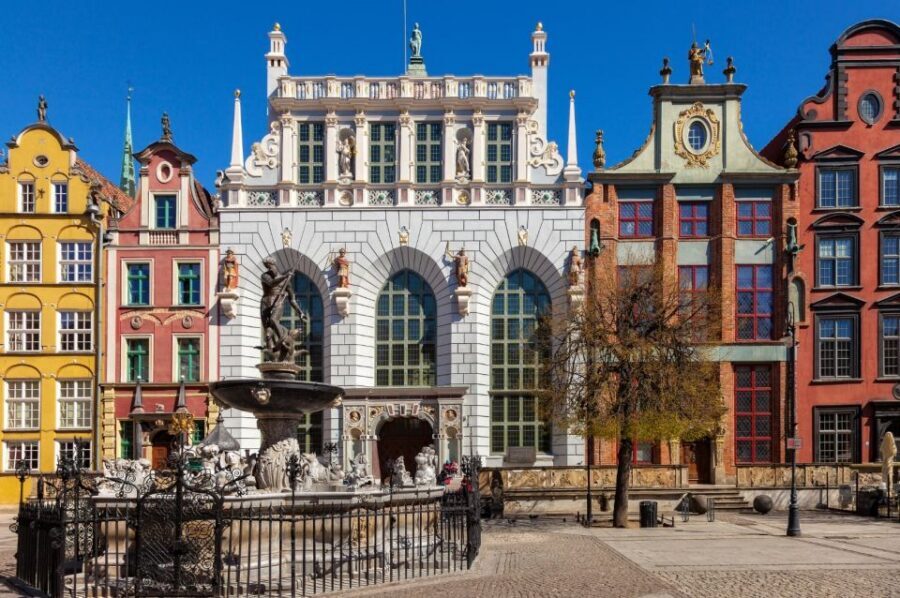
One of the most important moments on this tour is learning about the Holocaust using the city’s own geography. You visit the former Jewish ghetto area in Granary Island and you get the story of what happened there.
This is where you benefit from a guided explanation. Terms and timelines can tangle quickly when you read them alone. With a guide, the city layout becomes a memory tool. You can point to a place and say: this is where the ghetto area was, and this is how it fits into the wider Holocaust history.
Granary Island also makes the story feel tangible. You are not only imagining what was destroyed—you are seeing the area tied to that history. That makes the information stick in a useful way, even if the subject matter is heavy.
If you prefer a tour that balances the educational and emotional, this is the section where the guide’s tone and structure matter most.
The Kindertransports monument: what it means and why it mattered
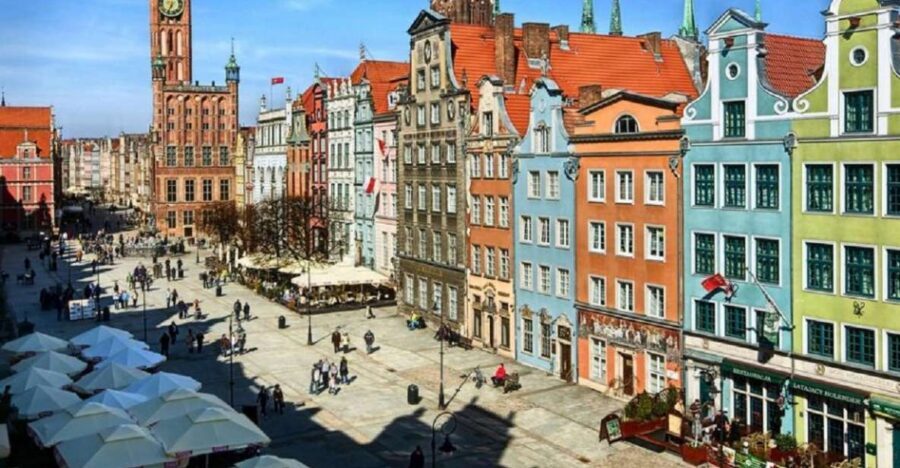
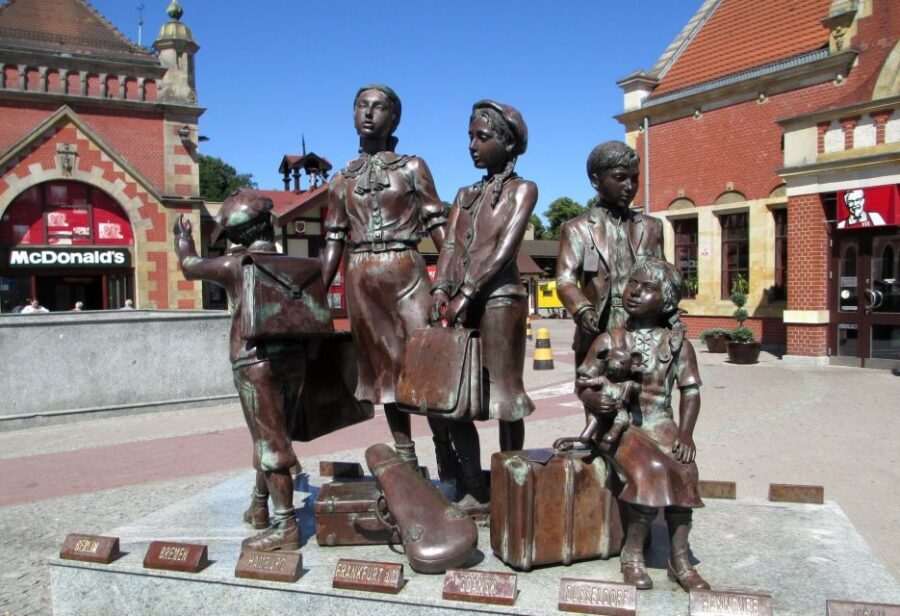
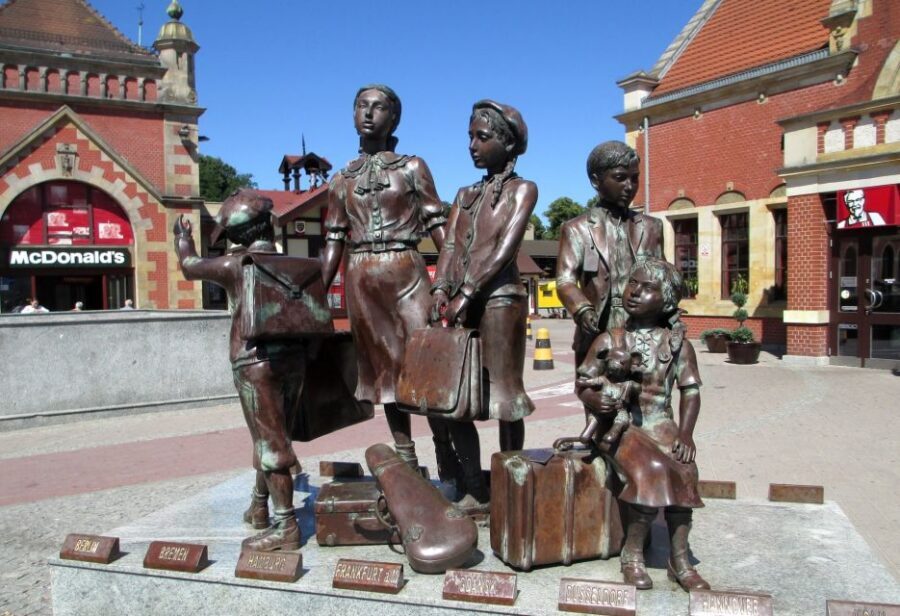
Near the former ghetto context, you will see the Kindertransports monument. You also hear about what Kindertransports were. This is a key contrast point in the tour: the Holocaust story is central, but you also learn about how people tried—often with limited options—to protect children.
The monument gives you a physical reference. Without it, Kindertransports can become abstract. With it, the story lands as something rooted in real, human decisions, and in the movement of children across borders.
This stop is also useful if you plan to do additional reading later. After this tour, you’ll know the right questions to ask and the right terms to look up, because the guide explains them in context with the city’s Jewish history.
You can also read our reviews of more guided tours in Gdansk




Great Synagogue on Kristallnacht: the story of Jewish veterans who acted
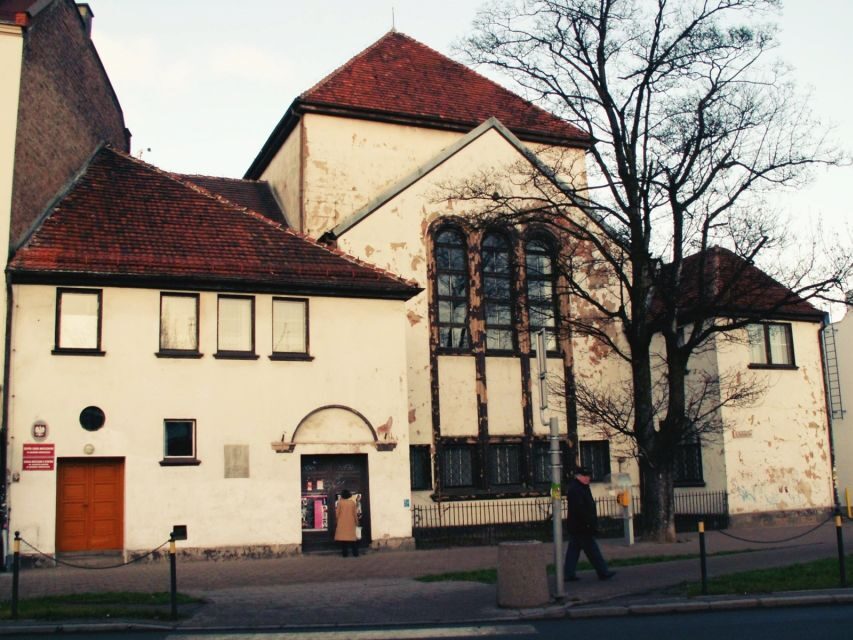
You’ll hear a specific, powerful detail: the story of Jewish veterans who saved the Great Synagogue on Kristallnacht. That detail does something important for your understanding.
Kristallnacht is often remembered as destruction and violence. This story adds complexity and agency. It shows that even in moments of extreme danger, some people fought for survival and protection—here, with the goal of saving a major synagogue.
On a practical level, this stop also helps you interpret what you’re seeing. When the guide refers back to the synagogue’s significance, you can connect it to the Great Synagogue’s role as a symbol of unity—and then to why saving it would matter beyond the building itself.
It is a hard story, but it is also one of the tour’s most memorable moments because it gives you a concrete thread through the devastation.
The Jewish cemetery: original walls, gate, and graves
If you want one stop that will stay with you, it’s the cemetery. You visit the local Jewish cemetery with original walls, an entrance gate, and graves. That means you are not seeing a memorial built later on a blank slate—you’re seeing a preserved physical setting.
This is where the tour feels slow in the best way. You are not racing to the next photo spot. The guide’s job here is to help you read the site respectfully, and to connect what you see to the people whose lives are represented there.
The value of this stop is also educational. You get a sense of continuity—how community identity persisted through generations. At the same time, you see what the city lost and what remains.
Dress and mindset matter here. Plan for a quieter, more reflective atmosphere, and give yourself a moment before you walk through the entrance so you can switch gears from sightseeing mode to memory mode.
The New Synagogue in Wrzeszcz (1926): seeing what still survives
The tour ends by showing what remains: the New Synagogue in Wrzeszcz, built in 1926. You’ll learn that it is the sole remaining synagogue in the city.
Ending here is smart. Earlier in the tour, you learned about the Great Synagogue’s symbol of unity and its destruction in 1939. By the time you reach the New Synagogue, the story closes the loop: something survived, and it matters that it is still standing.
The guide’s explanation makes the building feel like more than architecture. You can see it as a chapter that outlasted what came before and what was erased.
If you want to continue independently after the tour, this is also a helpful way to anchor your next walk. You’ll know where the living thread continues.
Timing and walking comfort for a 4-hour private tour
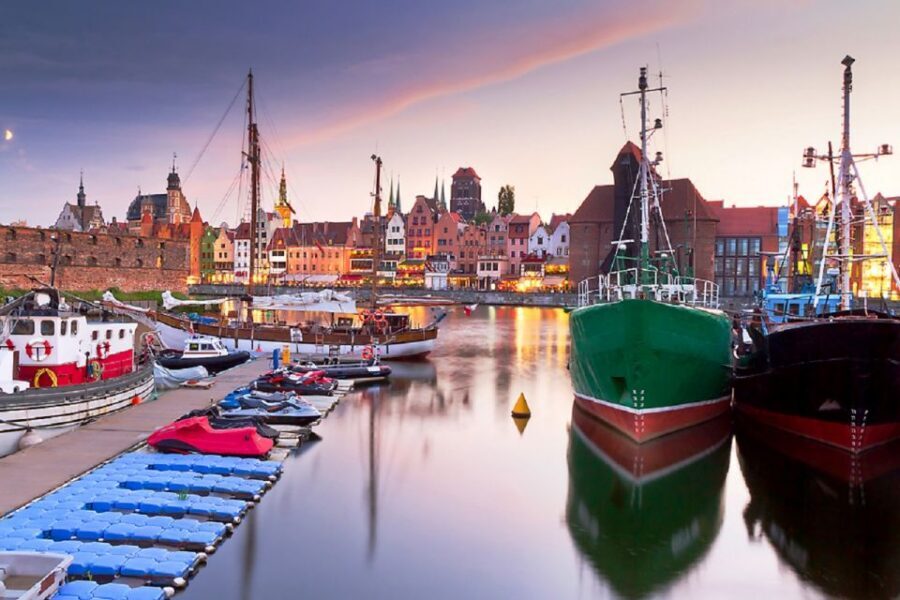
You’re looking at 4 hours total, which is a realistic amount of time for a structured Jewish heritage route. Because it is private and includes transportation, you are not doing only one long grind of continuous walking.
That said, it is still a walking tour. Old Town streets can be uneven, and you’ll likely spend time standing still to listen at stops like monument sites and historical locations.
Practical tip: wear comfortable walking shoes and bring water. Even when you pace yourself, 4 hours with thoughtful stops adds up. And if the weather turns, the ability to ask your guide to adjust your pace is a real advantage of the private format.
Price and value: is $60 per person a fair deal?
At $60 per person for 4 hours, this is one of those prices that depends on what you’d otherwise do on your own.
Here’s what you get that supports the cost:
- A live guide for the full 4 hours
- Hotel pickup and drop-off
- Transportation included
- A route that covers multiple key themes: Old Town Jewish community life, the Great Synagogue location, Granary Island ghetto history, Kindertransports context, a cemetery visit, and the New Synagogue
Also important: entrances are not included, so if you choose to pay for any sites that require tickets, you’ll want to budget for that on top.
Where it becomes good value is when you care about clarity. Jewish heritage history in a real city can be confusing if you self-tour with only a general guidebook. This tour helps you keep the timeline straight and connect each location to the human story behind it. That is the kind of value that lasts longer than a quick stop-and-snap photo.
Should you book this Gdańsk Jewish heritage private tour?
I think you should book if you want:
- A private, guided storyline through Gdańsk’s Jewish heritage sites
- A strong emphasis on specific places: the cemetery, Granary Island ghetto area, Kindertransports monument, and the Great Synagogue story
- A clear historical arc from early Jewish presence through the destruction of the Great Synagogue and onward to the New Synagogue in Wrzeszcz
- Hotel pickup and transportation, so you can focus on the story instead of logistics
I’d pass or rethink if you want a purely light, entertainment-focused city stroll. This route includes Holocaust-related history, and the cemetery stop asks for a respectful tone. It’s not the kind of tour you do when you need a break from serious topics.
If you do want to understand Gdańsk in a fuller way, this tour is a strong fit.
FAQ
What is the duration of the Gdansk Jewish Heritage Guided Private Walking Tour?
The tour lasts 4 hours.
How much does the tour cost?
The price is $60 per person.
Is the tour private?
Yes. It is a private group experience.
Does the tour include hotel pickup and drop-off?
Yes. Your guide meets you at the hotel lobby and you get pickup and drop-off.
Are entrance fees included?
No. Entrances are not included.
What languages are available for the live guide?
The guide is available in French, Italian, Portuguese, English, Polish, Spanish, German, and Russian.
Is the tour wheelchair accessible?
Yes, it is listed as wheelchair accessible.
What is the cancellation policy?
Free cancellation is available up to 24 hours in advance for a full refund.
—
If you want, tell me your travel dates and whether you prefer more history or more time for photos, and I’ll suggest what to pair this with in Gdańsk on the same day.